Showing posts with label apps. Show all posts

Wednesday, May 28, 2014

Internet dependence


I'm writing this post on vacation, and I realize that I need more than an hour of Internet access per day.

If I want to get anything concrete done, that is. 

And it's not my fault. The things I want to do on the Internet each day, if I could just do them quickly, would probably take me about 20 minutes.

Except for writing blog posts, of course. 

My situation
I'm on the Mayan Riviera for a 10-day all-inclusive vacation with my lovely wife, Roxanne (I know, boo-hoo), where I get to access the free WiFi network for at most an hour a day. I could have 24/7 access, but that costs more money. (My grandparents were Scottish.) So, I've been working with an hour's daily  access.

It's been very relaxing and refreshing. I've been mostly disconnected from the real world down here, and I'm only sporadically informed about the Montreal-New York series, the Ukrainian election, Russian invasions, celebrity deaths, mass shootings (blind guess about that, but I'm probably right), and other depressing news.

"You're supposed to be on a beach vacation, not spending all your time looking at the Internet" my lovely wife says when I grumble. So I have another (price included) drink and splash into the Caribbean, or talk to the iguanas. They never complain about limited WiFi, so I guess I shouldn't, either.

And I've learned something valuable: the Internet tortures me whenever I use it, but I do it so much I haven't noticed until I've disconnected.

How the Internet tortures me:
1. Making me wait. Has anyone ever added up all the time we waste waiting for the computer or the network or whatever to stop spinning the ball or the hourglass and update the work we've just done? To make that connection, already, to save the file? When your access is limited to an hour in total—working and uploading as well as waiting for the app to launch and the various servers to shake hands—you really notice all those delays.

2. Limited apps. I love my iPad, but when it's all I have for blogging, email, web surfing and social media, I really notice the differences, the limitations of the mobile apps compared to the full desktop versions. 

Take Facebook, for example. I cannot select a portion of a Facebook post, copy it and paste it into Twitter on the iPad. I don't know if it's because of the touch-screen interface or some combination of settings, but that's completely intuitive on the desktop version.

Hootsuite's iPad app doesn't have bulk tweet scheduling, which is the main reason I use the service in the first place.

In the desktop version of Pages, my clumsy fingers find it almost impossible to change the indents on paragraphs.

The iPad version of Blogger, which I am using to write this very post, doesn't allow me to indent whole paragraphs, or have bulleted and numbered paragraph formats. It also does not appear to have a Schedule feature, like in the full version.

I know, first world problems. But they slow down what I try to do, so I cannot accomplish in an hour what should take twenty minutes: 
- check the email and delete all the junk. On the iPad, I tend to delete news releases and social media updates, leaving them to the desktop when I have more time to devote to them. The iPad only has so much memory, and I try to restrict it to stuff I need immediately.
- check Twitter for mentions
- check the blog status for number of pageviews yesterday and comments, and publish the real ones (as opposed to spam)
- check Google+ and Facebook for important updates and announcements
- upload a new daily spreadsheet to Hootsuite.

If everything went quickly, if apps and networks responded without delay, I am sure that I could accomplish all that in 20 minutes. Okay, maybe half an hour.

Granted, it will take me 15 to 20 minutes to create a .csv file for uploading to Hootsuite. I need more time to respond to the important emails, write some of my own, and of course write blog posts like this.

But being restricted to an hour a day? It's just frustrating.

All that to say, I'll be back in full form, rested, recharged and full of new ideas in a matter of days. Till then, faithful readers, keep on questioning.

Tuesday, June 18, 2013

Quit being a dumb app: Guest post by Lloyd Corder, PhD.


I've followed communications professional Lloyd Corder's email newsletter, C-Note$, for years. It's always full of clear, useful advice—the kind that makes you say, "Of course—why didn't I see that before?"   I asked Lloyd to weigh in on how today's communications technology, including social media, e-newsletters (like his), blogs and so on have changed the way he communicates. As usual, he came back with some useful, clear advice. And as usual, I reacted with "Of course. Why didin't I think of that before?"
 

How to keep your smart phone from screwing up your relationships

Lloyd Corder, Ph.D.
 
Recently, I got this note from an entrepreneurial client and friend of mine who started a metal powders company that makes high tech parts for spaceflight companies like Amazon founder Jeff Bezos’ Blue Origin:  
I have to tell you, that I think of you more than you realize I'm sure. Every time I'm going into a meeting with someone, I pull my phone out and turn it off or to vibrate. You did that one time we met and I never forgot how I felt "Wow, he's taking this very serious and only wants to concentrate on me while we're meeting." Very powerful stuff.
That made my day.

 
I’ve spent my professional career helping others become better communicators. It may be called marketing research, ad testing, strategic marketing planning, leadership communications or even university teaching, but it boils down to figuring out how you can be better today than you were yesterday. Slight, continuous improvements lead to big results over time.
 
In working with hundreds of clients over the last 25 years, I’ve come to believe that the most profound gift you can give someone is your time and complete attention.
 
Within in your grasp—every day and at multiple times—you have the power to show you truly care…you are a great listener…you can accept someone for who and where they are in their life…you can show and be loved…and—most importantly—you can make someone’s life better.
 
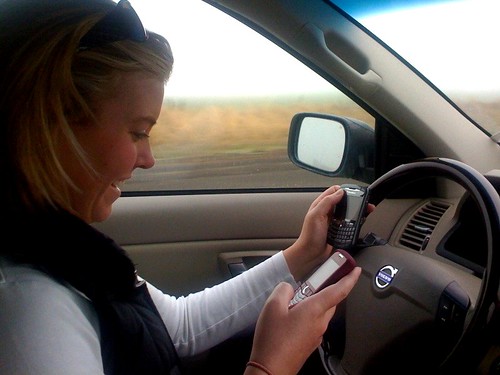
But giving your time and complete attention is darned near impossible if you’re spending all your time fiddling with your phone.
 
Don’t get me wrong. I love my smart phone. I can reply to clients faster. I can delegate projects instantaneously. I can update my social media status like no body’s business.
 
But smart phones have a dark side, too: 

  • Smart phones are the single biggest distraction in our lives. For many of us, instead of us being “all in” when we’re meeting with someone we know is important—like our friends, family members, coworkers and others—we are only partly paying attention. We may be there physically, but mentally and emotionally we’re thinking about emails, texting someone miles away, surfing the Internet or wondering how many likes we’ll get from our latest post. Our smart phones make it seem like we are afflicted with some form of attention deficit disorder.
  • Smart phones mess up our eye contact. We trust people who look at us. It’s tough to read someone when they are constantly looking away or at their phone. It suggests they would rather be somewhere else or doing something different. Smart phones are seductive. They trick us into thinking that I’ll just look away for a moment, and then I’ll be able to refocus. Forget it. You’ll want to check your phone every few minutes. It will become such a force of habit that you won’t even realize you’re doing it.
  • Smart phones make us feel like we have more control, but we actually don’t. We have so many new communications tools available to us. But are we any better communicators? Are your relationships better now than they were five years ago? Does it really matter to you that you now know the minutia of other peoples’ lives through their barrage of posts? Wouldn’t you rather understand the big picture of the people you care about?
Well, what should you do about all of this? Especially if you’re younger and have spent your entire life online, taking a break from your phone may be an out-of-body experience for you.
 
From my vantage point, you have two basic options.
 
First, you can go on letting your smart phone be the boss of your life. Bring it everywhere you go. Never turn it off. Let it distract, seduce and control you to your heart’s content. If you chose this path, don’t worry. A lot of people are on it. You’ll blend in fine and most people won’t notice the difference anyway—since they will be on their smart phones doing the same thing.
 
Or, if you dare, you could decide that maybe part of the purpose of your life is to help make the world you’re living in a little better place, if just for one moment or one minute or one hour or one day.
 
You can do that by sharing your time and complete attention with the people you’re in front of. Forget about your smart phone for a minute. Silence it and put it away. Be totally in the moment.
 
If you’re in a business meeting, require that everyone put their “screens down” and give their attention to topic at hand…especially if you’ve spent a fortune getting them to the meeting.
 
What I’m suggesting may sound like it’s easy to do, but it’s easier not to do. You will struggle. Your smart phone will tempt you to pay more attention to it than who you’re meeting with. But don’t you do it!
 
Just try getting through one meeting without your phone. If you falter, forgive yourself and try again with your second meeting. Like any important change in your life, it will take two or three weeks of diligent effort, then it will start to seem totally natural to put away your phone and get focused on the conversation at hand.
 
You will also quickly find yourself in the top five percent, separated from your competitors and everyone else…and being noticed by important people and people who are important to you. You’ll seem like a natural winner.
 
And at that point, you may just find that your influence, impact and life are exponentially better than they were when you were playing with that dumb phone all the time! __________
 
Lloyd Corder, Ph.D. is founder and CEO of strategic marketing research firm CorCom, Inc. and teaches at the Tepper School of Business at Carnegie Mellon University. He is a frequent keynote, convention and motivational speaker, and he has appeared on business-oriented radio and television programs. Corder’s studies have been published in more than 500 magazines and newspapers. For additional information and resources, please visit www.corcom-inc.com or contact him at corder@corcom-inc.com.