Showing posts with label audience. Show all posts

Wednesday, December 03, 2014

Thank you, audience, for growing


The audience for this blog has reached another record high point: in November 2014, more than 20,000 people viewed a page. Three times during the month, daily numbers reached or exceeded 1,000, and the all-time number is approaching 400,000. In fact, I fully expect to reach that by next week. If things keep going the way they have been, even without any more growth, it will have reached half a million by June.

Here’s the graph from Blogger. You can see that I started blogging in March 2006, but I didn’t post very much at first. I published seven posts in March, mostly reused material like reviews of printers, cameras and other communications technology. But by May, the frequency had dropped to once every week or two. I didn’t publish anything in June, just once in August and nothing all that fall. I only published six posts in all of 2008 and only one in 2010.

It’s not surprising that my blog got little attention then. Why would anyone come when there’s nothing new to see?

It wasn’t until 2011 and I had finished writing my first novel, The Bones of the Earth, that I started blogging regularly. By that fall, and most of the time since (with a few lapses, sorry) I was blogging at least once a week. For a while there, I was doing three posts a week. And, not surprising, that’s when pageviews started to climb.

That’s also when I got my twitter account, and putting a link to my blog in most of my tweets. Pageviews, driven by frequent announcements about posts and attracted by new content, started to climb dramatically.

As you can see from the graph, pageviews climbed in spurts. There’s the long, flat head from 2006 to 2010, then a more or less steady rise through 2011, when pageviews averaged around 6,000 per month—that’s 200 a day. There are peaks and valleys from month to month, then another surge to another plateau around 10,000 per month for most of 2012 and 2013.

And now, a new high: from 13,734 pageviews in September 2014, to 16,548 in October to over 20,000 in November! And the pace so far in December (okay, I know we’re just two days into it, but taking that as a trend) is over 700.

Getting the best help
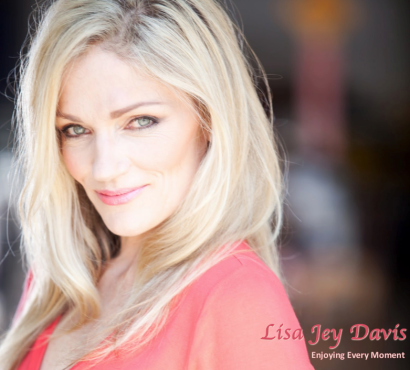
What accounts for that? I have to give some credit to Lisa Jey Davis, also known as Ms. Cheevious. In addition to being a kick-ass lady and always entertaining writer and blogger, she’s an awesome social media consultant. She created some Facebook pages and posts for me, and is doing some other mysterious things in social media on my behalf. And since she started doing that, my numbers have been climbing strongly. In addition, the Army of Worn Soles page she created for me on Facebook now has over 100 likes. To me, that’s a lot.

The view from the peak

I remember being so excited in 2011 and 2012 as I watched my daily, monthly and “all-time” pageview statistics climb. I remember thinking “Wow. Those statistics were really pathetic before 2011, but now, this is serious.” I compared this to my experience working on Canadian magazines (remember those things, printed with ink on paper?) in the 1980s. Thirteen thousand readers per month was a respectable, healthy readership for a “trade,” or industry magazine. With a staff. And postage expenses. And here I was, getting those kind of numbers all by myself.

A note here about Google’s graph: the numbers I see today don’t jibe with my memory. And the graph doesn’t show the odd-numbered years. You cannot see the statistics for 2007, 2009, 2011 or 2013.

Why do I do it?

Three times a week required an effort and a devotion of time that were too great to sustain. Other things, like writing novels, began to suffer. So I scaled back to twice a week for a while, and now am pretty content with once per week.

Now, if there were only a way to make money from that. Don’t tell me about Google ads. I have those, as you can see, and I haven’t gotten a penny. I’m not complaining; that’s not why I write this blog.

“So why do you spend so much time on that blog and on setting up tweets every day?” my lovely and supportive wife is fond of asking.

I’ve used the standard answers (that I am, umm, repurposing from consultants and self-described authors’ advisors): “building the platform, raising my profile.” It’s partly true, but as a method of driving book sales, well, I can’t say it’s had the impact that other writers report.

But it does show that I can get an audience. My writing is reaching important people: you.

Thank you, readers.

Monday, April 14, 2014

Monday blog for writers: Don't ignore e-books

Image from Jorghex’s collection in Wikimedia Commons,  published under a Creative Commons Attribution-ShareAlike 3.0 Unreported License. - See more at: 
It baffles me that there are still authors, intelligent professionals who want to reach an audience, yet who do not use the most effective and cheapest way of doing that — ebooks.

Last Saturday, I participated in the first Ottawa Book Fest held by the National Capital branch of the Canadian Authors Association. While it wasn’t what I hoped for in terms of selling books or engaging with readers, I did enjoy talking with many other local authors. Two things struck me: the number of authors who don’t bother with e-books, and the number who use expensive “publishing services” companies — vanity publishers.

“You can’t wrap an e-book,” was one typical comment. True, there is something very appealing about the tactile experience of holding a book. That’s one reason I went to the trouble and expense of getting paperbacks of my own titles.

Paper has a number of advantages over e-books. I will take a paperback to the beach or poolside, but I hesitate to bring my iPad there. It’s hard to read my iPad in bright sunlight (although the E-Ink screens of the Kobo, Kindle and others don’t have this problem). If you drop a paperback or get it dirty, it’s no big deal. At worst, you might have to spend ten to fifteen dollars to replace it. Or maybe $50 for a big hardcover. If I were to drop my iPad in the bathtub, that would be a major disaster.
Image courtesy Steve
Taffee's Blogg-Ed Indetermination

And yes, you can wrap up a paperback book and enjoy the recipient opening it.
On the other hand, the e-book’s advantages include:
  • they’re lighter, important when travelling
  • they should be cheaper — the publisher doesn’t have to pay for paper, ink or shipping
  • it’s a lot easier to give copies to people who are not in the same room with you — or the same country.

Let’s look at some facts.

E-books outsell paper books. More than two years ago, Amazon reported that its sales of e-books had surpassed paper books, and while that’s just one (the biggest in the world) outlet, the Association of American Publishers also announced that e-books outsold hardcovers in the adult fiction category as of 2011. E-books are the fastest growing sector of the book market, and even though the AAP reported that growth slowed in 2013, it was still growing and hit $800 million, while sales of paperbacks fell to $898 million.

As Hugh Howey pointed out on his blog (which I referenced in my post in February), the book e-tailers don’t report their sales numbers.  That means those numbers do not include any self-published e-books, which according to Howey’s research, outsell all the e-books from all Big Five publishers combined.

Why limit yourself?

E-book technology sparked an explosion in the number of independent authors self-publishing books. It’s an enabling technology.

And it’s not difficult to use. It helps to know about publishing, but if you can create a word processing file, you can create an e-book. Not necessarily a good e-book, but that’s a different discussion.

That’s why it astounds me to hear writers denigrate the e-book format. For an author to choose not to publish an e-books would be like a travel agent choosing not to book air travel and sell train tickets only. Sure, there’s a market for train travel, and trains can be more romantic and evocative than airplanes, but that choice severely limits the travel agent’s career.
Photo by Alexander Henning
Drachmann (Creative Commons)

Need advice? Ask me

Some writers may feel intimidated by e-books and the need to learn a new format. But as I said, it’s easier to format an e-book. There are plenty of free resources on the net, in the blogosphere, even on Facebook. Mark Coker’s excellent and free Smashwords Style Guide gives you step-by-step instructions, with lots of time-saving tips.

Or ask another author who has gone through the process. Most are happy to share what they’ve learned. For free. Ask me.

If you still feel unsure, or want to get someone to produce your e-book for you, then I’ll certainly charge a lot less than any vanity publisher.

If we work together, we’ll all succeed.


Saturday, July 07, 2012

Guest blogger: The 5 reasons why I am a failed writer

This week's guest blogger is marketing marvel Jens-Petter, owner of the SlyMarketing blog and company and author of Make Google Love You. He's writing not only about the best and worst he's ever done as a writer, he's giving us some really useful tips on how to market your books. Following is some of the best, most practical advice I've ever read. Over to you, Jens-Petter!

I say that I'm a failed writer because I can't seem to finish what I'm writing.

I am a solo entrepreneur with a marketing business, and I have written a novel and a short story for the Kindle. I am fairly successful in business with several big clients and a popular blog, but I still haven't published my novel or the short story.

I love writing, but my first hurdle was to choose the right language. I write in Norwegian and in English. I am a better writer in Norwegian, because I am Norwegian, but I have a much bigger audience when I write in English. And that's why I started my marketing blog in English.

I am still not sure if it's such a good idea to keep writing in two different languages or if I should focus on one. But since I believe that one of my strengths in marketing and writing is experimenting and I'm not really in a hurry to get things published, I've decided to keep writing in both languages for now.


The 5 reasons I am a failed writer

I have been thinking a lot about why I haven't been able to publish my novel or the short story. I've come up with five main reasons. Let me just tell you the reasons first, and then I'll tell you how I will market my novel and short story.


1. I don't have a goal

I write because I love to write. I want people to read what I have written, and I love feedback. And I work to become a better writer. But I don't have a goal when I write.

I am telling a story. I want it to be entertaining, but do I want my readers to cry, to learn something, or to never forget about the main character?The truth is that I don't know. I just write without having a single goal for the story or how my readers should
react.

I believe writers should have a main goal with everything they write. Do you agree?


2. I don't focus

When I started writing my novel, I thought that I wouldn't do anything but write for a year. I believed that was what authors do. I'd lock myself inside my office and just write.

I did write for a long time, but I kept doing so many other things that were not part of my main projects. And I kept creating new projects, instead of writing and finishing the novel and the short story.

I believe that writers should focus on one project at a time, and finish it before starting new projects. Do you agree?


3. I am terrible at editing

I write from the beginning of the first sentence until I'm finished. That's it. I know that as soon as I've finished writing, I will be really just at the beginning. Most of the time it's all about the editing. And the first draft is more or less just the foundation of the story. But I am having a hard time to remove anything from the story. I can add a lot, but since I have a hard time removing anything, the story becomes more and more complex.

I have come to realize the importance of editing, but removing is still a huge obstacle for me. I'd love your thoughts on this — what part of editing do you struggle with?


4. I write alone

I love the solitude of writing and I love the social part of the online world. My marketing experience is mostly part of the social world, where I have teamed up with lots of brilliant people who are helping me out. I get the experience of people from all over the world, and we share marketing advice. This has been all positive, and I wouldn't have been able to start my business if I didn't have this team of supporters behind me.

I believe that I shouldn't have been doing all my writing alone. I should have teamed up with other writers and I should have told them about my projects, and we should have shared opinions and experience. I am sure it's a myth that authors should be all by themselves when they write. I do my best work when I get feedback and when I am having conversations with people. If I could start all over again, I would find a mentor and a team of like-minded people to help me out. I understand the power of collaboration and I would have done my share.

Do you write alone, or have you teamed up with other writers? I'd love to know if other people are part of your writing process.


5. I write what I love, not what people will buy

One of my friends is a painter. I believe he is a brilliant painter. I love the way he paints, but the reason he doesn't sell any of his paintings is that he only paints what he loves to paint. And at the time I am writing this, he loves to paint aliens and blood. I believe that if he would have looked more at what people are interested in buying rather than what he loves to paint, he would be making a career as a successful painter.

I am not saying that he should only look at the market, but the market should be part of what he's doing. And the same goes for my writing. It took me a long time to adjust my first novel from a story that I wanted to write, because I thought that it would be an interesting project, to a story that would actually sell. I have added elements of both.

Adjusting to the market is important if you're going to make any money from writing. I know that money isn't really the issue, but if we're going to be able to write every single day and make writing part of who we are and what we do, we need buyers. And that brings me to my last point.

How to market fiction books

Every story has a beginning, a middle and an end. I think of marketing fiction books in the same way: it's a three-step process.

The beginning

 Research who your audience is. Find out where they are, and what you should be doing to reach them. It's usually not that hard.
Do a pre-launch phase. Think of how movies are marketed: they've got trailers and movie previews at the movie theatres. Create book trailers and add them to your blog, to YouTube, Facebook, Twitter, etc. The point is that you should build expectations. It's not hard at all. You can hire a brilliant person to do it on Fiverr for only $5. Add some text, and she'll add the effects and the audio.

Use the trailer to drive traffic to your blog, and build an email list of people who are eager to read your book. Let them know that they'll get it before other people, or make a promise that they'll get it cheaper. The pre-launch phase should be no less than 30 days. It takes time to build expectations.

The middle 

 When you're launching your book, you should first send emails to the people on your list. They should be waiting for your book. Write guest posts on related blogs, the blogs your audience reads (which you learned during the research part of the pre-launch phase). You should write many guest posts, and they should be about the process of writing your book. Add things about your new book (you could do this during the pre-launch phase as well). Create press releases and submit them to the local press (it's fairly easy to get reviews in the local press) and to the large PR sites (such as?).

You should get testimonials from people who've read your book. Publish all the testimonials to your blog — the more the better. Ask your readers to publish the testimonials on sites like Amazon.com, which will give your book a higher ranking.

The end

The last part of the launch should be about building relationships with your readers. Relationships are one of the most important parts of marketing. Ask your readers for feedback, and get more testimonials. Build a community. Let them know about you. Tell them how you write, give them more background on the story, and why you wrote it and what your inspiration is.

It's important that you add to your blog regularly, and that you build your newsletter email list. Communicate with your fans and they will spread the word about your awesome books.


Jens P. Berget is a Norwegian author and entrepreneur. He is currently writing his first novel, and he has started his own marketing business, while he continues to live off his passion.

Jens' blog, http://slymarketing.com/, will host my guest blog, as well. Check it out!