Monday, November 19, 2012

What is style? An interview with Charity Parkerson

How important is writing style? And just what is it, anyway — what makes up an author’s style? Can an author truly be unique?

This week, Written Words has invited Charity Parkerson, author of paranormal romance and erotica, to tell us her thoughts on writer’s style. Read what she has to say, and then check out her work.

How would you describe your own writing style?
Erotic with a southern twist.


Are there any authors whose style you admire? Do you try to emulate them?
I really like Julie Garwood. She does a great job of mixing humor with suspense and since I’m hilarious (in my own mind) I try to add a bit of humor to my books, as well.


Are there authors whose writing style you dislike?
I love Jennifer Wilde and have read all of her books. However, I can’t stand her descriptive writing style. She can weave the most wonderful and engaging stories, but I find myself skipping over the three-page descriptions of someone’s dress.


How important is your writing style to you? Are you happy with your style, or are there aspects of it you try to change during rewriting or editing?
When I first started out, I had several people tell me that I would run into trouble with reviewers because my characters have southern accents. I refused to remove it, since my books are set in the South, and it made sense that their speech would reflect that. I have run into a couple of reviews that mention it, but for the most part readers have been fine with it, and I’m glad that I did not allow anyone to talk me out of writing my own voice out of my stories.


What are the important elements of your style? What are you trying to achieve?
In erotica, I think that one of the most important elements is the ability to create a scene that is relatable but is still hot. I want to paint a picture with words that the reader can see, hear, and taste as if they are there.

How can readers identify your writing style? Are there particular words or kinds of words that you tend to favour? Sentence structures? Or is it more in the story, the pacing or the characters?
My characters tend to be a little on the dark side. It’s rare that I write a perfect character. I want people to cheer for someone that they never thought they could.

Do you think your genre imposes certain restrictions on writing style?
I write in several genres, but I do think that erotica is the most restrictive. Most people would think that it is the least. However, several times I have sent a story to my editor believing that I’ve finished the world’s hottest erotic novel, only to learn it is classified as steamy romance. You’re expected to use words that shock people into letting down their natural prude filter.

Do you think your audience responds to your writing style, consciously or unconsciously?
I hope it’s an unconscious reaction to a great read. :-D


How important do you think writing style is to an author's commercial success?
It’s very important if you also factor in who you are pitching yourself to.

Thank you, Charity.

Charity Parkerson made the bestseller list with her book A Secure Heart. Her paranormal Sinners series was voted as one of the top ten "Best books by an Indie author in 2011." Her Sexy Witches series blends paranormal, romance and erotica. She is also one of the Four Whips, a collective of authors who have recently published the erotic short-story collection Turkey Slap 2012.

Charity's newest book is A Splash of Hope, available from Amazon.

She is a member of The Paranormal Romance Guild, Coffee Time Romance, and Long and Short Romance Reviews. She is also a Goodreads moderator and a Library Thing author.

Visit her site at www.charityparkerson.com, and read her blog at charity-thesinners.blogspot.com.

You can like her at Facebook.com/authorCharityParkerson. You can follow her on Twitter @CharityParkerso.

Sunday, November 18, 2012

6 Sentence Sunday: More from One Shade of Red

This week's sample are six more sentences from my National Novel Writing Month work-in-progress, One Shade of Red. As you've probably guessed, it's a parody of the inexplicable best-seller, Fifty Shades of Grey.

The action in this excerpt follows the six sentences from two weeks ago.


I couldn’t look at the pool, because I couldn’t stop looking at her. I felt like I was in junior high again. The only word that came into my mind was: stacked. There were acres of bare skin. The bathing suit barely covered her nipples and pubis, but none of those words made it into my mind at that moment.


She looked at me, eyebrows raised, and I realized that she was waiting for me to say something.


Like it? Hate it? Think the whole idea is ill-advised? Can't wait to read it? Leave a comment!

Six Sentence Sunday is a continuing blog hop; authors who have blogs post six-sentence excerpts from their published works or their works-in-progress on Sunday morning, and list the link on the Six Sentence Sunday website. Check it out — there are a lot of excellent writers promoting some fine work. 

By the way, I really enjoyed doing the photo research for this post. Try Googling "red string bikini" yourself someday.

Wednesday, November 14, 2012

The Next Big Thing: One Shade of Red

Photo by Paloetic. Licensed under the Creative Commons Attribution 3.0 License.
Autumn Birt, traveler, travel writer and blogger, has tagged me for The Next Big Thing blog hop. She, herself, was tagged by fantasy author Bruce Blake, whom regular readers of Written Words will remember for his guest post on style.

The idea behind the Next Big Thing is to answer a set list of questions about your work in progress, then tag five more authors to do the same thing.

So, here are my answers about my Next Big Thing:

What is the working title of your book?
One Shade of Red.

Where did the idea come from for the book?
As you probably guessed, it’s a parody of the best-seller, Fifty Shades of Gray.
I first heard about the book last spring, when it was causing a stir in the mainstream media. I bought a copy for my wife, who read it and declared it terrible. She read it during our summer vacation by the coast, and repeatedly shook her head or moaned in literary disgust (at least, that’s why she told me she was moaning). 

A lady on the sun chair next to her one day noticed her reading the book. “What did you think of it?” she asked. 
“I think it’s terrible. Bad writing, and the characters are ridiculous,” my wife replied. “Did you read it?”

“It was the worst book I ever read!” said our new friend.

I read and heard several other reviews, as well. Obviously, millions of fans all around the world love the story. But most of the professional reviews I read or heard were very negative. They criticized the author’s writing abilities, the style of the book and the characterization. 

I had to read it, myself, just to see how I fell on the reaction spectrum. To me, it’s ridiculous, too. Christian Grey, a 27-year-old self-made billionaire? It doesn’t happen very often. Bill Gates, Steve Jobs, a couple of others. But they’re never super-hunks at the same time.

And Anastasia Steele, the 22-year-old virgin? Come on.

The names are preposterous, too. 

And of course, those ideas eventually led to the conclusion: I could write a much better erotic romance.

What genre does your book fall under?
You could call it a satirical, humorous erotic romance. Or a romantic, erotic parody. Or pseudo-romantic, satirical erotica.

Which actors would you choose to play your characters in a movie rendition?
Do I have to tell you this is Beyoncé?

BeyoncĂ© Knowles as Alexis Rosse; for the male protagonist, Damian Serr, maybe Angus T. Young — Jake from Two and a Half Men. Alternatives: Aarti Mann (Pria from The Big Bang Theory), or Eva Green for Alexis; Abhi Sinha from The Social Network would be good, too, for Damian. A younger, goofy kind of guy would be perfect.

What is the one-sentence synopsis of your book?
Where Fifty Shades of Grey is a woman’s ultimate sexual fantasy — domination by a fabulously wealthy,beautiful and sexually powerful young man with a dark flaw she can fix — One Shade of Red is every young heterosexual man’s ultimate sexual fantasy: a rich, gorgeous and sexually always available woman without any inhibitions or baggage, or anything at all to fix!

Aarti Mann
Will your book be self-published or represented by an agency?
I will publish this book myself, as I have all my other fiction.

How long did it take you to write the first draft of your manuscript?
I’m now working on it as my National Novel Writing Month (NaNoMo) project for 2012, so while I got the idea for it a few months ago, I started actually writing on November 1. I plan to finish no later than November 30.

What other books would you compare this story to within your genre?
Fifty Shades, first. After that, I don’t know — I don’t read much erotica. Maybe I should start — purely for research purposes, of course!

Who or what inspired you to write this book?
Angus T. Jones
As I explained above: I thought I could do much better at erotica than EL James. As far as I can tell, her premise is that women love sex, and a little bit of BDSM is fun; and the sexiest imaginable man is a handsome, thin, in-shape and immeasurably wealthy man with a deep, dark secret flaw that only she can fix. Women love to fix men, it seems.

I flipped that premise upside down: what qualities would a young virginal man find ideal in an older lover? She (if the man in question is heterosexual) would be:
  • beautiful
  • continuously eager for sex
  • Eva Green
    completely uninhibited about any sexual practice, position or conversation
  • wealthy, so she can provide lots of toys and activities without affecting his bank account
  • and having absolutely no hang-ups or deep-down secrets — in other words, nothing to fix!


What else about your book might pique the reader’s interest?
If I may be so bold (this is my blog, after all), I think that I am a much better writer than EL James. So my characters will be much more believable, their circumstances more plausible, and their motivations clearer. Also, I promise not to give my male protagonist, Damian Serr, an “inner god.”
However, I will give them names as preposterous as EL James gave her characters.

What else? Sex. Lots and lots and lots of sex in this book. When you read it, keep a glass of ice water handy.

Autumn Birt’s first novel is called Born of Water, and her Next Big Thing is Rule of Fire. Read about them on blog, Weifarer’s Wanderings. Click around her blog a bit, too, and you’ll find lots of great reading and adventure!

Now, the five authors I have tagged are:

Check their blogs next Wednesday, November 21.

Monday, November 12, 2012

Telling Tale Tales — lots of them

Kathy Lynn Hall on Style interviews

Writing style can vary widely over time and around the world. Like many readers, I can almost hear a particular “voice” when I read a British author as compared to an American writer. And who could argue that Dickens and other 19th-century authors had a style distinct from today’s prevailing style?
It seems to me that commercial fiction publishers are imposing a style. Can you distinguish Dan Brown’s style from Tom Clancy’s? EL James from J. Sterling’s?


It’s so refreshing to read an author like Kathy Lynn Hall, whose writing style is fearlessly her own. You probably already know her for Red Mojo Mama and its sequel, Red is an Attitude!, as well as The Great Twitter Adventure and other books, as well.

Kathy, how would you describe your own writing style?

Folksy — it took me a long time to find my “voice” and once I did I realized that it’s very earthy and one-on-one. I think I would have been one of those people sitting around the pickle barrel, telling tall tales in the old days.

Are there any authors whose style you admire? Do you try to emulate them?

I absolutely love Agatha Christie and Jodi Picoult, but can’t begin to write like either one of them. The only thing I think I can imitate is the way a story is woven. I often think of this as a pinball machine — anyone remember those? — when the ball starts down the chute and you’re madly trying to use the flippers to keep it pinging off all the little thingies. You keep trying to go back to the high pointers, sometimes failing, but sometimes you hit it big and everything lights up. That’s what a writer lives for.

Are there authors whose writing style you dislike?

No particular authors, but if a story is bereft of heart, I’m really not interested and quickly lose interest. If it’s all action and no character-building or interactions, I just stop reading it.


How important is your writing style to you? Are you happy with your style, or are there aspects of it you try to change during rewriting or editing?

I have grown to really like my style. I’ll never be the Great American Novelist and that’s okay with me. If I can make a reader love my characters and care about them, then I’m happy. The one thing I have to watch out for is my tendency to be too concise and leave out description. I started out as a screenwriter and that’s ALL dialog, so I have to curb those tendencies.


How can readers identify your writing style? Are there particular words or kinds of words that you tend to favour? Sentence structures? Or is it more in the story, the pacing or the characters?

It’s definitely the characters and what they say and do to each other. I could have written Castaway — the film — because my character would have invented Wilson, too.

Do you think your genre imposes certain restrictions on writing style?

Absolutely — I think any genre does that. My “Red” novels are romantic suspense, which demands that there be enough romance, but not so much that it becomes a romance novel, and enough action to keep you hopping. The current novel I’m working on is a political thriller and I’m stepping outside my comfort zone a bit to insert enough action.

Do you think your audience responds to your writing style, consciously or unconsciously?

With any author, I think the reader responds unconsciously at first, but eventually how you are writing rises to the surface and they begin to recognize what they like about the way you write. Or maybe what they don’t like.

How important do you think writing style is to an author's commercial success?

It’s everything. Almost, anyway. Style can overcome a lot. Sure, you must have a great story and characters, but if your style is clumsy or tough to read, you’ve lost the reader before they even get that far.

Thanks for the opportunity to do this interview, Scott. I enjoyed it.

And thank you, Kathy, for your insight.


Kathy Lynn Hall is author of the novels Red Mojo Mama, Red is an Attitude and The Great Twitter Adventure, the short-story collection Her Heart, the autobiographical collection of musings entitled Tell Them You’re Fabulous and the social media guidebook Blog & Tweet — How to Make a Splash Online.

She’s also a prolific blogger, maintaining seven (!) blogs simultaneously, while participating in others’ blogs, Twitter, Facebook and more. And somehow, she manages to do a whack of charity work and respond to pesky interviewers.

Check out her blogs:

What do you think about Kathy's comments about writing style? Leave a comment.

Sunday, November 11, 2012

In memory

6-Sentence Remembrance Day

Photo used under Creative Commons from dougbelshaw
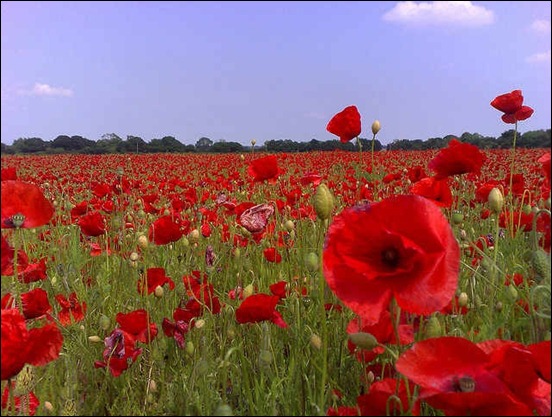
Today is Remembrance Day, also known as Veteran's Day in the US, and Armistice Day in the UK and elsewhere.

In honour of the day and the men and women who have served or suffered in war, my six sentences today are from another work in progress. Tentatively called Walking from the Soviet Union, it's the story of my father-in-law, Maurice, who was drafted into the Soviet Red Army just before Nazi Germany attacked in June 1941. A lieutenant, he commanded 12 men in an anti-tank unit. He was captured near Kharkiv, Ukraine in September, along with thousands of other troops.

This excerpt deals with his imprisonment in the POW camp called Coal Mountain.


Maurice dropped his sledgehammer and joined the lineup for supper. The sun was already down and the air was chill, but no one had enough energy to complain. They shuffled to a Luftwaffe private ladling soup from a barrel into small metal bowls. No bread, just  what the Germans called soup for the prisoners on the eastern front: fish heads floating in water. The Nazis gave the British and French prisoners on the western front twice the amount of calories daily, compared to the starvation rations for the untermenschen, the sub-human Slavs.
For more six-sentence samples, visit SixSunday.com.

Tuesday, November 06, 2012

What is writing style? Guest post by Bruce Blake

What is writing style? How important is it to readers? To writers? To a writer’s success?

I am asking authors for their thoughts on these questions.

Bruce Blake is author of the best-selling fantasy/horror novels On Unfaithful Wings and All Who Wander are Lost and founder of the Guild of Dreams fantasy writers’ collective. His latest novel is the epic fantasy Blood of the King, all available on Amazon.


Bruce, how would you describe your own writing style?

I am a big believer in Elmore Leonard's 10 Rules of Good Writing. If anyone's not familiar, included amongst these are: avoid detailed descriptions of characters, don't go into great detail describing places and things, and try to leave out the part that readers tend to skip. Those are the big three for me. I try not to waste any words. I'm a fan of many authors who are well known for their detailed descriptions (George R.R. Martin, China Mieville, etc.), but that's just not my style. I try to make every word count and use as few of them as possible. Short sentences, sharp dialogue, and I'm not afraid to throw out the odd fragment here and there.


Are there any authors whose style you admire? Do you try to emulate them?

I admire a lot of authors whose styles differ from mine and I would never attempt to emulate, like those I mentioned above, and J.R.R. Tolkien (I've often wondered how my style would be if I changed my name to Bruce R.R. Blake). I don't really try to emulate anyone, but I've been compared to Jim Butcher (I've only read one of his books) and Mike Carey. If I had to pick one novel in which the style particularly impressed me, it would have to be The Road by Cormac McCarthy. Never have sentence fragments been so powerful.


Are there authors whose writing style you dislike?

I think dislike is a strong word; there is something to take away from any writer's style. Having said that, I'm not a fan of writing that is more about the writing than it is about the characters and their story, though most writers who choose that style are far more talented than I can ever hope to be.


How important is your writing style to you? Are you happy with your style, or are there aspects of it you try to change during rewriting or editing?

I'm pretty happy with my style but, like everyone, I'm always striving to improve. Things definitely change during the rewriting and editing; that's when my style really emerges. I'm not a writer who will ever publish something as it came out during the first draft, nor will I usually even consider showing it to someone who has the ability to read. Too often, my first drafts end up being information dumps that need to be molded into shape. Sometimes they read like I was taking point-form notes during a lecture instead of writing a novel. My latest book, Blood of the King, went through about 12 drafts.


How can readers identify your writing style? Are there particular words or kinds of words that you tend to favour? Sentence structures? Or is it more in the story, the pacing or the characters?

Again, my style tends to be succinct. I pay attention to the lengths of my sentences and try to use them for maximum impact; it's not unusual for me to have sentences of only a couple of words or a paragraph that is only one word. I'm also conscious of word choices. I have a list I call “Bruce's Bad Words” that I try to weed out of my novels. It naturally includes words that signify passive constructs—like was, were and had—but it also includes words I use habitually (glance, something, moment) and what I call wishy-washy words (almost, barely, nearly). Ideally, I hope its the story, pacing and characters that help readers identify my writing. I think a truly good style should be close to invisible to any reader who is not looking for it.


Do you think your genre imposes certain restrictions on writing style?

I began writing that certain sub-genres of fantasy have requirements of style, but I did a rewrite, because that is not true. I think style is always open, but genre can impose certain tones or voices on a writer. Epic fantasy demands a different tone than urban fantasy, for instance, though the things that make up style—sentence lengths, dialogue, pacing, etc.—can remain essentially the same.


Do you think your audience responds to your writing style, consciously or unconsciously?

Yes, I do. I think that style is the thing that most readers respond to in genre writing, whether they can put their finger on what that style is or not. As I said, my goal is that my readers aren't even conscious of my style. I want it to be out of the way so my readers can concentrate on the characters and the story, not be distracted by how I tell it.


How important do you think writing style is to an author's commercial success?

Style is essential. It's what makes a novel walk and talk. A great story with interesting characters is still a laborious read when poorly written. Pacing, tone, voice, structure; all these things contribute to a reader's enjoyment of a book, and these are the elements of style (my apologies to Mr. Strunk and Mr. White). If you take a look through the one and two star reviews of any book on Amazon, you will find many “it would have been a great story if it was written by someone else” comments. If I use my magic decoder ring on that phrase, it says: “I didn't like the writer's style.”

Thank you, Bruce.

Bruce's blog is The Thoughts and Opinions of a Writer on the Rise. He is also the founder of the Guild of Dreams fantasy writers' collective. On The Guild of Dreams blog, Guild members take turns posting very interesting ideas, opinions, interviews, excerpts and lots of other stuff.

Sunday, November 04, 2012

6 Sentence Sunday to Start NaNoWriMo

Image: Creative Commons
My calendar appears faulty: it doesn't show Movember, nor NaNoWriMo. And the daily entry stubbornly displays a simple "Sunday," not “Six Sentence Sunday.”


Movember, as many of you know, is that thirty-day period between Hallowe’en and the beginning of December when men around the world grow ’staches to raise awareness of prostate cancer — and sometimes money, too. (I observe and celebrate Movember all year round.)

And is there a reader who has not heard of National Novel Writing Month, variously abbreviated as NaNoMo and NaNoWriMo? The idea is that you write a novel-length story, 50,000 words, through the same period as Movember. That’s 1,666.66 words per day. It’s a great device for getting past all the procrastination and excuses and just getting that novel done.

And of course, Six-Sentence Sunday is that tradition begun by author Sara Brookes where writers post six consecutive sentences from a published novel or work in progress onto their blog on Sunday mornings. Participants list their blog links on the 6 Sentence Sunday website. The site now posts close to 200 participants every week. It’s a great way to find new authors, and new readers — particularly those of you reading this right now who got here from that site.

As regular Written Words readers will know, I like to mash ideas together. Today, I’m combining Six Sentence Sunday, NaNoMo and the latest Written Words series on style, and presenting six sentences from my latest WIP, One Shade of Red.

Yes, you guessed right: it’s a parody of the clumsy best-seller, Fifty Shades of Gray. EL James wrote the modern woman’s sexual fantasy; just for fun, I’m going to present the modern Western man’s ultimate fantasy woman in the form of Alexis Rosse.

Don’t worry, I didn’t forget Movember: I’m writing wearing nothing but my moustache.

For my first six-sentence excerpt from this work, I present my parody on the scene in Fifty Shades where the heroine, the absurdly named Anastasia Steele, falls into the office of the equally unbelievably named Christian Grey:

The canvas bag, loaded with accessories and supplies, vomited all over the stone walk. The aluminum pole hit the ground and bounced up, smacking me in the face as I went down. I barely got one hand under my face before it hit the stone, too.

“Oh, dear! Are you all right?” said the musical voice — nothing like the buzzy squawk from the speaker by the front door.

I craned my head up. She was a dream —my dream.

Like it? Hate it? Leave a comment below, then go visit sixsunday.com for more samples!

Friday, November 02, 2012

The publishing industry death spiral


Image by Kevin Rushforth; Creative Commons licence CC-By-SA-3.0


Random House takes over Canadian publisher McClelland and Stewart.


Douglas & McIntyre files for bankruptcy protection.


Key Porter Books closes its doors.


Small, independent and iconic Ottawa bookstore Books on Beechwood closes for good.

These are just a few examples that trouble any writer, particularly one in Canada. I'm not the only one who sees them as symptoms of a deep malaise.

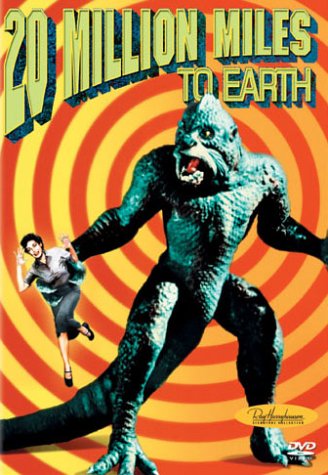
It has not been a good couple of years for traditional publishers, especially in Canada. Amazon, on the other hand, keeps growing like the creature from 20 Million Miles to Earth.

The loss of independent Canadian publishing companies is alarming. How many are left?

And with the news that Random House is merging with Penguin Publishing Group, reducing the Big Six worldwide publishers to the Big Five, the industry just becomes that much more monolithic, that much less diverse, that much less open as a means for the world to share ideas.

The real irony is that there are more books being bought, and presumably read, than ever before. Not just by a little bit, either — the e-book phenomenon has multiplied the total number of books — and incidentally, writers — by factors of magnitude.

And yet, the commercial publishing industry continues to ignore the independent authors. It’s understandable that a business will favour proven authors over risking a lot of money promoting an unknown, but today, it’s next to impossible for a new author to get a manuscript even looked at by an agent, let alone a publisher. The only new writers to get a traditional, commercial publishing contract, it seems to me, have some kind of connection to the publishing world, already.

The commercial publishing industry has not kept up with the change in the world. Publishers keep doing what they’ve always done. It’s time for some fresh ideas.

Instead, we get more work by sure-hit producers. I look forward to the next book by Cormac McCarthy or Yann Martel as much as anyone. I cannot oppose JK Rowling's move to adult-marketed fiction. But publishing a book ghost-written for Snookie or Justin Bieber is an immoral waste of resources.

The traditional publishing industry’s strategy clearly is not working. Like the mainstream political parties in the US, book publishing is disconnected from the reality most consumers live in. It sings its own praises to itself, it puts on a good show, but its members are the only ones watching.

Publishing is in a death spiral: fewer and fewer companies, fewer authors, and as publishers close down one by one, the spiral tightens. It seems the centre that it’s sinking into is denial.


Wednesday, October 31, 2012

Writing style: Interview with author Gary Henry

In my continuing quest to define the essence of writing style, I have asked a good author-friend, Gary Henry, for his thoughts.

Gary Henry
Gary’s novel American Goddesses crosses a number of genres. Set in the contemporary American Midwest, it features superheroines and spies, a little sex, a hefty dash of romance and lots of action. Combining these genres takes — well, a lot of style.

In addition, Gary has published a collection of short stories titled What Happened to Jory and Other Dark Departures, and The Moon Poem and Other Strange Jingle-Jangles, a collection of poetry. Gary also reviews independent novels on his blog, Honest Indie Book Reviews. His Twitter handle is @LiteraryGary.

How would you describe your own writing style?

I like to think of my writing style as “snappy” – using active-voice and vivid verbs to the best of my ability. I try to vary sentence length and incorporate colorful description.

Are there any authors whose style you admire? Do you try to emulate them?

John Steinbeck is my idol, but too far removed from my own skill level for me to attempt to emulate. Probably Robert E. Howard is my biggest influence. I grew up reading his lurid prose – not just “Conan the Barbarian,” but many of the stories he wrote for Weird Tales and other pulps, reprinted in later collections. “Pigeons from Hell” was a particular favorite. Thought it was the scariest thing I ever read, when I happened upon it at 10 years old. Still makes me shudder.

Are there authors whose writing style you dislike?

No one comes to mind. I invariably find something to like in everything I read. The Silmarillion by Tolkien is one book I’ve made repeated unsuccessful attempts to get through. I devoured the Lord of the Rings trilogy at an early age, however.

How important is your writing style to you? Are you happy with your style, or are there aspects of it you try to change during rewriting or editing?

My writing style is an intimate part of who I am. I’m happy with it. I know it’s good and I can technically show why. However, I understand it can still be improved. Going through my work, I still find instances of passive voice, wordiness, lame verbs and other weak areas. Punctuation, especially commas and dashes, is a particular weakness.

Two who have helped me improve my writing during rewrites and editing are Scott Bury and Melissa Foster, both masters of their craft. I’m not the only one they’ve helped, either.

How can readers identify your writing style? Are there particular words or kinds of words that you tend to favour? Sentence structures? Or is it more in the story, the pacing or the characters?

I think it would be difficult to identify me or any author just from an unfamiliar passage of writing. I try, not always successfully, to keep words to one or two syllables. I vary sentence structure and length. I try to vary pacing in the longer works. But these are things many of us attempt.

Do you think your genre imposes certain restrictions on writing style?

If so, I don’t pay attention. That’s why I bill my first novel, American Goddesses, as a “sexy superheroine paranormal romantic sci-fi fantasy thriller.” The story blithely invades the territory of multiple genres, from romance to sci-fi.

I read a few romance novels, actually, to learn the elements: The Merry-Go-Round by Donna Fasano and If We Dare to Dream by Collette Scott. They were good!

Do you think your audience responds to your writing style, consciously or unconsciously?

Hard to say. All the reviews of my novel, short stories and poems have dealt with content — plot and character — rather than writing style. I’m sure readers must respond to writing style on some level. I’ve seen nothing to support that regarding my own writing, however.

How important do you think writing style is to an author's commercial success?

There are as many writing styles as there are writers — perhaps more. There’s no question that a few styles occasionally capture the popular imagination and catapult the books to varying degrees of success. No one knows why those styles of writing hit. My guess is it’s a combination of luck, work and circumstance.

I believe we increase our odds of hitting the popular imagination by taking as many shots as we can. We can increase the odds by trying to improve our writing skills as much as possible.

In the end, there’s just no formula. Why does a demonstrably poorly written novel like Fifty Shades of Gray succeed, while many similar knock-offs, and many more far superior books don’t get off the ground? No one knows.

Trying to achieve success by imitating the style of a successful book is not something I’d recommend, On the other hand — who knows what the beast will find appetizing on any given day, at any given time?

For my part, I’ll just continue to refine my own style until it completely suits one particular beast — me.

Thank you very much, Gary.

What do you think, readers? What elements of style are important to you? Does a writer's style make a difference to your response to a book or other work? Would you buy or recommend an author solely because of his or her style?

Sunday, October 28, 2012

Hallowe’en Treat, part 4: Six spooky sentences


The ride of fear


Photo used under Creative Commons from wwarby

It’s the last Sunday before Hallowe’en, and this is the last installment of my Hallowe’en treat to readers of this blog. Don’t worry, I’ll have lots more posts in the future, including more excerpts from various works.

This six-sentence excerpt comes from Part 2 of The Bones of the Earth. Here, Javor is riding with a column of Roman Legionnaires because … well, you’ll just have to read the book for the “because” part.

At any rate, they column is riding two wide along a long, twisting forest path, when suddenly they’re attacked by something they cannot see. Their only hope is to gallop as fast as they can to the end of the path and hope …


Three times, they heard screams; three times, legionnaires at random points in the column fell to the side. But the column dared not break stride and flew along the path. Horses stumbled, but righted themselves. Men gripped their saddle horns and prayed for salvation. Javor heard nothing but thundering hooves and jangling steel, and the amulet was vibrating so hard it felt like it was on fire.

Up ahead, he could see light as the path came to some kind of clearing, but at that moment, something cold and damp clutched around his neck and yanked him from the saddle.

Want to find out what happens to Javor? Click the cover image on the right and get the whole book!

For more great six-sentence samples, visit SixSunday.com. And leave comments on every one that you visit today!