Showing posts with label writing style. Show all posts

Monday, August 18, 2014

Rules, shmules

Photo by: Scott Kleinberg, Creative Commons
Writers are always teaching me, whether they know it or not. I’ve been editing and beta-reading manuscripts for a number of people this summer, and their words make me re-evaluate some ideas I held firmly for some time. And I keep coming to the same dilemma: at what point does trimming text and adhering to the current stylistic conventions begin to trample legitimate expressions of writing style?

Every writer has heard of Elmore’ Leonard’s “Ten Rules for Good Writing.” You can Google them easily enough.

And it seems to me that the “rules” thrown around by those who claim to be publishing professionals and insiders are often contradictory. For instance, real professional authors don’t use adverbs much, if at all. I once heard an author in a radio interview claim proudly (there’s another adverb, damnit!) that he only had three or four adverbs in his whole book.

Then there’s the dilemma over dialog. “Never use a word other than ‘said’ to describe dialog,” advised Mr. Leonard. Also, never modify “said” with an adverb.

Meanwhile, I read some time ago that a large number of grade-school teachers across the US encouraged their pupils never to use “said” in their compositions. They could use “exclaimed,” “asked,” “replied,” “retorted” or anything else that made sense, but not “said.”

In providing a beta-read for a good friend’s new manuscript, I couldn’t bring myself to follow either rule. Now, there were times that I thought “said” was the right word, and I suggested that to my best-selling friend. But sometimes, as a writer, you want to describe how someone spoke. So you need either a stronger verb—which breaks Mr. Leonard’s Rule #3, or you need to describe with an adverb, which breaks rule number 4, or longer description, which breaks rule number 9 (“Don’t go into great detail describing places and things”).

Probably Leonard’s most famous rule is “Never use the words ‘suddenly’ or ‘all hell broke loose.’” Usually, it’s good advice. If something happens suddenly, then you can usually find a stronger verb to describe it.
He came in suddenly.He burst into the room.And you never need to write “it burst suddenly.” A burst is a sudden thing.
But sometimes, “suddenly” is the right word. Here’s an example from my first book, The Bones of the Earth:
[Photius’] staff was glowing white, and [Javor] suddenly understood it had been the source of the white flashes.
I suppose I could have written it differently, but this phrase most efficiently conveys the meaning to the reader—that the character understood a cause-and-effect relationship in an instant, after a period when he did not. I could have written “the glowing stick made him realize in an instant….” But that would have taken more words.

In praise of the cliché


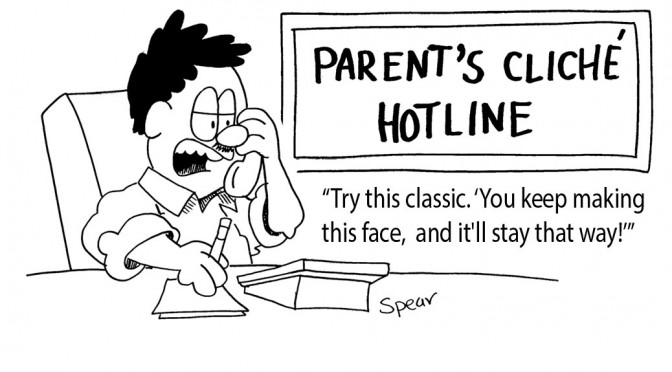
In my own writing, I try to avoid clichés (like the plague, right). For a new client, I explained that removing or replacing clichés was part of my standard level of service, and she stopped me immediately (damn, another adverb). Clichés are part of her style. They’re part of the way she speaks and she wants her little expressions in her written work, too.
 Speartoons, Inc. is licensed under aCreative Commons Attribution-NonCommercial-NoDerivs 3.0 Unported License.
That made me think about clichés, and alter my opinion. Really, they’re a form of jargon. Words can have more than one meaning, and any phrase, sentence or longer writing works on several levels. It conveys the literal message, as well as memories and associations. That’s how advertising works—by associating a word, a message or an image, or a combination of them, with positive feelings. “Buy this stuff and you’ll be happy.”

We can think of clichés as our modern social jargon. Jargon does more than convey a specific meaning within a narrow group: it identifies the speaker or writer as someone in the know, part of the club. Current slang and clichés serve the same purpose. They tell the audience that the user is up to date, part of the in crowd. Using last year’s slang is also dangerous—it tells the audience you’re out of date.

In fact, using a cliché well may be the most efficient way to achieve your communications goal: to get a particular reaction from your audience.

And the way people use quotation marks in writing, or air quotes when the say a well-used phrase, is akin to a bibliographic entry. Quotation marks essentially mean that the words they contain are not the writer’s original work, but someone else’s. The writer or speaker who uses them is giving credit, or at least, admitting they’re using another person’s expression.

Maybe there is room in the professional, credible publishing world for description, for using clichés and words other than “said.” If we all follow the same style conventions, isn’t all writing going to seem the same? Isn’t diversity what we want?

Have I blown my credibility out of the water by daring to support that pariah of the writing world, the cliché? By arguing against Elmore Leonard?

“That’s just the way I roll,” I thought suddenly.

Saturday, February 08, 2014

What do bestselling writers like to read?

Writers are inspired and informed by authors they’ve read. I asked some best-selling authors what they like to read most. This week, I’ve asked two very different authors for their opinions.

Best-selling Toby Neal is author of the Lei Crime series, set in her home state of Hawai’i; Russell Blake writes thrillers from his home in Mexico.


Name three characteristics of books that you like. What makes you keep reading a book? What are some books that you weren't able to put down until you finished them?


Toby Neal: 

I love a book with vivid characters in interesting situations most of all. I'm a voracious reader and read a variety of genres: mystery/suspense, romance, literary, memoir, sci-fi...First and foremost, the characters have to be three-dimensional and capture my interest. I also like original imagery and word choice "shaking his hand felt like grabbing a gel-filled surgical glove" is an image I remember from a new book I'm blurbing for mystery writer Thomas Matthews. Original! Memorable!  I like writing that feels confident, fresh, fast moving with a deeper message behind the outward action — and I write the kinds of books I enjoy reading.

Things I hate: 
  •     clichés
  •     formulaic plots
  •     overdescription and qualifiers: "she gasped, wailed, screeched"
  •     wandering narrative — I want to be anchored in each scene with sensory cues. New writers often launch into long dialogues that then float, unanchored, and we lose the setting 
  •     self-conscious wannabe sophistication, like no punctuation (literary can be very annoying to me).

In short, if a book has dynamic characters and solid writing, I'll read it and probably review it too!

Russell Blake: 

In fiction, I'd have to say that I look for different things depending upon my mood. When I'm in the mood for a mystery/thriller, I look for a combination of pace, plot and prose. If the pace is fast and the plot engaging I'm hooked, but if the prose does more than simply move me along, I'll be recommending the book to my friends.

I think the last book I couldn't put down was one of James Lee Burke’s — Last Car to Elysian Fields, I believe. Before that, Lawrence Block’s The Burglar Who Counted the Spoons. Although these are very different styles, I found them both fully engaging and finished them within a few days.

When I'm in the mood for literary fiction, it's all about the prose. A great example of what I'm into would be Ben Fountain’s Billy Lynn's Long Halftime Walk — quirky, unusual, but brilliant prose. Frankly, I have so little time to read these days, with my publishing schedule, I'm unlikely to have enough time to read an entire book without putting it down. But those were books I put everything aside to finish.


Do you consciously try to emulate these books? If so, what form does that take: plot, structure, characters, settings, author's voice and word choice?


Russell Blake: 

Good lord, no. There's no way I could come close to James Lee Burke’s word choice or author voice, although I aspire to at least get in the same ballpark. I'd say that I tend to ignore other authors once I sit down to write — I try to learn while I'm reading, and then forget the specifics, allowing their prose to color my perception without creating something I follow.

I don't like to deconstruct when I'm reading, and the only way I could see myself emulating with any accuracy would be if I read, deconstructed, and then deliberately set out to use what I'd analyzed, which would take all the joy out of writing for me.


Toby Neal: 

I've written ten books and a memoir. Seven of them are published with great reviews. I don't need to emulate anyone anymore, but when I started out in crime mystery/police procedural, I was emulating my "idols" Michael Connelly and Lisa Gardner and tried to "show not tell" virtually everything. My first book, Blood Orchids, is much choppier and more gritty in writing style than later works, where I found my "comfort zone" of a more descriptive style and less bad language and gritty violence. I prefer a more PG-13 level of violence, and my readers like that, too. I've also developed a series that's unique in the police procedural genre, which features a protagonist who starts out very damaged from child sexual abuse, gradually improves and recovers over the course of six books, and grows through a subplot love story that readers are crazy about!

Most of my early author idols’ protagonists remain fairly static, and that’s come to bore me as a reader. I eventually abandoned Stephanie Plum and Sue Grafton because the main character never changed. That frustrated me — perhaps because of my background as a mental health therapist, I want my characters to learn and grow over the course of the book(s). I hear repeatedly from readers that get hooked on my books that they like that, too.

Do you try to avoid any of the techniques or conventions followed by your favourite writers?


Toby Neal: 

I try to avoid being clichéd and formulaic (see above annoyance list) and if my favourite writers devolve into that zone, than yes, I not only stop letting them influence me, I stop reading them. For instance, I’m not reading Patricia Cornwell anymore because I feel like she’s obsessed with detail and her books have slowed down too much for me. I can take a class in forensics if that’s what I want, rather than reading that for pleasure!

I've become much more confident in my own voice and vision, and while I read a lot (as I said above) I try to expand my own repertoire by reading all kinds of things, including nonfiction that can inform my plots. One new "indie" mystery writer I really respect is Gae Lynn Woods. I wait for her books, and they inevitably are more gruesome and twisty than mine, with Texas local color — and I love the nested mysteries and distinctive characters she does. I also really respect Gillian Flynn for her truly original plots — but I hate her characters! All of them! And yet, they’re so bizarre and captivating I can’t stop reading. Now that’s a good book, that keeps you reading even when you want to stop.


Russell Blake: 

Every author I really like tends to have something intriguing in their use of language, but I don't think they follow specific conventions. None I'm able to deduce, at any rate. The hallmark of an effective author is the ability to mind-meld with the reader and transport them along, to put them in the same place as the characters, make them hear, see, smell, touch the world you've created. So beyond trying to do so, I can't say as I consciously avoid or advocate any one thing beyond clear communication while creating beautiful sentences.

What rules of writing do you intentionally break? 


Toby Neal: 

Point of view is my favourite area to surprise and bend the rules on readers.

I try to push out with new combinations of POV in every book. Lei Crime #6, Shattered Palms, coming out in March, is the first book I've written with only one, third-person POV.

My most innovative featured an investigator in third-person past tense, and a bad guy POV in first-person present tense. It made for a sometimes jarring reading experience, and I wanted readers to be uncomfortable — I was writing about sex trafficking and sadism, without a lot of gruesomeness. I wanted the reader to be in the head of a sociopath and see their way of seeing the world. It was challenging, but I think I pulled it off in Black Jasmine.


Russell Blake: 

Well, I don't believe that there are many actual rules, more like author preferences that have been laid out as rules by the dogmatic. In that regard, I don't much care about the proscription against adverbs in dialogue tags, nor am I afraid to open with the weather, nor do I particularly fear overwriting. So I guess you could say that while I know all the rules, I break or abide by them as the story mandates rather than out of some slavish devotion.

Thank you, Toby and Russell!


Toby Neal grew up on the island of Kauai in Hawaii. After a few stretches of “exile” to pursue education, she has made the islands her home for the last fifteen years. Toby is a mental health therapist, a career that has informed the depth and complexity of the characters in her books. Outside of work and writing, Toby volunteers and enjoys life in Hawaii through outdoor activities, including beach walking, body boarding, scuba diving, photography and hiking.

Visit her website, follow her on Twitter @tobywneal, or visit her Facebook page, LeiCrimeSeries.


 A Wall Street Journal and The Times (UK) featured author, Russell Blake is the bestselling author of twenty-five books, including the thriller novels Fatal Exchange, The Geronimo Breach, The Voynich Cypher,  Zero Sum, Silver Justice, King of Swords, Upon A Pale Horse, the Assassin series, the Delphi Chronicle trilogy, the JET series, and his latest BLACK series.

Non-fiction includes the international bestseller An Angel With Fur (animal biography) and How To Sell A Gazillion eBooks In No Time (even if drunk, high or incarcerated), a parody of all things writing-related.

Blake lives in Mexico and enjoys his dogs, fishing, boating, tequila and writing, while battling world domination by clowns.

Visit his blog, RussellBlake.com where he publishes his periodic thoughts, such as they are. Follow him on twitter @BlakeBooks.


Monday, June 10, 2013

Brevity infused with vision: Independent author Benjamin Wretlind on writing style

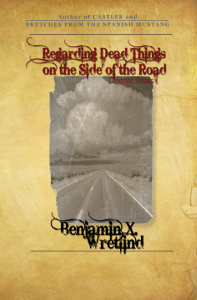
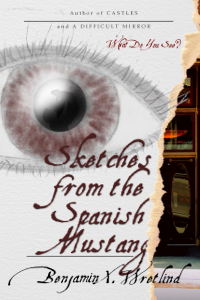
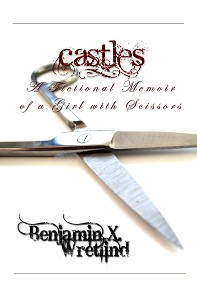
Ben Wretlind has broken new ground as an author with his novels Castles: A fictional Memoir of a Girl with Scissors and Sketches from the Spanish Mustang, and with his collection of short stories (which he wrote over several years), Regarding Dead Things on the Side of the Road.
All his writing displays a distinctive, poetic style of writing prose. I asked him about how he developed his style, and what it means.


How would you describe your own writing style?

I can't describe my own writing style any more than I can describe myself in the mirror. What I see is different from what the world sees. If there was a gun to my head, though, I might say "character-driven."

Your style has changed between what shows in the Regarding Dead Things collection and Castles: A Fictional Memoir of a Girl with Scissors. How much of that was intentional, and how much was a natural evolution? Are you happy with your style, or are there aspects of it you try to change during rewriting or editing?

We grow. Physically, of course, we grow from birth until death, but in terms of putting words on paper we grow by our experiences. If I showed you a story I'd written as an 8-year-old and one that I'd written as a 41-year old, you'd—naturally—see a shift in style. The stories written in Regarding Dead Things reflect my state of being during my twenties and thirties. Castles was written
over seven years, and in fact, I couldn't finish it until I had developed a style that was uniquely Maggie's (the main character). I had to grow to finish Maggie's story. There was nothing intentional about it.
But am I happy with it? To be happy with my style means I must have grown up, shed all of my skin, and completed my journey. I'm just not there.

What are the important elements of your style? What are you trying to achieve?

Brevity infused with vision. I want you to read what I see in my head.

Your two major works so far revolve around female characters: Maggie is the protagonist of Castles, and the stories in Sketches from the Spanish Mustang are linked by the Artist, also a woman. Why did you choose to base these stories on female characters? Did you find a special challenge in writing from a feminine point of view? Did that decision affect your writing style?

I've often said that the voice of Maggie in Castles is not my own. She "spoke" to me, and I wrote down what she said. That's my story, and I'm sticking to it. The Artist, however, was a deliberate attempt to write as a female character because I knew it would be a challenge. To "write what you know" isn't always the best option, in my opinion, because then you're never growing.

How can you expand your horizons if you're simply spouting off your own truths?

Find the truth in others, visual the quirks, feel someone else's pain for a moment and then open your eyes.

Are there any authors whose style you admire? Do you try to emulate them?

Ray Bradbury taught me more in the first chapter of The Martian Chronicles than any other writer before or since. "Rocket Summer." I haven't gotten it out of my head since I was a wee one stealing my brother's paperbacks.

Are there authors whose writing style you dislike? 

Not really. I won't say there are authors I can't read—there are many, actually—but to each his or her own. To dislike a writer's style because it is trite or flowery or morose or disjointed is akin, in my opinion, to disliking a person's face or ears or their hair cut. We all grow, and even the most accomplished writer who might be a household name grows as well. That doesn't mean I'll be able to read it, though.

How can readers identify your writing style? Are there particular words or kinds of words that you tend to favour? Sentence structures? Or is it more in the story, the pacing or the characters?

I would hope it's the characters that people relate to. If people remember me for writing character-based novels that speak directly to them (or through them), then I've achieved something.

Do you think your audience responds to your writing style, consciously or unconsciously?

Both. I want Maggie to stick with your unconscious until you're driven mad. I want the Artist to make you think consciously until you see with someone else's eyes. Audience response is really hard to gauge in 20-word reviews, but I see success and I see failure. You can't reach them all.

How important do you think writing style is to an author's commercial success?

Commercial success is a nasty thing. I've always believed, from my earliest years, that those authors who achieve commercial success are driven by outside forces to remain inside the lines. When you go outside the lines—when you grow as a writer—your success won't be possible unless the airport-novel-creating-machine wants you to be successful. Just look at a list of "Top 25 Beach Reads." Ugh. Don’t get me started. Is there a stupid virus out there?

Do you think your style will change in the future? Is there something different you would like to do in terms of style in a future book?

It'll change as we change. I can't say what the future holds in terms of style, however, but if you put that gun to my head again I would have to say I would like to write a multi-lingual novel and see just how well that's received.

Thanks, Ben!

Benjamin’s books include: Castles: A Fictional Memoir of a Girl with Scissors
Available on Amazon Sketches from the Spanish Mustang Available on Amazon
Regarding Dead Things on the Side of the Road: Collected Stories
Available on Amazon And his work in progress, Driving the Spike, is excerpted on the Guild ofDreams fantasy authors’ collective blog.  


Ben's blog is Drippings from the Mind of Me
Follow Ben on Twitter: @BXWretlind 

Wednesday, March 06, 2013

Christine Nolfi: a professional writer confident about her style

In my pursuit of the meaning and importance of writing style, this week I am turning to veteran Christine Nolfi, best-selling author of Second-Chance Grill, The Tree of Everlasting Knowledge and Treasure Me. Christine is also a founder of BestSelling Reads, a cooperative promotional group of writers of "new fiction."

Christine has definite views on the writer's style.

How would you describe your own writing style?

A combination of short, staccato sentences blended with longer, closer-to-literary passages. The combination is wholly intentional, a surefire way to evoke emotion in the reader.

Are there any authors whose style you admire? Do you try to emulate them?

I’m particularly fond of Ann Patchett’s style, but I don’t emulate her or other authors. I’ve been writing for many years. My literary voice is well established.

Are there authors whose writing style you dislike?

I dislike any prose that’s choppy, disjointed or poorly edited.

How important is your writing style to you? Are you happy with your style, or are there aspects of it you try to change during rewriting or editing?

After years of study, trial and error, critique groups, literary agents and much revision, I’m very happy with my writing style. Now when I sit down to begin a story, the entire process feels organic.

What are the important elements of your style? What are you trying to achieve?

An author receives the incalculable gift of the reader’s attention. Add in the modern world, with all the distractions and thrills of mass media, television, film — even the texting feature on your cell phone. Given all of that, I strive to create visual images on every page. Conflict rises, chapter by chapter. And I never forget to pack emotion into every sentence, and the novel’s essential structure.

Your style uses a lot of dialogue. What do you do to ensure your writing is authentic and believable?

I rehearse each scene out loud, becoming the different characters at different turns. This used to frighten my children. They’d arrive home from school to find Mom staring at the Mac and babbling dialogue. Now they’re grown and take my eccentricities in stride.

How can readers identify your writing style? Are there particular words or kinds of words that you tend to favor? Sentence structures? Or is it more in the story, the pacing or the characters?

I suspect readers first recognize my characters as something arising from Nolfi novel. Then the dialogue, which can veer from comedic to poignant in the blink of an eye. Writing style? The combination of short sentences and long passages are a dead giveaway.

Do you think your genre imposes certain restrictions on writing style?

Not at all. I write contemporary fiction, which covers the gamut of human experience. No, you’ll never find horror or erotica in my books. But you will find elements from many other genres — romance, mystery and suspense especially.

Do you think your audience responds to your writing style, consciously or unconsciously?


If fan mail carries proof, I’m sure of it. No doubt the response is both conscious and subconscious.

Why did you add discussion questions to the end of Second Chance Grill? Is this something you do with other books?


Book clubs welcome ready-made questions and I’ll probably supply them in each new release. The Tree of Everlasting Knowledge also has a discussion section. I’ll tell you, devising the right mix of questions for each book was arduous. I worried about missing important issues, or placing too much emphasis on others.

How important do you think writing style is to an author's commercial success?

I think readers in every genre have certain expectations. As an author, you must meet those expectations for any hope of success. In the case of contemporary fiction, readers demand a writing style rich in emotion, with striking visuals and deep symbolism. They don’t want a surface read. If they aren’t quickly immersed in the story and the conflict, they’ll move on to another novel.

Do you think your style will change in the future? Is there something different you would like to do in terms of style in a future book?

With each new book written, I sense my style veering closer to literary. Readers will decide if I’m making a wise decision. Someday I would like to try my hand at something different — a fantasy, perhaps, or science fiction. Or something gritty. Presently I’m editing my next two contemporary fiction releases, and will write the third installment of the Liberty Series over the summer. Perhaps I’ll find time in 2014 to try something new.

Christine Nolfi owned a small public relations firm in Cleveland, Ohio. She closed the firm after traveling to the Philippines to adopt a sibling group of four children. She has been writing novels full-time since 2004. Her debut Treasure Me is a 2012 Next Generation Indie Awards finalist. Her most recent book, Second Chance Grill was released in October 2012. Her works continue to earn high marks on GoodReads and Amazon.

You can find out more about Christine, her books and her blog at www.christinenolfi.com.

Follow Christine on Twitter @christinenolfi

Check out her GoodReads Author Page, her FaceBook Author page, and her Amazon Author page.

And don't forget to check out her books!

Second Chance Grill:
on Amazon.com 
on Amazon.ca
at Barnes & Noble
on
GoodReads.

Treasure Me — 2012 Next Generation Indie Awards Finalist
on Amazon 
at Barnes & Noble

The Tree of Everlasting Knowledge
on Amazon.com
on Amazon UK
on Barnes & Noble


Thursday, February 07, 2013

Fantastic, chatty and readable: Terry Tyler on writing style


How important is writing style for the author and the reader? This week, Terry Tyler, independent author of four (soon to be five) novels that, like most of those I enjoy most, defy genre boundaries.

How would you describe your own writing style?

In some ways this is very difficult to answer, Scott, because I’m so close to it. I can tell you how some readers describe it, ie, chatty and easily readable. A couple of people have said that I write about serious or “heavy” subjects in a light way without trivialising them, which is a compliment I treasure — I’d hate to think I came across as superficial, though I don’t really do overly deep! I suppose I can best describe my style as conversational, even during the narrative parts. Some people find my novels amusing (as opposed to laughable, one hopes!!) — any humour tends to be observational; for instance, in my most recent novel, Dream On, I have a scene where a character is forced to go onto The Jeremy Kyle Show — okay, it comes from years of watching Jeremy Kyle whilst doing the ironing — I’ve never deliberately set out to write a humorous book; sometimes, that can come across as too formulaic, too studied, to be truly funny.

Presumably, Jeremy Kyle, the UK's answer to Jerry Springer.
Image source: Wikipedia

Are there any authors whose style you admire? Do you try to emulate them?

No, I don’t try to emulate anyone (*gets all sniffy* !) — can’t see any point in that! You have to write with your own voice. I admire loads of writers’ styles, in particular Bill Bryson, Dorothy Parker, Kate Atkinson, PJ O’Rourke, Jackie Collins, Evelyn Waugh, Lauren Weisberger, William Boyd — I could go on all day, but they are many and varied, as you can probably see already!

Are there authors whose writing style you dislike?

 Never been able to get on with DH Lawrence, John Grisham, JRR Tolkien or Sebastian Faulks. That Shakespeare bloke, some of his stuff bores me witless, too ... however, I wouldn’t go as far to say that I actually dislike them; they’re just not my cup of tea. The only stuff I actively dislike is the pretentious and the badly written.

How important is your writing style to you? Are you happy with your style, or are there aspects of it you try to change during rewriting or editing?

 I’d never try to change my style; how I write is how I write. I just try to improve it all the time. When I’m rewriting/editing, I’m constantly looking for ways to phrase a sentence more tightly, more succinctly, or more vividly. Obviously there are words and phrases I overuse, for which alternatives have to be found, but I think everyone has those! I’d love to be able to write a historical novel, but I don’t think the way I write would work with such a genre. Anyway, I don’t think I’ve got the patience for the year’s research that might be necessary for writing a good one!

How can readers identify your writing style? Are there particular words or kinds of words that you tend to favour? Sentence structures? Or is it more in the story, the pacing or the characters?

Again, it’s hard to say! But I do tend towards short punchy sentences to make impact, at times, and will, occasionally, begin a sentence with an “and,” a “but” or an “or” if it feels right — so shoot me! I use something that I’ve recently discovered is called “free indirect speech,” which is when the narrative consists of the thoughts of the character, without actually writing “he thought” this and that. It’s just something I’ve always done; I didn’t realise it had a name until I read it on the blog of someone who is doing an MA in creative writing! Most of my books are written in this fashion; I change from one POV to another all the way through them.

As far as the story goes, I write about real people in real situations. All my books are very current, dealing with themes and circumstances that affect so many people today, such as divorce, infidelity, alcohol and drug abuse, diet obsession, tragic accidents, unrequited love, situations one can get into via befriending people on social networking sites, Internet dating, TV talent shows, women who want to “have it all” — you name it!

The feedback I get from most readers of my books is that my characters are like people they know. I’ve read words to this effect in many, many of my reviews, and for that I am eternally grateful. As for kinds of words — I don’t write in flowery language; I think I write in quite a spare fashion. I tend to skip-read long descriptive passages, so I don’t include them in my own work. The dialogue is always appropriate to the person who is speaking, without overdoing it — for instance, in Dream On and its sequel Full Circle I have a Geordie [north-east English — SB] character, and I have to make sure that he doesn’t say “Why aye” and “Howay” too often. I’m allergic to clichés in dialogue, and work hard to make sure that my characters talk realistically — even if it means their language is a bit ripe at times, or that they say things that are not grammatically correct!

Do you think writing with a female protagonist and POV, as opposed to a male POV, changes the style, in terms of word choice, sentence structure or other language elements?

Oh yes, of course, because women think differently from men. I think the mistake some writers make is writing the POV of their character of the opposite sex in the way they would like them to think, not how they actually do think. Have you ever read any Jeffrey Archer? His female characters are completely cardboard! But then, all people think differently, regardless of their sex, don’t they? It’s all about keeping in character when you’re writing that particular person, and not making them say or do something just because it moves the plot to the required place.

How important do you think writing style is to an author's commercial success?

I’d like to say that individual writing style is terrifically important to such, but I suspect that, sadly, this is not true; some books that are imitations of well-known authors sell very well. For instance, I sometimes think that all a writer has to do is stick a cartoon of a girl in high heels on the front cover, along with a cupcake or two and some pink swirly writing, and it doesn’t matter if the style is derivative, it’ll still sell to the huge army of avid chick-lit readers! Then there’s the ever growing erotica market — I suspect the fans of this genre are more interested in the particular area of eroticism with which the book deals than the writing style!

But style as a whole, rather than just individual? Yes, that makes a difference. You see a lot of people tweeting their books thus: “If you like John Grisham (or Sophie Kinsella/Nick Hornby/A N Other Famous Author) you’ll love.... etc etc.” Obviously the comparison with the style of an established author is seen as a way of acquiring new readers. Hey, I’m as guilty of this sort of thing the next person — I don’t compare myself to well-known writers, but if others do I will quote them in a tweet! Aside from anything else, it gives an idea of what the prospective reader might be letting him/herself in for, doesn’t it?

So I suppose my answer is yes, writing style is important to commercial success. Ideally, the writers with a style all of their own will break out and become the most successful. Ideally; but then we don’t live in an ideal world, do we?

Thank you so much for inviting me to appear on your blog, Scott! I hope this interview has been of interest to you and your readers.

Thank you, Terry, for a delightful and inspiring interview!

Terry Tyler lives in the north of England with her husband. She has four novels on Amazon, of the contemporary women's fiction variety, though she is happy to say that men read them too! Her fifth, Full Circle, will be published within the next two months, all going well. She is about to start work on her sixth, which will be explore the subject of stalking, from both the victim and the stalker's point of view, a subject she has touched upon in previous novels.

Terry's books:

You Wish

Amazon USA
Amazon Canada

Nobody's Fault

Amazon UK
Amazon USA
Amazon Canada


The Other Side


Dream On


Friday, December 21, 2012

Wodke Hawkinson on style


With six books, dozens of short stories and two blogs, the writing team of Wodke Hawkinson is widely recognized as a force in the independent author community.
Wodke Hawkinson is actually the writing team of Karen Wodke and PJ Hawkinson, two lifelong writers who, after each publishing a book on her own, teamed up to produce the thriller Betrayed, three collections of short stories, the genre-smashing Tangerine and their latest, Zeke, a novel of suspense and sexual tension.

The team not only writes in different genres, their individual works combine genres, cross genre boundaries and indeed invent whole new kinds of fiction. So naturally, I had to bring them back to Written Words to ask about their writing style.


How would you describe your own writing style?
K — I feel like we have a rather direct style of writing. We like to paint a clear picture of what’s going on (usually) and if we are vague about anything, it’s intentional. We like our books and stories to flow; we don’t want reading them to feel like work.

PJ — I agree with Karen. I personally don’t like something that hasn’t been in the story, or is barely mentioned, and then it ends up being a major part of the plot.

Are there any authors whose style you admire? Do you try to emulate them?

K - I admire so many authors; it would be hard to narrow it down. I don’t feel like we consciously emulate anyone, but I’m sure that we’ve been influenced to a degree by some of the great books we’ve read.

PJ - Again, I agree with Karen. While I don’t try to emulate other authors, I think it is nature of the beast that authors can’t help but use someone else’s techniques on occasion. After all, writing is writing, and there are only so many ways to put words to paper.

Are there authors whose writing style you dislike?

K — Without mentioning names, yes. I dislike writing that’s so verbose it’s a chore to wade through. I also dislike pretentious writing or vague writing.

PJ — Also, without mentioning names, I find some writers to be overly descriptive. There’s no reason to beat a dead horse.

How important is your writing style to you? Are you happy with your style, or are there aspects of it you try to change during rewriting or editing?

K — PJ and I have very similar writing styles and this makes collaboration easier for us. I’m pleased with our works. That said, we are always looking for ways to improve the story during editing.

PJ — Karen mentioned the similarity in our writing style but I’d like to also mention the different ways we have at looking at a situation. While we basically think the same on most things, we have also led completely different lives and thus can each bring our own points of view to the table.

How can readers identify your writing style? Are there particular words or kinds of words that you tend to favour? Sentence structures? Or is it more in the story, the pacing or the characters?

K & PJ — We’re not sure we have a style distinctive enough it could be recognized sans our name. We tend to favor an approach that carries the reader along, with just enough detail to set the scene, and with characters who may not always be likeable but act like real people in believable situations.

Do you think writing with a female protagonist and POV, as opposed to a male POV, changes the style, in terms of word choice, sentence structure or other language elements?

K — Yes. Absolutely.

Karen Wodke, left, and
PJ Hawkinson
PJ — I think it depends upon the character you are writing about. Not all females act like one and nor do all males act masculine. Writing style, word choice, and sentence structure all come together with the character, not with the gender. And in my case, I worked with mainly men for many years and believe I can see, at least to a point, their way of thinking.

Do you think your audience responds to your writing style, consciously or unconsciously?

K & PJ — It depends on the book. With a couple of our books, Zeke and Betrayed, audiences tend to have a strong response, either positive or negative. But we believe that has to do with the content (violence) more than our writing style. Not all of our works are suspense/thrillers, but the ones in that genre garner more passionate reviews.

How important do you think writing style is to an author's commercial success?

K & PJ — It could be very important. We feel that style is defined by the way an author handles the telling of the story. That would include many elements. If you gave the same exact plot to ten different writers, the tale would be told in ten entirely different ways. So style does matter. But we also have to say that sometimes the story itself is what matters. Some stories are so compelling they are able to transcend poor writing and appeal to a wide audience.

About Wodke Hawkinson and their books:

Wodke Hawkinson is the name under which writing duo PJ Hawkinson and Karen Wodke produce their collaborated works. The authors have been friends since high school, and began their co-writing partnership in 2009. Before combining forces, each completed a solo project in addition to publishing various short stories and/or articles. PJ published Half Bitten, a novel of vampire revenge and teen angst, and Karen completed her book for young readers, James Willis Makes a Million.


Both PJ and Karen attended school in Kansas. PJ graduated from Hutchinson Community College, and Karen attended HCC and Kansas Wesleyan University. Both reside in different Midwestern towns, and do much of their collaboration via telephone and the Internet. However, they have been known to discuss ideas while casting their lines at a quiet lake, as they both enjoy fishing.

Along with several short story singles, the books they have published as a team include:

Tangerine — Romance and intrigue in a future where space travel is commonplace and aliens a part of everyday life.

Betrayed — Brooklyn is taken captive during a botched carjacking. And so her nightmare begins.

Betrayed — Alternate Ending — Written especially for readers of Betrayed, this publication begins at chapter 49 of the original novel and takes the story in a completely different direction.

Zeke — A dark novel of sexual obsession and psychological suspense. How could a man who looks so good be this wicked?

Catch Her in the Rye — Selected Short Stories Volume One — Thirty-one short tales from various genres.

Blue — Selected Short Stories Volume Two — Eighteen short stories, three of which are novelette-sized. A cross-genre reading experience.

Alone — Selected Short Stories Volume Three — Eighteen genre-spanning works of short fiction that include drama, humor, sci-fi, and paranormal.

Website: http://wodke-hawkinson.com/

Readers' and fellow indie authors' site: http://findagoodbooktoread.com/

Amazon Author Page: http://www.amazon.com/Wodke-Hawkinson/e/B00572KLX2/ref=ntt_athr_dp_pel_1

Smashwords author page: http://www.smashwords.com/profile/view/wodkehawkinson

Barnes & Noble page: http://www.barnesandnoble.com/c/wodke-hawkinson

Yahoo Contributor profile: http://contributor.yahoo.com/user/1167577/wodke_hawkinson.html

Twitter ID: @WodkeHawkinson

On Facebook: http://www.facebook.com/wodke.hawkinson  


Thursday, December 13, 2012

Minimalism and action: Best-seller Seb Kirby on writing style

As soon as I started reading Seb Kirby’s Double Bind, I thought: “Yes! Here is a writer who knows how to waste no time, nor words in getting to the action.” Double Bind grabs you immediately and whips you along.


Seb's style seems to blend genres seamlessly. I wondered, "How does he do that so easily?" So naturally, I subjected the author to my interview on his writing style.

How would you describe your own writing style?

I like to write short chapters, short paragraphs, short sentences. I agree with Louise Brooks that “writing is 1 percent inspiration, and 99 percent elimination.” and with Alfred Hitchcock that “drama is life with the dull bits cut out.” I also like Blaise Pascal’s comment: “I have made this letter longer, because I have not had the time to make it shorter.” I spend a great deal of time editing (which Stephen King calls “polishing”) what I've written in order to try to live up to these views.

Are there any authors whose style you admire? Do you try to emulate them?

I discovered Ray Bradbury when a teenager. I appreciated his writing then for its strength in storytelling. I admire it now for its minimalism. This arises, I think, from the fact that Ray Bradbury wrote short stories. (Even novels like Dandelion Wine or The Martian Chronicles read like collections of short stories with a common narrative.) Then, the writing needs to be expressive but succinct. I try to write like that.

I also admire thriller writers Harlan Coben and Robert Harris. Both have a talent for creating a vivid sense of place without detracting from the plot flow that is so essential to a good thriller.

Are there authors whose writing style you dislike?

Well, I think that writing style is a very personal thing and that every author will have their own take on this. There's no right or wrong way. As W. Somerset Maugham said: “There are three rules for writing a novel. Unfortunately, no-one knows what they are.” So, I end up liking Ray Bradbury's style but I wouldn't want to dislike any writing on the basis of a style different to that. The only recent read in which I found it difficult to stick to this long held view was Cormac McCarthy's The Road, which I found stylistically annoying. But then it went on to win a Pulitzer and get turned into a successful movie, so it's clear that one person's style hate is another person's literary classic in the making.

How important is your writing style to you? Are you happy with your style, or are there aspects of it you try to change during rewriting or editing?

I'd say my writing style is still evolving. I try to set myself a formal challenge in each new story. This can be a simple thing, like “Write the whole book without using any ‘said’ attributions in the reported speech.” Or it can be something more complex, as in my second thriller, Double Bind where I set myself the challenge of writing as much of it as possible in the first person present tense. Either way, I hope that this keeps my writing fresh.

Overall, I'm a keen follower of Stephen King’s approach as set out in his On Writing. In terms of writing style, there are two of his comments that I take seriously. The first: “The road to hell is paved with adverbs.” So, where at all possible I don't use them. The second: “Any word you have to hunt for in a thesaurus is the wrong word. There are no exceptions to this rule.” I never use a dictionary or a thesaurus.

How can readers identify your writing style? Are there particular words or kinds of words that you tend to favour? Sentence structures? Or is it more in the story, the pacing or the characters?

My writing style is, then, I think, readily recognised by readers. It is often commented on in their reviews. About ten percent deduce that this writing style is poor and not for them. But a majority seem to get what I'm aiming at and say that the pace and tension of the thriller is enhanced and that enough space is allowed for the reader to make up their own mind, for example about the appearance and mannerisms of the characters. That's what makes a minimalist approach like this worthwhile.

Do you think your genre imposes certain restrictions on writing style?

There are bound to be restrictions involved in writing thrillers. After all, the main aim is to entertain and, if you're lucky, thrill. But that's good discipline. It restricts the temptation for the author to intervene too much.

Do you think your audience responds to your writing style, consciously or unconsciously?

This is a very good question that I don't know the answer to. Maybe it's something that writers don't give enough attention. Certainly it's not something that there's much room for in the writing process where the story takes on a life of its own. For a thriller writer, the issue most often becomes: “Can I really do that and make it seem consistent and believable in the context of the whole story?”

How important do you think writing style is to an author's commercial success?

Yes, it's important. To be clear, easily understandable and inspiring are worthy aims of any writer and the means with which you try to achieve this has a real influence on how successful you might be in achieving those aims. Most would say that there is a great deal of serendipity and hard work involved in whether this translates into commercial success or not. But without it, that success is much less likely.

Seb Kirby's debut novel, Take No More, has been widely acclaimed as a first-rate mystery thriller. Drawing from his love of classic books from H G Wells to Charles Dickens, he has mastered the art of storytelling. His second novel, Double Bind, is a psychological sci-fi thriller filled with twists and turns, a hallmark of Kirby's gripping imagination. A sequel to Take No More will be available in early 2013.

Find Take No More on Amazon.
Find Double Bind on Amazon.