Showing posts with label characters. Show all posts

Monday, February 17, 2014

Monday blog: What do best-selling authors read?

Creative Commons image courtesy http://bethtrissel.wordpress.com/
This week, I asked two very different writers to tell us what they look for in the books they read.
Kathleen Valentine writes a mixture of horror, humour and historical novels, novellas and stories, including The Old Mermaid’s Tale and the award-winning Depraved Heart, which could be described as paranormal romantic suspense.
Alan McDermott is the bestselling author of the Tom Gray trilogy, which has been profiled on this blog before. His writing is fast-paced, tense and explosive.
You’d expect them to have very different reactions to books, and in a sense they do — but I think that you’ll find some parallels, too.

Name three characteristics of books that you like. What makes you keep reading a book? What are some books that you weren't able to put down until you finished them?

Kathleen Valentine: The number one thing that I look for in fiction is a sympathetic character that I can care about. There seems to be a trend these days toward characters that are just awful—mean, calculating, whiny, self-absorbed. I refuse to spend time with people like that in real life so why spend time on the page with them? I want at least one character I can root for.
I'm also drawn to place. It doesn't have to be an exotic or glamorous place, just a place that I can imagine spending time in. Then, of course, comes a situation that interests me. It doesn't have to be intricately plotted but it does have to engage the characters. Writing style is also important to me. It doesn't have to be overly descriptive but I get bored with passive voice, clichéd descriptions, and repetitive word use.
Two books that I've recently read that I found hard to put down were The Orchardist and The Light Between Oceans. Both had central characters that were deeply flawed but had beautiful hearts. The settings were also mesmerizing—an orchard in a canyon and a lighthouse on an island. They were wonderful reads for me.
Alan McDermott: Easy. They must be fast-paced, full of intrigue and realistic. Like everyone else, I have my favourite authors, but I will abandon their book if I’m not being drawn in after a couple of chapters. Tom Clancy did that very well, and his books kept me mesmerised. I particularly enjoyed Rainbow Six and Red Storm Rising, books I have read more than once.

People say that a book must have a beginning, a middle and an end, but I like those which start and never let up until the last page.

Do you consciously try to emulate these books? If so, what form does that take: plot, structure, characters, settings, author's voice and word choice?
Alan McDermott: Clancy was the master at having multiple scenes going on at the same time, and he brought them together cleverly. I tried that with my first three books and was happy with the result.
Kathleen Valentine: No, not at all. I think I have a pretty distinctive voice—at least that is hat my readers tell me. I think sometimes characters in books will inspire me to want to create a character with many of the same qualities. For instance in Donna Tartt's The Secret History I was mesmerized by Henry Winter that I think parts of him have crept into a couple of my male characters.
Do you try to avoid any of the techniques or conventions followed by your favourite writers?
Kathleen Valentine: Not really. Most of my favorite writers—James Lee Burke, Dennis Lehane A.S. Byatt, Isabel Allende—have very unique voices and if I tried to emulate them it would be foolish. I do aspire to write as well but that's just a dream.
Alan McDermott: Yes, I try not to go into too much detail about surroundings and what people are wearing. If the protagonist is in the jungle, let the reader know if it’s raining or not, but don’t explain how green everything is. Okay, mention the bugs and other wildlife, but not every other page. I don’t like padding out a story for the sake of hitting a word count. I’d much rather race through and finish a book in a couple of days than spend a month getting to the climax.
What rules of writing do you intentionally break?
Alan McDermott: I think I break just about every rule there is! I know that some authors study the art of writing for years and make sure they structure their books in the “conventional” way. That’s absolutely fine, and I wouldn’t knock anyone for approaching writing in that manner.

I left high school aged 16 with a C grade in English and that’s about as far as my studies went, so for me, the only rule is: entertain the reader and make them want to come back for more!

I write my books the way I like to read them, and that means keeping the action going, and introducing new twists whenever I can. A lot of authors may criticise my books for not following all the rules, but we are living in the Internet era, where attention spans are dropping with every passing day. Folks are used to reading an article on the Internet and then moving on to the next one. If we keep producing books that don’t first grab the reader and then keep a strangle hold on them, we risk losing the next generation of readers. I’m confident that my books will stand that test of time. I’ll never win a literary award, but hopefully I’ll continue to make a living, and that’s what matters to me. Thirty thousand people have read my third book, which suggests my style of writing has already built a following.
Kathleen Valentine: I don't think I do but that's because I don't pay attention to rules in the first place. I pay attention to grammar and punctuation, etc. but writing rules? I don't think I even know of any.
Thank you for these insights, Alan and Kathleen.

Add caption
Kathleen Valentine is the author of three novels: The Old Mermaid's Tale, Each Angel Burns and Depraved Heart and numerous short stories and novellas. Her Beacon Hill Chronicles, including The Crazy Old Lady in the Attic, The Crazy Old Lady's Revenge and The Crazy Old Lady Unleashed, are Amazon Top Sellers. Her blog, KathleenValentineBlog.com, has been read by thousands of readers since its beginning in July 2005.
Her most recent work includes The Whiskey Bottle in the Wall: Secrets of Marienstadt and The Monday Night Needlework and Murder Guild. She has been listed as an Amazon Top 100 Author in Horror. She is a member of BestSelling Reads. Kathleen lives in Gloucester, Massachusetts, America's oldest seaport, and is writing every day. Her website is KathleenValentine.com

Alan McDermott is a husband, father to beautiful twin girls and a software developer from the south of England. Since 2005, he has been working as a software developer and currently creates clinical applications for the National Health Service. Alan’s writing career began in 2011 with the action thriller GrayJustice, and his subsequent Tom Gray trilogy has been picked up by Amazon division Thomas and Mercer. Alan is a fellow founding member of Independent Authors International.

Monday, June 10, 2013

Brevity infused with vision: Independent author Benjamin Wretlind on writing style

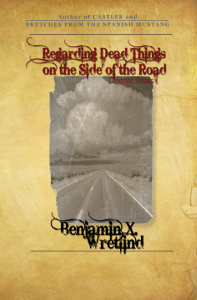
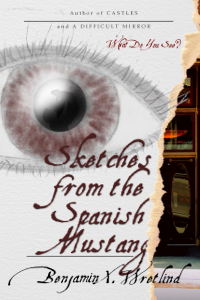
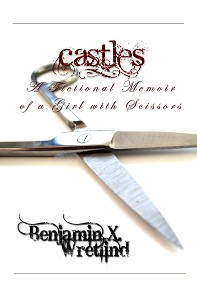
Ben Wretlind has broken new ground as an author with his novels Castles: A fictional Memoir of a Girl with Scissors and Sketches from the Spanish Mustang, and with his collection of short stories (which he wrote over several years), Regarding Dead Things on the Side of the Road.
All his writing displays a distinctive, poetic style of writing prose. I asked him about how he developed his style, and what it means.


How would you describe your own writing style?

I can't describe my own writing style any more than I can describe myself in the mirror. What I see is different from what the world sees. If there was a gun to my head, though, I might say "character-driven."

Your style has changed between what shows in the Regarding Dead Things collection and Castles: A Fictional Memoir of a Girl with Scissors. How much of that was intentional, and how much was a natural evolution? Are you happy with your style, or are there aspects of it you try to change during rewriting or editing?

We grow. Physically, of course, we grow from birth until death, but in terms of putting words on paper we grow by our experiences. If I showed you a story I'd written as an 8-year-old and one that I'd written as a 41-year old, you'd—naturally—see a shift in style. The stories written in Regarding Dead Things reflect my state of being during my twenties and thirties. Castles was written
over seven years, and in fact, I couldn't finish it until I had developed a style that was uniquely Maggie's (the main character). I had to grow to finish Maggie's story. There was nothing intentional about it.
But am I happy with it? To be happy with my style means I must have grown up, shed all of my skin, and completed my journey. I'm just not there.

What are the important elements of your style? What are you trying to achieve?

Brevity infused with vision. I want you to read what I see in my head.

Your two major works so far revolve around female characters: Maggie is the protagonist of Castles, and the stories in Sketches from the Spanish Mustang are linked by the Artist, also a woman. Why did you choose to base these stories on female characters? Did you find a special challenge in writing from a feminine point of view? Did that decision affect your writing style?

I've often said that the voice of Maggie in Castles is not my own. She "spoke" to me, and I wrote down what she said. That's my story, and I'm sticking to it. The Artist, however, was a deliberate attempt to write as a female character because I knew it would be a challenge. To "write what you know" isn't always the best option, in my opinion, because then you're never growing.

How can you expand your horizons if you're simply spouting off your own truths?

Find the truth in others, visual the quirks, feel someone else's pain for a moment and then open your eyes.

Are there any authors whose style you admire? Do you try to emulate them?

Ray Bradbury taught me more in the first chapter of The Martian Chronicles than any other writer before or since. "Rocket Summer." I haven't gotten it out of my head since I was a wee one stealing my brother's paperbacks.

Are there authors whose writing style you dislike? 

Not really. I won't say there are authors I can't read—there are many, actually—but to each his or her own. To dislike a writer's style because it is trite or flowery or morose or disjointed is akin, in my opinion, to disliking a person's face or ears or their hair cut. We all grow, and even the most accomplished writer who might be a household name grows as well. That doesn't mean I'll be able to read it, though.

How can readers identify your writing style? Are there particular words or kinds of words that you tend to favour? Sentence structures? Or is it more in the story, the pacing or the characters?

I would hope it's the characters that people relate to. If people remember me for writing character-based novels that speak directly to them (or through them), then I've achieved something.

Do you think your audience responds to your writing style, consciously or unconsciously?

Both. I want Maggie to stick with your unconscious until you're driven mad. I want the Artist to make you think consciously until you see with someone else's eyes. Audience response is really hard to gauge in 20-word reviews, but I see success and I see failure. You can't reach them all.

How important do you think writing style is to an author's commercial success?

Commercial success is a nasty thing. I've always believed, from my earliest years, that those authors who achieve commercial success are driven by outside forces to remain inside the lines. When you go outside the lines—when you grow as a writer—your success won't be possible unless the airport-novel-creating-machine wants you to be successful. Just look at a list of "Top 25 Beach Reads." Ugh. Don’t get me started. Is there a stupid virus out there?

Do you think your style will change in the future? Is there something different you would like to do in terms of style in a future book?

It'll change as we change. I can't say what the future holds in terms of style, however, but if you put that gun to my head again I would have to say I would like to write a multi-lingual novel and see just how well that's received.

Thanks, Ben!

Benjamin’s books include: Castles: A Fictional Memoir of a Girl with Scissors
Available on Amazon Sketches from the Spanish Mustang Available on Amazon
Regarding Dead Things on the Side of the Road: Collected Stories
Available on Amazon And his work in progress, Driving the Spike, is excerpted on the Guild ofDreams fantasy authors’ collective blog.  


Ben's blog is Drippings from the Mind of Me
Follow Ben on Twitter: @BXWretlind 

Monday, July 16, 2012

Three-way blog swap: How do we choose names?

This week's guest post is part of a three-way. Joe McCoubrey, former journalist and now novelist, with a book coming out very soon, writes here about naming fictional characters; my guest post is now on paranormal author Cathy Brockman's blog, and Cathy is writing for Joe. Be sure to check out these other blogs, as well as anyone else with the Master Koda badge, for some great reading. But first, read Joe's words.


How do authors come up with names for their fictional characters?


If you think about it, the average novel will introduce about 20 or 30 different characters — from the hero or heroine (and their closest friends/family) right through to all the people they need to encounter in the various twists and turns of a story.

So where does an author start the naming process?

We all do it differently, but put no less thought into coming up with names that roll off the tongue, stay memorable for the reader, and somehow capture the character we’re writing about.

Lee Child’s engrossingly enigmatic MP wouldn’t be the same if he wasn’t called Jack (just call me) Reacher, and how did Stephen Leather take an everyday kind of name like Dan Shepherd and make it resonant through a gripping series? In the latter case, Leather’s use of the nickname ‘Spider’ provided an easy alliteration that we, as readers, instantly buy into.

So where did the names come from? The secret might just be as basic as authors playing about with a list until they get one they like. By building a great character (and great stories) around the chosen names, they hope to succeed in getting the reader to identify with the overall concept in such a way that the name remains with us. Obviously, it helps if you’re a prolific author who constantly finds interesting stories for your character and therefore builds the brand through the series.

Many authors use the names of friends, either in full or by coming up with a subtle derivative. This helps not only to prepare a nice long list but also makes it easier to describe characteristics and traits if the actual person is always on the mind when writing about their fictitious alter ego. Not much good if your friends are plain John Smith (with apologies to all John Smiths)!

There are also some pitfalls to be avoided.

Let’s say an author picks a name for a character who is an eminent surgeon with a private practice in a particular city and you attribute some unsavoury or unprofessional actions to the character. Where would the author be if such a professional with that name actually existed? Unlikely? Pick a name at random, Google it and see what happens! You’ll be surprised.

By the way he or she doesn’t have to be a surgeon — the same applies to any profession, including police officers, who figure most in popular fiction.

Our literary forefathers could delve into the realms of the surreal to come up with tasty bites like Robinson Crusoe or Wilkins Micawber. And you really had to be there to understand the mind of PJ Wodehouse when he gave birth to Bertie Wooster, Watkyn Bassett, Gussie Fink-Nottle and Tuppy Glossop!!

The process, however, could be as simple as the choices faced by all parents when picking a name for their child, although in this case they have half the job done for them. There’s not much they can do about the surname but just think of the tizzy they get into trying to come up with a first name that “sings” to them when they bolt it on. The modern writer has to find both halves of the equation!

And perhaps the secret is as simple as that. Start with one half — either the first name or the surname — and then try to find a match. It would be interesting to know if Child decided first on Reacher and then added Jack, or was it the other way round?

When all’s said and done, the readers are the people who decide whether the choices we make are appropriate. So why not ask the readers? In these days of social media it would be an interesting experiment for authors to Facebook or tweet their friends/followers/fans and ask them to submit possible names for particular characters. I can just see a typical post: I’m writing about gangland criminals in London and have decided to include twins by the names of Ronnie and Reggie. Does anybody have a suggestion for a surname??


Bio

Joe McCoubrey is a former journalist turned author. His first novel, Someone Has to Pay, is being released shortly, with number two already in the bag and number three halfway there. In between, he has written a short story, "Death by Licence," which was published last month in an anthology called Action: Pulse Pounding Tales, edited by Matt Hilton. To find out more about Joe, check out the following links:


Blog: http://joemccoubrey.com/
Facebook: http://www.facebook.com/#!/joe.mccoubrey
Twitter: http://twitter.com/JoeMcCoubrey1


My contribution to the three-way is on Cathy Brockman's blog at http://cathybrockman.com/our-next-stop-on-the-tour-scott-bury/
And don't forget to visit Joe's blog to read Cathy's post!