Showing posts with label BestSelling Reads. Show all posts

Monday, May 12, 2014

What to write and what not to write? A writer’s inner fear!

Creative Commons

Guest post by Samreen Ahsan


“Start writing, no matter what. The water does not flow until the faucet is turned on.” ― Louis L'Amour

After I published my first novel, A Silent Prayer, many people around me asked what truly inspired me for writing or more precisely—what made me write? 

I never knew I was a writer until now. Those who have known me a long time also asked me if I was a born writer. I believe a person is always born with a talent—be it an artist or a musician. I don’t think there’s such thing as an inborn writing talent. Each individual in this world has a story to tell—everyone has a past, present and a future tied with emotions that make the person think, laugh, cry or contend. For writing, the basic talent you need in yourself is reading and of course, reading is an inborn talent. You cannot force anyone to be a good reader. 

“Indeed, learning to write may be part of learning to read. For all I know, writing comes out of a superior devotion to reading.”  ― Eudora Welty, On Writing

If you’re not a good reader, then you can never be a writer. Reading gives you inspiration, a whole new world from a writer’s perspective. You dive into that world, sometimes you drown yourself, sometimes you just float over it—it depends how deeply the story is being written. 

I believe there’s always an inspiration for a writer. It could be a person, his surroundings, a song, his own life or a minor incident. You just need one end of the rope and then you keep on pulling it, until you hold another end. That one end which you held first is your inspiration. 

Likewise, you can’t wait for an inspiration to write something—it comes to you. It’s just how you see it and how you perceive it. 

So back to the question I was asked after my first book—what made me write? Honestly I was never a writer (I don’t even write much blogs) but I guess my passion of reading and imagining fearlessly has driven me this way. Being a Muslim, I’ve a complete faith on my Holy book—what it has to say about the things we see and the things we don’t see. That inspired me to write about Jinn. We have read countless Jinn stories through Arabian folktales and all the readers have always found them purely fictitious. To me, it is not fiction. I wanted to create a believable fiction story. I know vampires and zombies don’t exist but I truly believe that the Jinn exist, just like angels—the only thing is they’re hidden from us—and that’s what Jinn means. So I started researching on this strange creature and for a few months (during my writing), there was only one activity in my life (besides writing)—read, read and read. 

The Djinn by maeshanne via Creative Commons.
It’s a very common myth among Muslims that the more you try to dig about the Jinn, the more they try to approach you. To some, it was hard for them to believe that I picked a topic out of the word of God and crafted a romantic story from of an Islamic concept—a religion which has always been a part of controversy and extremism. Some even asked me if I’ve actually encountered anyone of them. Really, it makes me laugh sometimes. I wrote because I didn’t fear anyone. I wanted my imagination to take a flight and see where it lands. I’ve been hearing this myth since my childhood. If I had feared and believed in that myth, I wouldn’t have written anything at all. Reading made me fearless.

One thing that I’ve learned in my journey of writing is—avoid self-doubt on your story. Always think it is unique and it would hopefully grab a reader. If you doubt on your own fantasy, others won’t appreciate it either. Self-trust and self-confidence is the prime step. Once you start writing, don’t stop yourself fearing if your idea is sellable or not, if others would like it or not. There are always risks in everything so take the risk and let your imagination fly out of your mind. 

Your imagination should not have any strings pulling it back. It should take a flight like a bird, not like a kite. The worst chances are obviously the failure but that should never stop you from writing. It is not necessary that if one person doesn’t like your idea, others won’t. Every brain works differently. Some people find white not to be a colour, but some find happiness in white. 

If you write something just because you want to make money out of it, trust me, it would always lack passion as the fear of failure would come through your words. 

So always write when you are fearless!

Samreen Ahsan is an author of award-winning romance fiction, A Prayer Series, which include A Silent Prayer and A Prayer Heeded. She is a member of BestSelling Reads, and the winner of the Best Romance in 2014 Los Angeles Book Festival.

Follow Samreen on Twitter @samauthorcanada


Monday, April 21, 2014

Ocean of Fear: A geeky thriller that I could not put down

Author Helen Hanson describes her writing as “thrillers for geeks”

There’s a certain geek factor in all thrillers. Many thriller authors write loving descriptions of cars, guns, bullets, bombs, or bullets. I have read several descriptions by different authors about how a bullet bounces around inside a skull and precisely what it does to a human brain.

But I actually enjoyed the geek factor in Ocean of Fear. Hanson made the geeky-technical aspects integral not only to the plot, but also to one of the main characters. 

What makes a good thriller?

To make a thrill, an author needs to build tension. The readers have to care enough about the characters and believe the situation enough to say “Oh no, don’t do that! You shouldn’t have done that!”

When the tension snaps, the author has to surprise you. It’s not a thrill when you know what’s going to happen

There are a lot of those moments in Ocean of Fear.

Plot points

Like any good thriller, Ocean of Fear begins with a murder. Baxter Cruise (character names are not this author’s strong suit), a grad-school dropout turned email spammer, discovers UC Santa Cruz professor, Dr. Allesandra Bisch, dead in her office. Baxter’s employer, Professor Sydney Mantis, had given Baxter a flash drive and asked him to give it personally to Dr. Bisch, as well as to look after his, Mantis’s dog while he suddenly had to leave town for a few days.

The mystery is not who killed Dr. Bisch — the author introduces the assassin in Chapter 2. The mystery is why, and the tension rises as the main investigator, FBI Special Agent Claudia Seagal, puts the pieces of the puzzle together, and as Baxter gets pulled deeper and deeper into the trap laid for Dr. Mantis. 

Hanson knows how to ramp up a story by taking it in unexpected directions. It turns out that the professors, Bisch and Mantis, were developing robotic submarines for drug dealers to use to smuggle their product into the US. Special Agent Seagal. This is the geek factor: Hanson tells us enough about robotics and remote control to make the story work, so that we understand that this story just could not happen without this technical detail. However, she never gives too much, never bores us with technical factoids that we don’t need. Every word is a plot point.

Engaging and critical backstories

Despite their unfortunate names, the characters have interesting backstories. Hanson is also skilled at not drowning the reader in long information dumps, but revealing details about Claudia’s deceased husband, Baxter’s dead parents, Mantis’s habit of seducing students, even the bad guys’ back stories as they’re needed. Readers begin to feel for the characters, to hope that their plans work out. The sibling rivalry between the two main baddies really rang true.

Two weaknesses

There are only two weaknesses with this story. First, there are the character names. The author shows us in Chapter 1 that “Dr. Bisch” is an intentional joke, but then there are all the animal names: Dr. Mantis, Agent Seagall. I don’t know if this was an intentional gag, but while there are some humorous moments in the book, it’s not overall a comedy. It’s a thriller that takes engaging, believable characters on an exhilarating ride to an explosive and satisfying conclusion.

The other weakness was the cover. It’s professionally done, but maybe a little too clichéd. It gave away too much of the story, instead of making me want to open the book.

But those are minor flaws. In the end, Ocean of Fear is a good, satisfying read from a skilled author.

4 *.

Visit Helen Hanson's website and blog and learn about her books.


Thursday, April 10, 2014

Think strategically

Creative Commons

On Saturday, April 12, I’ll be showing my paperback books at the Canadian Author Association’s first-ever Book Fest.

If things go right, I may even do some live blogging from there. And if you come, we may even have a chance to meet face-to-face! I know I’m excited about it.

I look at events like this more as chances to network with other writers, readers and book enthusiasts, rather than as a place to sell product. But let’s face it, authors are all trying to sell their work. As my Internet friend and fellow author Russell Blake likes to point out, writing books may be art, but selling them is business. And in that frame of mind, I am re-presenting a blog post that I originally wrote for the Guild of Dreams blog.

Thinking of authors as business people

The book field is an extremely competitive, fast-moving market. If any of us hope to carve out the slightest sliver of presence in it, we’re going to have to recognize it as a marketplace and ourselves as sellers of products. Marketers. Business people.

The authors who sell the most books treat their activity as a business.

I have to admit I’m not the greatest business type person in the world. But over the past couple of decades that I’ve been selling my words, I have learned that you’re a lot more likely to succeed at something if you have a detailed strategy to achieve it.

If you’re a writer (or anything else, for that matter), think strategically about your career. Set some realistic, if ambitious, and measurable goals. (Check out George Doran’s SMART project management approach.)

These should not be just a number of book sales. Your strategy has to list a lot of specific steps that will help you achieve your goal. What will you do to increase sales? When will you write your next book, who will review it, edit it, design the cover, take care of the production of an e-book or a paperback?

What is your promotion plan? How will you contact book reviewers? What is your social media plan? What will you do on Facebook, how frequently will you tweet, what will you do to increase your number of followers on Goodreads?

A collaboration challenge

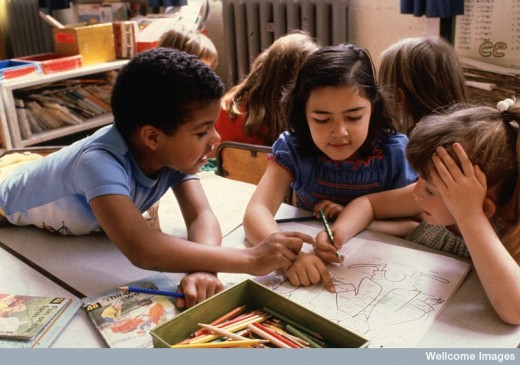
As individuals, we don’t have the ability to make much noise. But if we work together, strategically, we can have a lot more impact with a lot less effort.

Regular readers know that I am a big believer in authors (and other artists) working together, sharing skills and leveraging collective efforts. I participate in group sales and in professional organizations like Independent Authors International and Bestselling Reads.

Credit: Anthea Sieveking/ Wellcome Images
My challenge to all my readers who are also writers or other artists is to come together, not just in a mutual support and admiration group, but in a strategic one. Contribute your particular skills and take the advice of others who know about their specialties.

Collectively, we can devise an effective strategy to raise our profiles, improve the quality of our work and sell more books.

Want to get involved? Tell me about it or offer your time, expertise and effort in the comments, or send me an email (you can find it here if you look).

Thursday, March 13, 2014

Book launch: Toby's Neal's newest Lei Crime mystery — Shattered Palms


Bestseller Toby Neal has just launched her sixth Lei Crime novel. I asked her how she has changed as an author since she launched the first novel, Blood Orchids, in 2011.
I know my characters so well now that dialogue really flows—banter between Lei and her partner, Pono, interdepartmental meetings with Captain Omura, therapeutic phone calls with Dr. Wilson, Lei's therapist, interviewing and depositions in different settings that are part of the investigation, and most of all, scenes between my protagonist, Lei, and her fiance Michael Stevens. Their bumpy romance began in book one and culminates with a possible wedding in this book!  
I also have the steps and "rules" of a police investigation fairly well memorized, so plotting the scenes of the book is easy compared to when I first started writing police procedural and had no idea how police actually went about investigating. Now, hundreds of hours later, with friends and fans in police circles training, coaching, and reviewing my work, I actually think I could be a helpful addition to a homicide investigation, with my psychology background. 
I also have confidence now that I didn't have then. Confidence that, even though I don't know what the "twist" at the end of my book will be, my brain will come up with one by the time I need it. Confidence that, whether everyone "gets" it or not, I'm doing a good thing with these books by shining an entertaining light on current society and Hawaii issues. Confidence that I can write a first draft within three months and get four books out in a year. Confidence that  I can breathe life into even small characters, like the hippie lady with dreadlocks in the lime green Prius who helps Lei in Shattered Palms.  
I have confidence I can give readers what they want, leave them satisfied and yet hungry for more—and to me, that's successful storytelling. 
Thanks for the friendship and support, Scott!Aloha
So, what's Shattered Palms about?

Maui is lush mountains, cloud forest and exquisite birdsong—but for Detective Lei Texeira, arrows break that peace.

Someone is stalking poachers that are capturing Maui’s rarest birds, and Lei pursues the case with her usual leap-first, look-later style—but will she be able to catch a killer, save the birds, and still make it to her own wedding? Shattered Palms is a roller coaster ride from the top of Haleakala to the beach and back again, with extinction at stake.

“Toby Neal creates a captivating balance of the beauty of the islands contrasted with the ugliness of murder, and complicated by the trials of Lei’s personal life. A must-read for Neal fans.” — Thomas K. Matthews, author of Rejection.


You can get it NOW on Amazon. 

Best-selling author Toby Neal was raised on the Hawaiian island of Kauai, where she lives today after “stretches of exile” to pursue education. A mental health therapist, Toby credits that career with adding depth to the characters in the Lei Crime Series. She is a member of BestSelling Reads. 

Visit 
  • her BestSelling Reads Author page
  • her website and
  • her blog.

Thursday, February 20, 2014

The SAVING RAINE blog tour: Excerpt

The master of the thriller, Frederick Lee Brooke, stepped boldly into a new genre with his fourth novel, Saving Raine. Written Words joins the blog tour with Excerpt 2 — but first, what's this book about?
It’s 2021, and personal drones are a fixture of daily life, but due to constant upheavals food is scarce. Rival militias, the terrorist group March22, and draconian restrictions on travel complicate the task for 19-year-old Matt Carney as he starts a harrowing road trip filled with deadly obstacles, including Predator drones raining down homeland security missiles, to save his girlfriend, Raine.

Excerpt 2: 

“Can I send out a couple of drones?” Benjy asked quietly. The captain gave a quick nod, his hand on the wheel, watching his instruments and the river at the same time. The mate stood on the bow, keeping watch.

Matt followed Benjy and watched him launch the Tornados. “One upriver, the other downriver,” Benjy said. “Just for the heck of it.”

The sounds of the engine were damped so low, you could hear the water slapping against the steel hull. The eerie quiet and steady breeze made it a pleasant journey. They were crossing the Mississippi. The river was only two miles wide here, but he felt a thousand miles closer to Raine already. 

Matt felt a thrill once again at the memory of that bluebird he’d chanced to see this morning, that brilliant flash of blue. Suddenly he remembered the last time he’d seen a bluebird. It had happened the day he’d met Raine, while walking in that stretch of forest on the west side of Chicago. How could he have forgotten?
A few minutes later, when Benjy walked purposefully over to the captain to show him something, Matt followed, curious.

“What would this be?”

The captain studied the image of a vibration pattern for a few seconds, then gave a start. “Where is that Tornado?”

“Four hundred yards upriver.”

“Shit, why don’t I see it?” The captain wasn’t whispering now. He shoved the twin throttles forward, causing the engines to roar. The captain looked terrified. He stared intently out the window on his side, and Matt looked with him. Nothing but the breeze, the moon, and stars.


Then Matt spied it. A bow wave, some hundred yards to their right, heading straight toward them. He saw the wave, but no boat. 

“Bow wave upriver,” the captain said. “They’ve got image cancellation. Invisible till they’re on top of you. Good thing your drone picked up the signature.” 

“It’s got to be US military,” Benjy said. “What do we do?”

“We’re not going to make it,” the captain said. The oncoming craft suddenly resolved into a fully visible behemoth of three barges lashed side-by-side. Their little car ferry was actually almost far enough across to narrowly miss being run down. Matt thought the captain might be overly pessimistic.

The middle of the third barge cut through the water some twenty yards upriver, heading straight for them. That barge had to be fifty feet wide. But they were running at full throttle. The Mylar net jumped in the water behind them, no longer covering the wake as they ran at maximum speed.

“Why don’t they stop?” Benjy cried.

“Couldn’t stop if they wanted to. Momentum,” the captain shouted.

Matt stood at the stern rail and watched as the towering bow of the oncoming barge rose over them. The starboard edge of the barge sliced through the water, almost upon them. By some miracle, a distance of three feet separated the steel prow of the barge from the rear fender of their craft as it hurtled into their wake. The cutting edge of the barge chewed up the Mylar net like tissue paper. The ferry bounced in the churning water like a rubber toy, but the captain maintained control as they sped away from the barge.

“Got any weapons?” the captain shouted. “Better break ’em out.”

The loss of the Mylar net made the wake light up in the water like a movie screen. Fish leapt from the water behind them. Their big silver bodies glistened in the spotlights from the barge. Then the spotlights locked on their boat. Matt ran to the car and jammed a clip into the AR-15.

When the first shots came, he was ready.

“Two shooters, one in the corner, the other fifty yards up,” Benjy reported. He was studying the action on his Jetlink, crouched on the floor. All of a sudden the windows of the main cabin exploded, sending glass flying.

Matt let out a burst at the man in the corner. The shooting stopped from that position. Either the man had taken cover, or he was dead. The soldiers stood up there with no cover at all. Arrogant bastards. He focused on the second man and let out a second burst. Searching in the scope, he saw no more faces. Over the roar of the engine he heard Benjy’s voice.


“You got both, Matt, but the captain’s hit! Damn it, I need you in here now!”

Follow the blog tour


Enter the Rafflecopter for a Kindle Fire or PaperWhite (winner's choice), $75 Amazon gift card and full set of Brooke's Annie Ogden series
a Rafflecopter giveaway

Who is Frederick Lee Brooke?


Frederick Lee Brooke launched the Annie Ogden Mystery Series in 2011 with Doing Max Vinyl and following with Zombie Candy in 2012, a book that is neither about zombies nor sweets. The third mystery in the series, Collateral Damage, appeared in 2013. Saving Raine, the first book in Fred’s entirely new series, The Drone Wars, appeared in December, 2013.

A resident of Switzerland, Fred has worked as a teacher, language school manager and school owner. He has three boys and two cats and recently had to learn how to operate both washing machine and dryer. He makes frequent trips back to his native Chicago.

When not writing or doing the washing, Fred can be found walking along the banks of the Rhine River, sitting in a local cafe, or visiting all the local pubs in search of his lost umbrella.

Frederick Brooke is a member of Best-Selling Reads and Independent Authors International.

Follow him on Twitter @frederickbrooke or on Facebook.  

Visit his: 


Wednesday, February 05, 2014

Independent novel review: An Unlikely Goddess by Mohanalakshmi Rajakumar


Unlike most independent authors, Mohanalakshmi Rajakumar, known on Twitter as @Moha_Doha, eschews genre writing. Her novels include elements of romance, but they do not follow the conventional girl-meets-boy story.

An Unlikely Goddess is mainstream literature, and you can even look at it as part of the stream of books about the Indian immigrant experience, along with Rohinton Mistry and Michael Ondaatje. 

The story

The novel follows Sita from her birth in India. Her mother, Mythili, and the whole family are bitterly disappointed that her first born child is a girl. “What if he leaves me?” is her first thought after seeing her daughter. Mythili’s sister-in-law, Priya, drops the new-born on the hospital floor.

Sita’s life doesn’t get better after that. Her parents, Mythili and Sundar, never fail to remind Sita of how much she disappoints them throughout her life. This gets worse after Mythili gives birth to a boy, Manoj. 

When Mythili is still a young child, the family emigrates to Florida, of all places, where Sundar gets a perpetually temporary job as a researcher in a university. But Sundar never manages to get a promotion or even a permanent position, so he is never able to afford much of a lifestyle. He and his family can only look enviously at the success and socio-economic climb of other Indian immigrants as they move to large suburban homes and buy expensive cars.

What I liked

Characterization is the main strength of An Unlikely Goddess. Not only do we see the action through Sita’s eyes, Rajakumar’s prose enables us to experience an entire world through Sita — especially her conflicted feelings toward her parents.

The secondary characters are also well-developed, and they grow believably, too. Mythili gradually becomes aware of the subservience she’d been socialized to accept, and begins to develop some independence from her husband. Sundar goes through several stages of anger and resentment, blaming his family for his own career failures, but finally begins to mellow and even accept his daughter’s untraditional desires.

The only weak part is the last love interest, Richard. He’s just too good to be true — but then, after everything that the author has put her main character through, she deserves a really great guy.

Professional style

Mohanalakshmi Rajakumar is a prolific and professional independent author. An Unlikely Goddess is her eighth book, and her bibliography includes novels, story collections, anthologies and non-fiction.

An Unlikely Goddess is well written, well edited and has a professionally designed cover. The author’s style is clean and easy to read. Rajakumar is another independent author who reinforces the point that the commercial publishers have no monopoly on quality.

5*****

Find An Unlikely Goddess on Amazon

Visit her website and blog

Friday, November 01, 2013

My Presidential address

Today, I am proud to say that I take on the Presidency of BestSellingReads, a collective of “new fiction” authors. My thanks to Frederick Lee Brooke for being such an inspiring and capable President and blazing a path for me.

BestSelling Reads is an organization of writers of fiction and non-fiction who know the value of teamwork. Each member has a track record of producing quality books that regularly top best-seller lists, win awards and earn high reviews.

Above all, BestSelling Reads' site is a place to discover new, exciting, excellent books by some of the best new writing talent there is.

The group represents a broad range of writers working in many genres — everything from romance to thriller, science fiction to mainstream literature.

You may recognize some of the names: Shannon Mayer, Andy Holloman, Rachel Thompson, Patricia Sands ... authors with books near the top of their genres. And I’ve found every one of them to be helpful, kind, and downright smart. They’re some of the best writers I’ve ever read, too.

Regular readers know how I believe in independent writers working in concert to produce and promote books without the interference of a commercial publisher. Together, we can perform all the functions of a publishing company and achieve or exceed the standards of any Toronto, New York or London company — and leave control, and the rewards, in the hands of the author. BestSelling Reads is very effective at the function I find most difficult: marketing and promotion.

I was flattered to be invited to join at the beginning of the year; I’ve participated in a number of giveaways and other promotions, contributed to the blog and been interviewed on their Internet radio show. It’s been rewarding, and I’ve seen a couple of spikes in sales of my books.

Right now, BestSelling Reads is having another contest. You could win signed books of your choice from member authors of your choice — that’s right, real, physical books with covers and paper and everything. But don’t delay — the contest closes on November 3!

http://www.bestsellingreads.com/win-signed-books-october-giveaway/

Check it out, dear readers: take a look at the authors on the website, read the blog, and enter the contest. Leave some comments, too.

And remember: when you want a great read, you'll find a wealth of choice at BestSelling Reads.


Friday, October 18, 2013

Win signed books from BestSelling authors


BestSelling Reads authors are doing it again — giving away a virtual boxed set of five  signed paperbacks in the BSR October giveaway. 

How does it work? From BSR's own blog: 
The grand prize winner gets to choose a total of five titles, choosing from all the books available by BSR member authors. Five titles from one author, or mix and match with one title each from five different authors. Plus a $50 Amazon gift card to add even more titles to your shelf!
Second prize is a virtual boxed set of three signed paperbacks plus a $20 Amazon gift card. Eight runner-up winners will receive one signed paperback of their choice by any BSR member author plus a $10 Amazon gift card. 
To enter, visit BestSelling Reads' blog at BestSellingReads.com and enter the Rafflecopter.

Good luck!

Wednesday, October 16, 2013

Cover reveal: the newest novel by New Fiction author Mohanalakshmi Rajakumar

An Unlikely Goddess 

launched October 14, 2013. From Mohanalakshmi Rajakumar, winner of the SheWrites New Novelist Award, 2011


…The Hindu goddess, Sita, is said to have been born from the Earth.
King Janaka discovers the beautiful infant and in her beauty, believes in her divinity. He raises her as his own daughter……

A coming of age story, An Unlikely Goddess centres on Sita, the daughter of South Asian immigrants, growing up in all the wrong places. From Hinduism to Christianity, Brad to Naren, she's looking for love but gets anything but.

Excerpt:

Unlike her namesake, Sita's first mistake was being born.
     A girl, her mother thought, eyes dark in abject terror. What if he leaves me? She swallowed, increasing the dryness in her post-delivery mouth, the stiches across her abdomen itching. No water. Only ice chips until her bowels passed the tests. Mythili pressed back against the pillows. She closed her eyes, pushing her fingers into the sockets until the darkness was punctuated by bone-white stars. She wished she could as easily tune out the gurgles of the baby in the bassinet beside her.
Yet, even premature and unwanted, Sita was obliviously happy to enter the world, beaming her infant smile at anyone or anything she saw: the nurse, her aunt, her mother's back, the noxiously-pink cement walls of the Madras hospital in which she found herself. Several pounds underweight, she was otherwise fine—a petite, brown-skinned baby with tufts of black hair crowning a smooth scalp. How could she be expected to know that from her first breath she was, and always would be, a living reminder of her mother's failure to produce a first-born male heir?
       Though swaddled and placed in the bassinet immediately after delivery, her eyes were alive with motion. She blinked up at the faces of passersby, but they were admittedly few, so instead, she followed the blinking lights, the creeping shadows and the occasional appearance of a nurse. Everything about the world kept her busy with delight until sleep washed over her little body.
“Look at that smile,” the young nurse said, cradling Sita against her flat bosom.
“Aamam,” Priya, the childless aunt, agreed, rubbing a forefinger across the baby’s somewhat wrinkly face.
Instead of replying, Mythili, Sita’s mother, pulled a see-through blue sheet up to her chin and turned her face away.

You can buy An Unlikely Goddess now from Amazon: http://www.amazon.com/dp/B00FVSP82Q


About the author

Mohana is the modern mother, writer, wife. If you tell her something interesting, it's fair game for a blog post or her next novel. With eight e-books, two kids and a PhD, she's got a lot to say. 


Wednesday, September 11, 2013

Conveying emotion while avoiding cliché: Rachel Thompson on style


This edition of Written Words turns to Rachel Thompson, author of A Walk in the Snark, The Mancode: Exposed and most recently, Broken Pieces. She has graciously agreed to answer my pesky questions about writing style.

How would you describe your own writing style?

I've always been fascinated by writers who can express themselves with the least amount of words, yet still lyrically. That's why I'm such a fan of Hemingway. I tend to write in shorter sentences, with as few words as possible. 

You made a major shift between your first two books, The Mancode Exposed and A Walk in the Snark, and your third, Broken Pieces, in terms of subject matter and tone. Do you also think you wrote differently? Do you think your use of language changed?

The topics of male/female relationships are still there, and I'm still nonfiction, but yes, the tone is radically different. After writing the first two humor books, I found myself returning again and again to the childhood sexual abuse I experienced as a child and had never spoken or written about. It just seemed like it was time.

Are there any authors whose style you admire? Do you try to emulate them?

I hated Hemingway when I was younger, but very much appreciate his style now. I admire Hanuki Murakami immensely. John Irving and Pat Conroy also, for their ability to tell wonderful stories with rich characters. I'm enjoying more poetry now, especially by Dylan Thomas and Pablo Neruda. I enjoy David Sedaris very much. I'm also a huge advocate for women, and read as many female writers as I can. Those who influence me are Virginia Wolff, Lorrie Moore, Anne Rice's earlier works and Margaret Atwood — love her work. And indie authors like Christine Nolfi, Steena Holmes, and Terri Guiliano Long are extremely talented. 

Are there authors whose writing style you dislike?

It's interesting — I've attempted to read House of Leaves (by Mark Z. Danielewski) several times and just can't get through it. I'm very process-oriented and linear. That book is crazy. It's on my To Do list, though. :) 

How important is your writing style to you? Are you happy with your style, or are there aspects of it you try to change during rewriting or editing?

I do like my style. I find I work best with a loose structural outline (for example, “trust” or “love” as topics) and then I just let my mind go. It seems to work well with poetic structure in particular. I'm playing with sonnets right now. I tend to write in past tense more than I'd like. 

How can readers identify your writing style? Are there particular words or kinds of words that you tend to favour? Sentence structures? Or is it more in the story, the pacing or the characters?

As a nonfiction writer, I'm fascinated endlessly by the psychology of relationships, so I tend to use words that convey emotion, while avoiding clichés (e.g. heart, soul), which can be difficult! Avoiding cliché is a huge deal for me. With regard to pacing, in this past book I was struggling with the structure and how it lent itself to pacing. My brilliant editor, Jessica Swift, suggested I don't get mired in the structure while I was writing — rather, allow the pieces to go where they led me. This ended up working quite well and it's how we ended up structuring the book.

Meaning, it's not: essay, poem, prose; essay, poem, prose. It's whatever felt right for each section.

Do you think your audience responds to your writing style, consciously or unconsciously?

I do. We're taught to be chronological thinkers, but emotions don't conveniently fit into that neat little timeline. So with this book, I present it in pieces (as the title implies) so the reader will feel the same discomfort I did as I lived them. Even a 1-star review that complains about disliking the “disjointedness” of the book's structure is a win for me since that’s exactly what I wanted.

How important do you think writing style is to an author's commercial success?

I wish I had an easy answer. I had no idea people would respond to this book the way they have. Sometimes I read a NYTimes bestseller and think, “really?” So I suppose my answer is that yes, style does contribute, but we as authors also have to connect with readers at an emotional level for the work to resonate.


Where do you see yourself going creatively next? Tell us about your work in progress. What can your readers expect from RachelintheOC?

My social media book for authors (Let's Deconstruct! is the tentative title) is with my editor. We should be done with that process by October and I hope to release in November. I've started writing the next in the Broken series, titled Broken Places. I was hoping to release by December but we shall see — I'm thinking more spring of next year at this point. I don't want to rush it. And I recently signed with Booktrope to create the print version of Broken Pieces. That should be out in October or November also. 

Thanks, Rachel in the oh-see!

Thank you!

Rachel Thompson (aka RachelintheOC) is a bestselling author and social media/author marketing consultant. She is a founding member of the BestSelling Reads association of writers of new fiction.
Her three books, A Walk In The Snark, The Mancode: Exposed and Broken Pieces are all #1 Kindle bestsellers and garner five-star reviews from fans and professional reviewers alike.
When not writing, she helps authors and other professionals with branding and social media through her company, BadRedhead Media. Her articles appear regularly in the San Francisco Book Review (BadRedhead Says…), 12Most.com, bitrebels.com, and BookPromotion.com.
While she did live in “the OC” — Orange County, California, Rachel and family moved to Northern California in 2012 to be closer to family and friends — but really, because her family was tired of her burnt food and Rachel’s mom is a great cook.
She hates walks in the rain, running out of coffee, and coconut.

Find Rachel Thompson online: 

Email RachelintheOC(at)gmail.com
Website: rachelintheoc.com
Consulting company: BadRedhead Media 


Facebook 

Twitter 
Rachel: @RachelintheOC
Business: @BadRedheadMedia

LinkedIn

Goodreads  


Wednesday, August 21, 2013

Cover reveal: Martha Bourke's Deadly Call


Deep in the shadows of Boston, Massachusetts, the Order—a secret brotherhood of New Breed warriors—is all that stands between a takeover by shifter supremacists.

Diesel, the most charismatic of the brothers, exudes a love for life all the while carrying a terrible burden. A veteran of the Iraq War, he is haunted by the traumatic events of a single night. Poisoned by shame and certain he is cursed, Diesel fears he is a danger to everyone around him.

Helen, the Order’s stunning and gifted surgeon, has a few demons of her own. Even as she and Diesel give in to the deepest pleasures of the mating call, something still holds her back. Destiny threatens to divide them, until, in the midst of unimaginable tragedy, they must banish the ghosts of the past to save their future.

Deadly Call launches Thursday, August 22.


About the author 

Martha Bourke grew up in Burlington, Vermont, a magical place where street art meets cosmopolitan sensibilities meet nature. She is an accomplished teacher who has spent the last fifteen years creating Spanish-language programs for elementary schools and travelling extensively. For most of her life, she has had a fascination with foreign languages, culture, and mythology – a passion that colours and enriches the world of Jaguar Sun, which now comprises two series, Jaguar Sun and New Breed.

Martha and her husband of fifteen years have carved out their own little piece of Vermont in the Massachusetts countryside. When not writing, she loves spending time with her animals, listening to good music, thrifting, and adding to her Converse collection.

You can see all her books on her website, MarthaBourke.com. 
follow her on Twitter @Martha_Bourke 
and like her on Facebook: facebook.com/marthabourkeauthor


Wednesday, March 06, 2013

Christine Nolfi: a professional writer confident about her style

In my pursuit of the meaning and importance of writing style, this week I am turning to veteran Christine Nolfi, best-selling author of Second-Chance Grill, The Tree of Everlasting Knowledge and Treasure Me. Christine is also a founder of BestSelling Reads, a cooperative promotional group of writers of "new fiction."

Christine has definite views on the writer's style.

How would you describe your own writing style?

A combination of short, staccato sentences blended with longer, closer-to-literary passages. The combination is wholly intentional, a surefire way to evoke emotion in the reader.

Are there any authors whose style you admire? Do you try to emulate them?

I’m particularly fond of Ann Patchett’s style, but I don’t emulate her or other authors. I’ve been writing for many years. My literary voice is well established.

Are there authors whose writing style you dislike?

I dislike any prose that’s choppy, disjointed or poorly edited.

How important is your writing style to you? Are you happy with your style, or are there aspects of it you try to change during rewriting or editing?

After years of study, trial and error, critique groups, literary agents and much revision, I’m very happy with my writing style. Now when I sit down to begin a story, the entire process feels organic.

What are the important elements of your style? What are you trying to achieve?

An author receives the incalculable gift of the reader’s attention. Add in the modern world, with all the distractions and thrills of mass media, television, film — even the texting feature on your cell phone. Given all of that, I strive to create visual images on every page. Conflict rises, chapter by chapter. And I never forget to pack emotion into every sentence, and the novel’s essential structure.

Your style uses a lot of dialogue. What do you do to ensure your writing is authentic and believable?

I rehearse each scene out loud, becoming the different characters at different turns. This used to frighten my children. They’d arrive home from school to find Mom staring at the Mac and babbling dialogue. Now they’re grown and take my eccentricities in stride.

How can readers identify your writing style? Are there particular words or kinds of words that you tend to favor? Sentence structures? Or is it more in the story, the pacing or the characters?

I suspect readers first recognize my characters as something arising from Nolfi novel. Then the dialogue, which can veer from comedic to poignant in the blink of an eye. Writing style? The combination of short sentences and long passages are a dead giveaway.

Do you think your genre imposes certain restrictions on writing style?

Not at all. I write contemporary fiction, which covers the gamut of human experience. No, you’ll never find horror or erotica in my books. But you will find elements from many other genres — romance, mystery and suspense especially.

Do you think your audience responds to your writing style, consciously or unconsciously?


If fan mail carries proof, I’m sure of it. No doubt the response is both conscious and subconscious.

Why did you add discussion questions to the end of Second Chance Grill? Is this something you do with other books?


Book clubs welcome ready-made questions and I’ll probably supply them in each new release. The Tree of Everlasting Knowledge also has a discussion section. I’ll tell you, devising the right mix of questions for each book was arduous. I worried about missing important issues, or placing too much emphasis on others.

How important do you think writing style is to an author's commercial success?

I think readers in every genre have certain expectations. As an author, you must meet those expectations for any hope of success. In the case of contemporary fiction, readers demand a writing style rich in emotion, with striking visuals and deep symbolism. They don’t want a surface read. If they aren’t quickly immersed in the story and the conflict, they’ll move on to another novel.

Do you think your style will change in the future? Is there something different you would like to do in terms of style in a future book?

With each new book written, I sense my style veering closer to literary. Readers will decide if I’m making a wise decision. Someday I would like to try my hand at something different — a fantasy, perhaps, or science fiction. Or something gritty. Presently I’m editing my next two contemporary fiction releases, and will write the third installment of the Liberty Series over the summer. Perhaps I’ll find time in 2014 to try something new.

Christine Nolfi owned a small public relations firm in Cleveland, Ohio. She closed the firm after traveling to the Philippines to adopt a sibling group of four children. She has been writing novels full-time since 2004. Her debut Treasure Me is a 2012 Next Generation Indie Awards finalist. Her most recent book, Second Chance Grill was released in October 2012. Her works continue to earn high marks on GoodReads and Amazon.

You can find out more about Christine, her books and her blog at www.christinenolfi.com.

Follow Christine on Twitter @christinenolfi

Check out her GoodReads Author Page, her FaceBook Author page, and her Amazon Author page.

And don't forget to check out her books!

Second Chance Grill:
on Amazon.com 
on Amazon.ca
at Barnes & Noble
on
GoodReads.

Treasure Me — 2012 Next Generation Indie Awards Finalist
on Amazon 
at Barnes & Noble

The Tree of Everlasting Knowledge
on Amazon.com
on Amazon UK
on Barnes & Noble