Friday, June 07, 2013

Cover reveal: Rule of Fire by Autumn Birt

Rule of Fire launches on the solstice: June 21, and you can see the fantastic cover here, right now!


 Six friends stand alone against the combined Orders of Fire, Water, Air, and Earth, protecting a girl whose forbidden abilities have condemn her to death. Now they are joined by a man who was once the Curse, the Church's most powerful weapon and Ria's greatest threat. Left with no name and no memory, the decision to aid this stranger will cost friendships and more as the group of friends journey north to seek a tribe of people lost to time amid an ancient war. The path home is riddled with dangers as the Church of Four Orders still seeks Ria and the former Water Priestess Nirine. For one High Priest, the desire for vengeance is personal.

Ria must unravel the mysteries of her power to find acceptance in a world where her abilities are considered a taint. Is the strange gift of magic an aberration that should be destroyed or something far more, related to the skills held by the Elementals who rule Myrrah?

The sequel to Born of Water, Rule of Fire is book 2 in the epic fantasy trilogy, the Rise of the Fifth Order. Return to the world of Myrrah ruled by the Church of Four Orders. Release is scheduled for June 21st!

Learn more about the world of Myrrah and book 1, Born of Water, on Autumn’s blog, Weifarer’s Wandering

About the author

Autumn Birt is an indie author with two other books currently available: the adventure fantasy novel Born of Water and Born of Water’s Novel Companion. The sequel is scheduled for release in June of 2013. She has plans for many more novels. Check out Weifarer’s Wandering and her Facebook page for updates.
She is also a travel and fiction writer currently based in Maine, where she lives in a yurt with her husband and lovable Cairn Terriers. Her work is featured on the adventure travel website, No Map Nomads, where she is the co-editor and writer (and also known as Weifarer). On her writing blog,  Weifarer’s Wandering, she opines about the fun and trials of being a writer as well as upcoming releases.

Autumn is also a member of Guild of Dreams, which features her blog posts as well as those of eleven other fantasy writers.

With a Bachelor of Arts degree from Bucknell University in Studio Arts and English, Autumn once considered a career in illustration. After a few years of selling paintings while working as the manager of a gallery and custom framing store, a party and fine gifts store in Virginia, working retail at a gourmet kitchen store, being the head embroiderer at a college clothing store, and finally waitressing for a year, she decided to head back to University. After two years of intense science courses, this career path change led to a Master of Science degree in Ecology and Environmental Sciences from the University of Maine in Orono. Since graduating with her M.S., Autumn has worked for the USDA Natural Resources Conservation Service.

A wanderer at heart, Autumn’s desire to travel has led her to France while still in high school, a year abroad in Manchester, UK which led to excursions in Wales, Scotland, Ireland and around many parts of England, and more recent trips with family to Mexico (both the Pacific and Gulf of Mexico sides), US Virgin Islands, British Virgin Islands, Bahamas, Spain, Gibraltar, Morocco, Costa Rica, Saba, Barbados, St. Lucia, St. Maarten, and four Canadian provinces. She has plans for many further adventures both real and fictional.

Connect with Autumn online:

Wednesday, June 05, 2013

Now out: the third Cassidy Jones Adventure


One of my favourite middle-grade adventure superheroes is Cassidy Jones. The brainchild of independent author Elise Stokes, Cassidy Jones became a hit about a year and half ago, when a middle school in the US took Stokes’ debut novel, Cassidy Jones and the Secret Formula, as a school project. And now, you can enter a Rafflecopter contest to win all three e-books: Win ALL THREE Cassidy Jones books! Just enter this Rafflecopter: Rafflecopter giveaway.

I know I’m not the intended audience for Cassidy Jones, but I was impressed by the sheer quality of the writing. Stokes is a writer who clearly loves the language and has the skill to use it to create interesting, believable characters in compelling situations. She knows plot and pacing and how to describe action and setting, and when to leave the description to the readers’ imagination.

The follow-up novel, Cassidy Jones and Vulcan’s Gift, took the story to greater strengths, developing the secondary characters more along with Cassidy herself, and filling in some enticing details about Cassidy’s mysterious neighbour—and catalyst in turning Cassidy into a superhero.

Now, the third book in the series is out: Cassidy Jones and the Seventh Attendant. What’s it about?


Some Secrets Are Better Left Buried…

When the mysterious Gavin Phillips returns to Seattle after a prolonged and unexplained absence, he threatens to expose fifteen-year-old Cassidy Jones’s incredible secret: she is a superhero. But his presence is far more sinister than she realizes, for it soon becomes apparent that his hidden agenda holds a dark and dangerous intent that will unleash an unparalleled evil upon an unsuspecting world. Can Cassidy stop him before all is lost?
For your entertainment, here’s a sample:

A police car screamed past me as I veered off Fifth Avenue and into an alley. Sirens came from every direction on their way to the museum. I ran until I was sure no one was pursuing me and slid into the shadows of a doorway to assess the damage. A small cry of panic tore from my throat when I saw the ravaged costume, spotted with blood. I had been shot so many times, it was a miracle I hadn’t been cut in half.

“No, no, no, no,” I chanted, worming a trembling finger into a bullet hole. Due to the hardness of my skin, I couldn’t feel anything through my numbed fingertips, so I ripped away the costume and lifted the black tank underneath, exposing my stomach, which was peppered with bullets. They reminded me of corks lodged in wine bottles. Small amounts of blood burbled up around the bullets, as if they plugged a dam.

Tears of relief smarted my eyes. This was one of those rare occasions when I was grateful to be a mutant.


“It’s going to be okay. These can be removed. I’ll heal.” I dried my eyes with my forearm and suddenly realized I couldn’t hear Emery in the earpiece, nor the background noise of the coffeehouse. We had somehow lost our phone connection. I retrieved my phone and punched the speed dial.

“Are you all right?” Emery answered. The sounds of sirens,the museum’s alarm, talking, shouting, and a police officer on a megaphone flowed through the receiver along with his voice. “Cassidy,” he said again when I didn’t answer.


“I don’t know what to do.” I wiped back a sudden flood of tears with the tattered sleeve of my mummy costume. “My head’s scrambled. I can’t think straight.”


“Do you know where you are?”

“Yeah.” I glanced around. “No. I’m not sure. It’s weird that I can’t feel any pain. I should feel pain.”

“Cassidy, listen carefully,” Emery said slowly and calmly,which meant he wasn’t calm at all. “You’re only four blocks from Riley’s office—”

“How do you know—” I began to ask, then remembered GPS. I struck my forehead with my palm in an attempt to clear the haze.

“You’ll be fine,” Emery soothed. “I’ll take care of you. Please concentrate.”

He explained how to get to the back of Riley’s building through alleys, avoiding the main streets. I would have known this if I could think properly.


“There are a lot of people on the streets now, so take care not to be seen. I’m only two blocks away from Riley’s office. I’ll let you in through the emergency exit in back. Everything will be fine, Cassidy. This is almost over. Repeat back to me everything I just told you.”

I tried but couldn’t. The bullets felt heavy in my stomach. A horrifying thought struck me: What if my skin suddenly softens and the bullets get swallowed up in my flesh?

“Hurry, Emery.” I disconnected the call and shot toward the street. We need to get these bullets out of me!


At the street, I looked around, recognizing where I was—or believing I did. Spying an alley, I ran across the street toward it, leaping over a parked car. I saw two men and a woman in the alley ahead. One man held a switchblade to the other man’s throat while the woman riffled through his pockets. I moved so fast, none of them saw me until the mugger with the switchblade was yanked off his feet by the back of his jacket collar.


“Help!” he screamed as I dragged him behind me, arms flailing, boot heels bumping along the asphalt.


I emerged from the alley into a street bustling with activity and flung the mugger toward an oncoming police car. Lights flashing,siren blaring, the police car screeched to a halt and the mugger hit the hood,tumbling over it with the switchblade still gripped in his hand.


I jammed the cell phone between my teeth and took a flying leap at the nearest building, catching a windowsill on the second floor. I scaled the protruding bricks as swiftly as a spider scurrying up a wall and heaved myself over the ledge and onto the roof. Pausing to catch my breath, I spat the phone into my hand and looked down. A small crowd had gathered below to gape at me.


The dazed mugger, sprawled atop the police car, dropped his switchblade, which clattered across the hood and onto the asphalt. The officer in the passenger’s seat stared up at me with a radio microphone to his mouth,but his lips weren’t moving, as if he were at a loss about how to call in what he had just witnessed.

Get Cassidy Jones and the Seventh Attendant at:

Amazon USA

BONUS:


Sunday, June 02, 2013

Sample Sunday: The heat is on

The heat is on. Summer is here in Ottawa. Even though I'm spending a lot of this weekend in cold water, the air is heavy and thick with moisture.
This week's sample is from my erotic romantic comedy, One Shade of Red. Most of you already know that it's a spoof of the biggest bestseller, 50 Shades ... you know the one I mean.

In this excerpt, the hero, Damian, is working outdoors during the hottest summer in Toronto's history. And this is before the mayoral-crack scandal.


Seeing a man working in the hot sun does something to some women ... at least, we men in the hot sun hope so.


By the end of the third week, I had Mrs. Casales’ pool and deck looking much better. In fact, they looked great.

For no reason I could define, I had gone well beyond pool cleaning. I had cleaned the inside of the pool and scraped out all the slime and goop, vacuumed the accumulated dust out of the bottom and cleared the skimmers until they looked new.

Every time I had come, I had scrubbed the concrete pool deck. I even went to far as to bring clippers from my parents’ tool shed and hack back the overgrown hedges so that they would not drop so many leaves into the pool. I told myself that I was only making my work easier for myself in the long run, but my brain did not believe me.

Mrs. Casales obliged me by exclaiming how much better her whole back yard looked every time I finished. Occasionally, her two little kids, a boy and girl, both under 10 years old, would scamper in and wait impatiently when I told them they had to wait after I poured in the chlorine. “The water’s not good for swimming yet,” I said every time. “You’ll have to wait at least an hour.” They would stand at the side of the pool, bouncing on the balls of their feet, until one would think of something else to do and they’d chase each other across the yard or into the house.

Mrs. Casales always came out with iced tea or lemonade when I was done, and we’d sit at her patio set and chat about the pool-cleaning business, or the upcoming university year, or sometimes about her kids.

She seemed cheerful enough when we talked, but she never mentioned a husband. I remembered what Alexis had said about her marriage breaking up, but I did not know how to ask her about that without risking spoiling her mood.

At the end of the third week, the sixth time I had cleaned the pool, deck and the back yard in general, I took a deep breath and surveyed my handiwork. Part of my brain demanded to know why I had gone so far beyond pool cleaning, and another part of my brain refused to admit why.

Mrs. Casales came out of the kitchen with two bottles of Heineken. No children were in sight. “The water is perfectly balanced today, Mrs. Casales, so the kids can come swimming right away,” I said as I took a bottle from her hand.

“The kids are at their cousin’s this afternoon. We’re alone today,” she said and took a sip of her beer. “And call me Leda.”

On that hot afternoon, cold beer went down like salvation. I could feel heat radiating off my skin. I pressed the cold bottle against my hot forehead, relishing the ache it caused.

We sat at her squeaky, unsteady patio table. I stretched my legs in front of me. Mrs. Casales’ — Leda’s — pool was the last on my itinerary, and the day seemed to be going in an excellent direction.

I looked at her; she was wearing a thin cover-up over a two-piece bathing suit. I watched her neck pulse as she drank more beer. She had tied her crazy hair with one of those scrunchie things that girls like. “Thanks for the beer.”

She wasn’t bad looking, I thought. A little overweight, but that gave her nice curves. She was no Alexis, but to borrow Patrick’s tired joke, I wouldn’t kick her out of bed for eating cookies.

“Thank you, Damian, for doing such a great job. I appreciate how you’ve gone well beyond the pool cleaner’s job description. I did notice the way you trimmed the bushes and neatened up the whole yard.” She patted my knee and moved a little closer toward me.

“It was just to keep so many leaves and branches from falling into the pool,” I said. “So it made my own job a little easier.”

“Nonsense. You were trying to make me happier. And I truly appreciate that, Damian. Really, I do. And I should pay you back. One good turn deserves another.”

“No, no, the payment is what it is. We agreed. A deal is a deal.”

“Then, I should pay you back in some other way.” She looked right into my eyes.

My mouth felt dry, and pouring more beer into it did not help.

“Do you always work with your shirt off?” she said, and I suddenly felt conscious of my bare chest.

“Just when it’s this hot...”

I could not finish answering her because her mouth pressed against mine.   One Shade of Red is an erotic comedy e-book, available from Amazon, Smashwords, Barnes & Noble, Kobo, the iTunes bookstore and other e-retailers.

Thursday, May 30, 2013

Is there still a role for the commercial publisher?


“The global electronic marketplace is rapidly depleting authors’ income streams,” wrote Scott Turow, author and President of the Authors Guild., in an op-ed in the New York Times in April. E-books, pirated copies and changes to copyright laws will cause the “slow death of the American author.”
Photo: Evan Long by Creative Commons
Turow documents the futile efforts of the big publishing companies to control the e-book phenomenon, through doing things like fixing their prices ridiculously high, refusing to sell e-books to libraries and reducing the royalties they pay to authors.
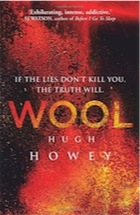
On the other end of the spectrum, Hugh Howey, author of the indie-pub phenomenon Wool, says that the self-publishing future is great for writers: “Those who take their writing seriously, who publish more than one title a year and do this year after year, are finding real success with their art. They are earning hundreds or thousands of dollars a month,” he wrote in Salon
Following these two statements, we have to ask: when readers choose good books without the intermediation of a publisher, is there a market for the gigantic, multinational Big Six — or “Bix” — publishers?
I have written about this on a couple of other blogs: Writers Get Together, the Guild of Dreams and BestSellingReads. Today, I’m bringing the arguments together and suggesting a new solution.

The legendary legacy

E-books are the driving force of publishing these days. Amazon reported that more than half of its sales are of e-books. And David Gaughran estimates that 25 percent of the e-book market is by independent authors.
The Bix claim to be agents of quality control: they find the best manuscripts, edit them rigourously, design and lay them out to be legible, print and distribute them so that readers enjoy reading them and promote them to bring them to the attention of audiences. Publishers take care of all those grimy aspects of publishing so authors are free to write more great books.
The Bix claim that they also provide an essential gatekeeping function. When the numbers of independent authors self-publishing e-books started climbing, the commercial publishers said that the self-published just weren't good enough to get published by a commercial publisher.
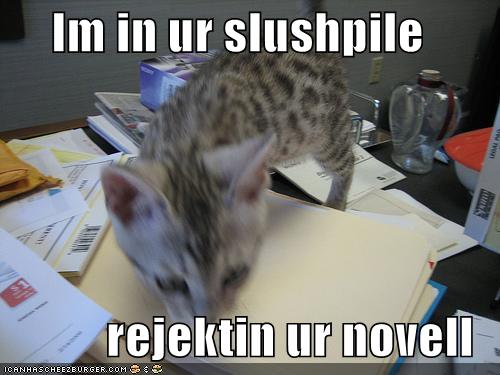
All those manuscripts that didn't make it out of the slush pile? The publisher sent their authors polite rejection letters, saying not that the manuscript is crap, but that it "didn't meet their needs at this time."
LOLcat built from original photo by sutefani in orlando,
under a Creative Commons-Attribution license by way of Flickr
Having worked for big and small publishers, here is what I know about the reality of choosing and editing books:
  • Acquisitions editors and agents choose manuscripts to publish based on sellability, not on quality. Because they cannot tell the future any better than you or me, they use factors like whether an author has been published before to make decisions. Getting selected from the slush pile is due either to blind luck or — usually — connections within the industry.
  • The quality of editing varies widely. Most copy-editors and proofreaders are right out of university and they’re so badly underpaid that most quickly seek more rewarding employment.
In reality, authors today do most of what publishers did 20 years ago: research, check facts, write, edit, copy-edit and proofread. Interior design or layout is capably handled by word processing apps. Howey and any number of other authors concur that most authors published by big companies have to do their own promotion. The days of book launch tours are long gone. Bix publishers only spend money to promote their sure-fire winners: their biggest sellers and celebrity authors.
The only money they shell out for new writers and relative unknowns, even for their mid-list authors, are for printing and distributing copies to bookstores.
But it’s not hard for the individual author to handle that part, as well. Software does most of the layout and production of e-books. Smashwords, Amazon and iTunes give step-by-step instructions on how to create a good e-book. Amazon’s CreateSpace system does the same for printed books. Their quality is equal to or better than commercial publishers’, and their prices are better than anything I’ve found in 30 years of managing printing.
That leaves cover design. More on that later.

The independent reality


Hugh Howey, from his website.
Hugh Howey, compares the self-published independent author to the independent musician. “We admire anyone who learns the grammar of chords and then strings these phrases together into music.” They begin by playing cover tunes, progress to busking and open-mic nights, get small gigs and hope to open for a big act or be discovered by a major label. “This is how artists are born. They are self-made.”
Like a musician, Howey became an overnight success after years of hard work. His breakthrough, best-selling novel, Wool, was the eighth or ninth title that he published through Amazon’s Kindle Select program. After he sold half a million copies, Simon & Schuster offered seven figures for the publishing rights. Ridley Scott optioned film rights.
According to Forbes magazine, Howey turned down S&S’s original seven-figure offer. Instead, he sold just the print rights for six figures, keeping the e-book rights for himself because he thinks that S&S won’t be able to sell enough to make up the royalty difference.

Proposing a new publishing model

Writers can, and do. perform all the functions of a commercial publisher. In other words, authors don’t need publishers.
I suggest a cooperative model of publishing, where authors, editors, designers and marketers work together to bring new electronic or print books to audiences with as little intermediation as possible.
(Image found on Ted Landphair's America blog, originally from whiteafrican, Flickr Creative Commons)

Many of you readers already know about the authors’ cooperative I belong to, Independent Authors International. With 13 members so far, it’s a consortium of writers who commit to supporting each other in development, production and promotion of each other’s work.
My latest book, One Shade of Red, is a good example of the process. Once I had written and re-written the manuscript, I turned it over to another iAi member, Gary Henry, independent author of American Goddesses. He performed the story editor function, pointing out where I needed to develop a character more, plot errors, purple prose and weak writing.
Cinta Garcia de la Rosa, author of The Funny Adventures of Little Nani, performed a second review. Bruce Blake, author of the Khirro’s Journey trilogy, and Benjamin Wretlind, author of Sketches from the Spanish Mustang, plus my usual editor, my wife, Roxanne Bury, provided copy-editing and proofreading.
David C. Cassidy, author of Velvet Rain, designed a fantastic cover.
In return, I edited or will edit their books, or will provide other services. I also do what I can to promote their books on Twitter, Facebook, Google+ and LinkedIn, and through my blog.
This service swap or barter exchange need not be the only way for this to work; authors could pay editors and designers cash, or provide a royalty, or come to other arrangements.
The point is, there are thousands of people with the skills needed to produce professional books. These skills are not locked down by publishing companies in London, New York and Toronto.
With this model, while the author retain control of the book and the money it earns (if any), the book still achieves the quality standard the Bix companies like to say they’re all about. The iAi colophon is a symbol of that standard.
Will iAi and other co-operative ventures replace the Bix? They’re big companies with a lot of assets. But they’re going to have to learn to adapt to the new reality, rather than fight against it.
Hugh Howey is right: this is a great time to be an author.
If you’re an author, I encourage you to check out Independent Authors International. And if you think you’d like to get involved, send an email.

Sunday, May 26, 2013

Sample Sunday: An argument with the girlfriend

Despite the weather, summer is coming fast. So for this week's Sample Sunday, here's an excerpt from my hot summer novel, One Shade of Red. This one introduces the reader to the hero's long-time girlfriend, the girl next door: Kristen.
 
Image: Angry Girlfriend by jasonippolitoLicensed under Creative Commons


Argument with Kristen

“Well, look who’s here. Hello, stranger.” Kristen’s voice had that clipped sneer in it. She folded her arms across her chest.
I put on my best smile and held out the flowers from the grocery store. “I finally got the bank account straightened out. Wanna have something to eat and hang out?”

It had taken a week of text messages, emails and a fax between me, Nick and the bank before the bank would give me access to the Pool Geeks account. I could deposit the cheques as well as take money out. So, finally, I wasn’t paying for the privilege of working. The first thing I did with the access was take out a hundred bucks to take my girlfriend out.

Kristen couldn’t suppress her smile when I held the flowers under her nose, although she tried to. Finally, she took the bunch and sniffed. “Well, since you brought flowers ... Where are we going?” She looked up at me, blue eyes shining through the flowers. Her mouth slowly spread into a smile.
“Why not Mama Toni’s? And my parents are away for the weekend, so I got a DVD.”

Kristen pretended to think about it for about two seconds. “Let me put these in some water.”

I stepped inside her house — her parents’ house — and waited like I had so many times before. Mrs. Petri came out of the kitchen, wiping her hands on a towel. “Oh, hello Damian,” she said. “Why don’t you sit down?”

My breath caught whenever I saw Mrs. Petri — even after all these years. She was the neighbourhood beauty: tall and fit with bright blue eyes that she had passed on to her daughter. Her hair was done up high, exposing her long neck, and she wore a sleeveless t-shirt and short pants. I wondered why she always showed more skin than her teenaged daughter.

I followed her to the kitchen and sat at the table; I knew from experience not to sit on the “good furniture” in the living room. Mrs. Petri poured me a cup of tea from the pot that was always filled. “Would you like a cookie?”

I took one from the plate in the middle of the table. Mrs. Petri baked regularly, and I loved her cookies. That’s how I first made friends with Kristen. When I was five, I was in a bunch of kids who came over to the Petris’ to play. I went back for the cookies. Through school, Kristen and I alternated coming over to each other’s houses for homework and other activities. I preferred being at her place, sitting at her mother’s kitchen table and munching on cookies. Those cookies were all that got me through long division in Grade 3 and A Separate Peace in high school.

I ate three cookies before Kristen returned from upstairs, dressed in her going-out-for-cheap-dinner clothes: khaki pants, a scoop-neck blouse and sensible shoes. She had tied her long, straight brown hair into a pony-tail. Kristen resembled her mother in her blue eyes and symmetrical, delicate features, but she was smaller, shorter. She was like a pretty doll: perfect and fragile. The prettiest girl in my grade, she was more for looking at than holding.

“Thanks for the cookies, Mrs. Petri,” I said as Kristen pulled me to the front door.
Mr. Petri came in from the garage at that point. “Where are you going?” he asked.

“I’m taking your daughter out for dinner and a movie,” I answered as cheerfully as I could, but I dreaded the response I knew was coming.
“You know you’ll never save money for university if you keep eating in restaurants,” he said. “A boy your age who lives on his own should know how to cook for himself.”

“Oh, Daddy,” Kristen said, pulling me out the front door.

“It’s alright, Mr. Petri,” I said, trying to sound casual and relaxed. Short but with broad shoulders and muscles that rippled in his lower arms, Mr. Petri always made me feel nervous and inadequate. Come to think of it, so did his daughter.
“I just got paid by three different customers.”

I knew what he was going to say next: “You should save that money in a bank. You never know what you might need tomorrow.”

“Oh, Daddy,” Kristen repeated and pulled me out the door.

“Be sure to have her home by midnight!” Mr. Petri called after us. And of course, it took three attempts to get my car started as Kristen’s father watched us from his front porch. By the time I could pull away from the curb, my face was burning.

Kristen and I could never agree on Mama Toni’s restaurant : I thought it was expensive; she thought it was cheap. Of course, she never paid for the food. She thought it was a quaint little place with mementos and pictures from Italy and New York on the walls; I pointed out that it was part of a chain and was owned by a foodservice corporation in Philadelphia. But we both liked the food and I liked to show off just a little by drinking Italian beer — which cost over seven bucks a bottle.

Hell with it: I felt the pool-cleaning cash burning a hole in my pocket.

Kristen ate about a quarter of her plate of pasta; she refused wine on principle and sneered at me every time I took a sip of my Moretti.

“So where are your parents tonight?” she asked while we waited for the bill.
“Up at the cottage for the weekend.”

“Why didn’t you go with them?”

“I don’t live with them anymore, Kristen. I’m a grown-up now. So are you. Besides, this way we have their whole house to ourselves.”

She narrowed her eyes at me. “I thought you said you didn’t live with them anymore.” She sipped her water delicately. Even though she could be judgemental and fucking annoying, she was very pretty in a delicate, little-girl way. A little too thin, maybe. She’d like it if I said that. She worked hard to keep her weight down.

“I do have a key to the front door. So we can watch the 50-inch plasma in full theatre-surround sound.”

She dabbed her lips with her napkin, then folded it carefully to cover the food left on her plate, as if she couldn’t bear to look at it anymore. “What DVD did you get?”

Fight Club.

“What? Why?”

“Hey, it’s the perfect couples movie.” I had been waiting all day to say this. “For the ladies, Brad Pitt gets naked. For the men, big, fat, ugly guys beat him up. What more could you ask for?”

I thought it was pretty funny. I still do.

What did you think? Leave a comment!

One Shade of Red is available on 

Wednesday, May 22, 2013

Independent novel review: Dark Prairies by RS Guthrie

Dark Prairies, Guthrie’s third novel is a departure from the pattern he established in Black Beast and LOST. They’re horror/supernatural tales crossed with cop mystery-thrillers. Dark Prairies is a mystery about a cop, but the only category that it’s fair to put this into would have to be “literary fiction.”

Guthrie calls this book his “magnum opus,” and his care and passion for the story are evident.
As always, he has brought all his considerable writing ability and professionalism to make a true master work.

Plot summary

Dark Prairies begins when small-town sheriff James Pruett finds out his wife has been murdered, shot outside her father’s ranch house. He quickly finds the murderer, his brother-in-law, in the town bar, and arrests him with no argument.

That’s the beginning of an unusual mystery story: the question is not “whodunnit,” but why Ty McIntyre killed his sister, Pruett’s wife, Bethy. Pruett, the chief policeman in the tiny Wyoming town of Wind River, is the one who has to lead the investigation into his own wife’s death. The conflicts of interest are tangled among legal, social and family ties, and the tension between Pruett and his in-laws is obvious from the start. Pruett also struggles with the natural urge for summary revenge. This is one of the best passages in the book.

The story shifts to Pruett’s estranged daughter, Wendy, in university. She begins a love affair with JW Hanson, professor of law and history, partly motivated by her wish to have him defend her Uncle Ty.
As Pruett investigates the case, we learn much about the history of Wyoming and the often murderous struggles over land, including the Johnson County War (brought to the screen in Young Guns). We also go into Pruett’s past as a Vietnam vet, a sheriff, an alcoholic and a flawed but passionate husband.

What I liked:


I have to admire Guthrie’s professionalism. He has slaved over the creation process, and rewriting. The editing is flawless, too. I cannot remember finding any typos or other errors, except for a missing period at the end of one chapter. Doubleday does no better than that.

Shelagh Rogers often says that some authors make the setting almost a character in a novel, and that’s certainly true in Dark Prairies. Readers can really see Wyoming’s mountains and prairies; we really get a feeling for the profound way that ranchers and others are linked to the soil.

Characterization always has been one of Guthrie’s main strengths. In Dark Prairies, we really get to know Pruett deeply. All his other characters are real — we can recognize people like Ty and his father, like Wendy and Hanson. Simultaneously repulsive and fascinating, Ty is probably the most complex and memorable character in the book.

The only weak characterization in the story is Wendy. How is it that she is motivated to defend the accused killer of her own mother. I know she doesn’t believe he really did it, even though he admits he did; but the book would have been strengthened if Guthrie had depicted Wendy’s emotional struggle a little more.

The only other drawback came in the long passages where Pruett beats himself up for his failures: his alcoholism, his affair and the consequent estrangement from his daughter.

Pruett’s struggle against alcohol is deftly handled and completely believable. Pruett doesn’t miraculously free himself of the bottle after some crisis like in a cheap TV movie. He fights temptation, loses many battles and makes a lot of mistakes. But it just struck me after about the third passage about Pruett’s slide back into a bottle, “I get it.”

Don’t take it hard, Rob — I promised myself and my readers that I would always give an honest review, and this is the only criticism I can make of this book.

Dark Prairies is a master’s great work. Don’t miss it.

5*

You can get Blood Land from Amazon.


Find his other works and read his writing at his blog, Rob on Writing.

Guest blog: Tameri Etherton and the strangest play ever seen

This edition of Written Words is something I've never done before: I'm re-blogging a post by San Diego-based independent author Tameri Etherton. Tameri was witness to the new dramatic phenom, Accomplice.

Tameri originally wrote this post on her own blog, A Cup of Tea and Sorcery, on May 17.

The concept of Accomplice seems to me to be a new medium for story-telling, which means writing. So for an explanation of a new way of expression, and a possible new outlet for writers — take it away, Tami!


Accomplice: The stangest play I've ever "seen"

My instructions were simple: Sunday. San Diego’s Little Italy. Noon. Go to State and Fir. Look for the eyeball. Wait there. You will be approached by a man who will give you directions. Follow his instructions… wear walking shoes!


That’s pretty much all I knew about this "play" I was going to see with my friend and writing pal, Christine Ashworth. Had I done a little bit of homework, I would’ve known that Accomplice ”offers a completely unique theatrical experience, unlike any found on any stage, taking its audience on an adventure through the city streets. You’ll be sent on a mission, aided by clues and mysterious cast members strewn throughout various locations such as street corners, bars and out-of-the-way spots.”

Um, yeah, that would’ve been great to know beforehand, but really I’m glad I went in not knowing what to expect. I mean, THIS was our stage:


Scene where the action began
 Pretty cool, right? After getting our instructions, we set off on our adventure. It took us a few minutes to figure out the clues, but once we did, we rocked it.


Nothing was safe from our prying eyes!

Part of the fun were the businesses that got involved in the play. They had clues for us, but we had certain tasks to complete first. Sort of like on The Amazing Race, but without all the stress or other competitors chasing after us. Plus, we got food and wine. Sweet!


The chips and dip here were divine.
We dashed around San Diego’s Little Italy and I saw parts of my city that I’ve never seen before. We’d duck into shops and around corners discovering new things. The pub we went to in the pic above I’ll definitely return to for lunch or dinner, as well as the final restaurant. The play was as much a love letter to San Diego as it was an adventure, which I absolutely adore.


Another great thing about this play? Whatever food or beverages you consumed, you totally worked off running up and down the streets! We must’ve walked five miles. Okay, maybe just two, but still. It was a hot day and damn, my glutes were burning after some of those inclines.

When the play ended, I was a little sad. I was having so much fun, I didn’t want it to be over! By then, I was fully invested not only in the story, but the characters were so charming I loved hanging out with each of them and wanted to meet more. But alas, all good things must come to an end. Afterward, Christine and I hung out to watch other groups come through. Watching them and their reaction to the end of the play was almost as much fun as when we experienced it ourselves.

Our partners in crime also stayed with us for a bite to eat and we ended up talking about books. Turns out, Jeff, Holly, and Tiny are avid readers! Tom (Christine’s husband and one of the actors in the play) was able to join us between groups. He’s not pictured to keep his identity a secret. It was a delightful afternoon spent chatting with friends about words. Bliss.


Our fellow conspirators: Jeff, Holly, and Tiny

Obviously, not all of you live near San Diego, but if you do go see Accomplice! It’s fun, quirky, and a good time. There are other cities that do this sort of thing, so check it out and see if you live near a town that does. Or, get together with some friends and make up your own play for a summer treat. Okay, maybe that was just crazy talk, but I loved this experience that much. I can’t thank my friend Christine enough for taking me. Without her, I probably never would have done something so unusual, but now, I’m going to look for more wacky adventures like this one.
Accomplice: San Diego is produced by the La Jolla Playhouse, to learn more about this amazing theater and the play, check out their website.

Thank you for this exposition, Tameri! This raises the question: what do readers think can be done to bring other forms of story-telling closer to the audiences? What kinds of lessons or applications can writers draw from Accomplice?

Check out Tameri's blog, A Cup of Tea and Sorcery. You can find her on Twitter @TameriEtherton.


Sunday, May 19, 2013

Sample Sunday: cleaning the pool in the hot sun

It's the long weekend, the beginning of the summer season for many in the northern hemisphere. Some of us start to dream of the luxurious, lazy season ahead, lying by the pool ... any pool ... because most of us don't have a pool ...

In reality, the weekend for most of us means cleaning barbeques, raking lawns, turning garden soil ... it's a lot of work.

For this week's Sunday sample, I have an excerpt that shows all the work that goes behind the idylls, lazing in a backyard pool. This is from my second novel, One Shade of Red.

In Chapter 2, the hero, Damian, has to re-clean his first —  client's pool, for free, because he didn't do it right the first time. Ah, the trials and lessons of youth.
So there I was, back at the pool under the mid-afternoon sun, scraping and scrubbing disgusting, smelly slime off the tiles. I had taken my shirt off and put it back on again when I felt my skin begin to burn, and now the cotton was saturated with sweat. Every so often, I reached into the pool and splashed my face. I thought about getting into the pool and staying cool while I cleaned, but I didn’t dare the risk of making Mrs. Rosse any bitchier.


“Now even the fussiest bitch has to be happy with this,” I muttered as I wiped off the very last of the gunk.

“That’s much better,” made me jump and I dropped the debris net into the pool.

I turned to see Mrs. Rosse in her jogging suit: tight blue-and-white top stretched across her breasts, matching tight shorts, expensive Nike running shoes with the top edge of pink half-socks peeking above the ankles. I made an effort to raise my eyes to hers, away from the outline of her nipples pushing against her top. I dropped the bucket and slimy water slopped onto my feet.

“Sorry to scare you,” she laughed and stepped to the edge of the pool. “I just wanted to say that the edge looks great. Nice and clean, now. I guess it’s my fault, really, letting it get as dirty as I did before having someone in to clean it.”

“I didn’t hear you come in,” was all I could think to say. I wondered if she had heard my out-loud thought about fussy bitches.

She laughed, but carefully inspected all around the edge of the pool. I got down on my knees, face burning, to try to fish the net out without getting all wet. When I stood up again, she was standing right in front of me.

“You’re awfully cute,” she said. My mouth opened, but nothing came out. What do you say? I tried to smile and tried even harder not to look at her nipples. “I think you deserve a tip for your hard work,” she added.
What did you think? Leave a comment.

And if you want more:

Get One Shade of Red on Amazon.com
Get One Shade of Red on Amazon.co.uk
One Shade of Red on Smashwords

Saturday, May 18, 2013

The coolest thing that can happen to a writer


This picture is only peripherally related to this blog post.
But who can resist and orange tabby on an iPad?
'Chester and the iPad' by FoxyCoxy 2010 Creative Commons Attribution,
Non-Commercial, No Derivatives Licence
I was riding the bus yesterday morning, on the way to the day job. Sitting across from me was a woman reading on her iPad.

Now, being occasionally enterprising, I reached into my briefcase for one of my bookmarks I printed as a promo for my first novel, The Bones of the Earth, with the Amazon link printed on it. And I noticed that the woman with the iPad kept glancing up at me.

Eventually, she turned the iPad around, and what did I see on the screen but the cover of The Bones of the Earth!

“I’ve read it already,” she said, smiling.

Apparently, she recognized me from my picture on the last page of the book.That made my week. My month.

She told me she liked it, too. “I believe in supporting indie authors, and if they’re local writers, too, well that’s even better!”

There is nothing quite like randomly meeting someone who tells you they like your work, whatever medium you work in.

Creative Commons

Wednesday, May 15, 2013

The Little Nani blog tour


Today, Written Words is happy to host a stop on the blog tour for the relaunch of The Funny Adventures of Little Nani by Cinta Garcia de la Rosa.
Yesterday’s stop on the tour was Helle Soe Gade’s photo and writing blog, where Cinta explained how and why she’s relaunching her collection of charming, hilarious and empowering stories for children. Here’s an abbreviated version of the blurb:

Little Nani is a little girl who likes helping people. However, when she helps people the results can be a bit unexpected. Why is that? Little Nani is a witch! Or at least she wants to be a witch. With her magic wand, she will try to cast different spells to help her friends, but she won’t be successful all the time.

Funny ostriches, horses that love reading, super-fast turtles, grumpy zombies… Little Nani has lots of friends!
Cinta provides places in the book for readers to draw their own illustrations of Little Nani’s misadventures. But now, Cinta herself will explain what led to The Funny Adventures of Little Nani.

What inspired you to write children's fiction?

That’s a good question. It’s so good that I don’t have a clue about how to answer it! Seriously though, I’m not sure. One day Little Nani popped into my head and I considered that maybe she would be more suitable for kids than for adults. But it seems that adults enjoy her adventures too, so that’s a bonus.

I have been a teacher for 16 years, and I love children. Writing for children was quite a challenge and at the same time something easy to do.

Where are most of your readers? North America? The UK? Europe?

Since I write in English, I don’t have many readers in Europe. So most of my readers are in North America and the UK.

Where did you get the name "Little Nani"?

In 2004 and 2005 I was living in London, working as an au pair. Au pairs live with a host family and help to take care of the children. So I was a nanny. I was living with a Jamaican family, where I had to take care of three girls. The three of them were very surprised to see that their nanny was such a tiny person (yes, I am very short), so they started to call me “Little Nanny.” Since Little Nani is a reflection of myself, I thought it proper to use the nickname my lovely girls from London gave me.

Are any of the characters in Little Nani or the second book based on real people that you know?

Yes, lots of them. I can’t avoid it. I have a funny conversation with a friend, or a friend does something funny, or I live a certain situation, and the character pops into my head immediately. I will talk more about this question in my blog stop tomorrow on My Books & I.

Have you ever had an adventure like one of Little Nani’s? Where you thought you could solve a problem, but where the attempt went wrong and the situation ended up being unpredictably worse?

Actually, yes. While I was in London, I had a Spanish friend there who was constantly in trouble, so the mother of the children I was living with didn’t really like her. I had to come back to Spain in a hurry when my family informed me that my mum was ill, so I thought that maybe if I made my friend help me with the preparations and made her look like a sensible girl, my “host mother” would like her better. I told my friend to come over to the house and offer herself to go with me to the airport and to take some of my bags to her house, which was closer to the bus station, so I didn’t need to walk with those heavy bags and all the luggage myself. She did that and my “host mother” was quite happy to see that my friend was trying to be helpful for a change.

I went to bed and the next morning, when collecting all my things, I discovered that my friend had taken the bag with my passport and money! I panicked, but then I thought that she would bring the bags, so there won’t be any problem. The problem was that she overslept, arrived at the airport too late and I missed my flight. So I tried to help her and it backfired on me.

If you could turn anyone in your life into an animal, who would it be and which animal would you choose?

It would be my sister. Taking into account that she is pretty lazy and her favourite hobby is just to lie down on the sofa, I would turn her into a cat, so she could spend her days doing nothing.

What do you consider your greatest writing challenge?

My biggest challenge is to write something longer than a short story. I am a pantser, so I don’t like planning. Indeed, I am unable to plan. I spent a whole day planning my choose-your-own-adventure Little Nani stories and that caused my worst writer’s block ever. My brain simply shuts down when it has to deal with planning. So my greatest writing challenge is to manage to write a novel or, at least, a novella.

Are there any other children's authors that inspired you or that you admire?

I don’t really read children’s books, so I don’t know many children’s authors. But if I have to name one author for children that I admire, it has to be Beatrix Potter. Her stories and illustrations are charming.

Who are the other writers that you admire and that may have influenced your writing?

My favourite author is Jane Austen, hands down. Some people say that my stories have a certain touch that reminds her style. Yeah, sure, I wish.... But sometimes I tend to write sentences in a way that sounds weird in the 21st century but sounded perfectly fine during the Regency period.

What is next for Cinta Garcia de la Rosa? Will you continue with children's literature, or turn to more work along the lines of A Foreigner in London? It seems to me that that could turn into a novel.

What’s next? Well, I have lots of plans for Little Nani, as I explained yesterday on Helle Soe Gade’s blog, but I don’t want to be just a children’s author. So there will be more stories along the lines of A Foreigner in London. In fact, I am planning several collections of short stories, based on different topics and emotions.

What do you hope to have accomplished as a writer in the next five years?

Well, in the next five years I hope to have many other books under my belt, and maybe I can even be moderately famous. I would love to travel the world signing books and attending to book fairs. That would be a dream come true.

Thank you, Cinta.

Thanks to you, Scott, for hosting me today.

GIVEAWAY!

Don’t forget to leave a comment, so you can enter the giveaway for the opportunity to win a signed copy of “The Funny Adventures of Little Nani”. If you leave comments in several blogs during the tour, you will get an entry for each comment. So don’t hesitate to comment!

Judge for yourselfcheck out Cinta's book:

The Funny Adventures of Little Nani (print) on Createspace: http://www.createspace.com/3914481

E-book: Amazon (US): http://www.amazon.com/Funny-Adventures-Little-Nani-ebook/dp/B009YMBXJW/ref=tag_dpp_lp_edpp_ttl_in

Amazon (UK): http://www.amazon.co.uk/Funny-Adventures-Little-Nani-ebook/dp/B009YMBXJW/ref=cm_cr_pr_pb_t

A Foriegner in London (e-book) at Smashwords: http://www.smashwords.com/books/view/298936


Visit Cinta's blogs:

Cinta's Corner http://cintascorner.wordpress.com/


I Can't Stop Reading http://icantstopreadingblog.com/

Indie Authors You Want to Read http://authorsyouwanttoread.wordpress.com/

Visit Cinta's Author page on Independent Authors International: http://independentauthorsinternational.org/iAi/Cinta_Garcia.html

And follow Cinta on Twitter: http://twitter.com/CintaGarciaRosa