Showing posts with label Zoe Saadia. Show all posts

Saturday, November 09, 2013

Breathing life into long-lost cultures: Zoe Saadia's writing style

What is style? Written Words continues to explore the issue of style among independent authors. This time, I’ve asked historical novelist Zoe Saadia to weigh in.

Saadia is unique among writers of historical fiction. Her novels, like At Road’s End, The Warrior’s Way, The Highlander and her latest, Two Rivers, are set in pre-European contact North America. The cultures of the place and time play very important roles in the stories. These factors place a particular challenge for the novelist, whose job it is to bring the audience into the created world.

I faced a similar challenge, if not as steep, with my historical fantasy, The Bones of the Earth, set in Dark Age eastern Europe. At least in my case, I could find some historical information about the peoples and the cultures of that setting. Pre-Columbian Americas, though, have less background information readily available.

That’s what I asked Zoe first.

Your books are set in a place and time unusual, if not unique, in literature: pre-Columbian MesoAmerica, specifically the Toltec, Aztec and Mayan cultures. What was it that inspired you to write historical fiction in that setting?
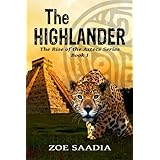
My main goal is to present pre-contact Americas to the wide audience of readers, to make people discover and enjoy these neglected cultures and periods. 

For some reason, historical novelists paid no attention to such large chunk of history, while doing to death all those well familiar times and places. Rome and Greece, Medieval Europe, Stuarts and Tudors and the Regency’s sparkling balls and receptions, all those and more have tomes of wonderful historical fiction to represent them, plenty of movies to fill our screens; while two large continents prior to their “discovery” seem to have no history at all — judging by the historical fiction genre, that is. Their conquest is well covered, and the post-conquest times, but what was there before?

Well, fifteen years of research had shown me that there were many fascinating things to find in pre-contact Americas, many different cultures, ways of life, upheavals and revolutions, empires rising and falling, democracies being born. A wonderfully rich field for historical novelist, and so far untouched by others – what a treasure  
So for now I have Central America covered with “Pre-Aztec” and “The Rise of the Aztecs” series, presenting the turbulent Mesoamerican history of the 14th and 15th centuries and how the well-known (to us) “Aztec” Empire came to rise. 
My North American books, the Peacemaker Trilogy, cover the process through which the great Iroquois confederacy was born — the famous democracy the constitution of which inspired quite a few clauses in the modern-day USA constitution (a fact admitted by the Founding Fathers in quite a few letters).
How long does the research take for one of your novels? What sources do you use?
The initial research takes long, a few years and more, but as I write series, I use the already accumulated information for one novel for the next. This way the research and the writing advance alongside each other. 

For example, when I was writing the novels of Pre-Aztec series, which are set in the capital of the regional power that preceded the familiar Aztec empire, I did not intend to write “The Rise of the Aztecs” series. 

Yet, as the general story progressed along with the research, I found myself yearning to learn more. The cultural details of the daily life were already there, the people’s mentality, their attitude, their way of life. So, I checked and rechecked the facts outlining the events. Tthe conquered cultures are always more difficult to research, as the original documents get destroyed and the version of the past events reported to us by the conquerors is terribly distorted, coated with a thick layer of unashamed propaganda. 
This way it was much easier to write the next series, with even some of the characters sneaking in, insisting on their own private history being developed beyond the general happy, or unhappy, previous ending.
How would you describe your own writing style?
My writing style is not a customary way of writing historical fiction. As I truly want to make a wide range of people discover the cultures I’m featuring in my novels, I write in a lighter style of action-adventures stories, as much for history lovers as for the enjoyment of a person who would not pick a history book given a choice.
So, while grounded in solid, well researched history, my stories are full of action, centered around all sorts of people, fictional and historical characters, behaving like regular men and women with feelings and desires of normal human beings all around the globe and in all times. Cultural values and technology aside, to my firm belief, people were always people, with their basic needs and ambitions, in Caesar’s Rome, Napoleon’s France, Moctezuma’s Tenochtitlan or modern-day New York City.
So, as I myself love fast-paced, easily flowing books to read, I make a point of writing my stories in this way, full of action, adventure and humor whenever possible.
What are the important elements of your style? What are you trying to achieve?
I want to make people discover pre-contact Americas; to meet the fascinating nations and cultures that inhabited these lands, all those various different civilizations. I want to break the terribly wrong image the colonial books and records created, which Hollywood cemented later on with its terribly distorted Westerns. This is my main goal
One challenge for writers of historical fiction is finding the appropriate “voice,” particularly in dialogue. How do you write dialogue that is at once reflective of the characters’ culture, and not outlandish or irritating to the readers?
Oh yes, it is a challenge. The cultural conceptions are, indeed, difficult to “translate” to our language, sometimes.
But then, it’s a very interesting, satisfying challenge — to make your characters likeable, understandable to the modern-day readers, while avoiding turning them into modern people dressed in costumes. There is nothing more irritating for me as a reader of historical fiction as running into a shallow historical novel full of modern-behaving characters. 

To avoid that, good cultural research helps. To just sift through the heap of the historical records is not enough. One needs to understand the people one is writing about, sometimes by enlisting the help of the modern-day history enthusiasts from these areas, many times the descendents of the involved cultures. I’m very lucky to have many friends all over Mexico, people who help me understand the events I may have misinterpreted otherwise, people who even are teaching me Nahuatl, the original language of the Aztecs and the other local peoples, which is still very much in use all over the western Mexico.

This way the characters of my books behave naturally, making the readers sympathize with them and their action, even though some of these may not make sense according to our values.
Are there any authors whose style you admire? Do you try to emulate them?
My main idols are Colleen McCullough and James Clavell, both exceptional historical novelists, whose every book I reread many times. Each time, I learn about different times and cultures without noticing, while enjoying myself immensely. Both these authors made me realize the power of the historical fiction as opposed to the non-fictional historical accounts. 

As for emulating, I suppose I tried to emulate them in the beginning, but today I think I developed my own style. Still, if likened to one of them, I would be extremely flattered.
Are there authors whose writing style you dislike?
I have trouble with over-descriptive writing style of many old-day classics.
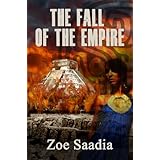
Do you think your type of literature, historical fiction, imposes certain restrictions on writing style?
No, I don’t think so. I found that a novel is a novel, that every story could, and in my opinion should, be full of action, with the fictional side coming ahead of the historical one. The historical and cultural backgrounds are very important, but the story itself is more so. The trick is to manage to keep this balance
Do you think your audience responds to your writing style, consciously or unconsciously?
Oh yes, I think they are. 

For one, many people who don’t read historical fiction in general, seem to enjoy my books, appreciating the reader-friendly style of mine. 
On the other hand, sometimes I get criticized by the hard-core history fans, who are expressing their doubts regarding the depth of the historical research behind my novels. To their opinion historical novel should be suitably heavy, full of excessive descriptions. Luckily, those are not many, not enough to make me start doubting my style. 
I do want to reach many people, to make them learn history without noticing, while enjoying a good story, like a good historical fiction should do.
How important do you think writing style is to an author's commercial success?
I think it’s very important. Especially today, with the television providing a serious competition, we have to keep up, not make it most enjoyable for the readers, easy to read and to lose yourself in the story. 
Thank you so much for your fascinating knowledgable questions, Scott. I enjoyed myself immensely, answering them!
Thank you, Zoe!

After years of researching Classic ancient Meditterranean history, Zoe Saadia turned to the Great League of the Iroquois and their amazingly detailed constitution. The common points and differences in the two cultures and their take on democracy spurred more research and study, and eventually led Saadia to write two series set in pre-Columbian Mesoamera: the “Pre-Aztec” series (At Road’s End, The Young Jaguar, The Jaguar Warrior and The Warrior’s Way), and the “Rise of the Aztecs” series (The Highlander, Crossing Worlds, The Emperor’s Second Wife and Currents of War).

Her newest series is set among the Iroquois Confederacy: Two Rivers, Across the Great Sparkling Water, and The Great Law of Peace.

Zoe Saadia is a founding member of Independent Authors International.


Visit her website and blog, Pre-Columbian Americas.

Tuesday, September 04, 2012

What do free giveaways on Amazon lead to? Lots of people getting your book for free.


Through the Labour Day long weekend, I used three of the five days out of ninety in which Amazon lets me set my book’s price to zero as a promotion. As best as I can figure it, over 1,400 people downloaded a full e-book copy of The Bones of the Earth gratis.

Of course, it’s done very little for my bank account.

Downloads versus rankings

As a member of Independent Authors International, a writers’ cooperative group, I participated in the group’s first Labor Day Free Reads event. Seven of us (see last week’s post) all set September 1 to 3 as “free days” on our Amazon Kindle Select accounts. We joined and/or notified I don’t know how many bloggers, portals, reviewers and Facebook groups to publicize it; we wrote and shared updates for our own Facebook pages and scheduled hundreds of tweets.

The giveaway began at midnight on September 1. While some participants thought progress was slow, for my own part, I was happy. I had over 300 downloads by Saturday evening, and when I got up the next morning, some 30 hours or so into the program, Amazon US was showing over 600 downloads. The UK site showed 39 downloads, plus one sale of The Bones of the Earth, Part One: Initiation Rites.

Some of the other participants noted that there were no downloads from the UK site after sometime on Saturday afternoon, September 1. It turned out there was some kind of glitch in Amazon.co.uk’s tallying system. I experienced it, too: while downloads from the US site climbed fairly steadily all weekend, the UK site was stuck at 39.

More exciting to watch were the rankings. By the end of Saturday, The Bones of the Earth had advanced to no. 1,300 or so in the Free lists, and by Sunday afternoon, September 2, it was number 2 in Historical Fantasy in Amazon.com’s US Free lists, and number 5 in Epic Fantasy; in the UK, despite only showing 39 downloads, it reached number 1 in Historical Fantasy!

After that, it started falling in the rankings, to number 3 and finally settling at number 5 in historical fantasy, and number 451 overall, by the end of the event, even though total downloads kept advancing.

Image: Creative Commons

Why did I give my book away for free after trying to sell it for so many months?

Good question. I’m glad I asked it.

Many other indie authors who have tried the Kindle Select giveaway program since it became available at the beginning of this year reported a sales spike immediately following the end of the giveaway period. For example, Russell Blake made his Geronimo Breach free for three days in January and saw about 12,000 downloads. “Then, when it went back to paid, a funny thing happened. After languishing for the first day, it shot like a rocket, finally hitting #165 in the paid Kindle store,” he reported in his blog.

Russell wasn’t the only one. I read similar stories from several other indie authors. But as time went on and more and more independent writers used the program, the results were less and less striking.

Still, I was hopeful. Writers I respected for both their writing and marketing ability kept using the program. In the summer, I participated as a supporter of the Book Pushalooza for Derek Blass, Elise Stokes, Robert Guthrie, Shannon Mayer and a few others. The planning and organization in that group effort was amazing.

Lessons learned

How did iAi Labor Day Free Reads go? For me, 1,400 downloads is great — it’s many times more copies than I have sold in the past 8 months, even if it was a small number compared to Russell Blake’s results.

Still, I have to keep that in perspective. Russell was already selling thousands of copies of his book before he had the giveaway.

Another lesson: maybe next time, I won’t do this over a long weekend. People, and readers are people, often go away from their computers during holidays.

Yet another lesson: I will participate for a longer period in the Facebook and other groups that I want to promote my book before asking them to do that.

And there are still more bloggers and reviewers to contact.

As far as sales go: strangely enough, I have sold 12 copies of The Bones of the Earth, Part 1: Initiation Rites at 99 cents through the weekend. I don’t understand this, because Part 1 is, as the title implies, the first part of the full novel. Part 1 came with parts 2 and 3 for free last weekend. I’m not complaining — four bucks is enough for two cups of good coffee. But it seems strange to me. I guess the fact that Part 1 is the first part of the full book is not that clear to some people. Anyway, I’m glad people bought the story, and I hope it makes them want to read the rest of it.

As for the hoped-for sales spike: I’m writing this during that first day after the end of the event, during which Russell Blake reported “languishing” sales. So I’ll watch my reports from Amazon. And I’ll let you know how it’s going.


Sunday, September 02, 2012

Progress report: Amazon promotional giveaway event

It’s one day into the first promotional giveaway of my book, The Bones of the Earth, and I’m thrilled with the results. The numbers may not seem huge to some people, but for me, they’re great.

As I mentioned in the post last week, I’m participating in Independent Authors International’s first multi-author, multi-book giveaway through Amazon. Throughout this Labour Day long weekend, seven of us have used our Amazon Kindle Select program free days to give away copies of our e-books.

In total, there have been over 700 downloads of my book in the first 34 hours of the multi-author giveaway event. As I’m writing this, The Bones of the Earth is ranked the number two historical fantasy in Amazon’s Free lists, and number 1 in Amazon UK’s lists!

Strangely, traffic on my blog is not much heavier than normal. Other participants and friends like Cinta Garcia (who guest posted here a few months back) have noticed heavier blog traffic.

So, great results? Compared to my book’s sales since the beginning of the year, this is great! Compared to the big sellers, fair to middling.

Reasons? Perhaps the last long weekend of the summer was not a great choice: there are a lot of other things for people to do, like go to the beach one last time, or get the kids ready for school. Or maybe there are a lot of other giveaways to compete with.

Those are the results so far. I promise to publish further updates for anyone who is thinking of trying this strategy.

Thursday, May 24, 2012

At Road’s End: A perfectly woven, rich tapestry


Zoe Saadia is clearly a very good writer. She has succeeded in a difficult task for a writer — I know, because it’s very similar to what I tried in my own writing.


In At Road’s End, Zoe Saadia presents a historical story set in a time, place and culture that are, as far as I know, unique in fiction: the Anasazi cliff-dwellers of what’s now the south-western USA and northern Mexico. Without needing a prologue or foreword, Saadia brings the people, their environment, culture and even some of their history to life.


And most important, she tells a story that you just can’t put down.


The story centres on Tecpatl, an elite-trained warrior from the Azcapotzalco culture, who live, according to the story, on the shore of Lake Texcoco (site of the later Aztec capital). He is escorting a trading mission across the desert to a city of cliff dwellers, called Great Houses.


Readers quickly learn that Tecpatl’s mission is punishment for a mistake he made, the full nature of which is revealed where it has maximum impact in the novel.


On the way, the group encounters a village that’s been raided and pillaged. There’s only one survivor, a woman with a command for languages. She helps guide the trading partner and its warrior-escort to Great Houses, her origin.


Saadia skilfully presents the complexities that people in this situation faced: great differences in language, culture and assumptions. One of the main drivers of the dramatic tension in the story, in fact, is the main character’s frustration in understanding the speech as well as the behaviour of the Anasazi he encounters.


A well-woven story

Presenting this complexity as an integral part of the plot requires great skill as a writer as well as a lot of research. Saadia has learned a great deal about the technology, economy, sociology and cultures of the people in her story, and all this adds to the realism. It’s actually entertaining to read about the characters’ attempts to navigate the chasms between them. Tecpatl’s most frequent refrain seems to be “I will never understand you.”


Equally believable are the relationships among all the characters. The social gap between Tecpatl, the elite warrior, and the merchants he’s escorting is even wider than the linguistic and cultural gap between Tecpatl and the Anasazi girl he rescues, Sakuna.


And the romantic relationship that develops between Tecpatl and Sakuna is equally skillfully done. There’s nothing cloying or Hollywood about this relationship, nothing coy or phoney. These are two adults who are eventually attracted to each other despite their differences. While that sounds like a cliché, in Saadia’s hands (or under her fingertips, anyway) the developing relationship rings absolutely true.


For example, we learn that Sakuna is the daughter of a prominent and wealthy man in Great Houses. He marries her off to a man in an outlying village—the one that is sacked at the beginning of the story. While the marriage is not Sakuna’s choice, and she’s clearly not in love with her husband, she accepts the marriage. But that’s couched in the realism of the character and the author. After her rescue, Sakuna becomes much more assertive. It’s completely believable. She sides with her rescuer, eventually, and the way she comes around to his side of things is also realistic.


Her father is presented just as believably. In fact, I’m sure I’ve met him. He’s self-assured and arrogant to the point of endangering himself and his whole community.


I won’t belabour the typographical and minor grammatical errors. There were only a few, and they did not detract from the enjoyment of this story at all. One more good edit would have fixed them, I’m sure. (And I’m also sure that my book could have used one more good edit, as well.)


Saadia has woven together many threads: exposing this era of pre-Columbian North America; cultural gaps; the struggle to assert oneself; redemption and so much more, and (minor grammatical and typographical mistakes notwithstanding) without a flaw.


If you want a really good read that brings a really exotic time and place to full-colour life, pick up At Road’s End.


5 stars