Showing posts with label historical fiction. Show all posts

Monday, April 07, 2014

Literary genre: haven or prison?

Creative Commons licence.
http://moon.com/2014/03/hiking-and-recreation-in-parque-nacional-torres-del-paine/
A little over a year ago, I wrote a post for the Guild of Dreams blog where I wondered about how important it is for a writer to remain within a genre. Now that I have just sent my third manuscript to an editor, I find myself wondering about that again. Without asking anyone’s permission, I am re-examine that issue.

When you start out writing fantasy — or romance, or science fiction, or mystery, or any other category — do you have to stay within it? Is writing something in another genre akin to crossing a border into a foreign territory?
For a novelist, is the genre a prison or a haven?

It looks like my career as a novelist is turning into an experiment to measure that.

My experience in the fantasy genre

My first published full-length novel qualifies as epic fantasy. I prefer the term “historical magic realism,” because  The Bones of the Earth has realistic, fictional characters alongside real, historical characters. It’s set in a real time and place, and then adds fantastic or magical elements. But for most people, “fantasy” is the shorthand term.

My next novel, One Shade of Red, stepped way out of epic fantasy and history. It’s a comic, erotic parody of Fifty Shades of Gray, and qualifies as romantic erotica. Or erotic romance. NOT porn.

My third novel (to be published) is one I started over 10 years ago, a memoir of my father-in-law’s experience as a draftee into the Soviet Red Army during World War II. So far, I’m calling it Between the Vise Jaws. But that may change.

Return to fantasy

With that done, I am now turning to a contemporary urban paranormal type fantasy, Dark Clouds. I posted the first chapter on this blog a couple of years ago.
Dark Clouds grew out of a pre-Hallowe’en writing challenge, the source of which I cannot remember. But the challenge was to write the scariest opening line I could, and in a humourous mood, I thought of “Matt always knew when his mother was coming over.”
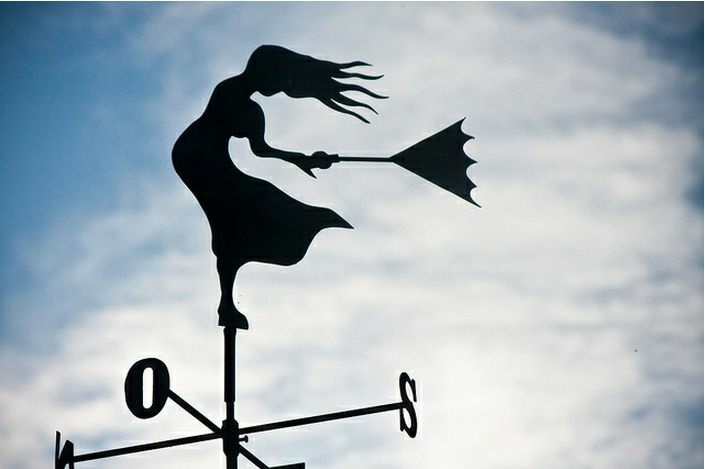
Photo by Garry Knight via Flickr Creative Commons


And I took it from there, making Matt’s mother a witch, then the Queen of all witches. Then I thought “what if Matt, the Witch Queen’s son, was immune to all her spells?”
Once I finished writing the story, I thought it could be the beginning of a novel, or at least a series of stories. So I thought I would call the novel The Mandrake Ruse, in the style of 60s-era spy stories like Man from U.N.C.L.E. And I could write a bunch of novels about The Witch’s Son.

Now that I’ve been toying with the idea for a couple of years, I realize that I have those titles mixed up, so when I do publish the book, it will be called Dark Clouds, and the first chapter will be “The Mandrake Ruse.” It just makes so much more sense.

Does genre-hopping hurt my credibility as an author?

A number of readers, and my family, too, have asked for a sequel to The Bones of the Earth. And as you can see from the cover, it’s “Book One of the Dark Age Trilogy.” I do have rough plot outlines for two more books about Javor and his adventures in the seventh century, but I also have this burning desire to write some other stories, first.

Had I a contract with a publishing company, my publisher, editor and/or agent would gripe about this. “Readers who liked your first book want more of the same!” I can hear one of them saying. “You’ve proven there’s an audience for that story, and they’ll be disappointed if your next book is totally different.”

I think every artist or creative person faces that dilemma: those who liked your first work will come back expecting more in the same vein. Delighting them with something new and completely different is a steeper hill to climb — you’re working against the very expectations that you created.

On the other hand, I am a writer because there are stories that I want to write, and my imagination doesn’t necessarily fit into categories defined by someone else.

I don’t read in just one genre — why should write in just one genre?

The most commercially successful authors stay within the categories they’re known for: John Grisham, Jodi Picoult, Tom Clancy, Dan Brown, Stephenie Meyer … it’s a long, depressing list.

On the other hand, some of the best writers have written in more than one genre, or have succeeded both artistically and commercially when they’ve gone beyond the slot assigned to them at some point in their careers:

Ray Bradbury — known for science fiction, especially Fahrenheit 451 and The Martian Chronicles, Bradbury’s also celebrated for Dandelion Wine, the story of a young boy’s “magical summer.”

Stephen King started with horror and is still best known for It, The Shining and Carrie, but he has successfully transitioned into science fiction, non-fiction and, it could be argued, literary fiction.

Guy Gavriel Kay began writing fantasy fiction with The Fionavar Tapestry series, continued with his almost-historical magic realism, and moved to historical fiction with Ysabel in 2007.

Margaret Atwood went the other way. Established since the 60s as a main force in current literature, she surprised the book world with the dystopian science-fiction The Handmaid’s Tale, more recently Oryx and Crake — although she denies they’re science fiction.

The big question

What will this do to future sales prospects? Will readers of The Bones of the Earth who check my new publication be disappointed or delighted by Between the Vise Jaws?

Will fans of One Shade of Red be totally turned off by a war memoir?

Or will my hopes be realized: that writing in different genres will spread my appeal to new audiences?

What do you think? Leave a comment!


Saturday, November 09, 2013

Breathing life into long-lost cultures: Zoe Saadia's writing style

What is style? Written Words continues to explore the issue of style among independent authors. This time, I’ve asked historical novelist Zoe Saadia to weigh in.

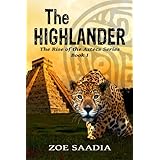
Saadia is unique among writers of historical fiction. Her novels, like At Road’s End, The Warrior’s Way, The Highlander and her latest, Two Rivers, are set in pre-European contact North America. The cultures of the place and time play very important roles in the stories. These factors place a particular challenge for the novelist, whose job it is to bring the audience into the created world.

I faced a similar challenge, if not as steep, with my historical fantasy, The Bones of the Earth, set in Dark Age eastern Europe. At least in my case, I could find some historical information about the peoples and the cultures of that setting. Pre-Columbian Americas, though, have less background information readily available.

That’s what I asked Zoe first.

Your books are set in a place and time unusual, if not unique, in literature: pre-Columbian MesoAmerica, specifically the Toltec, Aztec and Mayan cultures. What was it that inspired you to write historical fiction in that setting?
My main goal is to present pre-contact Americas to the wide audience of readers, to make people discover and enjoy these neglected cultures and periods. 

For some reason, historical novelists paid no attention to such large chunk of history, while doing to death all those well familiar times and places. Rome and Greece, Medieval Europe, Stuarts and Tudors and the Regency’s sparkling balls and receptions, all those and more have tomes of wonderful historical fiction to represent them, plenty of movies to fill our screens; while two large continents prior to their “discovery” seem to have no history at all — judging by the historical fiction genre, that is. Their conquest is well covered, and the post-conquest times, but what was there before?

Well, fifteen years of research had shown me that there were many fascinating things to find in pre-contact Americas, many different cultures, ways of life, upheavals and revolutions, empires rising and falling, democracies being born. A wonderfully rich field for historical novelist, and so far untouched by others – what a treasure  
So for now I have Central America covered with “Pre-Aztec” and “The Rise of the Aztecs” series, presenting the turbulent Mesoamerican history of the 14th and 15th centuries and how the well-known (to us) “Aztec” Empire came to rise. 
My North American books, the Peacemaker Trilogy, cover the process through which the great Iroquois confederacy was born — the famous democracy the constitution of which inspired quite a few clauses in the modern-day USA constitution (a fact admitted by the Founding Fathers in quite a few letters).
How long does the research take for one of your novels? What sources do you use?
The initial research takes long, a few years and more, but as I write series, I use the already accumulated information for one novel for the next. This way the research and the writing advance alongside each other. 

For example, when I was writing the novels of Pre-Aztec series, which are set in the capital of the regional power that preceded the familiar Aztec empire, I did not intend to write “The Rise of the Aztecs” series. 

Yet, as the general story progressed along with the research, I found myself yearning to learn more. The cultural details of the daily life were already there, the people’s mentality, their attitude, their way of life. So, I checked and rechecked the facts outlining the events. Tthe conquered cultures are always more difficult to research, as the original documents get destroyed and the version of the past events reported to us by the conquerors is terribly distorted, coated with a thick layer of unashamed propaganda. 
This way it was much easier to write the next series, with even some of the characters sneaking in, insisting on their own private history being developed beyond the general happy, or unhappy, previous ending.
How would you describe your own writing style?
My writing style is not a customary way of writing historical fiction. As I truly want to make a wide range of people discover the cultures I’m featuring in my novels, I write in a lighter style of action-adventures stories, as much for history lovers as for the enjoyment of a person who would not pick a history book given a choice.
So, while grounded in solid, well researched history, my stories are full of action, centered around all sorts of people, fictional and historical characters, behaving like regular men and women with feelings and desires of normal human beings all around the globe and in all times. Cultural values and technology aside, to my firm belief, people were always people, with their basic needs and ambitions, in Caesar’s Rome, Napoleon’s France, Moctezuma’s Tenochtitlan or modern-day New York City.
So, as I myself love fast-paced, easily flowing books to read, I make a point of writing my stories in this way, full of action, adventure and humor whenever possible.
What are the important elements of your style? What are you trying to achieve?
I want to make people discover pre-contact Americas; to meet the fascinating nations and cultures that inhabited these lands, all those various different civilizations. I want to break the terribly wrong image the colonial books and records created, which Hollywood cemented later on with its terribly distorted Westerns. This is my main goal
One challenge for writers of historical fiction is finding the appropriate “voice,” particularly in dialogue. How do you write dialogue that is at once reflective of the characters’ culture, and not outlandish or irritating to the readers?
Oh yes, it is a challenge. The cultural conceptions are, indeed, difficult to “translate” to our language, sometimes.
But then, it’s a very interesting, satisfying challenge — to make your characters likeable, understandable to the modern-day readers, while avoiding turning them into modern people dressed in costumes. There is nothing more irritating for me as a reader of historical fiction as running into a shallow historical novel full of modern-behaving characters. 

To avoid that, good cultural research helps. To just sift through the heap of the historical records is not enough. One needs to understand the people one is writing about, sometimes by enlisting the help of the modern-day history enthusiasts from these areas, many times the descendents of the involved cultures. I’m very lucky to have many friends all over Mexico, people who help me understand the events I may have misinterpreted otherwise, people who even are teaching me Nahuatl, the original language of the Aztecs and the other local peoples, which is still very much in use all over the western Mexico.

This way the characters of my books behave naturally, making the readers sympathize with them and their action, even though some of these may not make sense according to our values.
Are there any authors whose style you admire? Do you try to emulate them?
My main idols are Colleen McCullough and James Clavell, both exceptional historical novelists, whose every book I reread many times. Each time, I learn about different times and cultures without noticing, while enjoying myself immensely. Both these authors made me realize the power of the historical fiction as opposed to the non-fictional historical accounts. 

As for emulating, I suppose I tried to emulate them in the beginning, but today I think I developed my own style. Still, if likened to one of them, I would be extremely flattered.
Are there authors whose writing style you dislike?
I have trouble with over-descriptive writing style of many old-day classics.
Do you think your type of literature, historical fiction, imposes certain restrictions on writing style?
No, I don’t think so. I found that a novel is a novel, that every story could, and in my opinion should, be full of action, with the fictional side coming ahead of the historical one. The historical and cultural backgrounds are very important, but the story itself is more so. The trick is to manage to keep this balance
Do you think your audience responds to your writing style, consciously or unconsciously?
Oh yes, I think they are. 

For one, many people who don’t read historical fiction in general, seem to enjoy my books, appreciating the reader-friendly style of mine. 
On the other hand, sometimes I get criticized by the hard-core history fans, who are expressing their doubts regarding the depth of the historical research behind my novels. To their opinion historical novel should be suitably heavy, full of excessive descriptions. Luckily, those are not many, not enough to make me start doubting my style. 
I do want to reach many people, to make them learn history without noticing, while enjoying a good story, like a good historical fiction should do.
How important do you think writing style is to an author's commercial success?
I think it’s very important. Especially today, with the television providing a serious competition, we have to keep up, not make it most enjoyable for the readers, easy to read and to lose yourself in the story. 
Thank you so much for your fascinating knowledgable questions, Scott. I enjoyed myself immensely, answering them!
Thank you, Zoe!

After years of researching Classic ancient Meditterranean history, Zoe Saadia turned to the Great League of the Iroquois and their amazingly detailed constitution. The common points and differences in the two cultures and their take on democracy spurred more research and study, and eventually led Saadia to write two series set in pre-Columbian Mesoamera: the “Pre-Aztec” series (At Road’s End, The Young Jaguar, The Jaguar Warrior and The Warrior’s Way), and the “Rise of the Aztecs” series (The Highlander, Crossing Worlds, The Emperor’s Second Wife and Currents of War).

Her newest series is set among the Iroquois Confederacy: Two Rivers, Across the Great Sparkling Water, and The Great Law of Peace.

Zoe Saadia is a founding member of Independent Authors International.


Visit her website and blog, Pre-Columbian Americas.

Sunday, May 27, 2012

On the TTC Virtual Blog Tour: Allison Bruning, author of Calico

This week, Written Words is participating in Tasha Turner's Master Koda Blog Tour. It works like this: I'm hosting blogger Allison Bruning, and Raymond Frazee is hosting my guest post.

The first week's topic: what got you into writing? Take it away, Allison!

Passion! It is the heartbeat of any writer, the insatiable hunger from deep within an author’s soul to write. 

Lord Byron once said, “If I don't write to empty my mind, I go mad.” I know how he feels; the flow of words that clutter your mind, urging you to pour out your heart and soul onto a blank piece of paper. The longer you ignore it the more you think you will go insane. Your only relief lies with pen and paper or your computer. Letting go of reality, you allow your characters to tell the story. You draw so close to them and dig so deep into your story you forget time and place. You begin to talk about your characters as if they weren’t fictional but members of your family. The story unfolds before your eyes. Lost within, you are consumed by the story and forget the pen, paper or computer. You know the story is over when you feel it. The journey has ended. Sorrow fills your heart. The writing process is like a drug habit that leaves you craving for more. The American author and editor, E. L. Doctorow, summed up the experience saying, “Writing is a socially acceptable form of schizophrenia.”

I have felt compelled to bare my heart and soul into the written word from an early age. The only child of a single mother, I would often spend most of my time at my grandmother’s house. One afternoon after she picked me up from kindergarten, I had showed her a tiny book I had made in school. I was excited about my new book. A few days later, my grandmother surprised me with paper, pen, crayons and construction paper. She wanted me to make her a book. I couldn’t have been more elated! My grandmother had recognized my passion for writing and decided to foster that. For years I would write her a story then I would read it to her.

As I grew older, I tried my hand at keeping a diary but my diary ended up being more of a journal. I began to discover I could write pages upon pages of material in one sitting. I also enjoyed reading. There was never a day that went by where I didn’t carry a book, a notepad and a pen with me. There was just so much to explore and write about! In upper elementary school, I was placed in advanced reading classes. By middle school, I discovered I had a love for research and writing reports. I continued to write fiction and poems but felt a need to further explore the world of writing. 

In eighth grade, I was reading at a freshman college level and was writing reports at a high school level. I was even getting in trouble at school on purpose so I would be sent to Saturday school in order to write reports. That worked well until the principal and my mother learned why I wanted to get in trouble. By the time I was in high school, I had written over 20 books, 2 movie scripts, and over a dozen research papers on my own. I was poet for the literary magazine, a newspaper reporter and a member of the yearbook in high school.

My thirst for writing never left me after high school. It was only intensified as I discovered the English Department at Sul Ross State University. There I was taught how to compile a writing profile. Every English professor required one for their class. In my advanced English 101 class, my professor noticed my talent and told me I should pursue a writing career. She urged me to keep writing and to take as many English classes as I wanted. I eventually accumulated enough hours to have English as my major but never sought the degree. Instead I graduated with a degree in Theatre Arts and a minor in Anthropology. Yet I never lost my passion for writing.

My professional writing career began three years ago when my husband and I moved from Texas to Kentucky. I felt the urge to write a story. I spent the entire summer researching and writing Calico. My story was over 500 pages long. At the advice of a publisher, I split Calico into several different stories that eventually lead me to a complete series of 11 books. I named the series Children of the Shawnee. Children of the Shawnee, follows twin sisters, Calico and Rose Turner before, during, and after the American Revolutionary War. The second edition of Calico was Little Acorns Publishing House in April of 2012.

About Alison

The Executive Director of the Kentucky Young Writers Connection, a non-profit agency of writers who promote young authors throughout the state of Kentucky. Allison originally hails from Marion, Ohio. Her father, Roland Irving Bruning, was the son of German immigrants who came to the United States at the turn of the 20th century. Her mother's family had been in the United States since the 17th century. Allison is a member of the Peter Foree Chapter of the Daughters of American Revolution. Her linage traces to Private Reuben Messenger of Connecticut. Her educational background includes a BA in Theater Arts with a minor in Anthropology and a Texas Elementary Teaching certificate. Both acquired at Sul Ross State University in Alpine, Texas. Allison received National Honor Society memberships in both Theater Arts and Communication. Allison was also honored her sophomore year with admission into the All American Scholars register. She holds graduate hours in Cultural Anthropology and Education. In 2007 she was named Who's Who Among America's Educators. She is also the recipient of the Girl Scout Silver and Gold Awards.

Allison lives with her husband in Kentucky. Calico is book one from the series, Children of the Shawnee. It is available at http://amzn.to/JSNRpm. She is currently working on the sequel, Rose. She is also working on another series, The Secret Heritage, which traces the life of her great great grandmother at the turn of the 20th century in Ohio. Allison's interest includes Ohio Valley history, anthropology, travel, culture, history, camping, hiking, backpacking, spending time with her family and genealogy. Her genres include historical fiction, paranormal, romance, and suspense.

You can reach her at:

Facebook: http://on.fb.me/xxJ249

Facebook Fan Page http://on.fb.me/plvkxJ

Twitter: @emeraldkell

Blog: http://bit.ly/whteQI

Goodreads:http://www.goodreads.com/author/show/5164664.Allison_Bruning

And check my entry on the Virtual Blog Tour. This week, I'm hosted by Raymond Frazee on Wide Awake But Dreaming.