Showing posts with label characterization. Show all posts

Sunday, December 08, 2013

What do great writers like to read?

Creative Commons
What makes a good read? Is it characterization, plot, style? A unique idea, or the rules of your favourite genre?

I’ve asked some of the best independent authors I know what they like to read — what makes a good read for them. Today, here are the first three to answer: 

Name three characteristics of books that you like. What makes you keep reading a book? 

RS Guthrie: I personally love great, literary writing and deep characters. Of course, like everyone, my initial buy many times depends on the cover, or especially the first part of chapter one sampling. I usually know by one to three paragraphs in whether I will like the book. Actually, that's a pretty good indicator of the books I won't like. You can never know for sure about liking/loving a book until it ends; sometimes writers give up two-thirds of the way through and that's a HUGE disappointment you can't see coming.
Rob Guthrie

Karen Wodke: Three characteristics of books I like: 
  • being drawn into the story right from the start
  • when a story is handled in a unique way or deals with unusual material
  • when a book is so well-written, it takes me away.


Scott Morgan: Good books need a strong storyteller's voice; to be true  to its internal universe; and to take chances. I don't want to read the same thing someone else wrote, I want to read a new idea, new way of seeing, new world.

What are some books that you weren't able to put down until you finished them? 

RS Guthrie: The last book I read I could not put down was Jonathan Lethem's Motherless Brooklyn. I can never put any of his books down. Gun, With Occasional Music rocked my world! Dissident Gardens is just out and I have not read it yet.

Karen Wodke: Sharp Objects by Gillian Flynn; The Mothers by Vardis Fisher (about the doomed Donner party crossing); Evening News by Marly Swick; The Lord of the Rings by JRR Tolkien; Life-Size by Jenefer Schute.

What other books have these characteristics?

RS Guthrie: Anything by James lee Burke. In fact, he's the master of melding both elements (literary style with great characters). All of John D. MacDonald's Travis McGee series (21 books). Tim O'Brien's The Things They Carried, If I Die In A Combat Zone, and Going After Cacciato.

Karen Wodke: The books I mentioned are very different in style from each other. What they have in common is a compelling story. It would be impossible to list all the other books that share this characteristic. I like Dean Koontz, JA Konrath, earlier Stephen King, earlier James Patterson, Wally Lamb, Robert Heinlein, and a number of indie authors. The books I most enjoy reading share the following characteristics: interesting plot, descriptions that are appropriate to the story, a unique style of writing, and a steady pace.

Scott Morgan: All good books have these characteristics (a strong storyteller's voice; true  to its internal universe; and to take chances). Best examples for me are (fiction) Falling Angel by William Hjortsberg and (nonfiction) The Trouble with Tom by Paul Collins.
Scott Morgan

Do you consciously try to emulate these books? 

RS Guthrie: When I first read James Lee Burke's Dave Robicheaux series, I knew I had found my voice. Until then I kept flip-flopping between a more literary style versus deep, engaging characters and a lot of great dialogue (something you don't find in "literary" books). Burke showed me that the two can not only coexist but enhance each other and make for a compelling read. Primarily that affects my characters, dialogue, and definitely word choice. You need to be sparsely descriptive. Yes, describe the surrounding stage so the reader can smell it, see it, feel it, but don't take thirteen pages to do so. And dialogue, for me, is key. Good, engaging dialogue is the best way I know to show your character rather than tell him/her to the reader.

Karen Wodke: I don’t think I consciously try to emulate any other book. That said, a good book inspires me to work on improving particular elements in my own writing. For instance, reading Gillian Flynn has made me want to come up with
Karen Wodke
better similes and metaphors; she’s brilliant at both. She also has a very distinctive voice. A skill I admire in Stephen King is the ease with which he tells a story. Opening one of his books is like settling into a favorite chair. I admire the way Koontz pulls a reader in from the first page. And some thriller authors write such clean, tight plots; I can’t help but be impressed. There are important things to be learned from any well-written book.
You know what they say: easy reading is damn hard writing.

Scott Morgan: I try to emulate the writers more so than the books. writers like Brian Hodge always come up with incredible ways to tell stories that are not limited to single books. If I'm borrowing from books, it's usually inn how the writer constructs his/her universe with as little detail as possible. Great writers can put you in their heads but let you keep your own eyes.

Saturday, August 24, 2013

How to write a book I will like

Image "3D judges gavel" by Chris Potter (Flickr: 3D Judges Gavel) via Wikimedia Commons
I have reviewed a number of books by independent authors lately: Rachel Thompson, Bruce Blake, Seb Kirby, Doug Dorow, Chris Ward and of course RS Guthrie. All the reviews that I have published on this blog have been very positive: four or five stars out of five.

I thought I would now explain how I arrive at that judgement. Just in case you were wondering “What is it you want from a book, anyway, Scott?”

First, before you dismiss me as a the kind of reviewer who gushes over every book he reads, I have to tell you that I do not publish a review of every book I read.

About a year ago, I published a negative review of a book that I thought was bad: badly written and not edited even once. I gave it a one-star review.

I expected the author to react badly. What I did not expect was for her friends on Goodreads to rate my books poorly without reading them, in some kind of lame revenge.

From that point, I decided to publish a review only if I liked the book and felt justified in rating it at four or five out of five.

That doesn’t mean that if I do not publish a review of your book that I didn’t like it! I may not have gotten around to reading it yet, and even if I have, I may just not have had time to write a review, yet. And not every blog post is a book review. But if I really like a book, I will write a review of it, eventually.

Tell us what you  like, then!

Okay, okay. I was getting to that.

First, I demand that a writer knows what he or she is doing: writing in English. That means the writer has to know the rules of the English language: grammar, spelling, punctuation.

And the writer has to be able to string together sentences that are interesting without seeming forced. The words have to flow naturally.

I don’t want a writer to show off his or her vocabulary of archaic expressions. Far too many fantasy stories are full of words like “countenance” and “vouchsafed.”

Books written entirely in slang are tiresome, too. Yes, a cop has to speak some cop jargon, but that risks losing the audience.

Writers, don’t show off your way with words. Tell the story.

Don’t waste pages setting the scene or telling the character’s back-story — or  explain how the fantasy world came to be and how the secret orders of wizards or knights or whatever are holding things together.

Instead, let the explanation flow out of the plot. Show the consequences when the good witch dies,  don’t tell me about the danger.

And don’t get bogged down in details. I don’t need to hear the organization of MI6, how a Sig Sauer handgun works, or the relativistic underpinnings of your time machine. If it’s necessary to the plot, have one character explain it to another.

Details can make a scene come alive for the reader, but too much bogs the story down. Keep the story moving forward, and add details necessary for the action to make sense. If someone falls into a lake, the water temperature may be important to her survival. But the size of the lake or the colour of her shoes probably are not.

Characters

As readers of my reviews may guess, I like believable characters, even in unbelievable situations. Think Life of Pi.

Believable characters are like people you know: complex, with strengths and weaknesses. Even someone you love dearly must have some characteristics you find objectionable, if now downright obnoxious.

Look at yourself: what are your weaknesses? Where are your inconsistencies?
I have little patience anymore for the sharpshooting superspy who speaks 11 languages, takes out multiple bad guys with a combination of every martial art ever developed, flies jet fighters 15 feet above the city streets without hurting any bystanders and goes home to whip up a soufflé.

I prefer heroes I can identify with. The flawed ones. The guys who arrive at work with a stain on their pants and forget to pick up the eggs on the way home. Women who have to juggle families, jobs and career aspirations and don’t have time to learn a twelfth language.

It’s a lot more interesting to me if the hero has to figure out how to beat the bad guy. Think of even the action movies you’ve seen: isn’t it a lot more satisfying when the hero defeats someone who is far stronger and more capable?

It’s also a lot more interesting when the main character has to overcome one of her main weaknesses. That provides something else I look for in a story: character growth.

People do change. We age, we learn new things, we fall in and out of love.
And people who don’t change? They’re not interesting at all.

It’s the story

Ultimately, the story has to be engaging. It has to matter to me, and it has to keep moving.

I’m not going to try to prescribe a formula of dos and don’ts. There are enough bloggers and advisors to do that.

And I do not believe that there is a single right way to tell a story, either. The most successful books are those that do something different, even if the quality of the writing or the characterization is lousy.

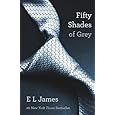
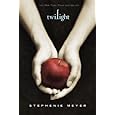
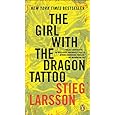
The Girl with the Dragon Tattoo was an unlikeable, borderline-autistic geek. Twilight introduced sparkly vampires and made teenage female lust for non-humans okay. 50 Shades allowed women to read about kink on public transit.
Do you want me to review your book?  Just make sure it has believable characters, a plot that moves quickly — and an editor.

Monday, June 25, 2012

What makes writing good?


Why do so many best-selling books fail the stylistic standards of commercial publishers?


How do EL James, Stephenie Meyer and Stieg Larsson get away with such bad writing when the very companies that publish their books turn down manuscripts on the basis of poor writing quality?


Many book reviewers at major publishing firms sneer at “self-published” authors for having poor editorial quality, and they’re not just talking about the mechanics of spelling and grammar. Major publishers and the “literary” crowd write about deep characters and themes, and castigate writers for using description or writing “suddenly.”


Last weekend, I heard Canadian writer Tom Gallant, author of The Lord God Bird, in an interview on CBC radio. He said he had gone through his book in advance of his interview with Shelagh Rogers and found no metaphors and only one simile. Is this necessarily good? Should every English-language writer try to emulate Hemingway?


There are a lot of places to get advice on how to become a good writer. There are any number of blogs, books, websites, courses, seminars and workshops that profess to turn you into a good writer.


With the number and range of sources, you’d expect to find a range of opinion. Yet, there’s a certain sameness to the advice. It’s as if everyone has decided to follow Elmore Leonard’s 10 famous rules, like never writing “suddenly” or starting a story with weather.


I have a lot of respect for writers like Elmore Leonard and Tom Gallant. They’ve shown mastery of their art, and have achieved success as authors. But there are a lot of best-sellers that defy these standards. Three come to mind immediately: Fifty Shades of Gray, Twilight and The Girl with the Dragon Tattoo.


Book fads

I haven’t yet read Fifty Shades of Gray. It seems to elicit two kinds of response: readers either love it or hate it. Some find it new, fresh and honest.


Writers mostly hate it. I don’t think that’s sour grapes—writers can’t begrudge every successful author, or we’d just be too depressed. But many writers point out that the writing style is heavy, wooden and unoriginal. The author, EL James, admits that she based the characters on Edward and Bella, the lead characters in Stephenie Meyer’s Twilight series (which itself has been criticized for its writing style). And I’m sorry, but as far as characters or personalities go, no one can tell me that either Edward or Bella is original.


Several reviewers have criticized James’ overuse of description and metaphors. “Someone needs to take this author’s thesaurus and hide it someplace safe” wrote blogger Jessica on Read React Review.


James’ inspiration, Stephenie Meyers, herself is no stranger to criticism of her writing ability. Apparently, Stephen King said Meyer “can’t write worth a damn.”

Last year’s book phenomenon was Stieg Larsson’s trilogy, The Girl with the Dragon Tattoo, The Girl Who Played with Fire, and The Girl Who Kicked the Hornet’s Nest. Each book in the series is far too long at over 800 pages. And they’re not filled with complex plots or deep characterizations. Instead, we read about what kind of sandwiches and Billy’s Pan Pizzas the characters eat, the details of laptop computer specifications and Ikea purchases.


Other than the girl of the title, Lisbeth Salander, and maybe her boss, Dragan Armansky, I did not find any of the characters at all believable. Instead, they’re flat renderings of roles in action movies: the thoughtful, plodding cop; the intrepid investigative reporter (in which role the author doubtlessly saw himself), the sexy female boss.


So what do readers want?

Why did these books catch on? I guess if I could answer that, I could rule the publishing world. Obviously, they each hit something the reading public was looking for at the time they were published, and could not find anywhere else. (Well, duh.)


I haven’t read Fifty Shades yet, and I don’t ever want to read a Twilight book. I’m not pre-judging either of them, and I’ve only quoted what others have said about them. But I have read two of Larsson’s books (unfortunately), and I found them ponderous, annoying and completely unentertaining.


What Larsson did right was create the character of the title (interestingly, that title was chosen by the Swedish publisher after the author’s death; he wanted to call it Men Who Hate Women). She is compelling: her pathological social inability is complemented by her tiny body. In other words, she should be completely helpless. Do you see Larsson’s oh-so-subtle social commentary, yet? Isn’t he clever? Salander makes up for it with a genius for hacking other people’s computers and savage determination for revenge.


That’s the chord that Larsson struck. Salander does things we all wish we could do: she exacts revenge on anyone who ever hurt her. By using the latest technology in an age fascinated with digital technology, she grabs our attention even more firmly.


Admit it: you’d love to hack into the email of that bitch two cubicles over who criticized your idea at the meeting last month. Find out just what she’s really doing when she’s supposed to be working on company time, and get your revenge.


Not having read the book, I’m taking a big chance by analyzing Fifty Shades, but I’ll suggest this: James has answered the same urge in readers by creating a character that does what her readers would love to do: surrender sexually and have a dominant personality reassure them that, no, they’re not really perverts, that what they would love to do is all right, they’re not bad for wanting them, and ultimately, they’ll end up in control.


So what do we do with this?

Is that the answer to blockbusting books — characters and situation that play out the fantasies of millions? Okay. But the next challenge is always the biggest one: getting the word out to all those millions of people.