Showing posts with label self-publishing. Show all posts

Monday, March 24, 2014

Book promotion steps to take before you publish

 Guest post by David Small, the Wandering Promoter

This Monday blog features guest blogger David Small, author, international hockey coach and entrepreneur. His new book, The Wandering Leader, launched on Valentine's Day and is already climbing the Amazon bestseller lists in non-fiction.

David hails from Kenora, Ontario — I town I spent many summer weeks in as a youth. It's not exactly known as a hotbed of literature, and it's been literally decades since I crossed paths with anyone from Kenora. I couldn't resist asking him to blog about his approach to self-publishing and his success in promoting his book — lessons we can all use. 

Over to you, David: 

A couple weeks ago I published my third book called The Wandering Leader. This book is about leadership, world travel, and chasing happiness. I define a “wandering leader” as someone who is in a leadership role, but doesn’t have all the answers. They sometime have to improvise or fake it until they make it. As JRR Tolkien said; “Not all that wander are lost.”  Sometimes I feel the same when I am promoting a product. I fake it until I make it. 

I want to share with you my marketing blueprint for how I ended up going from a nobody, to landing on the Amazon bestseller list. Hopefully my experiences in marketing and promoting my book will help you, or give you some ideas to promote your own products in the future. 

Pre-launch required reading: Platform by Michael Hyatt (hyperlink address: http://amzn.to/1jbgH3n ) 

3 weeks before launch week: write down different ways you can generate exposure during your launch week. Here are examples that I used during my launch week: 
  • launch team (very important)
  • media interviews/Press Releases
  • podcasts 
  • guest blog posts
  • images and social media production
  • promotions and giveaways.

If you don’t know an exact date your product with be available across all retail channels, it’s okay to let it be live on some channels and wait for all other channels to come live. You don’t need a big “pre-launch” or “official launch day” — just pick a day on the calendar. You’re the boss. 

2 weeks before launch week: Start to research blogs and podcasts that are in your field. For example, my book is about leadership, so I spent time researching podcasts and blogs in leadership, management, or coaching. I contacted about 30 podcast producers and 30 blogs. Aim for about seven to ten agreements in each category. This will drive traffic during your launch week. Ask that the post or cast be published during your launch week with links to your site or book. 

1 week before launch week: Talk to your book launch team. This is one of the most important ways for you to get exposure. These are friends, family members, and people you know who have a social influence. I was lucky to have NHL hockey players that I used to coach who were willing to help me during my book launch. One NHL player tweeted about my book and instantly 30,000 people saw it. That’s great, personal exposure. Offer to buy a copy of your new book (or whatever your product is) for anyone who helps you during your book launch week. 

Send out a press release to local media. They often like to do human interest pieces. Get on your local radio station to talk about your book and your goals. 

Book launch week: Start your promotion. Don’t spend money on click advertising; instead, buy cool prizes from companies you love and give them away to people who buy your book. I am a big support of Star Alliance air network, so I gave away travel vouchers (fitting because my book is about travel). This cost me approximately $400, which was the most I spent on advertising during my entire book launch. 

Give yourself a target to hit during that week, and a deadline to hit it. This creates a sense of urgency with your buyer. People like to support a race or goal. If you ask your friends and family to buy your product and you think they’re going to drop everything and do it, you’re wrong. I have some family members that I love dearly, but who have never gotten around to buying or reading any of my work. People just don’t really care. If you ask them to buy your book within a given week, so you can reach your sales goal, they’re more likely to do it. I said I want to reach 500 sales within the book launch week. 


Learn about the bestseller list. The Amazon bestseller list can really help you out (if your product is available on Amazon.) This list is updated hourly, and looks at overall popularity, as well as sales within the not-so-distant future. Because I asked people to order my book during book launch week, it put my book sales up to a high point during the first week of availability. Then in the second week all those sales landed it on the Amazon Top 100 list for the categories the book is published under. Being on the Top 100 list is huge because it gives people another reason to get off their butts and buy your book. You can ask them “help me reach the #1 best seller on Amazon by ordering a copy of my book today.” This gives your buyer a sense of urgency and a feeling like they’re a part of your success. I had 136 clicks and 127 orders in 24 hours. This in turn shot my book up to #7 on the bestsellers list. Which then gives you even more fuel to light a fire under your customers’ butts. If you’re that close to the #1 spot, people will get crazy and buy four or five copies of your book in hopes you’ll keep jumping up the list. 

My book passed authors like John Maxwell, Dan Millman, Tony Robbins, Dale Carnegie, and Dr. Phil in the category Books > Self-Help > Success. I used their names to grab attention in my social media campaigns and keep people interested. I also reengaged my book launch team for a second round of social media sharing with the target to help the book get to the #1 spot. 

For my book launch team, I created a guide and a hidden page on my website for them to use as reference. There I put sample tweets, images with quotes on them, link short codes, and excerpts from the book. People are busy, so make it idiot-proof for them. Copy and Paste and they’re done.  

When you’re promoting a new product, don’t get discouraged when people don’t leap up to buy it. Be genuine. Use your relationships and personality to ask people to buy it, but don’t harass them or spam them (until you make the bestseller list, then spam everyone you know — the higher you climb up the list, the more likely people are to help.) Good luck! 

How have you promoted your product launches? What worked for you or didn’t work for you? 

About the guest blogger:

David Small is the author of the bestselling book The Wandering Leader. In this book, David explains how leaders don’t need to be perfect, but they should get things done. He focuses on seven areas of leadership that everyone can grow in; career, financial, social, physical, spiritual, intellectual, and family. David has been a professional ice hockey coach for over a decade and is an officer in the Canadian army reserves. David has guest lectured and been a keynote speaker at leadership events around the globe. 


Visit his:


Sunday, October 27, 2013

Freedom of expression and self-publishing: The Mail's manufactured crisis and dinosaur porn

I nearly missed this story last week: Kobo, the e-book reader manufacturer and publisher, went through an exercise of weeding out “offensive” books and removing them from its catalog. Of course, “offensive” means books about some forms of sex. Apparently, books that glorify stock market manipulation or various forms of fraud against the middle class, or books that use religion to justify oppression of women, for example, are okay.


It seems to have started with an “investigation” by the UK newspaper The Mail into WHSmith’s website. On October 11, The Mail Online reported:
Typing the word ‘daddy’ into the search box, for instance, brings up disturbing fictional accounts of bondage and sexual humiliation, as well as collections of bedtime stories for youngsters.
After The Mail on Sunday alerted WHSmith to the appalling content freely available on its website, executives took the unprecedented decision to take the whole site offline while the explicit ebooks were removed from sale.

‘We will tighten our processes to ensure that this error can never happen again and sincerely apologise to our customers for any offence caused,’ the company said in a statement.
The Mail on Sunday investigation found that pornographic ebooks – the majority of which are self-published by their authors – are also available through Amazon, Waterstones and Barnes & Noble.

By Sunday, October 13, WHSmith’s website was down as executives and staff went through the catalog to remove offending titles. The crisis then spilled over to Kobo, which has a partnership deal with WHSmith to supply e-books. According to the much more credible and professional newspaper, the Telegraph, Kobo shut down its UK website by October 17 while its people went through its catalog, as well, and reviewed its self-publishing system to ensure that authors comply with its policies.

Erotic book lovers, meanwhile, sent a petition to online book sellers demand they “LEAVE OUR EROTICA ALONE!”

Executives from both Kobo and WHSmith stated that they’re concerned about books that glorify rape, incest and bestiality, among other subjects.

I’m sure you’ll all be relieved to learn that all my books have passed muster on Kobo.com, including my unabashed erotic novel, One Shade ofRed.

One series of books is apparently not available on Kobo anymore: Christie Sims’ dinosaur erotica books, like Taken by the T-Rex and Mounted by the Gryphon. I have no way of telling whether those books ever were available on Kobo, but they are available on Amazon, Barnes+Noble.com and iBooks.
Image source: The Mary Sue 

Kobo still sells erotica, including “tentacle erotica” titles like Taken by Tentacles and Tentacle Alien’s Breeding Pet. Apparently, sex with dinosaurs is too disgusting for Kobo and WHSmith’s executives, but sex with aliens with tentacles is okay.


The power of the written word

This was a crisis manufactured by the Mail newspaper. Apparently, they have reporters with nothing better to do than to surf the Internet for sources of porn that can be embarrassed. Then, they can find people to make self-righteous condemnations of pornography.

John Whittingdale, chairman of the Commons Culture, Media and Sport Select Committee said: ‘It is disgusting that WHSmith, one of the country’s most respected retailers, is selling hardcore pornography alongside children’s books.
Why does the Mail toy with evoking the forces of censorship and repression of freedom of expression? Because it sells newspapers.

No matter how Kobo and WHSmith try to discriminate between “legitimate” literature and that which is offensive according to standards, however widely they may be accepted, removing books is censoring some content.

And the Mail depends on the premise of freedom of expression for its existence.

Thankfully, this crisis has sunk back into the swamp without causing much interest anywhere.


I’m just pleased to have found something as ludicrously funny as the idea of dinosaur erotica. I don’t intend to read any, but you have to admit, it has to be the most ridiculous idea in fiction.

Sunday, July 07, 2013

Independent book review: Stories My Evil Twin Made Up

I have a major problem with Scott Morgan’s writing. There isn’t enough of it, especially fiction.
I understand Morgan’s dilemma. He has a day job, and a blog and a Twitter feed and a life with a family; he has also published writer’s guides, Character Development fromthe Inside Out and How To Be A Whiny Beeyotch: 71 Writing Excuses Meet the Back of My Hand. He has appeared on this blog, with a guest post and as the object of a review of his previous collection of short stories and poems, Short Stack.

I really enjoy Morgan’s fiction. His writing style proves that he is the kind of writer who should be teaching others how to write.

Reading Stories My Evil Twin Made Up evoked a mixed reponse: it’s very good, but it’s very short. It’s kind of a “Best of Scott Morgan” album.

“There’s nothing new in here,” Scott Morgan admits immediately in the introduction to his new collection. All 10 short stories appeared in one of Morgan’s three previous collections, Short Stack, Tryptic or Love/Sex/Soul — but not everything in those three collections appears in the new book. “There is no poetry in here and a few stories didn’t make it. Because they suck.”

I miss some of the poems, particularly “One True Cat” from Short Stack. But there is much to enjoy in Stories My Evil Twin Made Up especially “The Price of Angie’s Ice Cream,” “Brown Paper Bags” and “Food and Hats” are all entertaining as well as insightful. They evoke that “yeah, exactly, I was there” response.

Morgan’s talent lies in writing precisely the words that bring the reader into the created reality. Every word rings true. Nothing is out of place, nothing is excessive, nothing is missing. This is exactly the kind of writing that all the writing courses and all the snootiest London and New York publishing houses say that they insist on (before publishing something by the latest celebrity bimbo).

It’s hard to say what’s my favourite story in here, but “Brown Paper Bags” probably hit closest to home. It’s a story about young boys reaching that age when they can no longer bring cartoon character lunchboxes to school, but have to use plain brown paper bags. And all the other symptoms of growing up to be the perfectly repressed North American males society demands we be.

Victor had seen the changeover coming. Had monitored the upper classes and seen the transition from Marvel Comics to plain brown wrapper. He was fine with it. Was, in fact, looking forward to it. And then his mother handed him a black tin lunch pail. Tin, like his Superman lunchbox from kindergarten. Only uglier. It looked like a little house. The kind of lunchbox he’d seen in cartoons from the fifties, when mesomorphs ate their lunches on orange girders sixty floor above the street.

But he could already see the look in her eye, ten years into the future. Misty. Reminiscent of a childhood gone forever. To tell her that this was the worst thing she could have done to him would kill her on the spot. So Victor took the little black house. And promised her he’d keep it safe. He would just have to keep it in his backpack and hope he never got searched by anyone.

“Yes,” I kept thinking. “That’s it exactly.”

The only failing to Stories My Evil Twin Made Up is that it’s too short. The paperback version has very wide margins (to those versed in graphic design, a very short measure). It’s obvious that Morgan was trying to pad out his page count (which he cleverly hid by not putting page numbers in the paperback). It’s unnecessary. Even if the book had one-third fewer pages, it would still be a respectable, if slim volume. This design makes the readers feel that Morgan is trying to fool us, somehow.

Brother writer, I respectfully propose another solution: write more stories!

The world will be a better place for them. 

5*

You can find Stories My Evil Twin Made Up on Amazon.

Sunday, April 21, 2013

Guest post: How I landed publishers by choosing to self-publish

By Kristen Elise, Ph.D.


Here’s a secret: publishers love the self-publishing author.


When Scott asked me to do a guest post about marketing for newbie novelists, my first reaction was, “I don’t know anything about marketing — I’m a newbie novelist myself.” Then I received two contract offers for my first novel without soliciting them. And it occurred to me that I do know how to market. Even without a book to sell, I have learned how to market my name, and publishers noticed.


Four months ago, I finished The Vesuvius Isotope and began contemplating the next step. I had a choice: I could either learn how to self-publish, or I could learn how to query acquisitions editors and agents. I had no clue how to do either. For several reasons explained here, I decided to self-publish. And it occurred to me that I had just become my own marketing department.


I already had my blog, author site, and other pages up and running. I guess I already had some semblance of a platform. But it was only when I decided to self-publish that it occurred to me just how critical the platform would become: It was now my only connection to readers.


So as I created a self-publishing checklist and started checking its boxes, I simultaneously began boosting my platform. I thought about what I could offer readers that everyone else wasn’t offering. I thought about my target audience and how I could attract them to my site. I thought about how I could develop meaningful connections with people who might one day buy my book. For specific examples of platform-building techniques, click here.


The effort worked: my sites began gaining more readers, members and page views. One of those readers was an acquisitions editor who began asking questions about why I wanted to self-publish. Then she asked for my manuscript and ultimately offered to publish it. Another new reader was an author crazy about his new publisher. He referred me to his acquisitions editor, who ultimately offered me a contract as well.


So I’m now in the uniquely awesome position of choosing how to publish The Vesuvius Isotope. And I would like to reiterate: I did nothing spectacular to get this opportunity; all I did was build the very platform I would need anyway, in order to sell the book.


I cringe when I hear authors say things to the effect that they expect a publisher to do their marketing for them. Reality check: this doesn’t happen anymore.


If you choose to go the traditional publishing route, this means you will solicit agents, typically for more than a year, and if one takes you on, he or she will then solicit the Big Six publishing houses for God knows how long. If you are lucky enough to sign on with one, you are now in the unenviable position of competing with all best-selling authors and the occasional Newbie Novelist of the Year.


If you are that breakout artist, you will have it made. The house will use its muscle to send you on book tours, mass distribute your novel across the globe, translate it into Swahili and connect you with their “people” in the movie business. My sincere congratulations. Please mention my name to your agent.


But if you’re in the other 99 percent, guess what the Big Six will do for you. Nothing. Book tour? Please. They won’t even arrange a book-signing in your hometown. Then they’ll take almost all of your profit. Another reality check: most authors never get royalties, as the publishing house never recoups their expenses. And they need their money to fund marketing efforts for the best-selling authors and Newbie Novelist of the Year.


This grim picture is reality. And that’s why small publishing houses have now popped up all over the place. As a newbie author, these might be your best bet. A small publishing house may take you, a total unknown, because they are also not very well known and they’d like to change that. So they’ll take a shot with you. They’ll sign you on and pay for the publication of your book. They might pay you a small advance. You might even see some royalties.


But these smaller publishers come with a catch. Small houses don’t have the bandwidth to market their authors and titles extensively. They can’t afford to send you on those expensive book tours. They will expect you to do part of the legwork. A large part of it. So they look for authors that are already doing it. They look for authors that have already demonstrated that they're willing to get into the trenches. They look for authors who are already their own marketing teams.


They look for self-publishers.


Kristen Elise is the author of forthcoming novels The Vesuvius Isotope (fall, 2013) and The Death Row Complex (Fall, 2014). A long-time resident of San Diego, she lives in San Diego with her human family and three canine children. To contact Kristen Elise, visit her author site or blog or e-mail kris@kristenelisephd.com.


Monday, July 23, 2012

Independent Authors International: a new model changes the way books are published

I’m very excited about a new literary venture.

I’ve joined a group of 10 authors from 5 countries who are forging a new cooperative publishing model: Independent Authors International.

The members are all professional writers not affiliated or published by any major imprint. Instead, we are all independent authors who recognize that writers can provide all the services that a major publishing house can offer: editing, proofreading, design, e-book formatting, layout for print books and publicity. We’re sharing these services with each other to raise the quality and the credibility of independent publishing.

The news release explains it all. Then check out the website: iauthorsi.org. And check out the iAi author I'm cross-promoting this month: Haresh Daswani. Followers of this blog know that I found his Evolution of Insanity irresistible, if flawed.

Every month, a different iAi member's book will be featured in that spot on the right-hand side of this blog.

And when you’re hankering for great reads, now you know where to look!


Authors’ cooperative venture changes the publishing world — again

iAi to be a symbol of quality and professionalism in publishing

A group of writers, marketers and designers unaffiliated with publishers have banded together to create their own publishing model, “Independent Authors International (iAi).”

The new organization, whose members hail from across the U.S. and around the world, aims to support and legitimize the independent author movement, and bring new voices to readers throughout the world.

“Recently developed technologies like e-readers and print-on-demand make it now possible for individual writers to publish books without the resources of a large commercial publishing enterprise,” says iAi spokesperson, Scott Bury.

“The iAi co-operative will help professional authors by bringing together the skills and services that a commercial publisher offers, while leaving the authors in control of their work, at a fraction of the cost, and with a much more responsive and personal touch.”

The iAi's goal is to help its members produce quality, professional works recognized by literary agents, publishers, booksellers, and readers. The group is a democratic, cooperative organization controlled by its members.

Membership is granted by invitation of existing members. The group vets prospective members to ensure they meet the professional writing, editing, and marketing standards of the iAi.

To receive the services of the organization, members must contribute their editing, production, or marketing skills to other members.

The iAi currently has 12 authors and publishing professionals from the United States, Canada, the United Kingdom, Israel and the Philippines. The iAi website at http://iauthorsi.org/ has information on the organization's goals and principles, a list of members, books that meet iAi criteria and links to sites where these books can be purchased.

For more information about Independent Authors International or to schedule an interview with one of its members, please contact Scott Bury by email at scott.bury@iAuthorsi.org.

Monday, June 25, 2012

What makes writing good?


Why do so many best-selling books fail the stylistic standards of commercial publishers?


How do EL James, Stephenie Meyer and Stieg Larsson get away with such bad writing when the very companies that publish their books turn down manuscripts on the basis of poor writing quality?


Many book reviewers at major publishing firms sneer at “self-published” authors for having poor editorial quality, and they’re not just talking about the mechanics of spelling and grammar. Major publishers and the “literary” crowd write about deep characters and themes, and castigate writers for using description or writing “suddenly.”


Last weekend, I heard Canadian writer Tom Gallant, author of The Lord God Bird, in an interview on CBC radio. He said he had gone through his book in advance of his interview with Shelagh Rogers and found no metaphors and only one simile. Is this necessarily good? Should every English-language writer try to emulate Hemingway?


There are a lot of places to get advice on how to become a good writer. There are any number of blogs, books, websites, courses, seminars and workshops that profess to turn you into a good writer.


With the number and range of sources, you’d expect to find a range of opinion. Yet, there’s a certain sameness to the advice. It’s as if everyone has decided to follow Elmore Leonard’s 10 famous rules, like never writing “suddenly” or starting a story with weather.


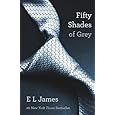
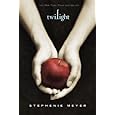
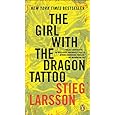
I have a lot of respect for writers like Elmore Leonard and Tom Gallant. They’ve shown mastery of their art, and have achieved success as authors. But there are a lot of best-sellers that defy these standards. Three come to mind immediately: Fifty Shades of Gray, Twilight and The Girl with the Dragon Tattoo.


Book fads

I haven’t yet read Fifty Shades of Gray. It seems to elicit two kinds of response: readers either love it or hate it. Some find it new, fresh and honest.


Writers mostly hate it. I don’t think that’s sour grapes—writers can’t begrudge every successful author, or we’d just be too depressed. But many writers point out that the writing style is heavy, wooden and unoriginal. The author, EL James, admits that she based the characters on Edward and Bella, the lead characters in Stephenie Meyer’s Twilight series (which itself has been criticized for its writing style). And I’m sorry, but as far as characters or personalities go, no one can tell me that either Edward or Bella is original.


Several reviewers have criticized James’ overuse of description and metaphors. “Someone needs to take this author’s thesaurus and hide it someplace safe” wrote blogger Jessica on Read React Review.


James’ inspiration, Stephenie Meyers, herself is no stranger to criticism of her writing ability. Apparently, Stephen King said Meyer “can’t write worth a damn.”

Last year’s book phenomenon was Stieg Larsson’s trilogy, The Girl with the Dragon Tattoo, The Girl Who Played with Fire, and The Girl Who Kicked the Hornet’s Nest. Each book in the series is far too long at over 800 pages. And they’re not filled with complex plots or deep characterizations. Instead, we read about what kind of sandwiches and Billy’s Pan Pizzas the characters eat, the details of laptop computer specifications and Ikea purchases.


Other than the girl of the title, Lisbeth Salander, and maybe her boss, Dragan Armansky, I did not find any of the characters at all believable. Instead, they’re flat renderings of roles in action movies: the thoughtful, plodding cop; the intrepid investigative reporter (in which role the author doubtlessly saw himself), the sexy female boss.


So what do readers want?

Why did these books catch on? I guess if I could answer that, I could rule the publishing world. Obviously, they each hit something the reading public was looking for at the time they were published, and could not find anywhere else. (Well, duh.)


I haven’t read Fifty Shades yet, and I don’t ever want to read a Twilight book. I’m not pre-judging either of them, and I’ve only quoted what others have said about them. But I have read two of Larsson’s books (unfortunately), and I found them ponderous, annoying and completely unentertaining.


What Larsson did right was create the character of the title (interestingly, that title was chosen by the Swedish publisher after the author’s death; he wanted to call it Men Who Hate Women). She is compelling: her pathological social inability is complemented by her tiny body. In other words, she should be completely helpless. Do you see Larsson’s oh-so-subtle social commentary, yet? Isn’t he clever? Salander makes up for it with a genius for hacking other people’s computers and savage determination for revenge.


That’s the chord that Larsson struck. Salander does things we all wish we could do: she exacts revenge on anyone who ever hurt her. By using the latest technology in an age fascinated with digital technology, she grabs our attention even more firmly.


Admit it: you’d love to hack into the email of that bitch two cubicles over who criticized your idea at the meeting last month. Find out just what she’s really doing when she’s supposed to be working on company time, and get your revenge.


Not having read the book, I’m taking a big chance by analyzing Fifty Shades, but I’ll suggest this: James has answered the same urge in readers by creating a character that does what her readers would love to do: surrender sexually and have a dominant personality reassure them that, no, they’re not really perverts, that what they would love to do is all right, they’re not bad for wanting them, and ultimately, they’ll end up in control.


So what do we do with this?

Is that the answer to blockbusting books — characters and situation that play out the fantasies of millions? Okay. But the next challenge is always the biggest one: getting the word out to all those millions of people.