Showing posts with label comma splice. Show all posts

Thursday, April 25, 2013

Writing tips: Beware the comma splice


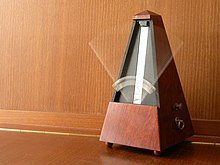
Comma butterfly image © Copyright Peter Trimming;
licensed for reuse under Creative Commons.


Commas are probably the most abused punctuation mark in English today, and probably the most overused, too. Here are a few tips to make them easier to use correctly.
Commas separate parts of a sentence:

  • items in a list 
  • phrases
  • clauses.

Don’t leave out commas from your writing. They represent the pauses in speech, and give readers a chance to take a breath — important even if we’re not reading aloud.

However, don’t overuse them, either. I remember one educational film made in the UK in (judging from the awful clothing) the mid-70s, that said overusing commas made text seem like the writer had hiccups!

  • The carpet, when delivered, will be laid by our approved carpet layers, who are, in your area, Thomas and Jones, Inc.

Read that aloud with a pause at every comma, and you’ll hear what I mean.

Think of a comma as a brief pause to make it clear what ideas belong together.

  • Since this is a new responsibility for the agency, based on new legislation ...

Which is different from

  • Since this is a new responsibility, for the agency based on new legislation ...

Image source: Moblog, creative commons

Those splices won’t hold!


Commas are not strong enough to separate complete thoughts. For that, you need a period — or at least a semi-colon. Sometimes, even talented writers will use commas in situations that need periods. This is called the “comma splice.”
Here are some examples from a book I helped to edit a little while ago, doctored somewhat to protect the innocent. I mean, guilty.

  • The woman in the red dress was no common thief, she’d seen too much, taken too much.

That’s two complete thoughts, so it should be two complete sentences. Replace the comma with a period and capitalize “She’d,” and you have a grammatically correct sentence.

The next example has the same problem:

  • Raising the money took priority, nothing could get in the way of that.

  • Sometimes, though, we don’t want to use the full stop, as the Brits like to call the period. There are cases where the period does not express what we are trying to say.

    • Too bad if the marine lived, he had learned long ago that least dangerous soldier was a dead soldier.

    These are two separate thoughts, but in this case, they’re closely related. Replace the comma with a semi-colon. Same with the next example:

    • Not so long ago, he thought Karen would be the only one for him, now barely a thought of her came into his head.

    The simple way to remember it is this: if a group of words has a subject and a verb, it’s a sentence. That means it also needs to begin with a capital letter and end with a period. Even two words can be a complete sentence:

    • Johnny ran.

    An imperative (command) sentence can be one word:

    • Run!

    And that means, end it with a period. Most of the time. You can also use question marks for questions, and occasionally exclamation marks, too. But use those rarely.

    Link related sentences with a semi-colon, but again, go lightly with them. They’re like habanero peppers — terrific when they’re used sparingly.

    For more on sentences, check out my blog post from last November. And if you have a question, put it in the comments, or send me an email or a tweet.

    Thursday, November 22, 2012

    Writing Tip: The Sentence, Part 1

    
    Brain structure: emw/Creative Commons
     Lately, I’ve been reading a lot of work that shows severe problems with sentence structure. Whether in fiction or non-fiction, it’s almost as if the writers do not understand what a sentence is.

    For example:

    An analysis of survey results conducted by GHI concluded that different groups of consumers face different kinds of challenges, this includes unemployed and underemployed as well as low-income groups.
     Or the opposite problem, exemplified in this case in fiction:

    The chattering of Will’s teeth, as loud as the cold north wind that blew down through mountains.
    The problem in the first case is a comma splice: joining two separate sentences with a comma, rather than separating them with a period (or maybe a semi-colon).

    Freeimages.co.uk
    In the second example, the problem is an incomplete sentence. Something is missing — a verb. This is how a grammatically complete sentence would read:

    The chattering of Will’s teeth was as loud as the cold north wind that blew down through mountains.

    That’s not a particularly creative solution, but it’s correct.

    Another example, with some light surgery to hide the actual source:

    But back to the economy, all three projects expanded simultaneously and required capitalization, no wonder the organization’s bottom line was depleted.

    The unit of expression

    Think of the sentence as your basic unit of expression. A word may be a unit of meaning, but a single word by itself does not usually express an idea.


    Back when I was in grade school, after cleaning the sabre-tooth tigers’ litter boxes, we all learned that a sentence expressed a single complete thought. To do that, it needs two elements: a verb or predicate — action — and a subject, which is usually a noun or a pronoun.

    Creative Commons
    The quick red fox jumps.

    The action word, the verb, is “jumps.” “Fox,” of course, is the subject. The rest of the words describe the subject.

    Sometimes, you don’t need the subject to be written out: “Duck!” The subject is “you, implied” — a concept that caused all sorts of confusion when I was in school.

    That’s it: noun and verb. Other words just describe the subject or complete the action. End it with a period.

    A wave of lust slammed into her body.
    Just “lust slammed” would be a grammatically complete sentence.

    The subject can also be a phrase or a clause: a group of words that function together as a noun.

    Resisting the temptation to crush her body against his and tear off her clothes took all his willpower.
    The subject in that example did not end until after “clothes.” (And “after clothes” is one of my favourite places.)

    That’s all there is to it. To write clearly, write about something doing something.

    Joining complete thoughts

    To join two complete thoughts — sentences — you have to have the right kind of link. Usually, it’s not a period, but a word or a group of words. I won’t go into the formal grammatical expression here; if you read good writing, you’ll develop a sense of what “sounds” right.

    Here are some examples of what not to do, and corrections. Again, these are taken from real sources, but doctored slightly so as to keep the guilty hidden until they can redeem their sins.

    Run-on sentence

    The run-on sentence happens when one complete idea follows another without any punctuation or joining phrases.

    Image Wikipedia Commons
    She got up and went into the bathroom and got a wet washrag and came back and laid it across her mother’s forehead.
    There are more than one problem with this example. The succession of clauses joined by “and,” while grammatically correct, gets tedious. There’s also way too much detail. You don’t need to describe every single action: your reader can figure out the intervening actions.

    She wet a rag in the bathroom and laid it across her mother’s forehead.

    Not that I minded I can curse with the best of them, as you’ve probably noticed.

    Not that I minded; I can curse with the best of them, as you’ve probably noticed.

    Comma splice

    Another common error is joining two related sentences with a comma instead of a semi-colon.
    She took his hand again, “how are we going to keep them safe?” She whispered.
    Again, there are more than one problem here:

    She took his hand again. “How are we going to keep them safe?” she whispered.
    “If we move quickly we could be off in front of the soldiers, we’ve got fast horses and money.”
    “If we move quickly we could get ahead of the soldiers — we’ve got fast horses and money.”

    “The horses need to rest tonight, so do we.” Gianni replied.

    “The horses need to rest tonight, and so do we,” Gianni replied.
     

    A matter of style?

    Wikipedia Commons
    Who cares, though? As long as the underlying meaning comes across, does grammar really matter?

    Yes. First of all, using grammar correctly, especially such a basic concept as understanding what a complete sentence is, is a necessary but not sufficient indicator of professionalism. Whether you’re writing fiction, advertising or technical reports, if you don’t come across as professional, no one will take your document seriously. And if the audience doesn’t believe you, why bother writing?

    Clarity is even more important. Consider this:

    For hospitals seeking increased profitability in the operating room (OR) it is essential to streamline the movement of materials from suppliers to the hands of doctors efficiently acquiring and moving supplies critical to OR procedures are measurable ways to reduce costs, increase revenue capture, optimize labour and improve process management.
    What’s efficient: doctors’ hands, or moving supplies?

    When the subject is medical care, I think clarity is pretty darn important.

    What do you think? Having trouble with sentences? Ask a question or leave a comment!