Tuesday, November 29, 2011

Try and not write lightening, and other mistakes in your and your fellows’ writing

There are some errors that drive me crazy, not because they’re so terrible — anything can be corrected — but because they appear so frequently, and they’re really so simple that it’s hard to imagine how people make them.
Lightning image from Suvro Datta
on freedigitalphotos.net


“Lightening” for “lightning.” People who should know better make this mistake all the time. Even some websites where I found the images of lightning called it “lightening.”

“Lightening” is a progressive verb, meaning “making lighter”—in weight or in colour.

  • “Using bleach is lightening the colour of my shirt.” 
  • “Help from the community is really lightening my workload.”
 The flash in the sky that accompanies thunder is “lightning.” There’s no e in it.

“Try and” is another common error.
  • “I’ll try and get there before 8:00.”

It’s a childish expression. To interpret the above sentence strictly, you get two ideas: “I’ll try,” (what are you trying?) followed by “and get there.” Are these two different things? The speaker intends to say he or she will try to arrive before a specific time. Solution: “I will try to get there before 8:00.”

“Two-month anniversary.” Newscasters, who should know better, kept using this phrase as the Occupy Wall Street protests continued into their third month in November. An anniversary is something that happens once a year. The syllable “ann” comes from the Latin word for “year.” The protest may have reached the “two-month mark” or “point,” but not an “anniversary.”

The most awkward sentence construction I have ever seen takes this form:
  • “This causes problems for our and our supplier’s accounting departments.”

The first time I noticed it, in a memo brought to me by a student from her employer, I thought it would never happen again. However, I have seen this kind of phrase in a few places lately:
  • “The document must bear your or your representative’s signature.”
  • “This copy is for his and his agent’s records.”
The writers of these phrases are trying use words efficiently. The effort is commendable, but it leaves this dangling modifier: “his and ...” Read it aloud and you’ll hear how strange it seems.

The solution: rewrite the whole sentence. Start over by thinking about what you want the reader to do after reading the sentence. (That’s the G for Goal in Get a GRIP).
  • “The author and his or her agent should retain copies in their records.”
  • “Please sign this document yourself, or have an authorized representative sign it on your behalf.”
  • “This causes problems for our accounting department as well as our suppliers.”


That’s the Writing Tip for this week. Use the Comments section below to add your own!

Sunday, November 27, 2011

Six sentence Sunday

I have finally done it. I have finally remembered to register in time and get myself to the computer before 9:00 a.m. on a Sunday. Here is my entry for Six Sentence Sunday.

Six Sentence Sunday is a simple blog hop for authors and aspiring authors. You sign into a Linky list at http://www.sixsunday.com/ between 6 p.m. ET Tuesday and midnight the following Saturday, including the link to your blog; then before 9 a.m. that Sunday, you put exactly SIX sentences from your novel—any novel, published or in progress—on your blog. Readers then follow the link on the home page to read the samples. If the author asks for a comment, you can leave one, but it's not mandatory.

Sounds simple, but for some reason, I've managed to let it slip past me, week after week, until now.

So, here are six sentences from Chapter 2 of The Bones of the Earth, now available on Amazon and Smashwords.  


“I can’t kill a sleeping man,” Hrech said in a very small voice.
Javor look at Hrech directly, something he almost never did. “You know what they’re going to do to the girls—rape them repeatedly. They’ll take turns with them, and when they get tired of them, they’ll kill them and go to another village and take more girls. We’ll never see them again alive, unless we do something right now. Are you with me or not?”

Hope you like it. Comments welcome!

Saturday, November 26, 2011

The best and worst of being an author: Guest post by RS Guthrie


Rob Guthrie is becoming known on the Internet, not just as the independent author of Black Beast: A Clan of Macaulay novel, but also for  founding RABMAD, or Read a Book, Make a Difference, where authors donate a portion (or all) of the proceeds of their works to good causes.

I asked Rob to tell answer two questions: what's the best thing or aspect in his personal experience of being an author, and what is the biggest mistake he's made.

As you'll see, Rob, in his inimitable way, decided to answer those questions in reverse order.

In return, I've written my best and worst on Rob's blog, Rob on Writing.

Over to you, Rob:

The worst and the best of being an independent writer
 
As indie writers, we must carry a machete to cut through the tangled mess of the publishing world. I personally prefer two. This way I can double-fist them, cutting through twice the vine work, and also have a backup when one blade becomes too dull to be of any use.

Seriously, how many pre-published indie writers understood the magnitude of marketing that would be required to make even a cursory attempt at reaching the masses of readers? Not I. In my deluded mind, I envisioned an endless supply of readers, just waiting for the next great book. I was realistic: I knew that eventually the work would have to stand on its own merit. But I never dreamed it would be such a challenge to reach the readers.

That was my biggest mistake. Not figuring out the marketplace—and more importantly, the level of effort required to make a go of book promotion—before putting out my first book. The reason I consider that a mistake is that I feel I have more or less sacrificed my first work to the altar of acquiring marketing base. In other words, I sell diddlysquat while learning how to sell more than diddlysquat.

Which is okay, because I think that is part of the equation for any writer, indie or not: you have to get something out there. A sacrificial novel, as it happens to be in my case. I just think I would have put something a little less involved. Perhaps a collection of short stories or a novella. I put a lot of work into my first novel and I fear by the time I have finished honing my marketing plan, achieved my true rhythm, and established my reader base, the first book will have become a giveaway to enhance interest in the second, third, and so on.

In a short time I have learned one incontrovertible fact: writers need each other. I never would have guessed this maxim beforehand. I likely wouldn’t have believed it, even if someone had shared it with me. But the best decision I made was to join the Twitter and Facebook writer communities and to saddle up with a collection of likeminded indie writers. 

Cross-promotion. That is the way out of the forest. 

As one, we are weak—as many, we are a force.

Too many writers still don’t get this concept. I think the biggest misconception is also the one that keeps many writers from joining forces: the idea that we are competitors, not allies. If this were, say, the auto industry, that might be true. Readers, however, unlike drivers of automobiles, have a unique qualifier (particularly in the digital “99-cent” age): a turnover rate that approaches the relative speed of light.

A consumer keeps a car for a minimum of three years. The average is probably more like five. A reader, depending on speed and time available, can read up to a book a day. And I think there are more readers today than ever, probably in no small part due to the lowering of price by the digital market (not to mention the ease of access—literally press a few buttons and your book is at your disposal).

My point is, there are plenty of readers for all of us. There really are. That our biggest task is grabbing market share is a false challenge. The mirage in the distance. As indie writers our biggest challenge is NOT ensuring enough consumers for our product. It is NOT creating the best product we can (although that is a close second). The biggest roadblock for the indie writer, by far, is getting his or her work out to the readers. Period. Nothing else comes close. 

Call it what you will: getting noticed, finding a readership, showcasing your product. If you have not yet realized how deep in the jungle an indie writer is, you haven’t really tried to sell your book yet. We indie writers are half a world away from our audience: 

The readers are THERE…they just don’t know you are.

The good news is we can help each other send out the word from the mountaintops. We can build buzz, product, credibility, and most importantly, we can leverage our collective reach to establish an audience. Think of it this way:

Bill writes a great mystery. So does Suzy. If by helping each other, they can reach 1,000 people they would not have had access to alone (all, presumably, mystery lovers), what do you think the chances are that the majority of readers will read both books? Why wouldn’t they? Assuming they are both entertaining, well-written, engaging mysteries that is (remember, I said before that eventually your work has to stand of its own accord).

Another example. Say you are a reader. You aren’t going to attend a mystery writers' conference only to pick one excellent author or book. In a perfect world they would all be great and you’d have an endless supply of reading material, right?

I’ll repeat it one last time for effect: the best decision I ever made was to join with other likeminded authors and to cross-promote. It is through writers helping writers that we will walk from the darkness of obscurity into the light of a hungry, awaiting marketplace.

You can find Rob's books on Amazon and on his site, RSGuthrie.com.

Wednesday, November 23, 2011

Guest post: Alan McDermott on being an author

I've asked some bloggers to contribute guest posts, where they answer two questions:

- what's the best thing you've done, as a writer?
- what is the hardest thing, or the biggest mistake you've made?

I am contributing posts on the same subject to their blogs.

The responses have covered topics from the kind of writing they do, when they write, their writing process and even managing their personal lives.

The first is Alan McDermott from the south of England, author of Gray Justice (which I reviewed on this blog last week). His blog is Jambalian.

Take it away, Alan!


The best and worst of being an author

The best part is easy. You might expect me to say it’s looking at those sales figures and seeing them tick over, but to be honest the thing that pleases me more is when I get a review from someone totally impartial. There haven’t been that many (I think around 16 in total, spread over a few sites such as Amazon, Smashwords and Goodreads), but each one gives me the determination to keep going on the next book.

Readers might think that the book in their hand was written by someone spending hours at the keyboard in an idyllic mountain retreat, but I’d bet that 90 percent of the time the author is like me, working a day job and coming home to a family. As any parent knows, that leaves very little time for anything, never mind writing a novel. This means I have to get up at dark o’clock every morning in order to scrape a couple of hundred words together before setting off for the office. When I get home there are three lovely ladies waiting for me, and they all want a piece of Daddy, and when I get an hour to myself in the evening I am so worn out I can just about say Hi to my friends on Twitter before the sandman comes calling. Weekends are not much better, but at least I can manage a thousand words over the two days.

It’s a tough regimen, but every time I see a new 4- or 5-star review it tells me that someone got a lot of pleasure from my book, and that makes it all worthwhile.

The hard part about being an author? To be honest, I don’t think there is an easy part. Notwithstanding the above routine, I had to come up with a storyline which gallops along at such a pace that the reader cannot put the book down. Having written that story, I then had to tame the beast that is impatience. The beast rears its head as soon as the last word has been confined to the page and screams “Publish it NOW!” I succumbed with my first novel and boy, did I pay the price. I’d given copies to friends and family the day before I published it on Smashwords and the emails soon started coming in, mostly entitled “List of errors.” I cringed as I realized I had given away over a hundred copies and all of these readers would have their reading experience ruined by needless typos. Even after fixing these errors, I got feedback from customers telling me they had found even more! Lesson learned, and for the next instalment I will be doing a heavy re-read and passing it to a few friends well before I publish it.
The next hurdle is probably the hardest to overcome. You now have a perfectly-formatted, error-free book, you think it’s a fantastic read, but how do you get it into the hands of readers? Sure, I’ve got a few friends on Facebook, but when I announced the release I got a couple of responses, both saying “well done,” but neither offering to read it. So I went back and told everyone they could have a free copy, and six people took me up on the offer.
Next came the Google search performed by all new authors: “How to sell my ebook?”

Up came about 150 million results and I started scrolling through. Most of the links took me to writer blogs and the general consensus was that I should get a Twitter account, which I duly did. I signed up and began telling the whole world about my book. After no sales that week, I discovered that people had to be following me in order to hear what I was saying. So I went in search of authors and the numbers began to rise, but still no sales. As I started clicking on blog links in the tweets of others, I discovered some of the cardinal rules of Twitter: don’t just tweet about your book; don’t send new followers direct messages asking them to buy your book; do always thank people who retweet your words; do try and make genuine friends rather than just potential customers. The list goes on, but these are the ones I have concentrated on.
One of the last things I ever considered was having my own blog. With no time to eat, never mind write, how could I begin to pile more work on myself? Nevertheless, it was seen as an essential part of the whole writer-selling-books deal. I already had Jambalian and I added a few posts about the book, but I realised that a proper blog was needed and created a free Jambalian blog on Blogger: http://jambalian.blogspot.com/.

I have tried to keep the focus on writing without saying “BUY! BUY! BUY!” but I find it hard to get time to even think of a topic, never mind commit one to pixels. I’m getting better, though.
At the moment, things are moving slowly, but having stuffed impatience back in his box, I am prepared for the marathon.


Now to get some writing done…

Monday, November 21, 2011

Writing tips: don’t try to be a writer


Some readers have told me they like writing tips. Here’s the most important: keep it simple.

Too many people try to be writers. They get stuck trying to construct new kinds of sentences, trying to shine or to equal Shakespeare or Fitzgerald. Or worse, they try to write like a business person speaks—or worst of all, like a politician.

Instead, try to tell your story or get your point across.

Some writers and editors recommend writing without any revising. Just get the words down, worry about grammar, spelling, tense, voice or anything but the ideas. That requires knowing clearly what those ideas are. (See my previous series of posts, “Get a GRIP” for more about making sure you have a clear idea of what you’re trying to write before you start writing). Just state as simply and as bluntly as you can what you want to say. Almost always, that’s the most effective—that is, that kind of writing achieves the goal you started with.

Don’t be afraid to make mistakes; you can always go back and fix them. Writing means re-writing. Once you have a draft, you can move sentences and paragraphs around, change words and clarify your expression. But you can’t do that until you have something written down.

Examples:

Wherever possible, use verbs instead of strings of nouns and adjectives.

Instead of:

“On issues related to ...”—write “about”

“in the six-month period” of “over the course of”—write “between Date 1 and Date 2”

“expressed discontent with”—write “were dissatisfied”

“taking a leadership role”—write “leading”

“relates to the fact that”—write “because”

“in recent years”—write “recently”

“would expect to”—write “expects”

“these measures enabled management to discern any areas in which improvements can be made by operations”—write ”management could identify improvements operations could make ...”

“the regulated firm is typically given 30 days to respond”—write “the regulated firm usually has 30 days to respond”

“X achieved high rankings for new online presentation of resources and tools”—write “X revised its website, making online tools and resources easier to access.”

I recommend dropping the phrase “achieved high ranking,” because that focuses on the organization’s goals, not the reader’s. Why should they care about the company’s satisfaction rankings? What they care about is what it does for them. Yes, there may be some value perceived in the testimonial aspect of high satisfaction ratings, but still, what is important in that example is the new functionality of the website.

See how much shorter and clearer the revised messages are?

The next post on writing tips will focus on what to watch for when you’re re-writing. In the meantime, tell me about your own pet peeves—what phrases or styles of writing bug you the most?

Thursday, November 17, 2011

The message of Occupy Wall Street


“Protesters and Officers Clash Near Wall Street and in Zuccotti Park”—NY Times

“Dozens arrested in Occupy Wall Street march in New York”—Globe&Mail

“Occupy protesters march on NYSE”—Chicago Tribune

From the Guardian - OWS protesters re-entering Zuccotti Park Credit: Mario Tama/Getty Images
I had expected to read a lot of negative reaction and analysis about the Occupy Wall Street movement in the major mass media. I was wrong. MSNBC continues to portray the protesters as unable to articulate a single message. But most of the other major media present credible, balanced and even sympathetic coverage. CBC radio has repeatedly made this point.

Today, November 17, 2011, the state apparatus in the US is moving in concert to shut down the protests across the country. In several cities, they appear to have succeeded. By latest accounts, the protesters have been pushed out of Manhattan’s Zucotti park but are now disrupting the streets in other parts of the city, and they haven’t been defeated nor have they surrendered, yet.

Still, it looks like the movement is reaching a turning point, one forced on it by the government. So I thought I would blog about my thoughts on the movement and its portrayal in the media.

First, I should state that I’m largely in favour of the movement. It’s fundamentally democratic. This is a broad-based group of people gathering in public areas around the world to voice their opinions. Whether you agree with them or not, in democracies, they’re allowed to speak their minds.

It’s not surprising that the state would oppose their ideas. It’s not a conspiracy, but it does prove the theory that the government apparatus of the US, at least, is controlled by the wealthy elite.

However, the elite’s and the state’s response has not been effective. From the beginning of the protest, the elites and the mass media have tried to portray the movement as disorganized and incoherent, without a clear message.

That argument against the OWS protests is an illustration of the “Big Lie” school of propaganda: repeat an untrue statement loudly enough, often enough, and people will believe it.

Actually, I find the message is pretty cohesive. Lately, the “99 percent” mantra has come to sum it up. Yes, the protesters represent a number of different causes: financial and tax reform, eradication of poverty, reduction of unemployment, elimination of debt, even environmental protection.

But this is not incoherent. What ties these causes together is that, if successful, they would benefit most people, at least in the West. However, they’ve been blocked for decades by the corporate elite that controls the politics of the developed democracies. The message is simply that the 99 percent are fed up with the way the wealthiest 1 percent blatantly abuse their power to benefit themselves at the expense of the majority.

The movement has broad support: professionals, trades people, teachers, professors, even airline pilots have demonstrated. The behaviour of the protesters have been exemplary. Until today, there have been no real problems (notwithstanding two deaths over so many thousands of participants). There has been no looting, no rioting, no bad behaviour. In Ottawa, for example, the Occupy protesters moved their tents and other effects to make room for Remembrance Day ceremonies.
The only disreputable behaviour has been on the part of the state against them, pepper-spraying seniors, bludgeoning people, making mass arrests people for walking on the street.

Things are starting to look ugly in New York now. But it’s still a good time to ask: has Occupy Wall Street succeeded?

Superficially, no. Debt and unemployment are still high, the financial system has not been changed, the rich are getting richer, wealth continues to concentrate in fewer hands and the middle class continues to see its position erode.

But they did succeed in raising the issues and increasing awareness of the concentration of wealth. People — voters — are now more sensitized to these issues.

The test will come not in the next election, but in the next scandal where the top 1 percent are caught with their hands in our pockets, again. What will the state do? What will the people do?

What will you do?

Tuesday, November 15, 2011

So much for a writer to do ...

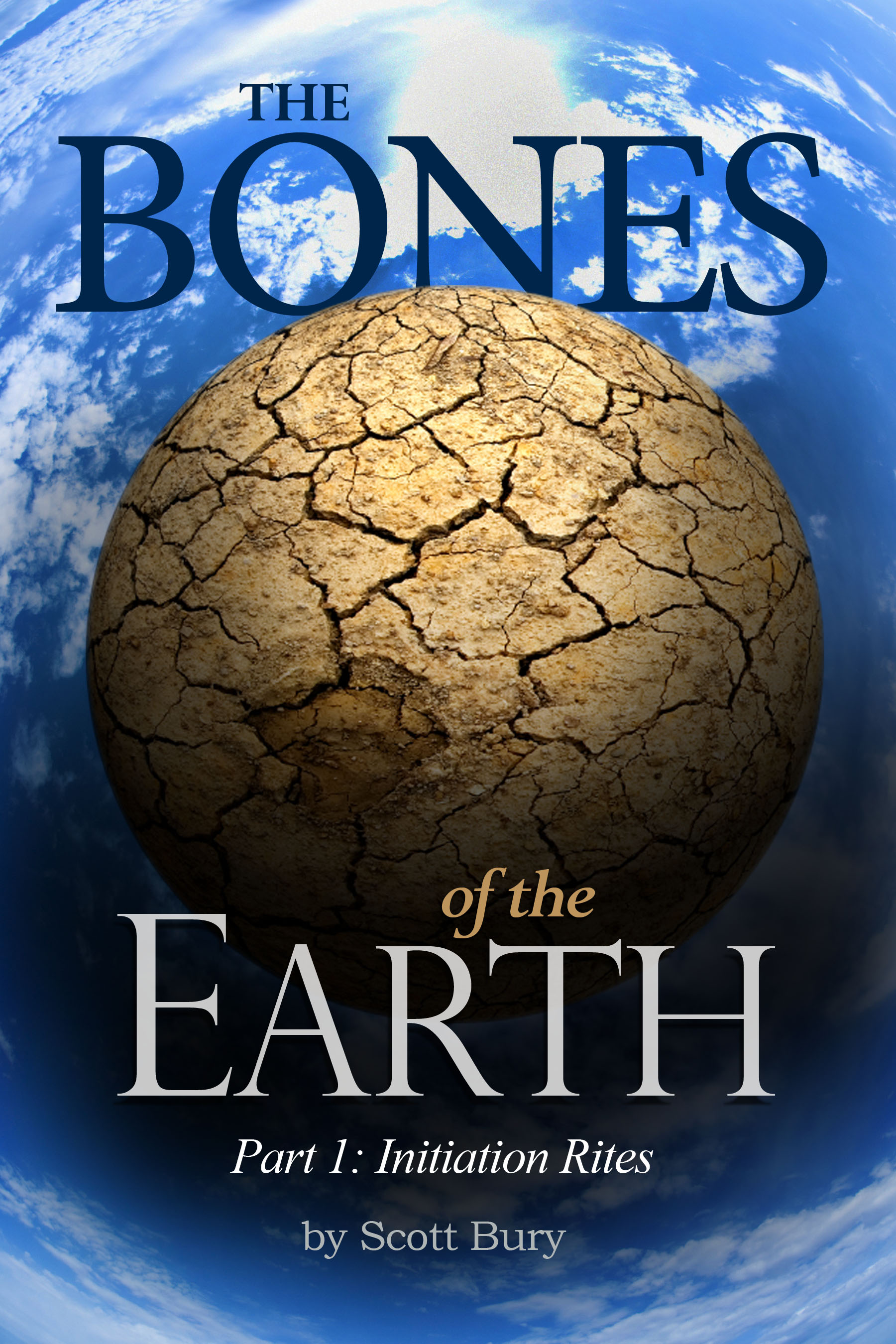
It’s almost time to launch Part 1 of The Bones of the Earth, the first novel I have actually finished writing. But while I could post the EPUB on Amazon and Smashwords tomorrow, there are still so many tasks that I have to do as a publisher.

I have already done a lot. I have written the book, then read it, rewritten it, edited it, re-edited, re-written, re-read and re-written again.

I have given it to two different editors and accepted most of their advice. I have found a terrific cover designer in Lisa Damerst, who has given me a dynamite cover.


The publisher’s job

As an independent author, the publisher’s job is my responsibility. There is so much advice to follow from blogs, websites, books etc. — too much to read it all, let alone implement it. But it seems that most agree on one thing: the importance of the author’s “platform.” All the book-promotion pundits make it seem deceptively simple, if time-consuming.

I started building my “platform” with this blog; I also have a presence on Twitter, goodreads, LinkedIn, Google+ and, of course, Facebook. I know I have not done enough to take full advantage of social media yet, but I am working on it.

At this point, I have to do the following at least:

- make more friends on goodreads (hint!)

- create a fan page on Facebook

- expand my Google+ page and Circles

- join writer-specific social networking sits like the Independent Author Network and Scribd, and possibly paid promotion sites like Book Buzzr

- start a blog tour.

Then, I must follow the advice of last month’s guest blogger, marketing expert Becky Illson-Skinner:

- join some writing groups where I would meet real, live people in the flesh, as opposed to online.

- set up some events such as book signing or library reading.

I have been fortunate to receive a number of positive reviews for my short stories. Those for Dark Clouds, my little Hallowe’en story, were completely unlooked-for; I also got some unsolicited and very positive reviews for my benefit story, Sam, the Strawb Part; even the reviews I requested were all positive. I feel good about that.

In the meantime, I keep blogging (see?), commenting on others’ blogs, reviewing books, tweeting and reading; and of course, I’m working on my next work for NaNoWriMo. Doing that requires writing 1,700 words a day — not a huge amount, but making sure that I do it every single day is a challenge.

Then, there’s life to live: a family, events, and of course, work. Did I mention that this blog is not my day job?

Time to revise the old saw: an independent writer’s work is never done!

Saturday, November 12, 2011

Indy book review: Gray Justice, by Alan McDermott

Tom Gray has a cause. It looks like revenge, but it’s more than that: he wants to change a system that he thinks is rotten. He’s sure that most of the people of his country think it is, too, and the government is just too hidebound, incompetent and cowardly to do anything. So he takes matters into his own hands and uses terrorist tactics to bring about that change.

That’s the premise of Alan McDermott’s Gray Justice, a novel that reads like a season of 24.

His action sequences are great. They’re fast, gripping and lucid. I can tell exactly what’s going on, I can picture where every character is and where they’re moving. The plot is strong, with no excess details and no dangling subplots. McDermott, like his main character, knows how to focus.

The characters have clear motivations. We readers know exactly why every person in this story does what he or she does.

Overall, I liked this novel, independently published as an e-book by the author. A portion of the proceeds from sales of the book go to two British charities: the British Heart Foundation, and Barnardo’s the leading children’s charity in the UK.

The book is not perfect. While the main character is nominally Tom Gray, it seems to me that more pages are devoted to Andrew Harvey, the special security agent tasked with stopping him. There are sections that are information dumps, especially when the author introduces new characters and tells their back-stories. It could have used a friendly, but firm edit early on.

Some of the dialog is a little forced, but most is believable. I can hear people speaking that way.
Another problem is that Tom Gray is just a little to capable, cool and calculated for me. I have trouble believing that anyone could plan a caper down to this level of detail, calculating every move his opponents will make (with one major exception that drives the second half of the book). But that’s the only credibility stretch in the book, so we can forgive the author. My book, after all, breaks credulity from the get-go.

A point here about the political dimension of the book. The main character proposes changes to the UK’s criminal justice system with much stricter sentences and prisons and even the reinstatement of corporal punishment. I could point out the practical futility of many of the proposals. On the other hand, [SPOILER ALERT! IF YOU DON’T WANT TO KNOW THE END OF THE STORY, SKIP THE REST OF THIS PARAGRAPH], the story itself does show how some of the ideas backfire. Personally, I think that the reasons for crime are deeper than the punishments for them.

The point is that McDermott tells a compelling story. I read this book in record time because I wanted to find out what would happen next. And that’s the mark of a successful novelist: he makes you want to read more.

Wednesday, November 09, 2011

Word of the year: “bailout”


What does it mean to “bail out” a business or a country?

Italy is going to get a financial bail-out from the taxpayers of the rest of the world. A lot of that will come from countries that have managed to stay out of financial trouble, but a lot will also come from taxpayers in countries that are facing their own financial challenges, including unemployment and government austerity measures.

Just days ago, Greece’s bailout was settled—although it’s still uncertain that the Greeks will accept it and avert worldwide financial chaos. Portugal and Ireland have received bailouts recently.

Three years ago, taxpayers in Canada, the US and elsewhere bailed out automotive manufacturers, at the same time that the whole world, it seemed, had to bail out the banks and other financial companies. And what did taxpayers, the source of all this money, get in return? Job security? Housing security?

No.

We seem to be caught in a never-ending cycle of crises and bailouts that spark more crises. We taxpayers have to bail out these companies, and now whole countries, because not doing so would cause the end of the economic universe we now inhabit, according to the powers that be.

(It’s interesting that the men—and it’s overwhelmingly men—who warn about doom and make the decisions never suffer from the chaos they preach. But that’s the subject of a whole different series of posts, or probably more fitting, a completely different blog. Or may a movement that would involve occupying public spaces near stock exchanges ...)


The different meanings of “bail”

The current usage refers simply to “rescuing,” but it comes from a different source. Which one applies most closely to this situation?

  • “Bailing out” means parachuting from a doomed plane. But that doesn’t fit—we are not getting out of failing economies, but getting more committed to them by pouring resources into them.
  • It can also mean scooping water out of a sinking ship—this is closer, but what we’re doing is putting something INTO the economy, so that doesn’t fit, either. 
  • “To bail out” means to pay money to get out of jail pending trial—this may be the closest meaning to the current situation, but it raises questions: will there be a trial? Of whom? 
  • According to the Concise Oxford Dictionary, “bail” also refers to detaining with intent to rob. Is that what the financial elite is doing to Greece, Italy and other countries? What are the strings attached to the rescue plans?
Which image comes to your mind when you read “bailout” of a failing economy: a falling plane, a sinking ship, getting out of jail or robbery?

Tuesday, November 08, 2011

Two reviews of independently published novels

Dead Heat
By Richard Sanders, 2011


Richard Sanders is a pro. Even if you don’t read the introduction/foreword, where he tells the reader of his time at People magazine and the low points in his life, the tight and clear style of his writing tell you: this writer knows what he’s doing, and he does it very well.

There are a few typos and a missing word or two in this e-book, but no more than any commercially published novel.

Dead Heat, a political thriller, proves that independent authors measure up to the best of commercially published titles with a fast-paced plot devoid of any holes. There’s action almost from the first page, and at no point does the story risk losing the reader’s interest. There is only one coincidence, which comes in at the beginning and launches the story. After that, the plot moves logically. As I said, Sanders knows what he’s doing.

On the other hand, Sanders threw in quite a few red herrings. Several times, I thought I had the killer worked out, thought “oh, no, he’s going that way?” But Sanders proved me wrong. I did not see the ending coming, and the resolution made perfect sense.

The strongest point, though, are the believable characters. Most of them are likeable, in some way, but the real test is that I feel like I have met most of them at some point in my life. I’m sure I’m related to some of them.

From the details and the emotions Sanders describes in his characters, it seems he also has been around at least one political campaign. He captures the political reality in the US today in all its pathetic, aggravating, exhilarating, tawdry, shameful and inspiring highs and lows.

I also have to wonder how much of an investigator he was: all the details rang true. Thankfully, the hero does not exhibit any outstanding heroics. He’s not Superman or Bruce Willis, which is a relief—there are way too much ridiculous heroics in this kind of literature.

I literally could not put this book down. Here, again, is an independent author that the big publishers should be looking for.


Xannu - The Prophecy
By Paul Dorset, 2011

Xannu - The Prophecy is further proof that commercial publishers have no monopoly on writing talent or writing quality. This is a good read with believable and entertaining characters, and a plot that pulls you along.

Dorset sets up a YA fantasy that follows many of the conventions of the genre: an invented world where countries have strange names, technology is at the level of the middle ages and magic works. Strange monsters plague humanity. At first, that was a turn-off for me. I am looking for something different. But I found that right at the beginning of the novel, when the main character has a conversation with the Power Almighty.

Dorset also inserts another twist on the fantasy trope with characters who travel between his invented world and a very prosaic, middle-class suburban reality. That's not really new, of course---think CS Lewis---but I really identified with Dorset's homey characterizations. He is very good at breathing life into his characters.
All his characters are fallible and funny, even the Power Almighty and his opposite, the power of evil.

There's a lot of humour, from the personality of the bumbling warrior-hero, to the frustrated ire of the Power Almighty (not so almighty, it seems), to the name of the tall quasi-humans, "Upthairs."

Personally, I was a little dismayed by the appearance of the princess and other royalty in this book. Maybe that's just me, but I enjoy stories about regular people far more. Still, in this plot, the royalty makes sense. And again, they are believable characters in their roles.

The quality of writing is very high in this e-book. There were no more typos or formatting errors than I have seen in typical print books from the biggest publishers. With books like this available on e-bookstores, there's no way that the big publishers can claim to be better than any independent author.

There is only one drawback: to get to the end of the actual story, I have to buy the next book in the series!

Friday, November 04, 2011

Guest post: author and blogger Becky Illson-Skinner

Becky Illson-Skinner is an author, blogger, sister, lover and more. Her blog, Mystery Writers Unite, is an online community where writers can meet to talk about the art, joy and passion of mystery writing.

Thank you, Becky, for this guest post today on selling written words.


Increasing sales of the written word


Probably one of the biggest challenges for any new author, regardless of the genre of their book, is to build a fan base and reach their sales goals. I’ve always loved marketing and graduated from Business Marketing with top marks. I understand how to market a product—I know marketing, but that is only part of the equation and probably the smallest part.


The biggest challenge is that the average person is bombarded by approximately 3,000 ads per day, all vying for their spending dollars. In addition, most people won’t buy something the first time they see it or hear about it unless the product is a name brand and the buyer is motivated (i.e., they need it). All of these things work against the new author.

By now, you’re thinking “Tell me something I didn’t know.” I respect that and I’m relieved you already know the things that work against you in getting yourself known to the masses. Don’t give up hope! There are things you can do to get yourself known and increase your sales. Also remember that the first book will be the hardest to market and subsequent releases of your work will be easier.

Here are some avenues that you can utilize that won’t cost you a fortune:

Appearances:

1. Host a book event in your area—Find other authors in your area that you can team up with and plan a fun, interactive book event with things for visitors to do. Don’t jump into this head-first; instead, do some research like you would for your book. Check out other book events that happen in your area to see what has worked and what hasn’t.


2. Have a book signing—There are many different types of venues (craft sales, flea markets, festivals, coffee shops, mall kiosks, etc.) that writers can capitalize on and be a part of to give readers a chance to meet the author in person and obtain a signed copy of a book. Believe it or not, having a signed copy of a book adds prestige to the book for the readers.

3. Approach your local library—Ask if they would support a “Meet the Author Day” that would consist of live readings from your book and prizes. You could even see if some other local authors would like to join you and partake to cut down on the costs.

4. Join groups—Find out what kind of interest groups exist for your book genre (e.g. book clubs). Ask if they would like to have you attend one of their meetings to do a reading, and offer signed copies of your book for sale at a discounted price. Make sure you have a prize to offer and a small thank-you gift to the organizer.


Internet:


5. Social networking—Make sure you are signed up to all the social networks and make connections with other authors, bloggers, writers, media gurus, etc. The more people you know…the more people know you.


6. Book reviews—Try to have at least three people a week read and review your book. Make sure that they are willing to post a review of your book either on Goodreads or Amazon. Once they have provided their written review, make sure you thank them and then link to that review and get the word out about the review. People tend to be more likely to buy something that someone recommends as opposed to being approached by the author of the work.


7. Links, links, links—please don’t undervalue links! These are the life-blood of the Internet and the more you have the better. The only way to climb the social net ladder in search engines like Google and Firefox is to have other pages pointing back to you. The more you have, the faster you will move up in the page ranking and the more visible your online presence will be. It takes time but it is time well spent.


8. Use a signature in your emails and always include a link to your book—this may sound simplistic but many people miss doing it.

Thursday, November 03, 2011

Apostrophes and pronouns: a confusing combination


I don’t like to rant about little things, but I’ve seen too many instances where supposedly professional writers and editors use “you’re” when they mean “your” and “it’s” instead of “its.” So, I'm dedicating this post to my quasi-regular "grammar tips" feature in hopes of clearing up the confusion.

Most writers, editors and readers I know are willing to forgive the occasional typo, even if it shows a misunderstanding of the right way to do things in English, as long as the overall quality and meaning of the content is good. But little errors erode your credibility, and especially for new writers or those striving to establish a “platform,” that can be a killer.

The source of confusion, I think, is that in English, apostrophes are used for contraction as well as possession, and sometimes, also, for plurals.

I have two proposals to dispel this confusion.


First proposal: discover the consistency

Consistency in spelling is rare in English, a language that seems to have more exceptions than rules. But when it comes to pronouns, the apostrophe always indicates a contraction. In other words, the apostrophe replaces a letter or two.

It’s = it is—“It’s cold in Winnipeg in January.”

Who’s = who is—“Who’s at the door?”

We’re = we are—“Open up! We’re freezing out here! This is Winnipeg, and it’s January!”

They’re = they are—“You better let them in. They’re confused about the date.”

You're = you are—"You're right. It's November, but it's still cold."

That means the respective synonyms without apostrophes are possessive.

Its = belonging to it—“The cat lost its toy under the couch.”

Whose = belonging to who—“Whose cat is that, anyway?”

Their = belonging to them—“They left their cat here because they didn’t want to bring it back to Winnipeg in January.”

Your = belonging to you—"Your cat is very fat."


Second proposal: eliminate the use of apostrophes as plurals

At one time, the apostrophe was used to pluralize single letters or symbols used as words in text and other unusual cases. For example, “The x’s in the expression represent unknown quantities.” “Make sure you dot your i’s and cross your t’s in the contract.”

While this makes sense when you listen to the pronunciation, it leads to confusion. How often have you seen an apostrophe used for plural on signs and even in ads?

When I first became an editor (not long after Caesar conquered Gaul), the new idea was to use italics to set off characters used as words and eliminate the apostrophe. To wit:

- “The xs in the expression represent unknown quantities.”

- “Make sure you dot your is and cross your ts in the contract.”

The change will take some getting used to, but I think it will reduce confusion among non-professional writers.

What do you think? By being careful about using apostrophes in combination with pronouns, can we writers bring about change and increase understanding, at least in this small way?


Tuesday, November 01, 2011

Don’t carve your outline in stone

Of all the tools and techniques for writers that I have written or spoken about, the outline gets the most resistance. Students, bloggers, aspiring writers and tweetmates argue “I like to write by the seat of my pants” or “I can’t use an outline.”

But I have yet to find a professional writer, one who has been published and earned a living from it, who objects to outlines.

Remember, you’re writing your outline on paper or a computer, not carving it in stone. You can change it after you write it. The idea is to get all your ideas onto paper (or screen). Then you can move them around, change them, add some, take others out—whatever makes sense to you.

Once it’s written down, the outline will show you the logic of your argument, proposal or story—or the lack of it. An invisible outline, one that’s only in your head, just doesn’t make these errors visible.

Don’t like the order? Change it! Even after you start writing the draft, you can change the order of ideas. It’s your work, after all.

I do this all the time, with every document. In fact, I did it with this blog post. I jotted down a scratch outline of words, short phrases and the occasional full sentence. I thought about my outline, moved some ideas around, then started adding words to turn those phrases into full sentences and paragraphs. Even while I was writing these paragraphs, I reordered the ideas and moved a couple of paragraphs around.

I cannot imagine writing something as long as a novel without an outline. How else can you make sure you get your hero from the introduction to the conclusion without skipping over something important? Especially with the current trend to non-linear storytelling, where the plot is not chronological but rather thematic, I cannot see how anyone could tell a coherent story without following an outline. There’s just no way to make sure you’ve covered everything you have to cover.

I know this is still going to raise some objections, and I invite you to argue with me. You know you want to. Yes, you do!

Post your objections or different perspective in the Comment box. Tell me about your outline.

And you “pantsers” out there: tell me all about your novel written without the outline. How long did it take you?

Hieroglyphics image courtesy www.copyright-free-images.com

Saturday, October 29, 2011


It's Hallowe'en! Time for the Coffin Hop Web Tour!
October 24-31, 2011
 Glowing Green Ghosts image courtesy Freeimages.co.uk


What better month than October for horror writers to crawl out of their coffins and spread the Halloween spirit!

Join in to win  great horror fiction and Halloween goodies! I'm entering my newest spooky story, Dark Clouds. Click the tab above to download a FREE e-pub copy!
 
Enter my contest by clicking the Subscribe button on the right. Every subscriber gets one entry into a draw for a Free e-pub copy (or MOBI, for Kindle owners) of my upcoming Novella, "Initiation Rites" in November. Follow this blog using the buttons in the lower left column for another entry.

Click on the links below to participating authors' websites. Each author has a contest to enter on their site.

Over 80 chances to win!

Dark Clouds:
Chapter One of The Mandrake Ruse

Matt always knew when his mother arrived in town: the wind would swirl from every direction at once, sending the neighbour’s weather-vane spinning clackety-clack and the yellow and brown leaves whirling along the road like a child’s top.
“Let’s get out of here,” Matt said to his wife, Teri. They packed a few things into a single suitcase and drove out of town, over the bridge to Wakefield. “We might as well stay somewhere nice,” he said.
“It’s too bad it’s so expensive,” Teri replied. She looked worried, but not about the money; she was weary of her mother-in-law’s antics.
They arrived at the hotel; Teri loved the way its rustic pretence did not mask its luxury. She lay on the bed and squirmed on the thick duvet. “This is so nice.”
Matt flopped down beside her and tried to undo a button. “There’s lots of time for that,” she said, gently pushing his hand away from her blouse. “I want to take a walk and see the fall colours.” She smiled and kissed him lightly, then sprang off the bed and opened the door. Matt sighed and shoved his feet into his runners again, then followed his pretty wife out.
They found a path that climbed a hill through a yellow and bronze forest. At the top, rock like a shield held the trees back enough to give them a view of the river where it bent to flow south toward Ottawa. They looked for the city’s skyline, holding hands. “Let’s make love under the trees,” Matt said.
Teri pushed his shoulder. “Silly,” she said, but then she frowned as she looked at the sky.
Matt followed her gaze. Overhead, the sky was blue, but black clouds were drawing together to the south, blotting out the sun. A gust ruffled Teri’s hair. She cried out, blinking and rubbing dust from her eye.
A small black cloud detached itself from the host over Ottawa and headed toward them, fast. Matt put his arm around his wife’s shoulder and pulled her back to the path. “We have to get off this hill, now.”
Somehow, the clearing had become wider, and the opening under the trees to the path, where they would be safe from the sky, was farther away. Matt recognized the phenomenon: his most common nightmare involved an expanding landscape that pushed his destination farther and farther away when he was racing against time to reach it. He held Teri tighter and started running.
Too slow. The black cloud got closer, was right on them and turned into a hail of dust, rocks and sticks whirling around them. Matt choked on dust. The wind knocked Teri to the rocky ground and she cried out again.


The Coffin Hop Horror Web Tour—the gory details:
 
1) Have a spooky fun time!

2) Invite your friends and spread the word!

3) This tour starts: Monday, October 24, 2011 at midnight (PST)
    This tour ends: Monday, October 31, 2011 at midnight (PST)
    Winners will be drawn and posted november 1, 2011

4) Meet and mingle with the authors! Experience a new destination at every stop! Participate in every site's contest and be entered for chances to win multiple prizes! Every blog visited is another opportunity to win!

5) Participation at all sites is recommended, but not required. The more sites you hop, the better your chances of winning prizes.

6) Did I mention to have a spooky fun time?
***Authors have full discretion to choose an alternate winner in the event any winner fails to claim their prize(s) within 72 hours of their name being posted or after notification of win, whichever comes first. Anyone who participates in this tour is subject to these rules***


Tuesday, October 25, 2011

Commenting can be a frustrating aspect of blogs


Bloggers who have Comments sections on their blogs: please make sure it’s possible for people to leave comments.

I try to be a good blogger and a good member of my Internet friends’ blogs. But I am frustrated with some of you blogmates out there, even some whom I follow and that are listed in the sidebars. The problem is with the verification systems: if you don’t allow a full range of options, you lock some people out of the comments. For some weird reason, my Blogger/Google account will not always let me use that identity to leave comments.

If your verification system only allows the potential commenter to log in using the Google, OpenID, Wordpress or AIM systems, it seems I cannot log in.

Protecting against spam

I understand why bloggers put verification on their comments: they’re trying to protect agains spammers, bots and other nefarious codes and coders that infest the Internet. But often, they protect themselves against people who want to leave legitimate and often very helpful comments.

Let’s not forget that one of the main reasons blogger enable comments is to increase their profile and spread the word that their blogs are worth reading.

Wordpress blogs seem to handle this security question well. I am always able to enter my name, email address and URL, and then the system posts or at least accepts my comment.

Blogger/blogspot varies: sometimes, the Login list includes “Anonymous” and “Name/URL.” However, almost as often, these two options are not in the list.

The variation is understandable: Google’s blogspot interface can be confusing. The various settings are buried in different parts of the Dashboard, Settings and Profile, and the various tools and gadgets that enable commenting have their own settings.

But blogmates, I implore you: there are so many interesting blogs that I’d love to comment on, and I cannot because of your security settings. Check your settings. I promise, I won’t spam you.

For the techies out there

If anyone can explain to me why I get an error message when I try to select my Google Account in the verification list, I would really appreciate it.

If, under the Comment field, the instruction reads “Comment as:”, and then the drop-down list has “Google Account,” when I select that option, I get this error message:

“Your current account (scott[at]writtenword.ca) does not have access to view this page.”

However, if the Comments section opens up as a separate window, I usually see this:

“Choose an identity: (Google Account).” That works perfectly.

I only have one Google account. Why does it work in one setting, and not in another?

Any thoughts or ideas would be greatly appreciated.

Sunday, October 23, 2011

Third Platform Building Campaign Challenge


Rachael Harrie's latest challenge was to write a 300 word story to "show, not tell" in 300 words or less: 

  • that it’s morning, 
  • that a man or a woman (or both) is at the beach
  • that the MC (main character) is bored
  • that something stinks behind where he/she is sitting
  • that something surprising happens.
Just for fun, see if you can involve all five senses AND include these random words: "synbatec," "wastopaneer," and "tacise."   (NB. these words are completely made up and are not intended to have any meaning other than the one you give them).
So, here is my entry, at exactly 300 words, excluding the title. I've used two of the words, but cheated a little, turning "wastopaneer" into a name. Let me know what you think.
Lakeside Resort
I hate this crappy place. Little wooden dock, little dented boats that stink of gasoline and puff out black clouds. Little ripples on the rocks sound like a hundred cats lapping milk.
I hate all these little kids. And this crappy little beach. It’s not a real beach. This crappy resort just dumped sand on the edge of the water. And the sand is crap, too. It’s rough and won’t stick together to make a sand castle. Anyway, that stupid baby would just stumble over and wreck it.
Oh, no. It’s crying again. Why don’t its parents shut it up?
Its mom picks it up and smoothes its hair. “Tacise, Tacise,” she says, kissing it. What a stupid name!
“Why don’t you go in the water, honey?” Mom says. I try to look up, but the stupid sun is in my eyes. I look at the water, but the ripples reflect the sunlight into a million shards, assaulting my brain.
Ripples. Not white surf like in Sara’s vacation pictures. I slurp up the last of my stale coke. “Nah,” I answer.
“Why not? It’s a beautiful day!”
“It wouldn’t be fun.”
“Swimming isn’t fun?”
“Swimming in the ocean would be fun.”
“My, who’s a spoiled princess?” says Dad, sitting up. I thought he was asleep.
“Daddy, this place stinks!” He just gives me his mock pout. “Literally. People are slaughtering fish over there!”
Cold! I scream and turn around, dripping and splashing. The baby’s annoying big brother, maybe four years old, runs away with a pail, shrieking with laughter. “Wasto Paneer!” his father yells, running after him. “You come back here!”
Dad is laughing. “You might as well get in the lake now, princess.”
Stupid vacation.

Friday, October 21, 2011

Breathless blog contest entry

Brenda Drake, author of Brenda Drake Writes (under the influence of coffee) has launched another contest for writers: "Can You Leave Us Breathless?"

Here's how it works: on October 21, writers post a 300-word excerpt from their work (or write something new) to their blog and enter their links in Brenda's LinkyLink list on her blog. Then we're all supposed to read and comment on others' entries.

It now being the 21st, here is my entry, an excerpt from Chapter 2 of my soon-to-be-released, rule-breaking magic historical realistic novel, The Bones of the Earth. (You can read all of Chapter 1 by clicking the tab at the top of the page.) I look forward to your comments!


From Chapter 2: The Rescue

Krajan dismounted and grabbed Elli by the chin. His mouth twisted into a horrible smile.

“Elli!” Javor yelled and lunged toward them, but his father caught him from behind, pinning his arms and pushing him to the ground.

“No, Javor! They’ll kill you!” Javor managed to break free in time to see the girls’ mothers run out, screaming. Another raider stepped in front of them and hit them with a heavy club. All the other villagers groaned, but no one had the courage to move. The women tried to get up, but the Avar hit Grat’s mother on the head again. She fell into the dust and did not move. Elli’s mother backed away on hands and knees, crying.

Roslaw and some other men ran up with bags of food. “No, please, leave the girls alone! Take the food, take it all, but leave our daughters!”
Krajan backhanded Roslaw savagely. The warrior’s heavy leather and steel gauntlet made a sickening crushing sound as it connected with the headman’s face, and Roslaw slumped into the dirt, bleeding from the nose and mouth.

Mladen, Elli’s father, sprang forward with a scythe, screaming “Everyone together! We outnumber them!” Faster than anyone could see, another raider drew a sword and slashed down. The scythe clattered to the hard ground, Mladen’s severed hand still gripping it. The Avars cheered and laughed; Mladen fell to his knees, gasping and staring in disbelief at the empty space at the end of his arm. Blood spurted over and over again onto the ground, splashing Elli and Grat until the Avar thrust his sword into Mladen’s neck, then kicked his body down. Still on her hands and knees, Elli’s mother shrieked. The village men cried out, but still no one dared move.

Krajan remounted. “We take these,” he declared.

300 words

Tuesday, October 18, 2011

Get a GRIP, part 5: the Plan

While this is part 5 of this series of posts, this is the fourth step in pre-writing—the stages you have to follow before you start writing even the first draft of your brilliant document. If you recall, I call the process “getting a GRIP”:
 
G – goal or purpose—what you hope to achieve with your writing
R – reader or audience—the most important ingredient
I – idea or thesis—what you’re trying to say

Now, the Plan, or outline.

Creating an outline is the biggest favour you, as a writer, can do for yourself.

I know, there are a lot of writers who say they prefer writing “by the seat of their pants.” I’ve learned that approach wears out a lot of pant seats.

With an outline, you can make sure that you have covered everything you need to cover in your document, whether it’s a memo, a report or a novel. An outline is like a road-map: it helps you tell, at a glance, whether you’re getting toward your destination or resolution, what are the obstacles in the way, and whether there isn’t a better route to follow.

I have tried writing both with and without outlines. Once, I interviewed a very interesting typeface designer. I thought he was fascinating, and I even thought I had a great lead. So immediately after the interview was over, I turned on the computer and dove right in. I wrote about a thousand words when I realized I could not logically go any further, and I had not written anything important, or even readable, yet.

So, I deleted everything and started over. I wrote a new lead and another 400 to 500 words. Got stuck. Deleted. Started over again.

Eventually, I realized that I needed to figure out what I wanted to say with this article, and in what order. I moved away from the computer, took out a pen and a piece of paper (I know, I’m a cave-man) and wrote a thesis statement and an outline.

You don’t have to write down an outline; if you can remember a lot of different ideas in the right order, you can do it in your head. But you still need an outline. To put it another way:

The time required to write an outline plus a good document is less than the time required to write the same quality of document without an outline.


Why create an outline

An outline helps you:
- make sure you include everything you want/need
- organize your ideas
- make sure you leave out information or ideas that don’t belong.


How to create an outline

I start by gathering all the ideas, information, facts, quotes, research and whatever else I’ve gathered in my research, then jotting it down (on paper or on screen) in the order I think of it. Someone else a long time ago called this the “scratch outline.” You might call it brainstorming, except that it involves just one person (usually). Write everything down. Some of these ideas are gold, and you might lose them.

Don’t write whole sentences, yet. Just jot or type single words or short phrases. You’re trying to get the ideas down as quickly as possible, while they’re still fresh and hot in your mind.

Once you’ve run out of steam and can’t think of anything else to write down, start looking for links. Play the Sesame Street game: “some of these things belong together.” Look for similar ideas and linked facts, and for categories as well as items within those categories. You’ll probably need to make another list after this.

Once everything is grouped, start looking for a logical order to put them in. Here, you have a lot of choice: chronological (for an incident report, for example), or most important to least important (like a newspaper article). Proposals often use the “problem-solution” approach: describe a problem, explain why it’s a problem, the show the solution and its ultimate effects. Advertisements do this, too: “Does the opposite sex run away from your bad breath? You need Moosebreath Away!”

Word processors have outlining tools or views that make creating and rearranging your outline easier.
Don’t worry about making it perfect. Just try different arrangements of ideas and facts. Move them around and imagine the sentences you can craft around the short phrases in your outline. You can fill them in now, if you think of something particularly good.

Don’t be afraid to add new ideas that you realize you had left out, and be even less afraid of taking things out if it seems that they don’t belong.

It really helps if you already have a thesis statement written; however, I sometimes find the main point comes out once I start massaging all the information I have. But a complete thesis statement is a must for a finished outline. UNDER NO CIRCUMSTANCES GO BEYOND WRITING YOUR OUTLINE UNTIL YOU HAVE DECIDED ON YOUR THESIS STATEMENT. Think of it this way: if your outline is your road map, then the thesis statement is your destination. You don’t start a journey without deciding where you’re going, do you? Okay, so do I, sometimes—but when it’s something as important as writing, don’t do it.


Summary
Start with knowing your goal, identifying your reader, and writing your thesis statement (although it may evolve)

  • Make a scratch outline
    • brainstorm
    • generate Lots of ideas
    • jot down short phrases or single word
       
  • Play the Sesame Street game: “some of these things belong together”
    • group similar ideas
    • look for general categories and specific items within categories
       
  • Organize the ideas and information
    • choose from logical, chronological, problem-solution, geographical, etc.
If you’re having trouble deciding on which order to use, go back to the first steps: what are you trying to achieve, who is your audience, and what is the main idea you want to tell them?

 
Fiction
I firmly believe in using an outline to write fiction. You need to know your characters and setting, and you need to know where your story is going. Otherwise, it doesn’t go anywhere and your beautiful prose does nothing but bore the reader.

 
Kirsten Lamb agrees with me (although she may not have heard of me). She has devoted several recent blog posts to the idea of structure of novels. “Novels have rules. When we don’t follow the rules, bad things happen. Just ask Dr. Frankenstein.”

 
You have to know where your plot is going and why your characters are going there. I’ve read a lot of wannabe writers’ blogs, where they say they let the characters lead them. I don’t know if any of them have finished, let alone published a book.

 
Having an outline for your plot allows you to spot those plot holes, figure out your characters’ motivations and pace your plot developments so they don’t bore the reader, nor leave them breathless.

 
In future posts, I’m going to put in some exercises on outlining. In the meantime, I’d love to hear from anyone who has been happy with the result of their document, whatever it may be, that did not have some kind of outline at some point. Remember, even if it was just in your head, it was still an outline.

Friday, October 14, 2011

Get a GRIP, part 4: the Idea

What is the one thing you have to say?


The third step you have to take before your write anything is to decide on the main idea of your document. No matter how long or short it is, you have to be able to sum up the point in one clear, complete sentence.

When U2 released The Joshua Tree, Time magazine quoted Bono as saying “Writing songs is easy. Writing good songs is hard.”

Writing anything is easy. All you need is something that leaves a mark on something else. A computer just makes it faster for your fingers to keep up with your brain.

But something worth reading has to be about something. In high school, we learned that “something” was called the thesis statement. It sounds impressive, but all it means is the main point.

A lot of people have trouble with this. They stare at the blank screen or page, or write sentences and paragraphs, then delete the whole thing and start over and over again.

Their problem is that they don’t know what they’re writing about. Before you start to write your document, write that thesis statement: one sentence that sums up the main point.

To do that, you have to go through the first two steps in the GRIP process: you have to have a goal or a purpose for writing—what you hope your document will accomplish—and you have to know whom you are writing for. Once you know that, write your thesis down: the statement that will motivate your reader to accomplish your goal. For this to work, as I have said, you have to know what motivates that reader.

Some books recommend the “hidden words” technique. Start with “The most important thing I have to tell you is ...” After you fill in the blank, you delete the opening clause—“hiding” it.

Every good letter, memo, report or proposal has a thesis—a single sentence that sums up what it’s about. Short stories and shorter poems, too, have to be about a single thing if they are to succeed. Longer novels can be about several things, but there has to be a single main theme.

I just finished reading Too Big to Fail, Andrew Sorkin’s minute-by-minute telling of the 2008 financial meltdown. At 555 pages, plus index and list of sources, it has a single thesis statement: “In the end, this drama is a human one, a tale about the fallibility of people who thought they were too big to fail.”

However, you don’t need to write the thesis statement explicitly in your document. It’s usually best to get to the point immediately, but depending on your goal, your reader and the context, you might decide to put it at the end, or to imply it and let the reader come to that conclusion. That technique is occasionally used in sales and advertising messages, but it’s hard to pull off. Advertisers are very good at this. The thesis of every beer ad is “Drink this beer and you’ll get laid!” Of course, they don’t say that explicitly. But that’s the message.

Writing the thesis statement is not easy. It may not be the first thing that you do. But you have to do it.

First, have a clear conception of the goal of your document. Write it down in terms of action that you want the reader to take.

Next, make sure that you know your reader as well as possible, including whatever motivations might support that action in your goal statement, and anything about the reader that would work against it.

The thesis statement has to compel the reader toward the action of your goal. Take your time with it. Write several versions and think about them. Write down other facts or ideas that will go into your document. But before you actually start writing the body of your memo, report or proposal—or whatever it is—you have to settle on the thesis statement.

“A vote for our candidate will keep your taxes low.”

“The accident was the result of poor safety training.”

“A new copier will save money over a year.”

The thesis can be long, it can be a compound, complex sentence, but it has to be a complete, grammatically correct sentence. Often, the writing of it can crystallize your thinking; I sometimes find that I had a vague idea, but writing it down forces me to make it real and concrete.

Fiction

Novels can be long and complex. They can be about a lot of different things. But there still has to be a central, main theme that links all the other subplots and conflicts.

Moby Dick: Captain Ahab wants revenge on the whale—other subplots include the growing of characters like Ishmael, questions about the existence of God and the nature of good and evil.

One of my favourites, Foucault’s Pendulum: Our imaginations drive our behaviours, even when we don’t know it—plus a lot about the foolishness of conspiracy theories and some touching observations about the different sides in war.

There are many more. Now, I’m going to ask you to enter in the Comments the main themes or thesis statements of your works in progress. Remember, each one has to be a single sentence. I’ll respond!

Wednesday, October 12, 2011

Get a GRIP, part 3: the Reader

What’s the most important part of writing? Right. The reader.

 
Consider the readers’ needs. Write for them. Keep in mind why they should care about what you have to say. What’s in it for them? How can you make their lives or work easier or better? Why should they spend time reading or watching or listening to you, when they could be paying attention to so many other things?

 
To answer those questions, you need to know as much about them as you can:
  • demographics – age, sex, education, income, where they live 
  • occupation: what do they spend their working lives doing?
  • needs: at work, at home
  • desires: some are common: food, shelter, sex, belonging
    o more, however, are specific to each reader’s job, life, demographics
  • predispositions and attitudes
    - perceptions – how will they react to particular words?
Sometimes, it’s predictable: some people respond in a particular way to words like “tea party,” “capitalism,” “democracy.” We probably can all make reasonable assumptions about how the different sides of the Occupy Wall Street protests will react to those words.

What that means is that your knowledge of the audience should help determine the words you choose. You can use common social media slang for a teen audience, but it won't make any sense to seniors. That's obvious. You'll have to work much harder than that, however, when it comes to your own specific communications.

 
When you’ve drawn a detailed picture of your readers or potential readers, connect it to your purpose (Goal, the G in GRIP): why should your readers do what you want them to do? To answer this, you need to have clarified your own goal. See the previous post.

 
For instance, if you want your audience to buy your product or service, what benefit will they get from it? Is that benefit enough to motivate them to get over the inertia required to make the change from what they’re doing (or not doing) right now?

 
For examples: your boss What is he/she motivated by? Interested in? Biggest challenge right now? What has he/she responded to before?

 
If you want to get his/her approval on a new initiative, such as buying a new copier-printer for the office, first answer “Why should he/she?” How will that action make his/her life/job easier? What about the proposed purchase is similar to decisions he/she has made in the past?

 
Be concrete. “The new ABC model 123 copier/printer operates 12 percent more efficiently and uses less toner and paper. This means the office can save $1,200 per year.”

 
Maybe the boss doesn’t care about saving a small part of his/her budget, but just wants copies NOW. “The new ABC model 123 copier/printer has proven to operate 10 percent faster than our current model, and jams 15 percent less frequently. This translates to three fewer paper jams per week at our current volume.”

 
What motivates your audience?

 
There are thousands of books and other resources looking into that question. I’ll leave it with this rule: the more you know about your audience or readers, the better you can shape messages that motivate them. Your research does not have to be that complicated, however. Just talk to people. Find out what they like, what they don’t like. And remember, every reader is an individual.


Fiction

 
What do fiction readers want? The biggest publishers wish they knew.

 
Do they want more of the same? Sometimes; multiple sequels and copycats of Harry Potter show that. How many book series about sexy vampires clog the bookshelves these days?

 
But the breakaway best-sellers, the trend-setters, are books and stories that touch their readers’ emotions deeply. There’s no secret that Stephanie Meyer’s work resonates with young women. Something about her characters and their struggles reaches those readers. I don’t have space, time, or inclination to go into that, here. The point is that these writers have, intuitively or otherwise, given their readers something they want. That something is motivating enough to get millions of people to go to a bookstore (physical or electronic) and pay 15 bucks or so for a copy.


Your challenge

 
Take out something you are working on right now. Then, on screen or on paper, write down answers to these two questions:

 
1. Whom are you writing this for? Specifically: your boss? Your sister? Describe what motivates that person. What does he or she like, dislike, need, avoid?

 
2. What do you want that reader to do? Make this concrete. What specific action do you want your reader to do after he or she finishes reading your document?

 
Then, put that in the Comments section and I’ll respond.