Wednesday, February 21, 2007

Bill Gates goes on tour

The fascination with Bill Gates comes from two sources: first, he’s the world’s richest man. The first time I met him, he was just “the world’s youngest self-made billionaire.” But for several years now, he’s stood on top of the world, outstripping the legendary modern Croesuses like the Sultan of Brunei.


Photo by Tom Hanson/Canadian Press; courtesy CBC.ca

It’s understandable that he draws crowds for that reason, alone. Everyone wants to catch some of the glow from that kind of treasure. We listen to his pronouncements, hoping to learn some clues that will help us amass our own riches.

But Gates would also command attention, without his wealth, because of his role as the head of Microsoft. Few other companies have had such a profound impact on our jobs, lives, culture, as Microsoft. (It’s hard to imagine Gates heading a company with as pervasive a reach and profound an impact as Microsoft without amassing such a fortune.)

So it’s heartening to know that Gates is now putting his intelligence and considerable star power to noble goals such as fighting AIDS and helping Africa out of its many plights. What’s going to be interesting from a communications perspective is noting what the population takes from his “farewell tour.” People accepted his predictions about the impact of computers — well, some of them, anyway. The world has bought his software.

Not only that, media has paid Gates a lot of attention whenever he’s launched new software and talked about what computers will do in the future. Now that he’s headed in a direction that’s much more difficult to follow, will the spotlight linger?

Tuesday, February 13, 2007

Asking questions about Islam

News. 24, Keifer Sutherland’s hit show. Documentaries, books, magazines.

Everyone is talking about Muslims, Muslim culture and especially about Muslims practicing their faith within a secular, pluralist Western society. Journalists, editorialists, politicians, casual observers are all struggling with some questions about our relationship to this significant minority. Environics Research even asked Muslims about their relationship to Canada. Their report was the top of the morning news on February 13.


What makes this remarkable are the convoluted questions they ask. Actually, the questions we all, in our secular, pluralistic society, have to ask.

Photo source: Tolerance.org

Take, for instance, the issue of the hijab, the head-scarf that many Muslim women wear. Environics, CBC News and others ask how people feel about them. How do Muslim women feel about them? It’s not trivial: France has forbidden women to wear them in schools, and other countries have taken stands against or for them.

There’s a deep conflict that’s difficult to resolve. On one hand, we feel that people should be free to wear what they want and worship as they wish. On the other hand, wearing the hijab is not optional for many Muslims. Even in Western countries, some women feel pressured and intimidated into wearing them. So there’s the conflict.

One of the most interesting aspects is the logical somersaults that politicians, journalists and commentators make about this, trying to stand up for both sides of the issue at once. Let’s see how convoluted they get.

How do you feel about this? Should Canada ban the hijab, or legislate some way to protect those who do not wish to wear them? What about veils covering the face – should they be outlawed? What about turbans?

Are we even asking the right questions? Tell me what you think.

Wednesday, February 07, 2007

Kia’s racy ad and the sensitivity of our police

Apparently, the Montreal Police Brotherhood, Quebec’s provincial police association, and, by extension, other police representatives, are very sensitive. They’ve protested Kia’s recent ad, which shows a female traffic cop passionately kissing a driver in his Kia, until they’re interrupted by a call on her car-radio.


Thanks to YouTube for the image.
It’s a cute ad, but the police in Quebec, apparently, are not amused. They want it pulled. Kia agreed to air it only after 9 p.m.

This raises a lot of questions about freedom of expression, the limits of expression in commercial and publicly-accessible television, the depiction of identifiable groups, respect for authority and the ability of any group to limit expression by crying “offensive.”

Personally, I wonder where the offense lies. What does the ad say? That driving a Kia makes you irresistible. In fact, the ad implies that police officers normally can resist temptations, but of course Kia’s product overwhelms even them.

Anyway, even if police officers are not immune to such temptations, what’s the worst that this ad says? That officers can be impulsive? Has the officer done anything wrong? She has kissed a man. No one has been hurt.

What the police associations don’t seem to realize is that we viewers aren’t stupid. We know this is hyperbole. We don’t expect to be mobbed by women when we drive a subcompact car, no matter who makes it. We also don’t really expect to be smothered in smooches when we wear any particular deodorant or after-shave. But it’s an amusing idea, nonetheless.

Get over it, officers!

What do you think?

Sunday, December 24, 2006

Merry Christmas!

The war on Christmas is over, right?

I've never thought there should be a war on Christmas, nor that using the word or idea of "Christmas" in offensive to anyone, especially if the idea and word are offered in the spirit implied: good will to all.

And of course, I'll accept a "Happy Chanukah" or any other seasonal, religious or other form of goodwill offeriing or greeting.

So to all, the best of the season. And look forward to more on communication.

Best,

Scott Bury

Monday, September 04, 2006

Media Relations Review

First impressions can change


I’m a proponent of creativity, and I admire those PR people who come up with innovative packaging ideas to get the attention of editors and journalists. But I have to admit that my first impression had to turn 180 degrees from being intrigued, to disappointed and even dismayed, to admiration over a package I just received from the iPR Group on behalf of Sony Ericsson Canada.

The intrigue started when Canada Post delivered a large, silver insulated bag with no return address. Inside was an oblong cardboard box with an abstract blue-and-white design and a title, Extremely Cool Stuff Inside.

The dismay started when I opened the box: it was filled with little bits of crinkly white, translucent plastic that represent snow or maybe ice shavings. Cushioned with them was a handsome colour brochure entitled Too Cool and bearing the Sony Ericsson logo. Inside that are pre-Christmas promotions for Sony-Ericsson’s current line of wireless phones, camera phones, a Walkman phone and accessories.


There’s also a CD-ROM on the 2006 product features.

This is where the disappointment hit: nothing else was buried in the phony snow. No samples, no trial phone or Bluetooth headset for journalists. Just a brochure and a bunch of little bits of plastic.

At that point, I decided against the whole package. Bad idea, I thought. I imagined the little bits of plastic would behave like Styrofoam bits, clinging with static electricity to everything, getting into disc drives and turning up everywhere for weeks on end. Bits were even stuck to the CD-ROM, and I really didn’t want to insert it into my computer’s drive.

I imagined writing a very negative review, scolding the iPR Group for not thinking things through. How could you send journalists something that will bugger up their laptop computers? I thought of writing.

But gradually, my thinking turned. Actually, it turns out that the plastic bits aren’t that prone to static. And the tiny bits stuck to the surface of the CD-ROM weren’t that hard to pull off, and the disc played just fine in my laptop.

So, all in all, my final impression is: good job, iPR Group. You really got my reaction. You got me to look at the material and even publish it.

It truly is an effective piece of communication. Sometimes, effective just takes a little while to come around.

Sunday, September 03, 2006

Communicator's Product Review

Kodak EasyShare v610 Dual-Lens 6 megapixel digital camera

The first thing you notice about the Kodak EasyShare v610 digital camera is its compact shape. It’s oblong, less than an inch thick, 4.4 inches long and 2.2 inches high. About the size of an iPod Mini, it fits very comfortably in your hand and in a pocket. This is a high-end prosumer camera? you might think, doubtfully.

The next thing you notice is the nice, big LCD screen. At 7.1 cm diagonally (2.8 inches), it’s big enough to give you a more than adequate view of photos and videos — far better than the 4.5 cm screens that were standard on most cameras even just a year ago.

Start shooting and you’ll notice the second-best feature of this camera: no shutter delay! After trying a dozen different models of auto-focus digital cameras, I finally found one that will take the action shots that I want, not a picture of two seconds after the shot I want.

But the best thing about this camera is what you don’t notice until much later: it takes terrific photographs. It has a 6-megapixel CCD and two different lenses for a very long, 10X zoom. You can zoom in easily, very far, and because it’s an optical, not a digital zoom, the results are very sharp, bright images.

This sharp, clear picture was taken at the extreme zoom of 10x with the Kodak EasyShare v610.

The only drawbacks to this camera are:
• The shape – it’s a rectangular box, with no curves, so that holding it isn’t actually comfortable
• The zoom buttons are in a logical place, but not an easily accessible one, making zooming while shooting awkward
• Relatively short battery life – several times while shooting, the camera died on me
• The menu obscures the images on the screen, so if you’re deleting pictures you don’t need, you can’t really tell if you’ve selected the right one without closing the menu first

Still, the EasyShare v610 is a light, easily portable and powerful camera that takes excellent pictures without any shutter delay. And with a suggested retail price of $399 US, it’s a great value. It even can be used as a back-up camera for a professional.

Summing up
The EasyShare v610 is an excellent value as a digital camera for the serious amateur photographer, and even could serve as a back-up camera or a proofing camera for a professional photographer.

For communications professionals, it’s an excellent choice. The high image quality and long zoom make it great for capturing images or even short videos at corporate functions. Its affordable price makes it easy to justify.

In short, the EasyShare v610 is an excellent buy.

Wednesday, August 16, 2006

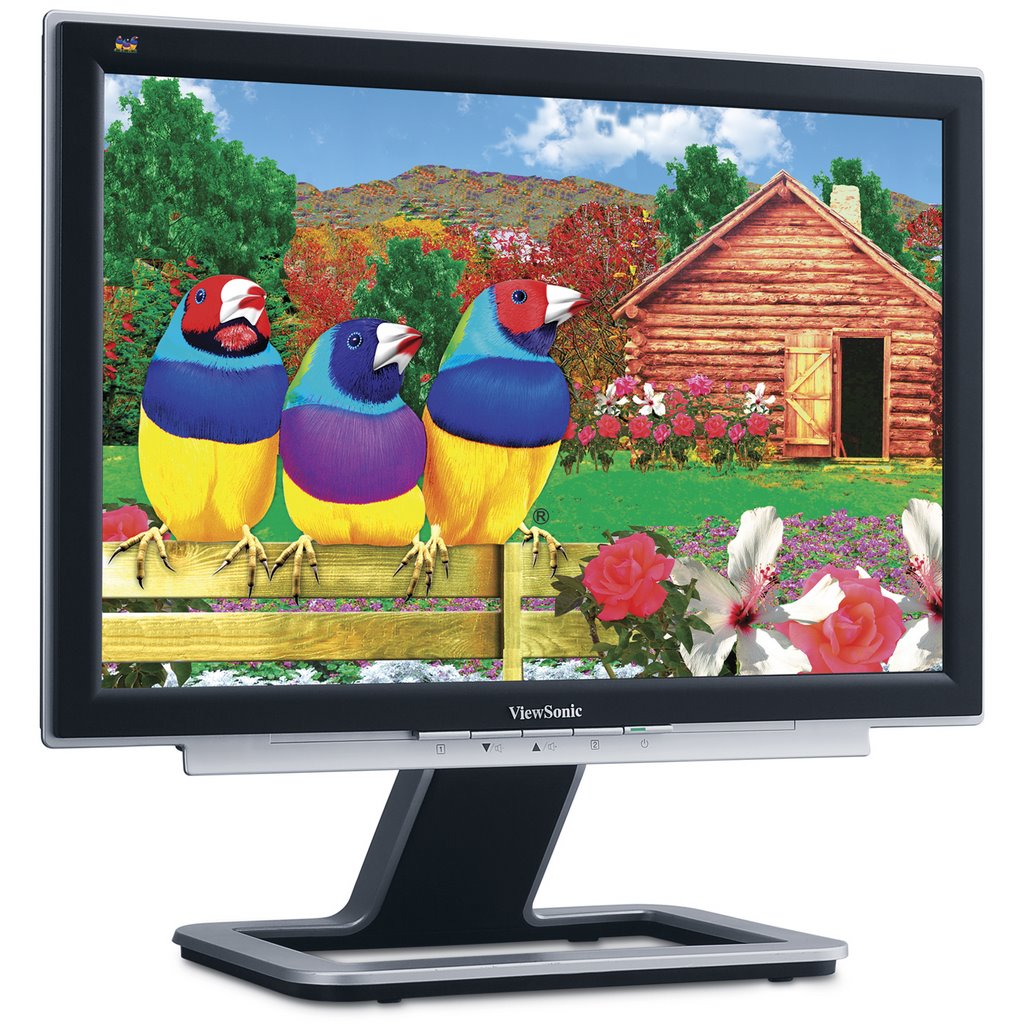
Product review: ViewSonic VX2025wm Monitor

ViewSonic VX2025wm
Price: $529 Cdn
By Evan Bury


The new ViewSonic VX2025 LCD monitor is a highly efficient and convenient computer display. It has many qualities that make it in some ways superior to the iMac’s built-in screen.

To start, the ViewSonic screen is clear and visible from all practical viewing angles, and unlike many LCD monitors, does not appear blurry or fuzzy when viewed from the side or above. Also, the resolution is consistently clear. When activated, the screen takes less than a second to bleep on, much faster than many other monitors.

The image is very clear and sharp. Images in games or movies show almost no blur or ghosting. The manufacturer attributes this to its ClearMotiv video technology.

Also, the ViewSonic’s base is very convenient. It does not occupy excessive space on the computer desk, allowing more space on the desk for manuals, notes and other computer related objects and equipment.


The one disadvantage is that the screen cannot swivel. A swiveling screen can be useful for space management and also checking behind the monitor when searching for small but important tools.

The screen does tilt, but that ability is not obvious. You have to pull up on a clip in the narrow neck of the stand to release it, and then the weight of the screen suddenly pitches if forward.

The controls located at the bottom of the screen are very easy to use, and includes a convenient volume control for the built-in speakers. Many other computers would force you to adjust the volume by more manual tedious means.

Finally, the wires in the back of the monitor are conveniently placed in a position that helps to avoid excessive tangling. When relocating a computer, tangled wires often present a time-consuming problem. However, the arrangement of these wires would keep tangling to a minimum, and would therefore allow the computer user to relocate the computer mush more quickly and efficiently.

Although the screen cannot swivel, the positive aspects of this screen far outweigh the one negative aspect.

To read more from this author, visit www.uncyclopedia.org and search “Wildwood,” “Fatsos” and a section on the FLQ under “Quebec.”

Friday, July 21, 2006

Mass communication: Criticizing Israel does not make you anti-Semitic

In her regular column in the Ottawa Citizen on July 20, " Quebec's ugly little bias," Brigitte Pellerin accuses Quebec pundits who are critical of Israel's actions in Lebanon of anti-Semitism.

While Israel does have the right to defend itself, and while Hezbollah is admittedly dedicated to the destruction of the Jewish state, Israel surely isn't above criticism. Even Kofi Annan criticized the level of Israel's reaction.

But criticizing Israel doesn't necessarily make one anti-Israeli or anti-Semitic, any more than criticizing the Bush administration makes you anti-American. Many, many loyal Americans criticize the White House regularly.

The American forces take a lot of flack over their behaviour, strategies and decisions in Afghanistan, in Iraq and around the world. And rightly so. Shouldn't we free, thinking people hold the government of Israel to the same standard?

Friday, July 14, 2006

Weasel Words


Canadian Prime Minister Stephen Harper calls Israel’s retaliatory attacks on Lebanon, including bombing of the Beirut airport and residential areas in Beirut, killing 50 civilians and only one Hizbollah fighter, “measured.”

Measured? What exactly does that mean? Measured with what? Against what? Is he saying it’s justified? He seems to be implying that, because also called Hizbollah’s attacks “unjustified,” and said that Israel has the right to defend itself.
All safe statements, in the weaseliest sense. Sure, any country has the right to defend itself. But I’m not alone in seeing the Israeli actions as escalation, not measured response. Time magazine, the Globe and Mail newspaper and other major Western news outlets have stated the Israel is escalating the conflict. The foreign ministers of both France and Italy called Israel's attack "disproportionate."

Comedian Jon Stewart described it as “World War Three breaking out” on the Daily Show on July 13, and even George W. Bush has promised Lebanon’s Prime Minister Fuad Saniora to pressure Israel to stop the attacks.

The lesson here, for Prime Minister Harper and other weasels, is to choose your weasel words more carefully. If this is a “measured” response, then Israel should also measure the risk more carefully. And Harper should measure his words.

Wednesday, July 12, 2006

Thanks, Hilary Swank


What drives a lot of attention to this site? Apparently, it’s Hilary Swank.

Three years ago, the first edition of Written Words cited Hilary Swank as an example of a too-thin actress. Since then, other celebrities have pushed the limits of anorexia even farther. But for whatever reason, having the name “Hilary Swank” in the site apparently attracts a lot of attention. The hits overload my ISP’s traffic limits every month!

So thanks, Hilary Swank, for the traffic.


Bad ad: Canadian Tire blows again


Poor kids: all they have is a lake, a hot summer day, bathing suits, floating dock — but no Aquaglide. They have to endure the efforts of their hapless Dad (dads are always hapless on TV) trying to entertain them.

Come on, Dad. What fun can a child have at a lake without an overpriced inflatable raft? What’s another four hundred bucks when you’ve already spent the money on the cottage rental, gas for the trip, treats, snacks and everything else? And where else can you get it but that ubiquitous Canadian resource, Canadian Tire?

A few months back, all the bloggers (The Written Word included) had great fun over the fact that the smug Canadian Tire guy, Ted Simonette, was discontinued. Canadian Tire hired a new ad agency, the renowned Taxi Canada to create a new line of ads.

The new series were better, showing realistic situations and products in use — the same things that Ted Simonette did, but much better.

But the latest ad for the Aquaglide inflatable raft shows that even an agency with as many awards as Taxi can misstep.

While Ted Simonette irritated us all with his smugness, the spoiled whininess of the kids really sets me off. Would I buy these brats a $400 toy when they couldn’t have fun with the lake? Would you?

TV wherever there’s Windows


Now you can watch live or recorded television on any Windows computer equipped with WinTV-PVR from Hauppauge Computer Works of (where else) Happauge, New York.

Hauppauge makes TV receivers for Windows computers, and Orb’s technology allows users to connect to their personal systems from anywhere with an Internet connection. The combination allows users to watch live or recorded TV streaming from their home PCs on mobile phones and PDAs, anywhere in the world.

So, if you can’t bear to miss a game or an installment of your favorite soap, you can watch it on your Blackberry while in a cab.

Now, all we need is a Macintosh version.

Find out more at www.hauppauge.com/orb

Meanwhile, Motorola’s Whole Home Media Services allows you to channel digital TV signals from the digital box or Tivo to any set in the house, using existing wiring. So now, you don’t have to pay for a second digital box for every TV set in your house. Sounds nice.

Find out more at http://broadband.motorola.com/whms/whm_how.html

Thursday, July 06, 2006

Open a dialogue

Sheikh Riyadh ul Haq, a controversial Muslim scholar from the U.K., decided not to try to enter Canada again, but instead delivered a lecture on being a better Muslim to the Youth Tarbiyah Conference in Scarborough, Ontario by video link.

A coalition of Canadian Muslim, Hindu, Jewish and gay rights groups operating under the banner of the Canadian Coalition for Democracies contacted Canadian Immigration Minister Monte Solberg to protest his visit here because, they said, he glorifies martyrdom and preaches hatred toward Jews, Hindus, moderate Muslims and homosexuals.

For example, his published speeches quote him as saying that the Jews and Hindus harbour the greatest hatred for Muslims, and apologized for “polluting” a mosque by saying the word “homosexual.”

Sheikh ul-Haq, for his part, said he did no such thing and that his statements had been taken out of context.

The question is: should we, a free, democratic society, ban the expression of ideas that make us uncomfortable? I would not agree with most of the speeches attributed to the Sheikh, but I can see where he might be coming from. In other words, I think he could make a case for some of his more objectionable statements. We may not agree with them, but shouldn’t we fight for his right to say them?

I don’t think we should defend the expression of outright hatred, but the quotes brought up by the Coalition for Democracies don’t seem to cross that line (although they do get awfully close).

The efforts of the Coalition did not stop the Sheikh from communicating his ideas. In fact, it gave them more prominence.

But shouldn’t we be doing that anyway? Isn’t the best way to combat hatred and destructive ideologies to confront them?

If we bar this man’s message from open discourse, we merely push it underground, where it festers. In the open, we can show everyone who’s interest how false the argument for hatred is; but if we don’t see it, then we can’t do that and we inadvertently grant the hate mongers more power.

Ban ul-Haq or confront him? Tell me what you think.

Monday, July 03, 2006

Perversion of communication

It’s said that back in 1991, Boris Yeltsin defeated the Communist hard-liners’ coup with a Macintosh computer, a laser printer and a fax machine. After arresting the crusading Mikhail Gorbachev, communist hardliners had their troops surround the “Russian White House,” where Yeltsin was holed up — but they neglected to cut off the phone lines. Yeltsin, so the story goes, used a Macintosh and fax machine — e-mail wasn’t that prevalent in 1991, especially in the then USSR — to rally the Russian people, who came out in unarmed thousands to protect the White House from the troops. One tank unit even joined the demonstration, allowing Yeltsin to make his famous speech from atop Tank No. 110. Within days, the coup d’etat was over, and within a few months, the Soviet Union was no more.

It’s my favourite story about the power of communication. And it was cited by many as an example of the “democratization of communication” — how new tools, like desktop publishing, personal computers and especially the Internet, were bringing the power of the press to everyday folks.

Since 2001, though, the world has seen the perversion of low-cost, high-power communications tools by terrorists. The latest example comes from the Brampton, Ontario courtroom where 17 men and boys are being tried for allegedly conspiring to commit terrorism in Canada. CBC News got a training video used to inspire would-be Canadian jihadists.
The video features Osama Bin Laden, who says “Therefore each individual from amongst the Muslims should come forth to kill the Jews and Americans,” says Bin Laden on the tape, “for killing them is foremost of obligations and the greatest form of worship.”

Wow.

Now, the abuse of technology for spreading hate and warping young personalities — okay, I’ll say it, for evil — is nothing new. Demagogues from Robespierre to Hitler have used the tools available to spread their messages.
What’s disturbing is that the widespread availability of today’s communications tools has engendered such a huge amount of hate. The fact that it’s aimed straight at my own culture and values is disturbing, too.
Is it inescapable to feel otherwise about a group who calls your cherished ideas, like individual freedom, equality of the sexes and open expression?

Kudos to Tarek Fatah of the Muslim Canadian Congress for such strong, public and consistent arguments for rationality among Muslim Canadians! He says he felt deeply offended” by a speech made by Kuwaiti Islamisst scholar Tareq Al Suwaidian, who told a group in Toronto that “Western civilization is rotten from within and nearing collapse ... it (the West) will continue to grow until an outside force hits it and you will be surprised at how quickly it falls."

Mr. Fatah is the MCC’s Communications Director, and apparently write most of the group’s website (www. muslimcanadiancongress.org); he has appeared on CBC radio to call for an end to foreign funding of religious institutions. The MCC also argues against religious courts in Canada, terrorism, the “war on terror,” and for equal rights.
It’s so good to hear from such a courageous, committed and rational voice. Let him and the MCC hear your opinions — send them an e-mail at muslimcongress@canada.com.

Friday, May 19, 2006

The Da Vinci Code is not that good

The Church doesn't want you to see The Da Vinci Code. President Bush doesn't want U.S. citizens to sing the National Anthem in Spanish. Pentecostal leaders in Canada and the U.S. don't want their children learning about human evolution. And the Prime Minister of Canada, Stephen Harper, doesn't want to let the media into funeral or memorial services for Canadian soldiers killed in Afghanistan.

They're all very defensive. And when people act defensively, they're afraid and they're hiding something.

So what are they hiding? I'll tackle these one at a time. Watch this space to see how this all ties together.

The fuss over The Da Vinci Code


The Catholic church says “don’t see The Da Vinci Code” because it’s an insult to religion. Vocal opponents of the book cite the author’s use of the Opus Dei organization and an albino monk as villains. But if you’ve read the book (I don’t want to give away too much of the plot to those who still intend to), you’ll know that ultimately, the author exonerates Opus Dei.

Why the fuss? Doesn't the Church know that this kind of protest is better publicity than the studios could ever buy? Really, the book isn't that good. It's a very forumlaic thriller. What Hitchcock would have called the “McGuffin” of this story is the Holy Grail, which has proven over centuries to make best-sellers.

What really concerns the Church is the main idea of the book — if you haven’t read the book yet and want to be surprised, STOP HERE - that Mary Magdalene was not a prostitute, but married Jesus Christ and had his child. Check your Gospels: there is no reference anywhere of Mary Magdalene being a prostitute, and none of the Gospels names her as the woman who washed Jesus’ feet with her tears and wiped them with her hair. In fact, they're not even in the same chapter!

Still, Brown's idea is radically different from the Church's teachings, and that's what bothers them most. And the Church doesn't like to have its ideas challenged: its long history proves that. Check out the stories of Peter Abelard, Galileo, Kopernicus, and of course the Protestant Reformation.

Actually, no religion seems to like to be challenged. They want us to believe and obey. I hope that as a civilization, we're all past that by now.

I think you should see the movie and read the book, because it does raise some very interesting issues about Christianity. Especially devout Catholics and other Christians - and they should really think about the role of women in their respective religions.

How does this related to George W. Bush, Pentecostals in northern Quebec or Stephen Harper? Watch this space.

Monday, May 08, 2006

A truly useful service

If you’re responsible for a blog or Web site, you’re always looking for free or cheap ways to boost your Web site’s quality and popularity. SEVENtwentyfour not only checks that all the links in your Web site are valid—or at least, lead somewhere—but it also tells you how many other sites in the whole Webiverse are connecting to your site.

This is far more informative than counting “hits” on your Web pages: it tells you just who is interested enough, or impressed enough, with your Web site to send others to it.

Another service is rank checking: SEVENtwentyfour tells you where your site ranks according to Google, Yahoo.com and others. As the company points out, “Google lowers your ranking if it sees broken links on your site, and Yahoo! won’t even list sites in its directory unless the links are perfect. Link errors aren’t just cosmetic. They cost you ranking, traffic and money.”

The service starts out as free for a month, but even when they charge, the bite is light: under $100 for a small site like mine for a whole year!

The service was put together by SevenTwentyFour, based in Mississauga, outside Toronto, and with another office near Buffalo, New York (straddling a hockey rivalry). It’s a subsidiary of marketing firm Brandimensions, and focuses on Web site verification.

Check them out at SEVENtwentyfour.com

Wednesday, April 12, 2006

Photo productivity possibilities for communications professionals

Apple’s new version of iPhoto software includes "Photocasting," a simple way to allow people to share digital photographs over the Internet. And iRemember is a “digital scrapbooking” application that works with iPhoto, making it simple to assemble digital photos into albums or “scrapbooks” and share them via e-mail.
To date, both applications are aimed at individual consumers, but professional communicators can see obvious business, marketing communication applications.
Are you using either application, or a reasonable facsimile, in your professional communications? Tell me how your solution works, using the Comments boxes below.

Celebrities speak out against media anorexia


Nice eyeliner, but she can’t even carry off a single line of dialogue in a commercial.

I am encouraged by two celebrities who have made very public criticisms of the kind of feminine anorexia that’s encouraged by the media, especially the fashion media.
J.K. Rowling, author of the Harry Potter novels, got a lot of attention when she used her own web site to rail against rail-thin models whose only purpose, she says, seems to be to promote overpriced handbags and “rat-like” dogs.
And punkess Pink’s song, Stupid Girls, is another rant against the thin image promoted by the fashion industry—a degree of thinness that is only possible through extremely unhealthy lifestyle choices.
I’ve been railing, myself, against this image and this idea that is so destructive to women’s self-esteem and health. With such powerful spokeswomen as Rowling and Pink, maybe we’ll start to see the pendulum swing away from the slavish emulation of empty-headed Paris Hilton.
And have you seen the latest TV ads for Maybelline's eyelash makeup? It features yet another typical fashion model: unnaturally, unhealthily thin with collagen-injected lips. The advertiser gives her one line - one line! of dialogue, and she can't even pull that off.

The real goods on separation

Two of the most prominent Quebec sovereignist playwrights, Michel Tremblay and Robert Lepage, have both renounced or questioned the value of Quebec separation. It’s been all over the Canadian media.
Finally, proof of the true nature of the “Quebec sovereignist movement”: it was bogus from the beginning. They never really meant it—the whole thing was just a lot of noise to get special treatment. It’s the same idea as a child threatening to leave the game and take her ball if she doesn’t get her way.
Ironically, Tremblay is the most produced playwright in Canada. He actually turned down the Order of Canada in 1990 because of his separatism—but accepted a Governor General’s Award in 1999.
I wonder how much financial support and grants Tremblay accepted as an artist from Canada while openly espousing separatism?

Wednesday, April 05, 2006

Don't Dare Argue with Evolution

The letters you write can get you into trouble. Take the Social Sciences and Humanities Research Council, which funds scientific research: they wrote that they can’t tell whether the theory of evolution is correct.

The SSHRC rejected a funding application by McGill University Professor Brian Alters, who had asked for $40,000 to find out if the increasing popularity of the “intelligent design” idea about the origins of life was “eroding acceptance of the theory of evolution.”

The SSHRC turned down the application because “the proposition did not adequately substantiate the premise that the popularizing of Intelligent Design Theory had detrimental effects on Canadian students, teaches, parents and policymakers,” its letter read.

But what really got them into trouble was the next sentence: “Nor did the committee considerer that there was adequate justification for the assumption in the proposal that the theory of Evolution, and not Intelligent Design theory, was correct.”

Professor Alters read the letter at a public lecture in Montreal at the end of March, garnering gasps from the audience and headlines in newspapers.

The professor has scored a lot of points by repeating the line about inadequate justification for the assumption of evolution. And rightly so: evolution is proven. While there is legitimate scientific debate about its mechanics, and while I will admit that the theory has become unassailable orthodoxy in scientific circles, Intelligent Design is an attempt to to put a scientific façade on creationism. It’s supported, so far as I can tell, only by those who confuse willful ignorance with religious faith.

Maybe Professor Alters’ application was inadequate: if I were marking a student’s essay on comparing the theories of evolution and intelligent design, I’d look for the same rigour applied to both arguments. And evolution would win, obviously. So maybe what the Council is saying is that Prof. Alters didn’t fill this part of the application out right.

And we know how important it is to the federal government (any federal government) to fill out applications the right way.

What does this controversy mean? It means that anyone writing a letter on behalf of an organization—university, federal agency, or business—should have it checked by a communications professional before sealing the envelope.