 |
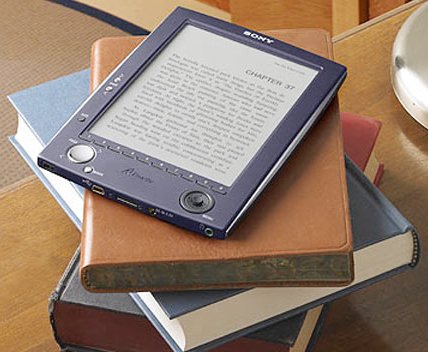
| Image from Jorghex’s collection in Wikimedia Commons, published under a Creative Commons Attribution-ShareAlike 3.0 Unreported License. - See more at: |
It baffles me that there are still authors, intelligent
professionals who want to reach an audience, yet who do not use the most
effective and cheapest way of doing that — ebooks.
Last Saturday, I participated in the first Ottawa Book Fest
held by the National Capital branch of the Canadian Authors Association. While
it wasn’t what I hoped for in terms of selling books or engaging with readers,
I did enjoy talking with many other local authors. Two things struck me: the
number of authors who don’t bother with e-books, and the number who use
expensive “publishing services” companies — vanity publishers.
“You can’t wrap an e-book,” was one typical comment. True,
there is something very appealing about the tactile experience of holding a
book. That’s one reason I went to the trouble and expense of getting paperbacks
of my own titles.
Paper has a number of advantages over e-books. I will take a
paperback to the beach or poolside, but I hesitate to bring my iPad there. It’s
hard to read my iPad in bright sunlight (although the E-Ink screens of the
Kobo, Kindle and others don’t have this problem). If you drop a paperback or
get it dirty, it’s no big deal. At worst, you might have to spend ten to
fifteen dollars to replace it. Or maybe $50 for a big hardcover. If I were to
drop my iPad in the bathtub, that would be a major disaster.
 |
| Image courtesy Steve Taffee's Blogg-Ed Indetermination |
And yes, you can wrap up a paperback book and enjoy the
recipient opening it.
On the other hand, the e-book’s advantages include:
- they’re lighter, important when travelling
- they should be cheaper — the publisher doesn’t have to pay for paper, ink or shipping
- it’s a lot easier to give copies to people who are not in the same room with you — or the same country.
Let’s look at some facts.
E-books outsell paper books. More than two years ago, Amazon
reported that its sales of e-books had surpassed paper books, and while that’s
just one (the biggest in the world) outlet, the Association of American
Publishers also announced that e-books outsold hardcovers in the adult fiction
category as of 2011. E-books are the fastest growing sector of the book market,
and even though the AAP reported that growth slowed in 2013, it was still
growing and hit $800 million, while sales of paperbacks fell to $898 million.
As Hugh Howey pointed out on his blog (which I referenced in
my post in February), the book e-tailers don’t report their sales numbers. That means those numbers do not include any
self-published e-books, which according to Howey’s research, outsell all the
e-books from all Big Five publishers combined.
Why limit yourself?
E-book technology sparked an explosion in the number of
independent authors self-publishing books. It’s an enabling technology.
And it’s not difficult to use. It helps to know about
publishing, but if you can create a word processing file, you can create an e-book.
Not necessarily a good e-book, but
that’s a different discussion.
That’s why it astounds me to hear writers denigrate the e-book
format. For an author to choose not to publish an e-books would be like a
travel agent choosing not to book air travel and sell train tickets only. Sure,
there’s a market for train travel, and trains can be more romantic and evocative
than airplanes, but that choice severely limits the travel agent’s career.
 |
| Photo by Alexander Henning Drachmann (Creative Commons) |
Need advice? Ask me
Some writers may feel intimidated by e-books and the need to
learn a new format. But as I said, it’s easier to format an e-book. There are
plenty of free resources on the net, in the blogosphere, even on Facebook. Mark
Coker’s excellent and free Smashwords Style Guide
gives you step-by-step instructions, with lots of time-saving tips.
Or ask another author who has gone through the process. Most
are happy to share what they’ve learned. For free. Ask me.
If you still feel unsure, or want to get someone to produce
your e-book for you, then I’ll certainly charge a lot less than any vanity
publisher.
If we work together, we’ll all succeed.