Showing posts with label Monday blogs. Show all posts

Monday, March 03, 2014

What do great writers like to read? Gary Henry and Mohana Rajakumar

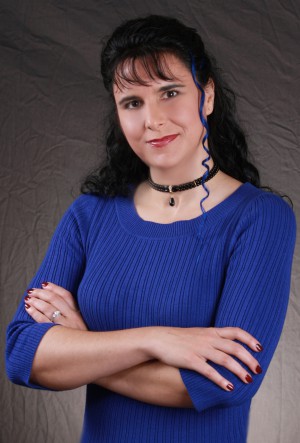
Image courtesy Mary Okeke Reviews
This week, two very different authors answer my unscientific survey of best sellers.

Gary Henry is author of the urban fantasy novel American Goddesses and a collection of short stories, What Happened to Jory and Other Dark Departures.

Mohanalakshmi Rajakumar is author of a number of literary novels that explore such as Love Comes Later (excerpted two weeks ago in Written Words), An Unlikely Goddess, The Dohmestics and Qatari Voices, among other works of fiction and non-fiction. Over to you!

Name three characteristics of books that you like. What makes you keep reading a book? What are some books that you weren't able to put down until you finished them?

Gary Henry: I like simplicity. It should be easy to follow the narrative and stay on top of what's  happening. That doesn't exclude plot twists and turns. But I don't like having to backtrack to figure out what's going on.

I like character description so that I can get an idea of what the characters look like, in addition to what they say and do. I call that — what characters say, do and look like — the character triangle.

I like books written in active voice and with vivid verbs.

Mohana Rajakumar: I love books that give readers insight into culture they wouldn't otherwise have; features strong women behaving in empowering ways; are a mixture of history and imagination.

Responding to the voice of the author (if non-fiction) or the characters who the story is about; of course not knowing what will happen next is always a plus.

Right now The Language of Baklava by Diana Abu-Jaber is my current favorite read. She remembers everything and there are recipes included!

Do you consciously try to emulate these books? If so, what form does that take: plot, structure, characters, settings, author's voice and word choice?

Mohana Rajakumar: I am thinking about how to revise my own memoir to be more compelling! Readers have loved it but some have found the essays disjointed. Diana's takes a chronological approach so I'd have to go back and create a lot of content if I hoped to adopt her style completely.

Gary Henry: I do. It's these kinds of books that inspired me as a kid to want to write books like them. Specifically, books by Robert E. Howard (Conan), George MacDonald Fraser (Flashman) and Len Deighton (too many to name). Biggest influence on me has been their handling of characters and word choice — active voice and vivid verbs.

Do you try to avoid any of the techniques or conventions followed by your favourite writers?

Gary Henry: No. I just try to avoid overtly copying. I have turned to favourite writers during my own writing at times to see how they, Fraser for instance, might have described a woman's face, and try to follow his technique, but draw the line at lifting copy.

Mohana Rajakumar: Not yet but that doesn't mean it couldn't happen in the future.


What rules of writing do you intentionally break?


Mohana Rajakumar: Staying in one point of view the entire story; sometimes if you have an interesting cast of characters, it's better to hop around and give readers a 360 experience.

Gary Henry: I've broken the rule about introducing important characters late, but that's not something I'll make into a habit. Rules are good, especially when we're getting started as writers. Always remember, though, it's your story, and if you don't please yourself with it, it'll be hard to please anyone else. Take that rule with a generous bit of salt, too.

Gary Henry is a writer, runner and dog dad, who lives in Lawrence, Kansas with wife Karen and canine kids Lambchop and Sophie Jones. He is managing editor at Durability + Design Magazine, a glossy print monthly covering architectural design, technology and construction. He is the author of AMERICAN GODDESSES, a sexy super-powered paranormal fantasy thriller for e-book readers, available on at Amazon.com  

Visit his blogs, Honest Indie Book Reviews, and his new Indie Universe. Follow him on Twitter @LiteraryGary. And visit his Author page on Independent Authors International.

Mohanalakshmi Rajakumar is a South Asian American who has lived in Qatar since 2005. She has since published seven e-books including a mom-ior for first time mothers, Mommy But Still Me, a guide for aspiring writers, So You Want to Sell a Million Copies, a short story collection, Coloured and Other Stories, and a novel about women’s friendships, Saving Peace

From Dunes to Dior, named as a Best Indie book in 2013, is a collection of essays related to her experiences as a female South Asian American living in the Arabian Gulf. Love Comes Later, a literary romance set in Qatar and London, won the Best Indie Book Award for Romance in 2013. The Dohmestics is an inside look into compound life, the day to day dynamics between housemaids and their employers.

Visit Mohana’s website  or follow her latest on Twitter @moha_doha, on Facebook, Youtube or Pinterest.

You can visit Mohana’s Author Page on Amazon. Also, visit her Author page on Best Selling Reads.


Monday, February 24, 2014

Monday blog: Real numbers — The truth about self-publishing

This past January, Digital Book World reported that nearly 80 percent of self-published authors and more than half of traditionally published authors earn less than $1,000 a year from their efforts.

That report has generated a lot of debate. Some very honest and brave independent authors have put their own statistics up against this argument: 
Hugh Howey — arguably the most successful indie author these days — and another, anonymous indie author compiled statistical research and put the lie to the DBW claim. They point out that the DBW report is so broad as to be useless — it includes books of all types, and does not include ebooks sold by Amazon, the biggest book retailer in the world. 


Howey and his unnamed partner dug deep and found that e-books account for 86 percent of all genre fiction, and that  independent authors outsell the Big 5 commercial publishers combined in genre fiction.  There’s a lot of analysis in the report, and I recommend you read it

Toby Neal, bestselling author of the Lei Crime series and several other books, candidly revealed her own sales, revenues and cost figures on her books. While Toby treats the writing as an art, she approaches publishing as a business. She invested $12,000 in editing, design, production and marketing of her first book, Blood Orchids, and netted over $100,000. She still makes money on that book, and views all her nine books (with one more coming in March).
 
Independent author Jami Gold blogged about two more analytical reports that took apart the DBW claim about most independent authors making under $1,000. Jami’s original post was reblogged by book consultant Kristen Lamb. It turns out that professional independent authors, those who use professional editors and designers, market their books as a business and continue to publish several titles, make considerably more money. 

About 50% of respondents make more than $10K when they have 4-7 self-published books available, and 20% make more than $50K. At 12-20 books available, over 50% of respondents are making 50K or more, and 30% are over $100K.

In short, independent writers who treat writing as a business or profession, rather than as just a hobby or game, can make a comfortable living at it.

What’s a professional writer? 

Being professional means:
  • publishing regularly, developing a catalog of titles
  • using a professional editor – someone with background experience in the publishing industry
  • using a professional cover designer
  • marketing and promoting strategically and using professional services appropriately.

Getting into the category will cost you money, but not as much as giving up 90% of your earnings to a commercial publisher, and certainly not as much as forking out thousands to a vanity publisher or something like one of those “become a published author” scams. And it won’t cost as much as you give up by not doing these things.

I have to admit, I’m remiss on one dimension: the regularity of my publishing my own books. It’s been a year since I published my second novel, One Shade of Red, and it’s going to be at least three more months before the next title is ready for publication. It’s tentatively called Out of the USSR, but that may change. I may just call it Maurice.

It’s so refreshing, indeed inspiring, to get this honest number-crunching from some people who are making a profession from being independent authors, and showing us all there is a business model and a path that work.

Want to find more indie authors who are working the dream? In addition to those mentioned above, check out:


And many more that I just don’t have time or space to list here, and many I haven’t had the chance to read, yet. But keep coming back to the blog for reviews and interviews with independent authors.

Monday, February 17, 2014

Monday blog: What do best-selling authors read?

Creative Commons image courtesy http://bethtrissel.wordpress.com/
This week, I asked two very different writers to tell us what they look for in the books they read.
Kathleen Valentine writes a mixture of horror, humour and historical novels, novellas and stories, including The Old Mermaid’s Tale and the award-winning Depraved Heart, which could be described as paranormal romantic suspense.
Alan McDermott is the bestselling author of the Tom Gray trilogy, which has been profiled on this blog before. His writing is fast-paced, tense and explosive.
You’d expect them to have very different reactions to books, and in a sense they do — but I think that you’ll find some parallels, too.

Name three characteristics of books that you like. What makes you keep reading a book? What are some books that you weren't able to put down until you finished them?

Kathleen Valentine: The number one thing that I look for in fiction is a sympathetic character that I can care about. There seems to be a trend these days toward characters that are just awful—mean, calculating, whiny, self-absorbed. I refuse to spend time with people like that in real life so why spend time on the page with them? I want at least one character I can root for.
I'm also drawn to place. It doesn't have to be an exotic or glamorous place, just a place that I can imagine spending time in. Then, of course, comes a situation that interests me. It doesn't have to be intricately plotted but it does have to engage the characters. Writing style is also important to me. It doesn't have to be overly descriptive but I get bored with passive voice, clichéd descriptions, and repetitive word use.
Two books that I've recently read that I found hard to put down were The Orchardist and The Light Between Oceans. Both had central characters that were deeply flawed but had beautiful hearts. The settings were also mesmerizing—an orchard in a canyon and a lighthouse on an island. They were wonderful reads for me.
Alan McDermott: Easy. They must be fast-paced, full of intrigue and realistic. Like everyone else, I have my favourite authors, but I will abandon their book if I’m not being drawn in after a couple of chapters. Tom Clancy did that very well, and his books kept me mesmerised. I particularly enjoyed Rainbow Six and Red Storm Rising, books I have read more than once.

People say that a book must have a beginning, a middle and an end, but I like those which start and never let up until the last page.

Do you consciously try to emulate these books? If so, what form does that take: plot, structure, characters, settings, author's voice and word choice?
Alan McDermott: Clancy was the master at having multiple scenes going on at the same time, and he brought them together cleverly. I tried that with my first three books and was happy with the result.
Kathleen Valentine: No, not at all. I think I have a pretty distinctive voice—at least that is hat my readers tell me. I think sometimes characters in books will inspire me to want to create a character with many of the same qualities. For instance in Donna Tartt's The Secret History I was mesmerized by Henry Winter that I think parts of him have crept into a couple of my male characters.
Do you try to avoid any of the techniques or conventions followed by your favourite writers?
Kathleen Valentine: Not really. Most of my favorite writers—James Lee Burke, Dennis Lehane A.S. Byatt, Isabel Allende—have very unique voices and if I tried to emulate them it would be foolish. I do aspire to write as well but that's just a dream.
Alan McDermott: Yes, I try not to go into too much detail about surroundings and what people are wearing. If the protagonist is in the jungle, let the reader know if it’s raining or not, but don’t explain how green everything is. Okay, mention the bugs and other wildlife, but not every other page. I don’t like padding out a story for the sake of hitting a word count. I’d much rather race through and finish a book in a couple of days than spend a month getting to the climax.
What rules of writing do you intentionally break?
Alan McDermott: I think I break just about every rule there is! I know that some authors study the art of writing for years and make sure they structure their books in the “conventional” way. That’s absolutely fine, and I wouldn’t knock anyone for approaching writing in that manner.

I left high school aged 16 with a C grade in English and that’s about as far as my studies went, so for me, the only rule is: entertain the reader and make them want to come back for more!

I write my books the way I like to read them, and that means keeping the action going, and introducing new twists whenever I can. A lot of authors may criticise my books for not following all the rules, but we are living in the Internet era, where attention spans are dropping with every passing day. Folks are used to reading an article on the Internet and then moving on to the next one. If we keep producing books that don’t first grab the reader and then keep a strangle hold on them, we risk losing the next generation of readers. I’m confident that my books will stand that test of time. I’ll never win a literary award, but hopefully I’ll continue to make a living, and that’s what matters to me. Thirty thousand people have read my third book, which suggests my style of writing has already built a following.
Kathleen Valentine: I don't think I do but that's because I don't pay attention to rules in the first place. I pay attention to grammar and punctuation, etc. but writing rules? I don't think I even know of any.
Thank you for these insights, Alan and Kathleen.

Add caption
Kathleen Valentine is the author of three novels: The Old Mermaid's Tale, Each Angel Burns and Depraved Heart and numerous short stories and novellas. Her Beacon Hill Chronicles, including The Crazy Old Lady in the Attic, The Crazy Old Lady's Revenge and The Crazy Old Lady Unleashed, are Amazon Top Sellers. Her blog, KathleenValentineBlog.com, has been read by thousands of readers since its beginning in July 2005.
Her most recent work includes The Whiskey Bottle in the Wall: Secrets of Marienstadt and The Monday Night Needlework and Murder Guild. She has been listed as an Amazon Top 100 Author in Horror. She is a member of BestSelling Reads. Kathleen lives in Gloucester, Massachusetts, America's oldest seaport, and is writing every day. Her website is KathleenValentine.com

Alan McDermott is a husband, father to beautiful twin girls and a software developer from the south of England. Since 2005, he has been working as a software developer and currently creates clinical applications for the National Health Service. Alan’s writing career began in 2011 with the action thriller GrayJustice, and his subsequent Tom Gray trilogy has been picked up by Amazon division Thomas and Mercer. Alan is a fellow founding member of Independent Authors International.