Showing posts with label Gary Henry. Show all posts

Monday, March 03, 2014

What do great writers like to read? Gary Henry and Mohana Rajakumar

Image courtesy Mary Okeke Reviews
This week, two very different authors answer my unscientific survey of best sellers.

Gary Henry is author of the urban fantasy novel American Goddesses and a collection of short stories, What Happened to Jory and Other Dark Departures.

Mohanalakshmi Rajakumar is author of a number of literary novels that explore such as Love Comes Later (excerpted two weeks ago in Written Words), An Unlikely Goddess, The Dohmestics and Qatari Voices, among other works of fiction and non-fiction. Over to you!

Name three characteristics of books that you like. What makes you keep reading a book? What are some books that you weren't able to put down until you finished them?

Gary Henry: I like simplicity. It should be easy to follow the narrative and stay on top of what's  happening. That doesn't exclude plot twists and turns. But I don't like having to backtrack to figure out what's going on.

I like character description so that I can get an idea of what the characters look like, in addition to what they say and do. I call that — what characters say, do and look like — the character triangle.

I like books written in active voice and with vivid verbs.

Mohana Rajakumar: I love books that give readers insight into culture they wouldn't otherwise have; features strong women behaving in empowering ways; are a mixture of history and imagination.

Responding to the voice of the author (if non-fiction) or the characters who the story is about; of course not knowing what will happen next is always a plus.

Right now The Language of Baklava by Diana Abu-Jaber is my current favorite read. She remembers everything and there are recipes included!

Do you consciously try to emulate these books? If so, what form does that take: plot, structure, characters, settings, author's voice and word choice?

Mohana Rajakumar: I am thinking about how to revise my own memoir to be more compelling! Readers have loved it but some have found the essays disjointed. Diana's takes a chronological approach so I'd have to go back and create a lot of content if I hoped to adopt her style completely.

Gary Henry: I do. It's these kinds of books that inspired me as a kid to want to write books like them. Specifically, books by Robert E. Howard (Conan), George MacDonald Fraser (Flashman) and Len Deighton (too many to name). Biggest influence on me has been their handling of characters and word choice — active voice and vivid verbs.

Do you try to avoid any of the techniques or conventions followed by your favourite writers?

Gary Henry: No. I just try to avoid overtly copying. I have turned to favourite writers during my own writing at times to see how they, Fraser for instance, might have described a woman's face, and try to follow his technique, but draw the line at lifting copy.

Mohana Rajakumar: Not yet but that doesn't mean it couldn't happen in the future.


What rules of writing do you intentionally break?


Mohana Rajakumar: Staying in one point of view the entire story; sometimes if you have an interesting cast of characters, it's better to hop around and give readers a 360 experience.

Gary Henry: I've broken the rule about introducing important characters late, but that's not something I'll make into a habit. Rules are good, especially when we're getting started as writers. Always remember, though, it's your story, and if you don't please yourself with it, it'll be hard to please anyone else. Take that rule with a generous bit of salt, too.

Gary Henry is a writer, runner and dog dad, who lives in Lawrence, Kansas with wife Karen and canine kids Lambchop and Sophie Jones. He is managing editor at Durability + Design Magazine, a glossy print monthly covering architectural design, technology and construction. He is the author of AMERICAN GODDESSES, a sexy super-powered paranormal fantasy thriller for e-book readers, available on at Amazon.com  

Visit his blogs, Honest Indie Book Reviews, and his new Indie Universe. Follow him on Twitter @LiteraryGary. And visit his Author page on Independent Authors International.

Mohanalakshmi Rajakumar is a South Asian American who has lived in Qatar since 2005. She has since published seven e-books including a mom-ior for first time mothers, Mommy But Still Me, a guide for aspiring writers, So You Want to Sell a Million Copies, a short story collection, Coloured and Other Stories, and a novel about women’s friendships, Saving Peace

From Dunes to Dior, named as a Best Indie book in 2013, is a collection of essays related to her experiences as a female South Asian American living in the Arabian Gulf. Love Comes Later, a literary romance set in Qatar and London, won the Best Indie Book Award for Romance in 2013. The Dohmestics is an inside look into compound life, the day to day dynamics between housemaids and their employers.

Visit Mohana’s website  or follow her latest on Twitter @moha_doha, on Facebook, Youtube or Pinterest.

You can visit Mohana’s Author Page on Amazon. Also, visit her Author page on Best Selling Reads.


Saturday, February 08, 2014

What do bestselling writers like to read?

Writers are inspired and informed by authors they’ve read. I asked some best-selling authors what they like to read most. This week, I’ve asked two very different authors for their opinions.

Best-selling Toby Neal is author of the Lei Crime series, set in her home state of Hawai’i; Russell Blake writes thrillers from his home in Mexico.


Name three characteristics of books that you like. What makes you keep reading a book? What are some books that you weren't able to put down until you finished them?


Toby Neal: 

I love a book with vivid characters in interesting situations most of all. I'm a voracious reader and read a variety of genres: mystery/suspense, romance, literary, memoir, sci-fi...First and foremost, the characters have to be three-dimensional and capture my interest. I also like original imagery and word choice "shaking his hand felt like grabbing a gel-filled surgical glove" is an image I remember from a new book I'm blurbing for mystery writer Thomas Matthews. Original! Memorable!  I like writing that feels confident, fresh, fast moving with a deeper message behind the outward action — and I write the kinds of books I enjoy reading.

Things I hate: 
  •     clichés
  •     formulaic plots
  •     overdescription and qualifiers: "she gasped, wailed, screeched"
  •     wandering narrative — I want to be anchored in each scene with sensory cues. New writers often launch into long dialogues that then float, unanchored, and we lose the setting 
  •     self-conscious wannabe sophistication, like no punctuation (literary can be very annoying to me).

In short, if a book has dynamic characters and solid writing, I'll read it and probably review it too!

Russell Blake: 

In fiction, I'd have to say that I look for different things depending upon my mood. When I'm in the mood for a mystery/thriller, I look for a combination of pace, plot and prose. If the pace is fast and the plot engaging I'm hooked, but if the prose does more than simply move me along, I'll be recommending the book to my friends.

I think the last book I couldn't put down was one of James Lee Burke’s — Last Car to Elysian Fields, I believe. Before that, Lawrence Block’s The Burglar Who Counted the Spoons. Although these are very different styles, I found them both fully engaging and finished them within a few days.

When I'm in the mood for literary fiction, it's all about the prose. A great example of what I'm into would be Ben Fountain’s Billy Lynn's Long Halftime Walk — quirky, unusual, but brilliant prose. Frankly, I have so little time to read these days, with my publishing schedule, I'm unlikely to have enough time to read an entire book without putting it down. But those were books I put everything aside to finish.


Do you consciously try to emulate these books? If so, what form does that take: plot, structure, characters, settings, author's voice and word choice?


Russell Blake: 

Good lord, no. There's no way I could come close to James Lee Burke’s word choice or author voice, although I aspire to at least get in the same ballpark. I'd say that I tend to ignore other authors once I sit down to write — I try to learn while I'm reading, and then forget the specifics, allowing their prose to color my perception without creating something I follow.

I don't like to deconstruct when I'm reading, and the only way I could see myself emulating with any accuracy would be if I read, deconstructed, and then deliberately set out to use what I'd analyzed, which would take all the joy out of writing for me.


Toby Neal: 

I've written ten books and a memoir. Seven of them are published with great reviews. I don't need to emulate anyone anymore, but when I started out in crime mystery/police procedural, I was emulating my "idols" Michael Connelly and Lisa Gardner and tried to "show not tell" virtually everything. My first book, Blood Orchids, is much choppier and more gritty in writing style than later works, where I found my "comfort zone" of a more descriptive style and less bad language and gritty violence. I prefer a more PG-13 level of violence, and my readers like that, too. I've also developed a series that's unique in the police procedural genre, which features a protagonist who starts out very damaged from child sexual abuse, gradually improves and recovers over the course of six books, and grows through a subplot love story that readers are crazy about!

Most of my early author idols’ protagonists remain fairly static, and that’s come to bore me as a reader. I eventually abandoned Stephanie Plum and Sue Grafton because the main character never changed. That frustrated me — perhaps because of my background as a mental health therapist, I want my characters to learn and grow over the course of the book(s). I hear repeatedly from readers that get hooked on my books that they like that, too.

Do you try to avoid any of the techniques or conventions followed by your favourite writers?


Toby Neal: 

I try to avoid being clichéd and formulaic (see above annoyance list) and if my favourite writers devolve into that zone, than yes, I not only stop letting them influence me, I stop reading them. For instance, I’m not reading Patricia Cornwell anymore because I feel like she’s obsessed with detail and her books have slowed down too much for me. I can take a class in forensics if that’s what I want, rather than reading that for pleasure!

I've become much more confident in my own voice and vision, and while I read a lot (as I said above) I try to expand my own repertoire by reading all kinds of things, including nonfiction that can inform my plots. One new "indie" mystery writer I really respect is Gae Lynn Woods. I wait for her books, and they inevitably are more gruesome and twisty than mine, with Texas local color — and I love the nested mysteries and distinctive characters she does. I also really respect Gillian Flynn for her truly original plots — but I hate her characters! All of them! And yet, they’re so bizarre and captivating I can’t stop reading. Now that’s a good book, that keeps you reading even when you want to stop.


Russell Blake: 

Every author I really like tends to have something intriguing in their use of language, but I don't think they follow specific conventions. None I'm able to deduce, at any rate. The hallmark of an effective author is the ability to mind-meld with the reader and transport them along, to put them in the same place as the characters, make them hear, see, smell, touch the world you've created. So beyond trying to do so, I can't say as I consciously avoid or advocate any one thing beyond clear communication while creating beautiful sentences.

What rules of writing do you intentionally break? 


Toby Neal: 

Point of view is my favourite area to surprise and bend the rules on readers.

I try to push out with new combinations of POV in every book. Lei Crime #6, Shattered Palms, coming out in March, is the first book I've written with only one, third-person POV.

My most innovative featured an investigator in third-person past tense, and a bad guy POV in first-person present tense. It made for a sometimes jarring reading experience, and I wanted readers to be uncomfortable — I was writing about sex trafficking and sadism, without a lot of gruesomeness. I wanted the reader to be in the head of a sociopath and see their way of seeing the world. It was challenging, but I think I pulled it off in Black Jasmine.


Russell Blake: 

Well, I don't believe that there are many actual rules, more like author preferences that have been laid out as rules by the dogmatic. In that regard, I don't much care about the proscription against adverbs in dialogue tags, nor am I afraid to open with the weather, nor do I particularly fear overwriting. So I guess you could say that while I know all the rules, I break or abide by them as the story mandates rather than out of some slavish devotion.

Thank you, Toby and Russell!


Toby Neal grew up on the island of Kauai in Hawaii. After a few stretches of “exile” to pursue education, she has made the islands her home for the last fifteen years. Toby is a mental health therapist, a career that has informed the depth and complexity of the characters in her books. Outside of work and writing, Toby volunteers and enjoys life in Hawaii through outdoor activities, including beach walking, body boarding, scuba diving, photography and hiking.

Visit her website, follow her on Twitter @tobywneal, or visit her Facebook page, LeiCrimeSeries.


 A Wall Street Journal and The Times (UK) featured author, Russell Blake is the bestselling author of twenty-five books, including the thriller novels Fatal Exchange, The Geronimo Breach, The Voynich Cypher,  Zero Sum, Silver Justice, King of Swords, Upon A Pale Horse, the Assassin series, the Delphi Chronicle trilogy, the JET series, and his latest BLACK series.

Non-fiction includes the international bestseller An Angel With Fur (animal biography) and How To Sell A Gazillion eBooks In No Time (even if drunk, high or incarcerated), a parody of all things writing-related.

Blake lives in Mexico and enjoys his dogs, fishing, boating, tequila and writing, while battling world domination by clowns.

Visit his blog, RussellBlake.com where he publishes his periodic thoughts, such as they are. Follow him on twitter @BlakeBooks.


Thursday, May 30, 2013

Is there still a role for the commercial publisher?


“The global electronic marketplace is rapidly depleting authors’ income streams,” wrote Scott Turow, author and President of the Authors Guild., in an op-ed in the New York Times in April. E-books, pirated copies and changes to copyright laws will cause the “slow death of the American author.”
Photo: Evan Long by Creative Commons
Turow documents the futile efforts of the big publishing companies to control the e-book phenomenon, through doing things like fixing their prices ridiculously high, refusing to sell e-books to libraries and reducing the royalties they pay to authors.
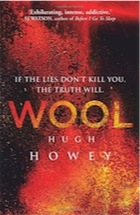
On the other end of the spectrum, Hugh Howey, author of the indie-pub phenomenon Wool, says that the self-publishing future is great for writers: “Those who take their writing seriously, who publish more than one title a year and do this year after year, are finding real success with their art. They are earning hundreds or thousands of dollars a month,” he wrote in Salon
Following these two statements, we have to ask: when readers choose good books without the intermediation of a publisher, is there a market for the gigantic, multinational Big Six — or “Bix” — publishers?
I have written about this on a couple of other blogs: Writers Get Together, the Guild of Dreams and BestSellingReads. Today, I’m bringing the arguments together and suggesting a new solution.

The legendary legacy

E-books are the driving force of publishing these days. Amazon reported that more than half of its sales are of e-books. And David Gaughran estimates that 25 percent of the e-book market is by independent authors.
The Bix claim to be agents of quality control: they find the best manuscripts, edit them rigourously, design and lay them out to be legible, print and distribute them so that readers enjoy reading them and promote them to bring them to the attention of audiences. Publishers take care of all those grimy aspects of publishing so authors are free to write more great books.
The Bix claim that they also provide an essential gatekeeping function. When the numbers of independent authors self-publishing e-books started climbing, the commercial publishers said that the self-published just weren't good enough to get published by a commercial publisher.
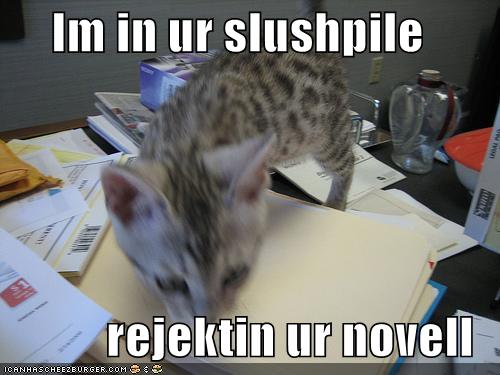
All those manuscripts that didn't make it out of the slush pile? The publisher sent their authors polite rejection letters, saying not that the manuscript is crap, but that it "didn't meet their needs at this time."
LOLcat built from original photo by sutefani in orlando,
under a Creative Commons-Attribution license by way of Flickr
Having worked for big and small publishers, here is what I know about the reality of choosing and editing books:
  • Acquisitions editors and agents choose manuscripts to publish based on sellability, not on quality. Because they cannot tell the future any better than you or me, they use factors like whether an author has been published before to make decisions. Getting selected from the slush pile is due either to blind luck or — usually — connections within the industry.
  • The quality of editing varies widely. Most copy-editors and proofreaders are right out of university and they’re so badly underpaid that most quickly seek more rewarding employment.
In reality, authors today do most of what publishers did 20 years ago: research, check facts, write, edit, copy-edit and proofread. Interior design or layout is capably handled by word processing apps. Howey and any number of other authors concur that most authors published by big companies have to do their own promotion. The days of book launch tours are long gone. Bix publishers only spend money to promote their sure-fire winners: their biggest sellers and celebrity authors.
The only money they shell out for new writers and relative unknowns, even for their mid-list authors, are for printing and distributing copies to bookstores.
But it’s not hard for the individual author to handle that part, as well. Software does most of the layout and production of e-books. Smashwords, Amazon and iTunes give step-by-step instructions on how to create a good e-book. Amazon’s CreateSpace system does the same for printed books. Their quality is equal to or better than commercial publishers’, and their prices are better than anything I’ve found in 30 years of managing printing.
That leaves cover design. More on that later.

The independent reality


Hugh Howey, from his website.
Hugh Howey, compares the self-published independent author to the independent musician. “We admire anyone who learns the grammar of chords and then strings these phrases together into music.” They begin by playing cover tunes, progress to busking and open-mic nights, get small gigs and hope to open for a big act or be discovered by a major label. “This is how artists are born. They are self-made.”
Like a musician, Howey became an overnight success after years of hard work. His breakthrough, best-selling novel, Wool, was the eighth or ninth title that he published through Amazon’s Kindle Select program. After he sold half a million copies, Simon & Schuster offered seven figures for the publishing rights. Ridley Scott optioned film rights.
According to Forbes magazine, Howey turned down S&S’s original seven-figure offer. Instead, he sold just the print rights for six figures, keeping the e-book rights for himself because he thinks that S&S won’t be able to sell enough to make up the royalty difference.

Proposing a new publishing model

Writers can, and do. perform all the functions of a commercial publisher. In other words, authors don’t need publishers.
I suggest a cooperative model of publishing, where authors, editors, designers and marketers work together to bring new electronic or print books to audiences with as little intermediation as possible.
(Image found on Ted Landphair's America blog, originally from whiteafrican, Flickr Creative Commons)

Many of you readers already know about the authors’ cooperative I belong to, Independent Authors International. With 13 members so far, it’s a consortium of writers who commit to supporting each other in development, production and promotion of each other’s work.
My latest book, One Shade of Red, is a good example of the process. Once I had written and re-written the manuscript, I turned it over to another iAi member, Gary Henry, independent author of American Goddesses. He performed the story editor function, pointing out where I needed to develop a character more, plot errors, purple prose and weak writing.
Cinta Garcia de la Rosa, author of The Funny Adventures of Little Nani, performed a second review. Bruce Blake, author of the Khirro’s Journey trilogy, and Benjamin Wretlind, author of Sketches from the Spanish Mustang, plus my usual editor, my wife, Roxanne Bury, provided copy-editing and proofreading.
David C. Cassidy, author of Velvet Rain, designed a fantastic cover.
In return, I edited or will edit their books, or will provide other services. I also do what I can to promote their books on Twitter, Facebook, Google+ and LinkedIn, and through my blog.
This service swap or barter exchange need not be the only way for this to work; authors could pay editors and designers cash, or provide a royalty, or come to other arrangements.
The point is, there are thousands of people with the skills needed to produce professional books. These skills are not locked down by publishing companies in London, New York and Toronto.
With this model, while the author retain control of the book and the money it earns (if any), the book still achieves the quality standard the Bix companies like to say they’re all about. The iAi colophon is a symbol of that standard.
Will iAi and other co-operative ventures replace the Bix? They’re big companies with a lot of assets. But they’re going to have to learn to adapt to the new reality, rather than fight against it.
Hugh Howey is right: this is a great time to be an author.
If you’re an author, I encourage you to check out Independent Authors International. And if you think you’d like to get involved, send an email.

Sunday, December 23, 2012

American Goddesses: a high-octane superhero story for grown-ups

Independent book review: American Goddesses


By Gary Henry


Gary Henry’s American Goddesses is a book that’s a lot of fun to read, and you can tell the author had a lot of fun writing it.

The premise of American Goddesses is this: what would happen to a marriage if the wife suddenly developed super-powers? One answer: super-powered lovemaking.

Megan Harris is a slim, 40-year-old book editor from the Midwest who develops super-powers after an experimental medical treatment. She has super-strength, the ability to fly and can win a football game single-handed against the defensive sides of two professional teams.

While the love-making may be super, her husband, John, feels emasculated by his wife’s awesome power. His insecurity drives him into the arms of another woman. Of course, there’s no hiding infidelity when your wife has super-powers. Megan deals with the other woman, has it out with her husband, and then ... has her way with him.

That was fun, but Henry knows that there’s much more ore in this vein, and he exploits it. What follows is a high-energy superhero story that doesn’t let the reader go.


Author Gary Henry
A skilled writer, Henry reveals the back story as the readers need it in the course of telling the tale. That makes for a much more entertaining read than having to wade through long info-dumps that explain how the current situation came about.

One refreshing aspect of this super-hero story is that almost everyone is a believable character, people like those we’ve all met. Megan, as mentioned, is a book editor. I’ve met a number of those in my time, and I have been one, too. Trish, another woman who gained her powers at the same time as Megan, is a waitress.

The villains, Maunov and Melnikov, have depth, history and deep, powerful feelings. You have to disagree with them, but you can also understand them. And the crazy baddie, Skinner, made my skin crawl — partly because in him I recognized traits I had seen in reality.

The only flaw is that some of the later characters, brought in near the end, are a little stereotypical, almost right out of central casting. Henry could have put a little more reality into this part.

Summary: if you’re looking for entertainment in your reading, but want your fantasy written for grown-ups, turn to Gary Henry’s American Goddesses.

You can find Gary Henry's American Goddesses on Amazon, Barnes & Noble, the Diesel e-bookstory and Smashwords.

Visit Gary Henry's Honest Indie Book Reviews blog.
Follow Gary Henry on Twitter @LiteraryGary.

Wednesday, October 31, 2012

Writing style: Interview with author Gary Henry

In my continuing quest to define the essence of writing style, I have asked a good author-friend, Gary Henry, for his thoughts.

Gary Henry
Gary’s novel American Goddesses crosses a number of genres. Set in the contemporary American Midwest, it features superheroines and spies, a little sex, a hefty dash of romance and lots of action. Combining these genres takes — well, a lot of style.

In addition, Gary has published a collection of short stories titled What Happened to Jory and Other Dark Departures, and The Moon Poem and Other Strange Jingle-Jangles, a collection of poetry. Gary also reviews independent novels on his blog, Honest Indie Book Reviews. His Twitter handle is @LiteraryGary.

How would you describe your own writing style?

I like to think of my writing style as “snappy” – using active-voice and vivid verbs to the best of my ability. I try to vary sentence length and incorporate colorful description.

Are there any authors whose style you admire? Do you try to emulate them?

John Steinbeck is my idol, but too far removed from my own skill level for me to attempt to emulate. Probably Robert E. Howard is my biggest influence. I grew up reading his lurid prose – not just “Conan the Barbarian,” but many of the stories he wrote for Weird Tales and other pulps, reprinted in later collections. “Pigeons from Hell” was a particular favorite. Thought it was the scariest thing I ever read, when I happened upon it at 10 years old. Still makes me shudder.

Are there authors whose writing style you dislike?

No one comes to mind. I invariably find something to like in everything I read. The Silmarillion by Tolkien is one book I’ve made repeated unsuccessful attempts to get through. I devoured the Lord of the Rings trilogy at an early age, however.

How important is your writing style to you? Are you happy with your style, or are there aspects of it you try to change during rewriting or editing?

My writing style is an intimate part of who I am. I’m happy with it. I know it’s good and I can technically show why. However, I understand it can still be improved. Going through my work, I still find instances of passive voice, wordiness, lame verbs and other weak areas. Punctuation, especially commas and dashes, is a particular weakness.

Two who have helped me improve my writing during rewrites and editing are Scott Bury and Melissa Foster, both masters of their craft. I’m not the only one they’ve helped, either.

How can readers identify your writing style? Are there particular words or kinds of words that you tend to favour? Sentence structures? Or is it more in the story, the pacing or the characters?

I think it would be difficult to identify me or any author just from an unfamiliar passage of writing. I try, not always successfully, to keep words to one or two syllables. I vary sentence structure and length. I try to vary pacing in the longer works. But these are things many of us attempt.

Do you think your genre imposes certain restrictions on writing style?

If so, I don’t pay attention. That’s why I bill my first novel, American Goddesses, as a “sexy superheroine paranormal romantic sci-fi fantasy thriller.” The story blithely invades the territory of multiple genres, from romance to sci-fi.

I read a few romance novels, actually, to learn the elements: The Merry-Go-Round by Donna Fasano and If We Dare to Dream by Collette Scott. They were good!

Do you think your audience responds to your writing style, consciously or unconsciously?

Hard to say. All the reviews of my novel, short stories and poems have dealt with content — plot and character — rather than writing style. I’m sure readers must respond to writing style on some level. I’ve seen nothing to support that regarding my own writing, however.

How important do you think writing style is to an author's commercial success?

There are as many writing styles as there are writers — perhaps more. There’s no question that a few styles occasionally capture the popular imagination and catapult the books to varying degrees of success. No one knows why those styles of writing hit. My guess is it’s a combination of luck, work and circumstance.

I believe we increase our odds of hitting the popular imagination by taking as many shots as we can. We can increase the odds by trying to improve our writing skills as much as possible.

In the end, there’s just no formula. Why does a demonstrably poorly written novel like Fifty Shades of Gray succeed, while many similar knock-offs, and many more far superior books don’t get off the ground? No one knows.

Trying to achieve success by imitating the style of a successful book is not something I’d recommend, On the other hand — who knows what the beast will find appetizing on any given day, at any given time?

For my part, I’ll just continue to refine my own style until it completely suits one particular beast — me.

Thank you very much, Gary.

What do you think, readers? What elements of style are important to you? Does a writer's style make a difference to your response to a book or other work? Would you buy or recommend an author solely because of his or her style?

Tuesday, September 04, 2012

What do free giveaways on Amazon lead to? Lots of people getting your book for free.


Through the Labour Day long weekend, I used three of the five days out of ninety in which Amazon lets me set my book’s price to zero as a promotion. As best as I can figure it, over 1,400 people downloaded a full e-book copy of The Bones of the Earth gratis.

Of course, it’s done very little for my bank account.

Downloads versus rankings

As a member of Independent Authors International, a writers’ cooperative group, I participated in the group’s first Labor Day Free Reads event. Seven of us (see last week’s post) all set September 1 to 3 as “free days” on our Amazon Kindle Select accounts. We joined and/or notified I don’t know how many bloggers, portals, reviewers and Facebook groups to publicize it; we wrote and shared updates for our own Facebook pages and scheduled hundreds of tweets.

The giveaway began at midnight on September 1. While some participants thought progress was slow, for my own part, I was happy. I had over 300 downloads by Saturday evening, and when I got up the next morning, some 30 hours or so into the program, Amazon US was showing over 600 downloads. The UK site showed 39 downloads, plus one sale of The Bones of the Earth, Part One: Initiation Rites.

Some of the other participants noted that there were no downloads from the UK site after sometime on Saturday afternoon, September 1. It turned out there was some kind of glitch in Amazon.co.uk’s tallying system. I experienced it, too: while downloads from the US site climbed fairly steadily all weekend, the UK site was stuck at 39.

More exciting to watch were the rankings. By the end of Saturday, The Bones of the Earth had advanced to no. 1,300 or so in the Free lists, and by Sunday afternoon, September 2, it was number 2 in Historical Fantasy in Amazon.com’s US Free lists, and number 5 in Epic Fantasy; in the UK, despite only showing 39 downloads, it reached number 1 in Historical Fantasy!

After that, it started falling in the rankings, to number 3 and finally settling at number 5 in historical fantasy, and number 451 overall, by the end of the event, even though total downloads kept advancing.

Image: Creative Commons

Why did I give my book away for free after trying to sell it for so many months?

Good question. I’m glad I asked it.

Many other indie authors who have tried the Kindle Select giveaway program since it became available at the beginning of this year reported a sales spike immediately following the end of the giveaway period. For example, Russell Blake made his Geronimo Breach free for three days in January and saw about 12,000 downloads. “Then, when it went back to paid, a funny thing happened. After languishing for the first day, it shot like a rocket, finally hitting #165 in the paid Kindle store,” he reported in his blog.

Russell wasn’t the only one. I read similar stories from several other indie authors. But as time went on and more and more independent writers used the program, the results were less and less striking.

Still, I was hopeful. Writers I respected for both their writing and marketing ability kept using the program. In the summer, I participated as a supporter of the Book Pushalooza for Derek Blass, Elise Stokes, Robert Guthrie, Shannon Mayer and a few others. The planning and organization in that group effort was amazing.

Lessons learned

How did iAi Labor Day Free Reads go? For me, 1,400 downloads is great — it’s many times more copies than I have sold in the past 8 months, even if it was a small number compared to Russell Blake’s results.

Still, I have to keep that in perspective. Russell was already selling thousands of copies of his book before he had the giveaway.

Another lesson: maybe next time, I won’t do this over a long weekend. People, and readers are people, often go away from their computers during holidays.

Yet another lesson: I will participate for a longer period in the Facebook and other groups that I want to promote my book before asking them to do that.

And there are still more bloggers and reviewers to contact.

As far as sales go: strangely enough, I have sold 12 copies of The Bones of the Earth, Part 1: Initiation Rites at 99 cents through the weekend. I don’t understand this, because Part 1 is, as the title implies, the first part of the full novel. Part 1 came with parts 2 and 3 for free last weekend. I’m not complaining — four bucks is enough for two cups of good coffee. But it seems strange to me. I guess the fact that Part 1 is the first part of the full book is not that clear to some people. Anyway, I’m glad people bought the story, and I hope it makes them want to read the rest of it.

As for the hoped-for sales spike: I’m writing this during that first day after the end of the event, during which Russell Blake reported “languishing” sales. So I’ll watch my reports from Amazon. And I’ll let you know how it’s going.


Sunday, September 02, 2012

Progress report: Amazon promotional giveaway event

It’s one day into the first promotional giveaway of my book, The Bones of the Earth, and I’m thrilled with the results. The numbers may not seem huge to some people, but for me, they’re great.

As I mentioned in the post last week, I’m participating in Independent Authors International’s first multi-author, multi-book giveaway through Amazon. Throughout this Labour Day long weekend, seven of us have used our Amazon Kindle Select program free days to give away copies of our e-books.

In total, there have been over 700 downloads of my book in the first 34 hours of the multi-author giveaway event. As I’m writing this, The Bones of the Earth is ranked the number two historical fantasy in Amazon’s Free lists, and number 1 in Amazon UK’s lists!

Strangely, traffic on my blog is not much heavier than normal. Other participants and friends like Cinta Garcia (who guest posted here a few months back) have noticed heavier blog traffic.

So, great results? Compared to my book’s sales since the beginning of the year, this is great! Compared to the big sellers, fair to middling.

Reasons? Perhaps the last long weekend of the summer was not a great choice: there are a lot of other things for people to do, like go to the beach one last time, or get the kids ready for school. Or maybe there are a lot of other giveaways to compete with.

Those are the results so far. I promise to publish further updates for anyone who is thinking of trying this strategy.

Tuesday, July 31, 2012

The 777 challenge


Joe McCoubrey has nominated me for the 777 Challenge.
Joe is author of thrillers like the soon-to-be-released Someone Has to Pay and Absence of Rules. He’s a very active blogger and member of the Master Koda Facebook group. As he explained on his blog, he was tagged for the 777 Challenge last week.

The idea for the Challenge is to post seven sentences from page 7 or 77 of your work-in-progress, and nominate seven other authors you admire to pass the challenge on to.

Before getting to my seven sentences, one explanation: this excerpt probably won’t end up on page 7. I’ve written about three-quarters of the book, but because the plot isn’t linear, I haven’t finished with Chapter 1, yet.

So what we have here is what’s currently on page 7, but pages 1 and 2 represent fractions of chapters.

The WIP is tentatively titled Walking from the Soviet Union. It's the story of my father-in-law, who was drafted into the Red Army in 1941, between the Molotov-von Ribbentrop Pact’s dismemberment of Poland and the invasion of the USSR by Nazi Germany. The story combines my memories of Maurice and his stories of his wartime experience.

Page 7 deals with his induction into the Army, and one person in particular that he met in training camp:

“Good lord,” said Maurice, in Ukrainian.
“You—you look exactly like me!” said the other.

The two men stared at each other, then stood back to look each other up and down. Other cadets looked at them curiously, and soon started to laugh. “Hey, look at the twins!” said one.

“Who are you?” Maurice asked, almost afraid to hear the answer.

“Hrech Kowalchuk,” the other answered.
Okay, here’s a little more, just to tell you what was going on:

Maurice was relieved to hear that the man’s voice was distinct from his own. “From Kharkiv. Not too far from here. Who are you?”
“Maurice Bury. Ternopyl.” He looked for a long time at the other man, still barely able to believe his eyes. From the look on Kowalchuk’s face, he felt the same. 
Now, for the seven authors whose blogs I want to encourage you all to visit — and who I hope will carry the 777 Challenge further:

  1. Rob Guthrie
  2. Scott Morgan
  3. Gary Henry 
  4. Alan McDermott
  5. Will Granger
  6. Roger Eschbacher
  7. Benjamin X. Wretlind
 Readers, encourage them to pick up the challenge!

Friday, July 27, 2012

Who are iAi?


On Monday, I used this blog to announce the launch of a new group of independent authors from around the world, aptly called Independent Authors International, or iAi.

iAi is a cooperative publishing model. The idea is to bring together the skills and resources that a traditional publishing company offers to writers: appraisal of ideas, editing, proofreading, design, formatting for publication and promotion — while leaving control, and revenue, in the hands of the author.

All writers have several skills in addition to writing. Some I know are also skilled in graphic design; some have of necessity become skilled in efficiently formatting manuscripts for e-publication or printing. And some are good at promoting, marketing and selling books.

Books that are reviewed by iAi members, professionally edited (by a member or another professional), professionally designed and manufactured to a high standard, can bear the iAi colophon — a standard of quality.

Members of iAi share their skills, and at the same time, raise the quality, professionalism and credibility of its members work.

I’m proud to be associated with these skilled, talented and professional authors:

Haresh Daswani: Evolution of Insanity

Roger Eschbacher: Dragonfriend: Leonard the Great, Book 1

Will Granger: Anabar’s Run, Anabar Rises, and horror short stories

RS Guthrie: Black Beast, LOST and the newly released Dark Prairies

Gary Henry: American Goddesses, What Happened to Jory and Other Dark Departures, The Moon Poem and Other Strange Jingle Jangles

Alan McDermott: Gray Justice and Gray Resurrection

Zoe Saadia: At Road’s End, The Young Jaguar, The Jaguar Warrior, The Warrior’s Way
Elise Stokes: Cassidy Jones and the Secret Formula, Cassidy Jones and Vulcan’s Gift

Benjamin X. Wretlind: Castles: A Fictional Memoir of a Girl with Scissors, Sketches from the Spanish Mustang


Their names are all linked to their Author pages on the iAi website. If you’re looking for some good e-books to read, you’d have a hard time finding anything better!