Showing posts with label good books. Show all posts

Monday, March 03, 2014

What do great writers like to read? Gary Henry and Mohana Rajakumar

Image courtesy Mary Okeke Reviews
This week, two very different authors answer my unscientific survey of best sellers.

Gary Henry is author of the urban fantasy novel American Goddesses and a collection of short stories, What Happened to Jory and Other Dark Departures.

Mohanalakshmi Rajakumar is author of a number of literary novels that explore such as Love Comes Later (excerpted two weeks ago in Written Words), An Unlikely Goddess, The Dohmestics and Qatari Voices, among other works of fiction and non-fiction. Over to you!

Name three characteristics of books that you like. What makes you keep reading a book? What are some books that you weren't able to put down until you finished them?

Gary Henry: I like simplicity. It should be easy to follow the narrative and stay on top of what's  happening. That doesn't exclude plot twists and turns. But I don't like having to backtrack to figure out what's going on.

I like character description so that I can get an idea of what the characters look like, in addition to what they say and do. I call that — what characters say, do and look like — the character triangle.

I like books written in active voice and with vivid verbs.

Mohana Rajakumar: I love books that give readers insight into culture they wouldn't otherwise have; features strong women behaving in empowering ways; are a mixture of history and imagination.

Responding to the voice of the author (if non-fiction) or the characters who the story is about; of course not knowing what will happen next is always a plus.

Right now The Language of Baklava by Diana Abu-Jaber is my current favorite read. She remembers everything and there are recipes included!

Do you consciously try to emulate these books? If so, what form does that take: plot, structure, characters, settings, author's voice and word choice?

Mohana Rajakumar: I am thinking about how to revise my own memoir to be more compelling! Readers have loved it but some have found the essays disjointed. Diana's takes a chronological approach so I'd have to go back and create a lot of content if I hoped to adopt her style completely.

Gary Henry: I do. It's these kinds of books that inspired me as a kid to want to write books like them. Specifically, books by Robert E. Howard (Conan), George MacDonald Fraser (Flashman) and Len Deighton (too many to name). Biggest influence on me has been their handling of characters and word choice — active voice and vivid verbs.

Do you try to avoid any of the techniques or conventions followed by your favourite writers?

Gary Henry: No. I just try to avoid overtly copying. I have turned to favourite writers during my own writing at times to see how they, Fraser for instance, might have described a woman's face, and try to follow his technique, but draw the line at lifting copy.

Mohana Rajakumar: Not yet but that doesn't mean it couldn't happen in the future.


What rules of writing do you intentionally break?


Mohana Rajakumar: Staying in one point of view the entire story; sometimes if you have an interesting cast of characters, it's better to hop around and give readers a 360 experience.

Gary Henry: I've broken the rule about introducing important characters late, but that's not something I'll make into a habit. Rules are good, especially when we're getting started as writers. Always remember, though, it's your story, and if you don't please yourself with it, it'll be hard to please anyone else. Take that rule with a generous bit of salt, too.

Gary Henry is a writer, runner and dog dad, who lives in Lawrence, Kansas with wife Karen and canine kids Lambchop and Sophie Jones. He is managing editor at Durability + Design Magazine, a glossy print monthly covering architectural design, technology and construction. He is the author of AMERICAN GODDESSES, a sexy super-powered paranormal fantasy thriller for e-book readers, available on at Amazon.com  

Visit his blogs, Honest Indie Book Reviews, and his new Indie Universe. Follow him on Twitter @LiteraryGary. And visit his Author page on Independent Authors International.

Mohanalakshmi Rajakumar is a South Asian American who has lived in Qatar since 2005. She has since published seven e-books including a mom-ior for first time mothers, Mommy But Still Me, a guide for aspiring writers, So You Want to Sell a Million Copies, a short story collection, Coloured and Other Stories, and a novel about women’s friendships, Saving Peace

From Dunes to Dior, named as a Best Indie book in 2013, is a collection of essays related to her experiences as a female South Asian American living in the Arabian Gulf. Love Comes Later, a literary romance set in Qatar and London, won the Best Indie Book Award for Romance in 2013. The Dohmestics is an inside look into compound life, the day to day dynamics between housemaids and their employers.

Visit Mohana’s website  or follow her latest on Twitter @moha_doha, on Facebook, Youtube or Pinterest.

You can visit Mohana’s Author Page on Amazon. Also, visit her Author page on Best Selling Reads.


Friday, December 20, 2013

What makes a good read? Two best-sellers join the debate

Photo by Documentally / Christian Payne, found on Flickr, licensed through Creative Commons.
 
Writers are always struggling with advice from disparate sources on how to improve their writing. That’s why I turned to some best-selling authors and asked them what made certain books their favourites. What makes a good read? 

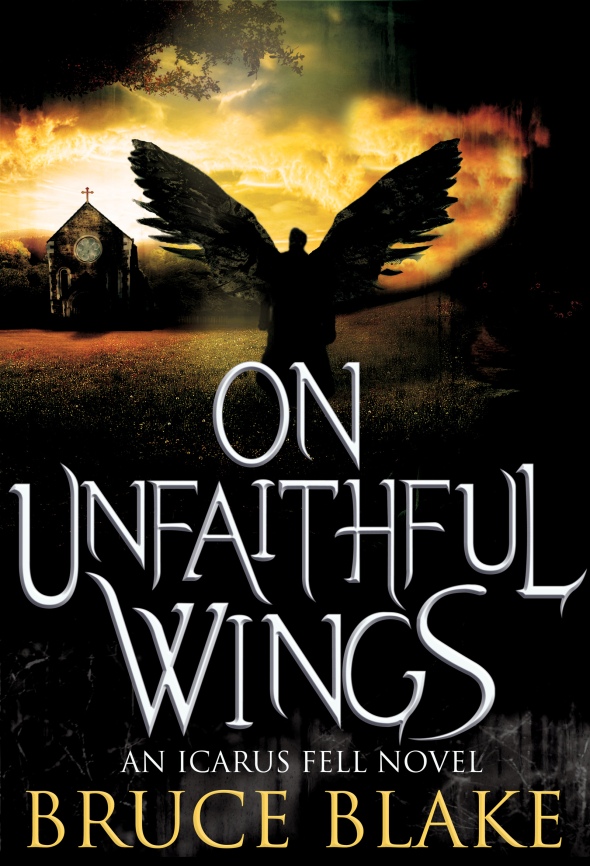
Weighing in this week are DelSheree Gladden, best-selling author of the Destroyer trilogy (Inquest, Secret of Betrayal and Darkening Chaos) and the Twin Souls saga, and Bruce Blake, the prolific author of the Icarus Fell series (On Unfaithful Wings, All Who Wander are Lost and Secrets of the Hanged Man), Khirro’s Journey trilogy (Blood of the King, Spirit of the King and Heart of the King) and the new Small Gods series (When Shadows Fall). With his wife, Rosie Bitts, he is the co-author of the Lady Corsairs series. 

Name three characteristics of books that you like. What makes you keep reading a book? What are some books that you weren't able to put down until you finished them?

DelSheree Gladden: 
Strong characters, well thought out storyline, and an emotional element to the story readers can connect with. What makes me keep reading a book is the characters. I have to connect with the characters and care about them and their struggles. It can be a fascinating storyline, but if the characters are only so-so, I’m not going to be hooked.  
The Mistborn Trilogy by Brandon Sanderson is one of my all-time favourites. I was absolutely riveted by his books. The complexity of the storyline was amazing, yet it never seemed overcomplicated or convoluted. His characters came alive from the first page and he did what is sometimes the hardest thing for a writer to do. He let the story go where it needed to go even if that meant losing characters and writing what I can imagine he didn’t want to write. 
Bruce Blake:
Three things that I look for in a good book are writing style, engaging characters, and originality. It can be difficult to find the combination of all three in the same book, but when I do, I can't stop reading. 
The most recent example for me is Best Served Cold by Joe Abercrombie. The voices of each character are so distinct and he has an interesting way of turning a phrase. Vicious Circle by Mike Carey, To Kill a Mockingbird by Harper Lee and many of Stephen King's early books make my list, too.

What other books have these characteristics?

DelSheree Gladden
Some of the other books that I will always love are books like The Dresden Files and Aleran Codex from Jim Butcher, The Wheel of Time series by Jordan and Sanderson, The Dalemark Quartet by Dianna Wynne Jones, and pretty much any of Raymond E. Feist’s books. 

Bruce Blake
Anything by Stephen King up to “It." George Martin's first two books in the Song of Ice and Fire series. Ender's Game and Speaker for the Dead by Orson Scott Card. Neil Gaiman's American Gods.

Do you consciously try to emulate these books? If so, what form does that take: plot, structure, characters, settings, author's voice and word choice?

DelSheree Gladden
There are aspects of all my favourite books that I try to emulate. Sanderson’s plots are always flawless. I can never find even the tiniest hole. I will debate, rewrite, outline, make a dozen sticky notes, whatever it takes to try and make sure I’m not leaving unanswered questions for my readers. What I’ve tried most to emulate is creating good characters my readers will fall in love with. Butcher’s characters always have a great deal of depth. You can’t help but get sucked into their lives, even those characters who are only briefly in the book. His characters always have a defining inner struggle that impacts every aspect of their story. I want my characters to be that unique and real when I write as well.

Bruce Blake

Sometimes, but not always. I mean, Joe Abercrombie's use of unique
voices for each character definitely inspired my conscious choice to try something similar in my latest book, When Shadows Fall. On the other hand, without me really thinking about it, any good writing style challenges me to keep a close eye on my word choices. Stephen King’s depth of characterization gave me something to strive for and George Martin's detailed world and cultures were another inspiration.

Thank you, DelSheree and Bruce!

Visit DelSheree Gladden's website
Visit Bruce A. Blake's website

Thursday, December 12, 2013

Good reading: Two best-selling authors tell what they like to read

Creative Commons
What makes a book a good read? Three more independent authors give me their perspective: 

Mohana Rajakumar is author of So You Want to Sell a Million Copies?, Love Comes Later and a number of other books. Her latest is An Unlikely Goddess.


Name three characteristics of books that you like. What makes you keep reading a book? 

Mohanda Rajakumar: I love the characters or at least want to know what happens next. Books where the writer takes me into a world totally other than my own and I learn something new. And I talk to other people about what's happening in the world of the story — it's that compelling.

Jesi Lea Ryan: I like books with unique characters who don't irritate the crap out of me.
Plot is important, but it is becoming emotionally invested in the characters
that keep me interested. Richelle Mead's books (yes, all of them) are my
best example of this. Her books are action packed and filled with intrigue
and adventure, but she has such an amazing way of tying me in emotionally
that I feel like I am in the book. It's amazing! 

I also like books that run at a faster pace. I don't like a lot of pointless
musing. I'm a firm believer in what doesn't add to your story should be cut.
I can give you about fifty bad examples of this, but where I find it most is
in erotica. Good erotica uses sex scenes to further the character or plot.
Bad erotica has little plot or character and things it can survive on
gratuitous sex. It's annoying. 

What are some books that you weren't able to put down until you finished them? 

Mohana Rajakumar
Mohana Rajakumar: Gone Girl, The Vanishing Act of Esme Lennox, and The Night Circus.

Jesi Lea Ryan: Stacia Kane's Downside series have really unique characters, beautifully flawed.
  
What makes you keep reading a book? 
Mohana Rajakumar: To see what happens next and how we get where we are going.


Do you consciously try to emulate these books? 

Mohana Rajakumar: I do try to take readers into worlds they don't know because that's what drew me into reading as a child. And into writing as an adult. There were so many things to think about, I wanted to get out and share them with others. In terms of keeping the reading guessing, suspense I struggle with as a writer but character development I have much more confidence in my ability to deliver. 

Jesi Lea Ryan: I don't consciously emulate other books, but I'm sure they influence me to some extent. I read over 250 novels a year, and I don't have a stellar
memory.  I can't quote even from my favorite books. Part of this is because
I rarely read the same book more than once. I can tell you that I
consciously try not to write the things that irritate me. For example, I
detest indecisive heroines. And god, there is so much of that in YA and NA
romance.  Makes me want to hurl books across the room.  Indecisiveness does
not create plot tension, it creates reader tension, and that's not a good
thing!  So I don't drag things out too much in my books.  If the heroine
needs to make a decision, she's generally quick to act on it. 


Sunday, December 08, 2013

What do great writers like to read?

Creative Commons
What makes a good read? Is it characterization, plot, style? A unique idea, or the rules of your favourite genre?

I’ve asked some of the best independent authors I know what they like to read — what makes a good read for them. Today, here are the first three to answer: 

Name three characteristics of books that you like. What makes you keep reading a book? 

RS Guthrie: I personally love great, literary writing and deep characters. Of course, like everyone, my initial buy many times depends on the cover, or especially the first part of chapter one sampling. I usually know by one to three paragraphs in whether I will like the book. Actually, that's a pretty good indicator of the books I won't like. You can never know for sure about liking/loving a book until it ends; sometimes writers give up two-thirds of the way through and that's a HUGE disappointment you can't see coming.
Rob Guthrie

Karen Wodke: Three characteristics of books I like: 
  • being drawn into the story right from the start
  • when a story is handled in a unique way or deals with unusual material
  • when a book is so well-written, it takes me away.


Scott MorganGood books need a strong storyteller's voice; to be true  to its internal universe; and to take chances. I don't want to read the same thing someone else wrote, I want to read a new idea, new way of seeing, new world.

What are some books that you weren't able to put down until you finished them? 

RS Guthrie: The last book I read I could not put down was Jonathan Lethem's Motherless Brooklyn. I can never put any of his books down. Gun, With Occasional Music rocked my world! Dissident Gardens is just out and I have not read it yet.

Karen Wodke: Sharp Objects by Gillian Flynn; The Mothers by Vardis Fisher (about the doomed Donner party crossing); Evening News by Marly Swick; The Lord of the Rings by JRR Tolkien; Life-Size by Jenefer Schute.

What other books have these characteristics?

RS Guthrie: Anything by James lee Burke. In fact, he's the master of melding both elements (literary style with great characters). All of John D. MacDonald's Travis McGee series (21 books). Tim O'Brien's The Things They Carried, If I Die In A Combat Zone, and Going After Cacciato.

Karen Wodke: The books I mentioned are very different in style from each other. What they have in common is a compelling story. It would be impossible to list all the other books that share this characteristic. I like Dean Koontz, JA Konrath, earlier Stephen King, earlier James Patterson, Wally Lamb, Robert Heinlein, and a number of indie authors. The books I most enjoy reading share the following characteristics: interesting plot, descriptions that are appropriate to the story, a unique style of writing, and a steady pace.

Scott Morgan: All good books have these characteristics (a strong storyteller's voice; true  to its internal universe; and to take chances). Best examples for me are (fiction) Falling Angel by William Hjortsberg and (nonfiction) The Trouble with Tom by Paul Collins.
Scott Morgan

Do you consciously try to emulate these books? 

RS Guthrie: When I first read James Lee Burke's Dave Robicheaux series, I knew I had found my voice. Until then I kept flip-flopping between a more literary style versus deep, engaging characters and a lot of great dialogue (something you don't find in "literary" books). Burke showed me that the two can not only coexist but enhance each other and make for a compelling read. Primarily that affects my characters, dialogue, and definitely word choice. You need to be sparsely descriptive. Yes, describe the surrounding stage so the reader can smell it, see it, feel it, but don't take thirteen pages to do so. And dialogue, for me, is key. Good, engaging dialogue is the best way I know to show your character rather than tell him/her to the reader.

Karen Wodke: I don’t think I consciously try to emulate any other book. That said, a good book inspires me to work on improving particular elements in my own writing. For instance, reading Gillian Flynn has made me want to come up with
Karen Wodke
better similes and metaphors; she’s brilliant at both. She also has a very distinctive voice. A skill I admire in Stephen King is the ease with which he tells a story. Opening one of his books is like settling into a favorite chair. I admire the way Koontz pulls a reader in from the first page. And some thriller authors write such clean, tight plots; I can’t help but be impressed. There are important things to be learned from any well-written book.
You know what they say: easy reading is damn hard writing.

Scott Morgan: I try to emulate the writers more so than the books. writers like Brian Hodge always come up with incredible ways to tell stories that are not limited to single books. If I'm borrowing from books, it's usually inn how the writer constructs his/her universe with as little detail as possible. Great writers can put you in their heads but let you keep your own eyes.