Showing posts with label publishing. Show all posts

Wednesday, December 03, 2014

Thank you, audience, for growing


The audience for this blog has reached another record high point: in November 2014, more than 20,000 people viewed a page. Three times during the month, daily numbers reached or exceeded 1,000, and the all-time number is approaching 400,000. In fact, I fully expect to reach that by next week. If things keep going the way they have been, even without any more growth, it will have reached half a million by June.

Here’s the graph from Blogger. You can see that I started blogging in March 2006, but I didn’t post very much at first. I published seven posts in March, mostly reused material like reviews of printers, cameras and other communications technology. But by May, the frequency had dropped to once every week or two. I didn’t publish anything in June, just once in August and nothing all that fall. I only published six posts in all of 2008 and only one in 2010.

It’s not surprising that my blog got little attention then. Why would anyone come when there’s nothing new to see?

It wasn’t until 2011 and I had finished writing my first novel, The Bones of the Earth, that I started blogging regularly. By that fall, and most of the time since (with a few lapses, sorry) I was blogging at least once a week. For a while there, I was doing three posts a week. And, not surprising, that’s when pageviews started to climb.

That’s also when I got my twitter account, and putting a link to my blog in most of my tweets. Pageviews, driven by frequent announcements about posts and attracted by new content, started to climb dramatically.

As you can see from the graph, pageviews climbed in spurts. There’s the long, flat head from 2006 to 2010, then a more or less steady rise through 2011, when pageviews averaged around 6,000 per month—that’s 200 a day. There are peaks and valleys from month to month, then another surge to another plateau around 10,000 per month for most of 2012 and 2013.

And now, a new high: from 13,734 pageviews in September 2014, to 16,548 in October to over 20,000 in November! And the pace so far in December (okay, I know we’re just two days into it, but taking that as a trend) is over 700.

Getting the best help

What accounts for that? I have to give some credit to Lisa Jey Davis, also known as Ms. Cheevious. In addition to being a kick-ass lady and always entertaining writer and blogger, she’s an awesome social media consultant. She created some Facebook pages and posts for me, and is doing some other mysterious things in social media on my behalf. And since she started doing that, my numbers have been climbing strongly. In addition, the Army of Worn Soles page she created for me on Facebook now has over 100 likes. To me, that’s a lot.

The view from the peak

I remember being so excited in 2011 and 2012 as I watched my daily, monthly and “all-time” pageview statistics climb. I remember thinking “Wow. Those statistics were really pathetic before 2011, but now, this is serious.” I compared this to my experience working on Canadian magazines (remember those things, printed with ink on paper?) in the 1980s. Thirteen thousand readers per month was a respectable, healthy readership for a “trade,” or industry magazine. With a staff. And postage expenses. And here I was, getting those kind of numbers all by myself.

A note here about Google’s graph: the numbers I see today don’t jibe with my memory. And the graph doesn’t show the odd-numbered years. You cannot see the statistics for 2007, 2009, 2011 or 2013.

Why do I do it?

Three times a week required an effort and a devotion of time that were too great to sustain. Other things, like writing novels, began to suffer. So I scaled back to twice a week for a while, and now am pretty content with once per week.

Now, if there were only a way to make money from that. Don’t tell me about Google ads. I have those, as you can see, and I haven’t gotten a penny. I’m not complaining; that’s not why I write this blog.

“So why do you spend so much time on that blog and on setting up tweets every day?” my lovely and supportive wife is fond of asking.

I’ve used the standard answers (that I am, umm, repurposing from consultants and self-described authors’ advisors): “building the platform, raising my profile.” It’s partly true, but as a method of driving book sales, well, I can’t say it’s had the impact that other writers report.

But it does show that I can get an audience. My writing is reaching important people: you.

Thank you, readers.

Monday, September 29, 2014

Who Do We Have To _____ To Get a Little Respect Around Here?

Guest post by Lorraine Devon Wilke

The following blog post caught my eye, and I thought I had to do what I could to bring it to more readers. The author, Lorraine Devon Wilke, graciously agreed to let me re-blog it.

Read the original on her blog, After the Sucker Punch. And if you agree, please share and promote this post as much as you can.

The cheers of indie authors who’ve FINALLY found outlets for their books—whether Amazon, Smashwords, Lulu, indie bookstores; wherever—can be heard far and wide from every corner of the globe. It’s been loudly exclaimed by everyone in the know that it’s the dawn of a new day for writers everywhere. After years of dismissal and disrespect from traditional publishers and their gatekeepers across every element of the literary landscape—from query letter browbeating, ice-cold rejections, overly possessive editors, and blasé publishers with no marketing budgets—independent authors have now taken control of their destinies and ventured forth, filters, limitations and grumpy gatekeepers be damned.

Good, right?

Yes, in some ways. In others, we indies are still very much the ugly stepsisters to our more vaunted and valued legacy colleagues. Don’t think so? Just today I clicked on the website of a “recommended book blogger” (whose name I will leave out for the sake of decorum) who seemed hell-bent on insulting those self-published writers who’d had the audacity to contact him for reviews. His FAQ page not only went out of its way to discuss how unreadable he found most self-pubbed books, but his hissing condescension about “amateurish” writers incapable of even understanding the word “no” led to a sneering pronouncement that he didn’t want to read, hear about, or otherwise experience the books of said authors and, therefore, please don’t waste his time by contacting him.

Sheesh. The fumes of disdain emanating from his page practically choked me.

And he’s not the only one. Media sources abound with snitty-toned announcements that they DO NOT TAKE SUBMISSIONS FROM SELF-PUBLISHED AUTHORS (caps are theirs). Review sites that cover legacy authors free-of-charge gouge self-pubbers in the hundreds of dollars. Feature writers who ooze admiration for the latest debut novelist from the Big 5 have actually figured out how to roll their eyes on Twitter over the pathetic shenanigans of indie writers trying to get their attention.

We’re definitely the “not cool” kids on the playground and this persistent — and, in many cases, undeserved—marginalization makes launching an indie book all the more difficult. When the overriding presumption is that your book is—to put it bluntly—a piece of shit (a presumption with which I personally take umbrage), you’re not only starting from zero in the world of marketing and promotion, you’re climbing from less-than-zero.

Fair? No. But let’s face it; we kinda dug our own hole, we self-published writers. Despite the fact that the industry is changing and evolving on a daily basis, with increasing numbers of options and outlets available, and more and more authors—even some from the traditional world—opting to go the self-published route, the rickety stage set early-on was built largely by anxious amateurs eager to define themselves as “authors” before availing themselves of the various elements of true professionalism. 

There are still far too many self-pubbed books that are amateurishly written, with poorly edited copy and covers that fairly scream “I’m a self-published writer!!!” And, unfortunately, still too many authors who relegate those necessary services as negotiable rather than essential—a professional blunder akin to a restaurateur opening a bistro without a qualified chef, a decent waitstaff, or a well-designed room. The resulting customer and industry response (see above) is the sad and subsequent remnant of that miscalculation.

We are all, every one of us, tarnished to some extent by the mistakes of the early (and prevailing) corner-cutters, but those mistakes are, hopefully, being mitigated by the growing number of independent authors who do approach their work, their books, and their presentation with impeccable and unassailable standards. And that growing number (of which I count myself) deserve to NOT be automatically generalized into a category of “subpar” by media, reviewers, bloggers and the like. 

Just as many traditionally published books (to once again put it bluntly) suck, yes… so do many self-published books. Conversely, just as many traditionally published books are profound and not-to-be-missed works of literary wonder, so, too, are many self-published books.

That the aforementioned blogger and his snarky cohorts refuse to consider that is evidence of literary shortsightedness. Like geezers who discount useful technology as “newfangled” or antiquarians who bemoan penmanship while ignoring heartfelt emails, they’re missing out. On a gem. A “stunning debut.” A “keenly executed character study.” A really good book.

Their loss. But the unwillingness of the wider media to explore indie authors with the same open-mindedness—and vetting and reviewing protocols—implemented for those traditionally published, is creating a literary ghettoization. And the resulting deficit is felt not only by the writers being dismissed simply by virtue of being self-published, but by readers who have less access to those authors and their work because of that ignorance.

Just as self-published writers are obligated to evolve and demand of themselves the highest levels of professionalism, so, too, must accompanying media evolve away from their myopia and literary bigotry. If they do not, what is being wasted is far more than their time; also lost is the cultural embrace of much talent and many good books being written by courageously independent authors who deserve at least a look.

Follow Lorraine Devon Wilke on Twitter, Facebook, and Huffington Post. Her article archive can be found at Contently, her photos at Fine Art America; details and links to her other work @ www.lorrainedevonwilke.com. Stay current with her books at Author Central, and if you a member of Goodreads or Shelfari, be sure to stop by and connect.

To pick up your own copies of After the Sucker Punch andShe Tumbled Down,” click titles and check back for updates at her Amazon Author Page.

Monday, July 21, 2014

Do we need a new category?

Photo by jsorbieus via Flickr Creative Commons.
Last month, I wrote in this blog that I did not consider my books to be self-published because I did not do the work myself. In fact, a number of talented, creative and generous people made critical contributions to the development of all my books, as
  •           pre-publication readers (“beta readers”)
  •           editors
  •           proofreaders
  •           a cover designer
  •           marketing consultants.

I have said before, in this blog and elsewhere, that commercial publishers, big or small, hold no monopoly on quality books, electronic or print. Authors have more than one skill, and by collaborating, they can help each other publish books that meet or exceed the standards of Little, Brown, MacMillan or Knopf.

Exceeding their marketing and distribution might is another story, of course.

To me, a better term than “self-published author” is “independent author,” because I am independent of the control of any publishing company. No one tells me what to write, what to include, or what kind of cover to have.

But as readers of this blog will know, blogger, author and teacher Joshua Isard wrote that the term “independent publisher” is already taken. (I won’t quibble that I didn’t call myself an independent publisher, but rather an independent author. Oops, I guess I just did.)

The publishing landscape is changing fast.


Author and blogger Anne R. Allen wrote in her blog about the blurring lines between traditional, commercial and self-publishing. Not only is Amazon becoming a publisher, but the Big 5 have been adding self-publishing services as well as buying vanity presses—companies that charge authors (often thousands of dollars) to help them format, print and produce e-books.
(I will give you some free advice if you want some, or you can read this blog regularly).

As Anne concludes, the lines have always been blurry and they’re not getting any clearer.

But maybe “independent publisher” is the wrong term, simply because it doesn’t describe an idea clearly. Maybe we do need another term.

How about “collaborative publishing,” or “cooperative publishing”? Do either of those work better?

What do you think?

Friday, July 18, 2014

My print adventures

Publishing a printed book is much less forgiving than producing an e-book. I have known that since I started working with electronic publishing, lo many years ago. But I really felt it with the production of my third book, Army of Worn Soles.

I have printed books before, and I thought getting a print version of my third would be a piece of cake. And it was—until I made my own life my difficult by making the books itself more complex and using photographs within. No, it’s not hard to do, but getting the results you want means you have to follow some pretty strict guidelines. 

Here are some of the lessons that I had to re-learn.

Use them when you prepare your own books for printing through CreateSpace, Lightning Source or any other printing service.

Word perspective

There are some things about document design and layout that I knew about even before I started writing. 
  • Use proper opening and closing quotation marks, not straight quotes/inch marks. 
  • Use real, curvy apostrophes, not inch marks instead of apostrophes.
  • Double-check to make sure you’re using a real open quote ‘ instead of apostrophe ’. Most modern word processors like Microsoft Word and Pages automatically format these for you. If you’re not getting quotation marks at the beginning of the quote that point in the opposite direction from the marks at the end, go to your Preferences or Options menu and select “smart quotes.”
  • Use the Ruler in your word processor, or the Styles menu, to indent the first line of paragraphs.   —but remember not to indent the first paragraph after any heading or subheading. Don’t double-space paragraphs unless you’re writing a business guide or something similar. Definitely do not double-space paragraphs in fiction.
  • Learn the differences between hyphens, en-dashes and em-dashes. 
    • Use the hyphen to join compound words, like “north-west.” 
    • En dashes are twice as long as hyphens. Use them to indicate a range in numbers, like “August 3–4.” You’ll enter it by typing Ctrl-hyphen or, on a Mac, Option-hyphen. 
    • An em-dash is twice as wide as the en-dash. Use it to break a sentence to indicate a new idea or a brief break in the logical flow—like this. Enter it with Shif-Alt-Hyphen, or on a Mac, Shift-Option-Hyphen. Decide whether you want to have spaces on either side of your em-dashes — like this — or not—like this—and use them consistently.

Come up to the page

When I got my first job at a subsidiary of one of the Big Five publishing companies, I learned to think about book layout in terms of the two-page spread. When readers look at a book, usually they see a left, or verso page, next to a right, or recto. In the West, where we read left to right, we tend to start with a right-hand page, so the left is the back, or verso, of the right-hand page.

Left hand pages have even numbers, right pages have odd numbers, because we start page 1 on the right-hand side, then turn it over. Word allows “mirroring margins,” so that you have opposite left and right margins, and a different setting for the “gutter.”
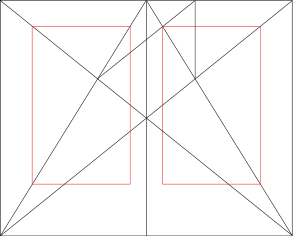
Image courtesy Knite Writes http://knitewrites.com/2013/11/25/formatting-for-createspace-the-knite-way/

Depending on whom you talk to, the outside margin—left on the verso (left) page, right on the recto—should be either wider or narrower than when laying out pages that are to be printed on one side only.

Createspace asks for a wider gutter—right margin on the left page, opposite on the other side— because of the perfect binding—the flat, glued spine of the book. With a thick, perfect-bound book, text too close to the spine is harder to read. Createspace offers a Word template that has a suggested width for left, right and gutter margins.

Headers and footers

With opposite pages, you can have opposite formats for headers and footers.
The first thing to realize here is that the first page of every document and every chapter has a different format. In Word, choose “Different first page” from the Layout menu. In Apple’s Pages, select Setup—Section—“Hide (Headers and footers) on first page of section.”

The second thing to remember is that left and right pages necessarily have opposite treatments of page numbering.

Traditionally, when it comes to fiction, publishers have not done much about this. Looking at some old books I have, I notice that typically, the verso page has the author’s name, while the recto bears the title of the book. Page numbers are centred on the bottom, or the footer.

With textbooks, on the other hand, the page number (folio, in publishing jargon) is on the outside corner —that is, on the far left of the header or footer of the left-hand/verso page, and on the far right of the recto. 

Personally, I think it’s much better. Think about how you use a book. Pick up a print book, the one closest to you right now. Turn to page 96. How do you do that? You hold the book’s spine in one hand, and use the opposite thumb to flip through the pages. How much more difficult it will be to find page 96 if the folio were in the gutter, instead of on the outside? 

Sometimes for very long books or anthologies, one header may have the name of the author of that chapter, while the other page has the title of the whole anthology, or sometimes the theme of the current section.

For example, my 1999 edition of Lord of the Rings, three-volume set has the book title (eg. The Fellowship of the Ring) on the left/verso, and the chapter title, eg. “A Short Cut to Mushrooms,” on the right/recto. The page numbers are on the outside corners of the header, and the footers are blank.

The textbooks that I worked on had a much more complex treatment. Headers or footers would show the part and chapter titles, along with the page number, in the outside corner.

It’s important to put the folio in the outside corner. 

How to accomplish this

In Word or Pages, you can change the header and footer from one page to the next this way:
  • Go to the Header and Footer or Page Layout menu and select “different first page.” 
  • Inserting a Section Break at the end of each chapter and deselect the “Continue from previous” button in the Header/Footer menu.
This gives you four areas to put four different kinds of information:
  • book title
  • part title
  • chapter title
  • author.
When I was writing my first novel, I sent a preliminary draft to a beta reader who had pretensions to being a publisher. I thought I would send something that would imitate a professionally printed book, as far as possible with the technology and my experience at the time, so I did those very things:
  • set up facing pages
  • put the folios (page numbers) on the outside corners
  • put the name of the series of the book (The Dark Age) on the left (verso) footer
  • put the name of the book (The Bones of the Earth) on the recto footer
  • put the part title (Part 1, Initiation Rites; Part 2: Tests; Part 3: The Mission) on the left header
  • put the chapter title in the right header.

The beta reader went ballistic on this. “What are you doing! A publisher just wants to see the page numbers in the header or the footer. This is way too fancy.” But why? It’s information that adds to the experience for the reader. If you don’t want to see it, don’t look—in fact, when we read a book, this fades into the background.

While Word makes this pretty straightforward, Apple’s Pages word processing program has no facing pages option, so this is very frustrating.

Take care with photographs

The photo of the author (me) in the print version of my first two books didn’t turn out so well. They looked great in the e-book, but muddy in physical form. 
Turns out I made a rookie mistake, one I should have known better than to commit. I have worked for years in print, after all, and I remember telling other people to do this very thing: don’t print .jpg-format images.

If you have a photograph or any other image to print, you have to make sure that you’re sending the printer a file that will print well. Make sure you do at least these things:
  • In your photo editor program, change the colour space to either Grayscale for black-and-white, or CMYK if you’re printing in colour.
  • Set the resolution to at least 300 dpi. More isn’t really necessary, but less will look terrible.
  • Save the image as a .TIFF or .EPS format file.
  • Import the high-resolution .TIFF file into your word processor or page layout program.
  • If you have to send the printer a PDF, make sure your resolution and colour space match the printer’s requirements. Make sure that the page layout program’s resolution for images is also set to at least 300 dpi, CMYK.

Lightning Source requires a PDF (Acrobat) format file. Here are some other settings to check before you upload your file:

  • Page size—the default for your .pdf output is probably 8 ½ by 11 inches. This will not produce a book. Change the page dimensions, margins, bleed and trim settings to Lightning Source’s (or whichever printer you’re using) specifications.
  • Page orientation—again, check whether the output will give you the results you expect. Test it on your own printer first.
  • Fonts—if you’re using a special font, you will have to embed them in the .pdf. You can do this with the Printer settings.
Producing your printed cover is even more complex by a factor of magnitude. I’ll cover that in a future post.

For now, for those working on formatting their print books, this is just a place to start. But following these tips will get you past the initial errors that a lot of people make.

Tell me about your experiences in print.

Monday, July 07, 2014

Microsoft Word versus Apple Pages—A comparative review

Creative Commons
Occasionally, you have to hand it to the dark side. For years, over a decade, in fact, I’ve known and acknowledged that Microsoft Word is the best word processor.

I did not want to acknowledge that, though. I wanted there to be something better than the market leader and de facto standard. But my latest experience in publishing my latest book has only reinforced that conclusion.

I used OpenOffice's word processor and then Pages to write the book, which were fine when the goal was producing an e-book. I found Pages especially useful in that I could use it on both my desktop Macintosh and my iPad.

But when it came to formatting the book for print, well, using OpenOffice is downright aggravating, and Pages lacks some of the feature essential to producing a professional grade printed book.

My reaction to Pages

Pages is a light and easy to use application. It only costs $19.99 from the App store, and the iPad version is only ten bucks. On the other hand, Word for the Mac can only be had as part of the Microsoft Office, which costs $139 for the Home version, or $99 per year for the Web-based subscription.

One of Pages' productive feature is the way that it automatically saves your new files and updates in iCloud. This made it simple to switch between using my desktop computer in my office and my iPad while mobile. 

Pages’ user interface is characteristically clean and inviting on the desktop computer. The iPad version, though, features a shade of orange that I, personally, don’t like.

I reached the iPad version's limits quickly. It’s almost impossible to format paragraphs using the ruler at the top of the screen. I don’t know if my fingers are too thick and blunt or what, but the only way I could change the paragraph indents was to enlarge the view to at least 200 percent, and even then, it difficult to select the icons to move the margins.

Also, there doesn’t seem to be a Styles feature in the iPad version, where I can set the typeface, font size, paragraph spacing and other typographical features for blocks of text and headlines and change them with one command. This is standard in full featured word processors.

Finally, the major limitation on both the mobile and desktop versions of Pages is the lack of a facing pages feature. It just doesn’t seem to have entered the programmers’ minds.


What I need for print layout

Formatting an e-book is relatively simple compared to print output , because much of the format of the e-book is determined by the e-reader device. Sure, you can choose typeface and whether paragraphs are double-spaced or indented on the first line. But when you go to print, there are many aspects beyond those that you have to control.

When laying out a printed book, you have to consider the page spread—two facing pages, left and right. If you look at a professionally produced book, especially a textbook, you’ll see that the page layout elements are mirrors of each other. For example, if the page number (“folio” in old book layout parlance) is on top right corner of the right-hand page, it will be in the left corner of the left-hand (even-numbered, if you do it right) page.
The page spread. Image courtesy Wikipedia.

Word has a simple means of allowing this: you just check “Different Odd & Even Pages” when formatting the Header or Footer.

Without this, you could put your page numbers in the centre of the header (top) or footer (bottom) of the page. But you cannot set your document to have the book title on the right hand pages and your name as the author on the left. There’s just no way to do that in Pages.


What I like about Word

Word offers everything you could ask for in a word processor: typing aids, a fully featured Styles menu, control over every aspect of not just wording, character style and page layouts, but also output to .pdf and e-pub format.

I can use Pages, but I have to use work-arounds. For instance, if I want to save the document in a format (like .doc) so that a non-Mac user can share it, I can’t just Save As a .doc. Instead, I have to Export a copy of the file. That means I now have two separate files, which leads to version control problems.

Just use the .doc version from then on, you say? Easy enough with Word, or most other programs. But the people at Apple have taken a bizarre approach. It will open the files with the .doc filename extension, but convert it on the spot to .pages format. Saving it in Word format requires saving it first as a .pages document, then Exporting it again to Word format. It’s not a big deal, but it is an extra step that gets annoying.
Workarounds. Image Creative Commons

Word is a big, expensive program with more features than any one person will ever use. But it does give me all the tools that I need for electronic and print publishing. For that reason, it will have to remain my word processing choice.

Thursday, June 26, 2014

Thanks for the support

Thank you, readers and Internet friends, for all the support through the publishing and launch of my third book, Army of Worn Soles.

Publishing any book is an intense and drawn-out process—a lot of work over a long period. As I said in my post of June 16, I did not accomplish this on my own. First credit has to go to the protagonist and subject of the book, the man who lived the story and somehow survived Operation Barbarossa, scorched earth, capture and starvation, my father-in-law, Maurice Bury. Without his surviving, and later cooperating with me, this book simply would not have happened.

I have to thank my beta-readers for their insight: Literary Gary Henry, Action-writer Alan McDermott and Flawless Frederick Lee Brooke.

Rockin’ Rebecca Tsaros Dickson, as I said, did a fantastic job of bringing out the best I can do as an editor.

I asked a number of people to do advance reviews, and they responded not just with a blurb, but also with suggestions that really improved the book:
Thanks to all the people who posted reviews on Goodreads and Amazon:

And then all the bloggers who agreed to host the cover reveal and/or an excerpt:


Let’s not forget my family: my beautiful and ever-supportive wife, Roxanne, for not only filling in some critical information about her father, but also putting up with me over these past months when I’ve been sitting at my computer, researching or writing or editing or some damn thing instead of fixing things around the house; and my mighty sons, Awesome Evan and Super Nicolas, for enduring their dad’s weirdness.

Oh, yeah, and the won't let me leave out the cats. So thanks, Simba, for howling all morning while I try to write, and Cloudy, for putting your fluffy tail in front of the computer screen when I'm trying to type something. I don't know where I'd be without you.

I’m grateful to you all.

Monday, June 16, 2014

Not self-publishing—independent publishing

Creative Commons
I am not a self-publisher, because I did not publish my books by myself. I was part of a team of talented, dedicated, professional, skilled and very giving people, to whom I am indebted and grateful.

You know by now that my new book, Army of Worn Soles, will publish in e-book form on June 22, 2014—less than a week from the day this post goes up on the blog.

In the past few weeks, I’ve been busy with all sorts of not just last-minute details on the book itself, but also with advance promotion and publicity. I’ve been answering questions, and learning, from those answers. A question that has come up (however, not as frequently as I expected) was about “self publishing.”

I prefer the term “independent publishing,” simply because I think it’s far more accurate. I don’t publish any books by myself.

Publishing any book calls upon a wide range of skills:
  • writing—creating the story or the information for the reader
  • substantive—“story editing,” a review and critique of the overall worth of the manuscript, whether it’s complete, or there’s too much material, and whether the basic ideas make sense
  • copy-editing—ensuring it’s clear, grammatical, logical?
  • proofreading—looking out for spelling, punctuation and grammar mistakes and silly little errors in logic (like setting the opening of a chapter on a spring morning and ending, without indicating any passage of time, with a winter night)
  • design—of the cover as well as the interior
  • layout—setting up the interior according to the design, and making sure that the whole book follows the same design
  • manufacturing—transferring from manuscript to e-book or print format with the highest fidelity to the final manuscript and the highest production quality affordable.
Each of this is a major task requiring specialized knowledge, and no, I don’t attempt it myself. I can do many of them, but not all—not well.

And I have always said, “You can’t edit your own stuff.”

The team

When it comes to publishing my books, I call upon a supportive team. For Army of Worn Soles, that team included:

  • Fred Brooke, Alan McDermott, Russell Blake and Cinta Garcia de la Rosa as pre-readers
  • Rebecca Dickson as my stalwart editor
  • David C. Cassidy as cover designer
  • a large team to help promote the cover and excerpts, whom you are meeting through other posts on this blog.

Army of Worn Soles, like my other books, is a truly collaborative effort.

No, I do not self-publish. Army of Worn Soles, and all books I write, followed a cooperative publishing model, one promoted and supported by Independent Authors International. Like those published by the Big Five commercial publishers, are the result of a team of talented professionals applying developed skills to producing a quality book.


Monday, April 07, 2014

Literary genre: haven or prison?

Creative Commons licence.
http://moon.com/2014/03/hiking-and-recreation-in-parque-nacional-torres-del-paine/
A little over a year ago, I wrote a post for the Guild of Dreams blog where I wondered about how important it is for a writer to remain within a genre. Now that I have just sent my third manuscript to an editor, I find myself wondering about that again. Without asking anyone’s permission, I am re-examine that issue.

When you start out writing fantasy — or romance, or science fiction, or mystery, or any other category — do you have to stay within it? Is writing something in another genre akin to crossing a border into a foreign territory?
For a novelist, is the genre a prison or a haven?

It looks like my career as a novelist is turning into an experiment to measure that.

My experience in the fantasy genre

My first published full-length novel qualifies as epic fantasy. I prefer the term “historical magic realism,” because  The Bones of the Earth has realistic, fictional characters alongside real, historical characters. It’s set in a real time and place, and then adds fantastic or magical elements. But for most people, “fantasy” is the shorthand term.

My next novel, One Shade of Red, stepped way out of epic fantasy and history. It’s a comic, erotic parody of Fifty Shades of Gray, and qualifies as romantic erotica. Or erotic romance. NOT porn.

My third novel (to be published) is one I started over 10 years ago, a memoir of my father-in-law’s experience as a draftee into the Soviet Red Army during World War II. So far, I’m calling it Between the Vise Jaws. But that may change.

Return to fantasy

With that done, I am now turning to a contemporary urban paranormal type fantasy, Dark Clouds. I posted the first chapter on this blog a couple of years ago.
Dark Clouds grew out of a pre-Hallowe’en writing challenge, the source of which I cannot remember. But the challenge was to write the scariest opening line I could, and in a humourous mood, I thought of “Matt always knew when his mother was coming over.”

Photo by Garry Knight via Flickr Creative Commons


And I took it from there, making Matt’s mother a witch, then the Queen of all witches. Then I thought “what if Matt, the Witch Queen’s son, was immune to all her spells?”
Once I finished writing the story, I thought it could be the beginning of a novel, or at least a series of stories. So I thought I would call the novel The Mandrake Ruse, in the style of 60s-era spy stories like Man from U.N.C.L.E. And I could write a bunch of novels about The Witch’s Son.

Now that I’ve been toying with the idea for a couple of years, I realize that I have those titles mixed up, so when I do publish the book, it will be called Dark Clouds, and the first chapter will be “The Mandrake Ruse.” It just makes so much more sense.

Does genre-hopping hurt my credibility as an author?

A number of readers, and my family, too, have asked for a sequel to The Bones of the Earth. And as you can see from the cover, it’s “Book One of the Dark Age Trilogy.” I do have rough plot outlines for two more books about Javor and his adventures in the seventh century, but I also have this burning desire to write some other stories, first.

Had I a contract with a publishing company, my publisher, editor and/or agent would gripe about this. “Readers who liked your first book want more of the same!” I can hear one of them saying. “You’ve proven there’s an audience for that story, and they’ll be disappointed if your next book is totally different.”

I think every artist or creative person faces that dilemma: those who liked your first work will come back expecting more in the same vein. Delighting them with something new and completely different is a steeper hill to climb — you’re working against the very expectations that you created.

On the other hand, I am a writer because there are stories that I want to write, and my imagination doesn’t necessarily fit into categories defined by someone else.

I don’t read in just one genre — why should write in just one genre?

The most commercially successful authors stay within the categories they’re known for: John Grisham, Jodi Picoult, Tom Clancy, Dan Brown, Stephenie Meyer … it’s a long, depressing list.

On the other hand, some of the best writers have written in more than one genre, or have succeeded both artistically and commercially when they’ve gone beyond the slot assigned to them at some point in their careers:

Ray Bradbury — known for science fiction, especially Fahrenheit 451 and The Martian Chronicles, Bradbury’s also celebrated for Dandelion Wine, the story of a young boy’s “magical summer.”

Stephen King started with horror and is still best known for It, The Shining and Carrie, but he has successfully transitioned into science fiction, non-fiction and, it could be argued, literary fiction.

Guy Gavriel Kay began writing fantasy fiction with The Fionavar Tapestry series, continued with his almost-historical magic realism, and moved to historical fiction with Ysabel in 2007.

Margaret Atwood went the other way. Established since the 60s as a main force in current literature, she surprised the book world with the dystopian science-fiction The Handmaid’s Tale, more recently Oryx and Crake — although she denies they’re science fiction.

The big question

What will this do to future sales prospects? Will readers of The Bones of the Earth who check my new publication be disappointed or delighted by Between the Vise Jaws?

Will fans of One Shade of Red be totally turned off by a war memoir?

Or will my hopes be realized: that writing in different genres will spread my appeal to new audiences?

What do you think? Leave a comment!