Showing posts with label good writing. Show all posts

Friday, April 05, 2013

Writing tips: Words to throw away


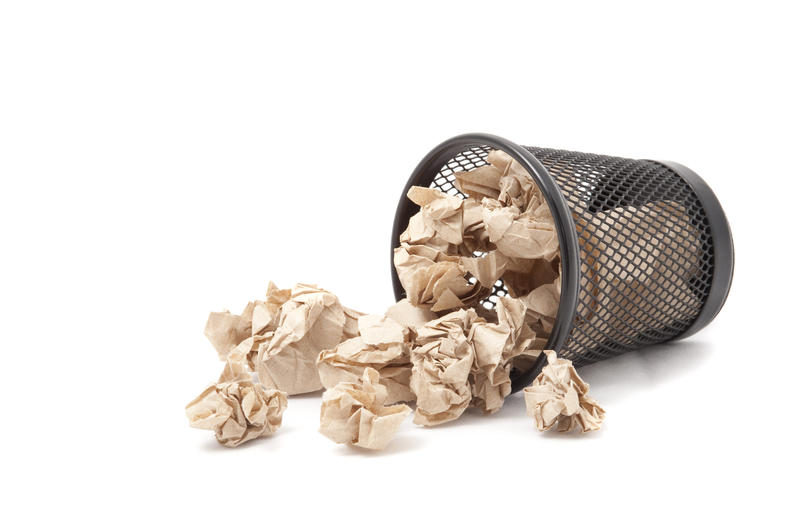
“Edit” often is synonymous with “take out.” A lot of the work I do involves highlighting unnecessary text and pressing the Delete key.

It’s a tough job.

In order to make it easier (and you all want my work to be as easy as possible for me, don’t you?), I thought I would warn you against writing those words in the first place. If they aren’t there, I don’t have to cut them.

I have two categories in this post: words and phrases you can just remove without replacing; and phrases you can easily replace with a single word.


Terms to tank

It’s time to ditch some catch-phrases. Maybe the first time you heard them, they sounded cool. But here is my list of words and phrases that no one should say, let alone write down, anymore:


Push the envelope

Outside the box


Going forward, when it means “in the future”


High-level


On the ground, unless you mean something that is actually on the ground


At the end of the day


In the field of


It is to be noted that


The information you requested is below


This report/letter/email is in reference to


In light of this


The month of


In a nutshell


Obese text

Working for a large organization, I read a lot of text written in what I call “corporatese” — a language that obscures and hinders communication of ideas more than facilitating it. Documents filled with extra words and phrases that don’t add information, but just bloat the word count.

The next time you find that you’ve written any of these phrases, replace them with a single verb. Then re-read the text. You’ll be amazed at how much better it reads.

Conduct the evaluation of — replace with “evaluate”

During the period of — “between”


Cognizant of/aware of — “know”


At a later date — “later”


First and foremost — “first”


Due to the fact that — “because”


In reference to — “about”


There are a lot more, but you get the idea. When you see a noun phrase — a group of words that convey the same meaning as a single word — replace their lazy asses with that single hard-working word.

Suggest more terms to tank in the Comments.

Friday, November 30, 2012

NaNoWriMo — How did it go?

I jumped deep into National Novel Writing Month this year. I had an idea during the summer for a book, and somewhere around late September, I decided to make it my NaNoMo project.
The idea: to write a parody of the bestseller Fifty Shades of Gray, but to do it better.

The goal: 50,000 words by the end of November.

The process: I participated in some of the social aspects of NaNoMo, but didn’t actually do all that much other than write the story as furiously as I could.


  • Before November 1, I wrote a background piece, describing the characters and outlining the plot. 
  • I logged into my account on the NaNoWriMo site and updated my word count daily.
  • I read some of the mail that came into the account, but I realized soon that I did not need the “pep talks.” I was motivated.
  • I attended one “write off” event at a cafĂ© in my town: a bunch of NaNoWriMo participants gathered in the coffee shop with our computers (iPad 2 in my case) and wrote 1,667.7 words in a couple of hours. I felt quite out of place — I was by far the oldest one there. Most of the others were first- and second-year university students, and most were writing fan fiction, science-fiction or fantasy. I was the only one doing a parody. Still, I exceeded my goal, and in two and a half hours, cranked out a little over 2,000 words.
  • Every day, and I mean EVERY DAY, I wrote more than 1,667 words. A couple of times, I did over 3,000 words per day. What a feeling that is!


  • Results: One Shade of Red

    • I hit 50,000 words more than a week ahead of schedule — November 22. Unfortunately, I don’t yet have a complete novel. As of writing this on November 30, I’m sitting at 64,000 words or so and still have not reached the end. I have an outline for the conclusion, and yes, there’s room for a sequel. But there is no way I’m going to write a trilogy about this.
    • I think my basic story is better than Fifty Shades. I have more realistic characters:
    o My narrator/protagonist is a naive virgin, but there’s a reason for that: he has had a girlfriend, the “girl next door” type, since childhood, and she is fervently attached to the concept of virginity until marriage.
    o His wealthy sexual mentor, Alexis Rosse, is young, but not as unbelievably young as Christian Gray: she’s 30 or 31 (a lady never tells, or so my mother used to say — actually, she still says that), and she made her fortune the old-fashioned way: she married into it.
    • I also have what I like to tell myself is a better writing style than EL James, but I’ll let the audience judge that — after I finish rewriting and editing.

    Work to do: I’ve exceeded the word count required for “success” in NaNoMo, but I have to flesh out the conclusion. And then, I’ll have to do at least one rewrite before turning it over to a beta reader or two and an editor. In other words, there’s at least two months more work to finish this off.

    Would I do it again? I don’t think I’ll go to another “write off” event, but I would not turn down an after-party.

    Something like NaNoMo is a great motivational exercise for a writer. It’s so easy to procrastinate writing a novel —you can always tell yourself that you’re waiting for inspiration or that there are other things to do. And there’s a little something called life that seems to get in the way of writing novels.

    I enjoyed National Novel Writing Month this year. I think I’ll do it again next year. But I’m not going to wait for it: I’m going to continue writing every day, and get as many stories out of my brain and onto the computer screen as possible.

    How many of you participated in NaNoMo or NaNoWriMo 2012? Did you succeed?

    Wednesday, October 31, 2012

    Writing style: Interview with author Gary Henry

    In my continuing quest to define the essence of writing style, I have asked a good author-friend, Gary Henry, for his thoughts.

    Gary Henry
    Gary’s novel American Goddesses crosses a number of genres. Set in the contemporary American Midwest, it features superheroines and spies, a little sex, a hefty dash of romance and lots of action. Combining these genres takes — well, a lot of style.

    In addition, Gary has published a collection of short stories titled What Happened to Jory and Other Dark Departures, and The Moon Poem and Other Strange Jingle-Jangles, a collection of poetry. Gary also reviews independent novels on his blog, Honest Indie Book Reviews. His Twitter handle is @LiteraryGary.

    How would you describe your own writing style?

    I like to think of my writing style as “snappy” – using active-voice and vivid verbs to the best of my ability. I try to vary sentence length and incorporate colorful description.

    Are there any authors whose style you admire? Do you try to emulate them?

    John Steinbeck is my idol, but too far removed from my own skill level for me to attempt to emulate. Probably Robert E. Howard is my biggest influence. I grew up reading his lurid prose – not just “Conan the Barbarian,” but many of the stories he wrote for Weird Tales and other pulps, reprinted in later collections. “Pigeons from Hell” was a particular favorite. Thought it was the scariest thing I ever read, when I happened upon it at 10 years old. Still makes me shudder.

    Are there authors whose writing style you dislike?

    No one comes to mind. I invariably find something to like in everything I read. The Silmarillion by Tolkien is one book I’ve made repeated unsuccessful attempts to get through. I devoured the Lord of the Rings trilogy at an early age, however.

    How important is your writing style to you? Are you happy with your style, or are there aspects of it you try to change during rewriting or editing?

    My writing style is an intimate part of who I am. I’m happy with it. I know it’s good and I can technically show why. However, I understand it can still be improved. Going through my work, I still find instances of passive voice, wordiness, lame verbs and other weak areas. Punctuation, especially commas and dashes, is a particular weakness.

    Two who have helped me improve my writing during rewrites and editing are Scott Bury and Melissa Foster, both masters of their craft. I’m not the only one they’ve helped, either.

    How can readers identify your writing style? Are there particular words or kinds of words that you tend to favour? Sentence structures? Or is it more in the story, the pacing or the characters?

    I think it would be difficult to identify me or any author just from an unfamiliar passage of writing. I try, not always successfully, to keep words to one or two syllables. I vary sentence structure and length. I try to vary pacing in the longer works. But these are things many of us attempt.

    Do you think your genre imposes certain restrictions on writing style?

    If so, I don’t pay attention. That’s why I bill my first novel, American Goddesses, as a “sexy superheroine paranormal romantic sci-fi fantasy thriller.” The story blithely invades the territory of multiple genres, from romance to sci-fi.

    I read a few romance novels, actually, to learn the elements: The Merry-Go-Round by Donna Fasano and If We Dare to Dream by Collette Scott. They were good!

    Do you think your audience responds to your writing style, consciously or unconsciously?

    Hard to say. All the reviews of my novel, short stories and poems have dealt with content — plot and character — rather than writing style. I’m sure readers must respond to writing style on some level. I’ve seen nothing to support that regarding my own writing, however.

    How important do you think writing style is to an author's commercial success?

    There are as many writing styles as there are writers — perhaps more. There’s no question that a few styles occasionally capture the popular imagination and catapult the books to varying degrees of success. No one knows why those styles of writing hit. My guess is it’s a combination of luck, work and circumstance.

    I believe we increase our odds of hitting the popular imagination by taking as many shots as we can. We can increase the odds by trying to improve our writing skills as much as possible.

    In the end, there’s just no formula. Why does a demonstrably poorly written novel like Fifty Shades of Gray succeed, while many similar knock-offs, and many more far superior books don’t get off the ground? No one knows.

    Trying to achieve success by imitating the style of a successful book is not something I’d recommend, On the other hand — who knows what the beast will find appetizing on any given day, at any given time?

    For my part, I’ll just continue to refine my own style until it completely suits one particular beast — me.

    Thank you very much, Gary.

    What do you think, readers? What elements of style are important to you? Does a writer's style make a difference to your response to a book or other work? Would you buy or recommend an author solely because of his or her style?

    Wednesday, October 24, 2012

    What is writing style? Guest post by Roger Eschbacher

    What is writing style? It’s an elusive topic, in many ways.
    To help me chase down the essence of writing style, I’ve called upon some author friends for their opinions. First, we have Roger Escbacher, author of Dragonfriend: Leonard the Great, Book 1, a middle-grade/young adult fantasy adventure story set in the court of King Arthur.

    Besides Dragonfriend, Roger Eschbacher has also written two children’s books: Road Trip, and Nonsense! He Yelled, both for Dial Books. He is also a professional television animation writer who’s worked for Warner Brothers, Nickelodeon, The Hub, and Cartoon Network. His blog is The Novel Project, and his Twitter handle is @RogerEschbacher.


    How would you describe your own writing style?
    I would describe my writing style as cinematic. My goal is to describe the action, world and characters in my book in such a way that readers have a movie playing in their head as they read along. I think this comes from two places, the first being that I’m a television animation writer. In animation, one has to fully describe what is happening so that the artists can animate it. Detailed descriptions are required in my “day job.” Second, as a reader I’ve always preferred books written in that style. I love getting lost in the “brain movie” when I’m reading for pleasure. In general, SF/fantasy books tend to be written this way, which is probably why I read this genre almost exclusively.

    Are there any authors whose style you admire? Do you try to emulate them?
    Dragonfriend cover imageI admire the writing styles of Neil Gaiman, J.R.R.Tolkien, Douglas Adams, J.K. Rowling, and Rick Riordan, to name a few. All of these folks are quite “cinematic” so I suppose that’s the reason why. Of those four, I’d say Tolkien would be the strongest influence. I love his command of the epic tale so much that I find myself rereading LOTR and The Hobbit every couple of years. Oddly enough, I try not to emulate him too closely for fear of coming off as a low-grade copy of a true master.Are there authors whose writing style you dislike?
    Oh, yes.

    How important is your writing style to you? Are you happy with your style, or are there aspects of it you try to change during rewriting or editing?
    My writing style is very important to me and I am happy with it for the reasons listed above. When I’m editing, I do my best to make the manuscript an exciting and easy read. My goal is to produce a page-turner — something that flows. I want readers to fly through the book and not get knocked off course by speed bumps and, as Elmore Leonard says, “the parts that readers tend to skip.”

    How can readers identify your writing style? Are there particular words or kinds of words that you tend to favour? Sentence structures? Or is it more in the story, the pacing or the characters?
    For me, it’s all about story, pacing, and characters. Natural-sounding dialogue is important, too. I hope that readers would describe my style as fast-paced and exciting.

    Do you think your genre imposes certain restrictions on writing style?
    Not really. I tend to write “quest-y” stories and for me that’s liberating in that everyone expects that the hero and his friends will go somewhere, do a lot of stuff along the way, almost get killed but survive and make it home. The challenge is to tell a quest tale in a way that follows the expected rules but also continues to surprise the reader.

    Do you think your audience responds to your writing style, consciously or unconsciously?
     Yes, I do. My favorite reader compliment on Dragonfriend was from a kid who said, “I can totally see this as a movie.” I smile every time I think of that.

    How important do you think writing style is to an author's commercial success?
     I honestly don’t know the answer to this one.

    Thank you very much, Roger.

    Readers, let Roger and me know what you think. How important is a writer's style? What do you like? What do you wish authors would stop doing? And does an author's writing style affect your decision to buy or recommend a book?


    Thursday, June 28, 2012

    Good, bad, even ugly: Refining your writing

    The newest guest blogger in the “best and worst I have ever done — as a writer” is Michele Chiappetta , known to her fans and Twitter followers as the Chipper Muse. As usual, my guest post will appear on her blog — but read her words, first. You’ll be glad you did!

    A quick glance at the best sellers list often makes it seem that quality is in the eye of the reader—that mediocre books written still manage to sell magnificently. (I’m looking at you, Twilight and Fifty Shades of Grey.)

    And the stories of writers having tremendous success in self-publishing imply that all you need to do is write it, and they will come, emerging from the cornfields of Iowa with their e-readers. Especially if you’re selling something for 99 cents.

    In today’s publishing environment, does it actually matter whether your writing is good, bad, or ugly?

    For any serious writer, I think the answer is yes. Writing is a business and an art; you have to know what is good and what is bad because it affects your sales, and because it shapes how you pursue your artistic vision.

    But since your definition of good and bad writing may not be the same as the readers who buy the books, you have to figure out how you’ll evaluate yourself so you can improve at your craft and satisfy your goals.

    Obviously, good writing begins with the basics, the things we all can agree on: using correct grammar and spelling, proofing your work to make sure you didn’t leave out words, using proper paragraphing, laying out your book so that it is easy on the reader’s eye, and so on. But beyond that, what makes your writing good, bad, or even ugly?

    I’d say good writing is something I’m proud to put my name on. It rises to high standards of quality. It contains creative, musical phrases that entice without being exhaustingly purple. It catches the reader up into a magical swirl of catharsis. It entertains. It’s accessible. It honors reader expectations of the genre. And most importantly, it conveys the message I want to share.

    I’ve had plenty of personal experience with the good, the bad, and the ugly in my years as a writer. But you know, if you hit bottom, you can only go up, right?


    When I was bad


    My personal worst piece of writing was the first draft of a short story I created for a weeklong creative writing seminar at Manhattanville College. I wrote the piece in second person, present tense, as an experiment, and I have since shredded the original, horrible draft for my own sake. I don’t want the evidence to condemn me or, God forbid, be published after I’m dead.

    But let’s just say it sounded something like this. And bear in mind, since I shredded the actual draft, this is just my own recollection of its contents, and the original was much, much worse:

    You walk along the lonely streets, noticing how dirty they are, noticing the stink of garbage and thinking that your whole life stinks just as bad. You hate your life, you hate how unfair everything is, and you just wish it would all end. No one has it as rough as you, and you know it. But there’s nothing you can do, and no one cares.
    I shared this piece with the class. Man, they hated the old guy, absolutely loathed this depressed, critical, grumpy old man. In fact, they hated him and the overall tone so much that no one wanted to read any further. And who can blame them, right? Whiny people are annoying.

    Unfortunately for me, I was trying to create empathy instead of loathing, so I failed miserably. And what’s even worse: the readers thought my protagonist was an elderly, depressed man, rather than the teenager I’d meant him to be.

    Yes, my bad. Literally. My bad writing. I don’t think you can get much worse than thinking you’re writing about a likable, self-absorbed teen only to be told, “Nope, sounds like a hateful geezer. I hope he dies.”

    But I learned several important lessons about making my writing good that day:
    1. Sometimes the critique group is right. Sometimes, the truth is harsh, and you’ll be humiliated, but that’s okay. It won’t kill you. If you learn from it, you’ll be better off the next time you write.
    2. Sometimes what you think you’re doing only works in your head, and not on paper. And if it doesn’t work on paper, you didn’t do your job, so you shouldn’t be surprised when you don’t get published or paid, and your readers want your character to die.
    3. Good writing takes effort. It’s not easy. Don’t expect it to be. Instead, do whatever it takes to fix what isn’t working. That’s what makes you a writer instead of a wannabe.
    Good writing, like a lot of things, is a combination of many factors: a unique voice, tone, theme, compelling and believable characters, dialogue that entertains and drives plot forward, eye- and ear-catching descriptions, a sense of how to make the tropes of your chosen genre work for you… If you want to be good, you’ve got to work at it.

    And that means you have to risk being bad, even ugly, before you get good. You can’t afford a whole lot of pride, because it doesn’t lead to good writing. If you want to get good, you have to spend the effort, listen to others, do research, learn how to turn feedback into effective edits…


    You must develop your craft by any means necessary


    It’ll take many hours and a lot of words you’ll never publish, but you’ll eventually arrive at the point where you write something you don’t mind sharing on a guest blog, like this piece of a scene of my novel-in-progress:

    The sheathed sword rested in an umbrella stand by the door. Hard rain drummed against the door and windows, creating a pleasant, sleepy rhythm that soothed the little girl as she stared at the sword and thought about what she wanted to do. She crouched comfortably on her heels between the washing machine and the wall. It was one of her favorite hiding places when her mother and father argued, as they did now, in the back bedroom they shared. They had obviously forgotten all about their daughter, and had given her no orders at all for a change. Their voices drowned beneath the storm’s thunder and drumming rainfall. And so she had a moment’s peace.

    Which was why the sword called to her now.

    She had always wanted to see it up close, to touch it and understand it the way her father did. He spent much of his time with it; he checked each day to make sure it was where it was supposed to be. And many times, he took it and disappeared into the fields with it, perhaps to practice with it or clean it in secret. The little girl was never sure what he did. He didn’t allow her to accompany him when he took the sword out. She tried to follow him often enough, but he always managed to leave her behind and evade her spying eyes. His legs were so much longer than hers that she couldn’t keep up with him. And he was cunning.

    “You’re only five,” he said to her. “You don’t need the sword yet. You’ll see it one day, when you’re ready.”
    I know that piece is not perfect. But it’s a hell of a lot better than the grumpy old man fiasco. And if I continue to learn and practice, I can only go up from here. My writing will get gooder.

    And yeah, I know that’s not a word. But I couldn’t resist. (That’s why good writers need editors, but that’s another guest blog post.)

    Copyright © 2012 by M.A. Chiappetta. All rights reserved. Used by permission of the author.

    M.A. Chiappetta has been writing since she was a kid. And sometimes she’s even good at it. She writes full-time as a nonprofit PR person, and part-time as a novelist and blogger. You can find her at The Chipper Muse blog, which covers writing, creativity, things that make her laugh, books and movies, and anything else that catches her attention. And be sure to like her on Facebook and follow her on Twitter, where she likes to chat real-time about real things, so that she can get to know you.