Showing posts with label Fifty Shades of Gray. Show all posts

Monday, February 04, 2013

Update: One Shade takes a major step


 Creative Commons License. Some rights reserved by Reinis Ivanovs

One Shade of Red is now in front of its editor!

I have promised to keep you faithful readers apprised of my progress in publishing my second novel. So there it is: now with editor Gary Henry, author of American Goddesses and What Happened to Jory, member of Independent Authors International, literary critic (Honest Indie Book Reviews), editor and communications professional.

February is a month when we think of romance, eros, love ... mostly because of the greeting-card industry’s major success in manufacturing a reaon to buy greeting cards.
And I’ve helped perpetuate it (not that the greeting card industry needs my help in this), at least for one person: my editor. On February 1, I began sending the third draft of my new novel, One Shade of Red, to Gary, in batches of five chapters so as not to clog up his email server.
(Gary, I hope you enjoy the story even as you apply your manifold skills to making it better. And I hope that some of the content doesn’t distract you too much.)

Regular readers of Written Words know that One Shade of Red is my spoof of the incomprehensible best-seller, Fifty Shades of Gray. It was inspired by the thought, “I can write something sexy much better than this!”

Here’s the concept: Fifty Shades of Gray features the woman’s ultimate fantasy male — Christian Gray is immensely wealthy, beautiful, only 27 years old (how many 27-year-olds with that much money are there?), and he has a deep, dark, secret problem for the regular-girl heroine to fix. The heroine is so naive and good down to the toes of her sensible shoes that she’s a virgin at 22, yet has no problem achieving orgasm the first time she has sex.

One Shade of Red turns that completely upside-down. The narrator-protagonist is a young virgin male, Damian Serr. He’s 20, and for those of you who scoff at that idea for being just as unbelievable as a 22-year-old virgin in urban North America in the 21st century, the reason is that Damian has been dating the girl next door since they were both children. And the girl-next-door, Kristen ( ;)) is a very religious girl who resists Damian's efforts to move their physical relationship past the junior-high level.


Christian Gray is what women want. We already
know what men want.
Image source:
WeHeartVintage.co
Image copyright Some rights reserved by grumlinas


 The heroine of the story is Alexis Rosse, a beautiful young financial wizard. She has achieved immense wealth by the age of 30 in a much more believable way than Christian Gray: she inherited it from her late husband. Alexis is voluptuous and sexually voracious. And the major difference from Christian Gray: she has nothing wrong with her. There is nothing to fix.

What more could a man want than that?

The process

Because I don’t believe that the first draft of anything is ever fit for anyone else to see, I spent the past month and a half re-writing and editing what started as my National Novel Writing Month (NaNoWriMo) 2012 project.

When I finished writing the first draft, I realized that, in terms of erotic writing, One Shade went much further than EL James had in Fifty Shades. I can be quite descriptive (especially when it comes to something I really like). I showed my prime editor, my wife, Roxanne, some of my second draft. She declared: "It's porn. Good porn, but it’s still porn.”

That’s a label I want to stay away from. I have no problems with porn, per se, but having that label hung on me may just limit the novel’s success where I don’t want it to.


Fifty Shades is about as
risque as
this 1930s pin-up.
Image source:
Appletree Days blog
 So, I went through the manuscript again, scaling down the description, making the sex scenes less graphic. What I was trying for was something as graphic, as explicit as Fifty Shades, but more honest, more realistic, without, as I said, straying into the porn field.

It’s a shame, though, to throw out some of those very hot passages. Hmmm ... maybe there’s something I can do to salvage them? Recycle and repurpose?

What do you think?


Speaking of pin-ups, I couldn't resist this one. Should
I try to work this scene into the novel?
Source and copyright: Some rights reserved by grumlinas


Friday, January 11, 2013

One Shade’s progress


By Tania Saiz [CC-BY-2.0 (http://creativecommons.org/licenses/by/2.0)], via Wikimedia Commons


An in-progress view of collaborative publishing


Now that I’ve finished my first draft of my current novel, I’ve decided to share with you blog readers a real-time look as this work progresses through collaborative publishing.

Regular readers will know that my current work-in-progress is One Shade of Red, my spoof of the inexplicable best-seller, Fifty Shades of Gray. It began last fall when two ideas came together:

- that I could write a better story than EL James did

- that I needed a spark for my National Novel Writing Month 2012 project.

I succeeded in the NaNoWriMo project. In well under 30 days, I tapped out 50,000 words in a coherent story. I finished the first draft of the novel by about December 10 (still well within the rules of the NaNoWriMo game).

Computer addict 3 image found on
Concurring Opinions, courtesy Ipkat
(ipkitten.blogspot.com)
I took a couple of weeks off from the book as a cooling-off period, and because, hey, it was Christmas. Gotta spend some time with the family occasionally, at least so those calls of “Would you come away from your computer for a few minutes, already!” have a chance to stop echoing.

Regular readers also know that last summer, nine other writers and I founded Independent Authors International, an author’s cooperative. One of the purposes of iAi is to share the various skills that authors have. I used that cooperative process to publish my first book, The Bones of the Earth. My premier editor and beta reader was Roxanne Bury (more sympathetically known as my wife). After I made the changes she recommended, I sent the manuscript to fellow iAi member Will Granger, author of Anabar’s Run and Anabar Rises. Another author and designer, Lisa Damerst (whose book cover work can be seen on the No Road Back) designed my cover, and I am very pleased with it.

I will follow a similar process with One Shade of Red.
Sometimes, it's just too much information.
(Image source: Jeff Youngstrom, Creative Commons)

The first draft of One Shade of Red weighed in at 73,167 words. Upon re-reading it, I realized that if I was going to try to spoof EL James, I would have to pull back on some of my description. The book is about sex, and I wanted to write about sex as frankly and fully as I write about everything else, but the first draft contains descriptions that are WAY too graphic. I included much, much more detail than EL James ever did.

I am now half-way through the rewrite of One Shade; Roxanne has the first couple of rewritten chapters to look at now. When I have incorporated those changes, I will have to choose another editor for the crucial dispassionate second look and proofread. I will also have to find a cover designer.

I promise to keep everyone up to date. And don’t hesitate to ask questions!

Sunday, December 09, 2012

Who was the hot mom on your street? A Six Sentence Sunday sample

Picture courtesy Synthesis by shafeen charania
This week's Six Sunday sample is another from my work-in-progress (almost done!), One Shade of Red. It's a parody of Fifty Shades  but I know you figured that out.

This selection is a little different from the excerpts I've posted over the past few weeks. Here, the protagonist, Damian, is doing the most difficult sexual activity of all: talking about sex with his mother. Damian is trying to explain his relationship with his girlfriend, Kristen Petri, and Damian's mother contrasts the girl with her mother.

Mrs. Petri was the “hot mom” of the neighbourhood. My friends used to make jokes about how lucky I was to go to their house when I was 13 and 14. She didn’t dress like her daughter: she was attractive, even beautiful, and she knew it. She did yoga and played tennis and always had her hair done fashionably. She liked to wear tight blouses and tight pants, high heels and jewelry. “I’ve seen your father looking at Mrs. Petri, you know,” my mother said.


For more great (and mostly spicy) six-sentence excerpts, visit http://www.sixsunday.com/.

And leave lots of comments!


Sunday, December 02, 2012

Six-Sentence Sunday sample: Kissing client


Once again, my six-sentence sample this week is from my work-in-progress, a parody of Fifty Shades of Grey called One Shade of Red. My aim is to mirror this inexplicable bestseller, but have somewhat more believable characters and better writing.

The main character is Damian, a 20-year-old virgin who lacks self-confidence. He has been forced into a summer job as a pool cleaner in the wealthiest area of the city, and he’s having an impact on his clients that goes well beyond their pools.


In this excerpt, Damian has finished cleaning Mrs. Lobos’ pool on a very hot day, and she’s brought him a beer as a reward for a job well done. They’re sitting beside the pool.


"Do you always work with your shirt off?" she said, and I suddenly felt conscious of my bare chest.

"Just when it's this hot..."


I could not finish answering her because her mouth pressed against mine. Her tongue pushed into my mouth as her hands went around my shoulders. She pulled herself onto my lap as she ran her hands up and down my back.


From exploring my mouth with her tongue, she went to sucking my tongue into her mouth.


Creative Commons Licence: DavidMartynHunt - Steal a passionate kiss through Gap Daemon


What do you think? Leave a comment!

And visit Six Sentence Sunday for more thrilling, exciting, titillating and intense samples!


Friday, November 30, 2012

NaNoWriMo — How did it go?

I jumped deep into National Novel Writing Month this year. I had an idea during the summer for a book, and somewhere around late September, I decided to make it my NaNoMo project.
The idea: to write a parody of the bestseller Fifty Shades of Gray, but to do it better.

The goal: 50,000 words by the end of November.

The process: I participated in some of the social aspects of NaNoMo, but didn’t actually do all that much other than write the story as furiously as I could.


  • Before November 1, I wrote a background piece, describing the characters and outlining the plot. 
  • I logged into my account on the NaNoWriMo site and updated my word count daily.
  • I read some of the mail that came into the account, but I realized soon that I did not need the “pep talks.” I was motivated.
  • I attended one “write off” event at a café in my town: a bunch of NaNoWriMo participants gathered in the coffee shop with our computers (iPad 2 in my case) and wrote 1,667.7 words in a couple of hours. I felt quite out of place — I was by far the oldest one there. Most of the others were first- and second-year university students, and most were writing fan fiction, science-fiction or fantasy. I was the only one doing a parody. Still, I exceeded my goal, and in two and a half hours, cranked out a little over 2,000 words.
  • Every day, and I mean EVERY DAY, I wrote more than 1,667 words. A couple of times, I did over 3,000 words per day. What a feeling that is!


  • Results: One Shade of Red

    • I hit 50,000 words more than a week ahead of schedule — November 22. Unfortunately, I don’t yet have a complete novel. As of writing this on November 30, I’m sitting at 64,000 words or so and still have not reached the end. I have an outline for the conclusion, and yes, there’s room for a sequel. But there is no way I’m going to write a trilogy about this.
    • I think my basic story is better than Fifty Shades. I have more realistic characters:
    o My narrator/protagonist is a naive virgin, but there’s a reason for that: he has had a girlfriend, the “girl next door” type, since childhood, and she is fervently attached to the concept of virginity until marriage.
    o His wealthy sexual mentor, Alexis Rosse, is young, but not as unbelievably young as Christian Gray: she’s 30 or 31 (a lady never tells, or so my mother used to say — actually, she still says that), and she made her fortune the old-fashioned way: she married into it.
    • I also have what I like to tell myself is a better writing style than EL James, but I’ll let the audience judge that — after I finish rewriting and editing.

    Work to do: I’ve exceeded the word count required for “success” in NaNoMo, but I have to flesh out the conclusion. And then, I’ll have to do at least one rewrite before turning it over to a beta reader or two and an editor. In other words, there’s at least two months more work to finish this off.

    Would I do it again? I don’t think I’ll go to another “write off” event, but I would not turn down an after-party.

    Something like NaNoMo is a great motivational exercise for a writer. It’s so easy to procrastinate writing a novel —you can always tell yourself that you’re waiting for inspiration or that there are other things to do. And there’s a little something called life that seems to get in the way of writing novels.

    I enjoyed National Novel Writing Month this year. I think I’ll do it again next year. But I’m not going to wait for it: I’m going to continue writing every day, and get as many stories out of my brain and onto the computer screen as possible.

    How many of you participated in NaNoMo or NaNoWriMo 2012? Did you succeed?

    Sunday, November 25, 2012

    6 Sentence Sunday: a sample from One Shade of Red

    Image: Wikipedia Commons
    Today's Six Sunday Sample is another from my National Novel Writing Month work-in-progress, One Shade of Red, a parody of (you guessed it!) Fifty Shades of Grey.

    This excerpt comes from what's shaping up to be Chapter 7: The Dinner Date. It takes place in a high-end restaurant in downtown Toronto. The protagonist, Damian, is a student and has barely enough cash for the restaurant bill, but nothing left over for a tip.

    The solution: hero and heroine do a dine-n-dash. Don't worry: Damian pays for the food, but leaves no tip.  

    
    Peter Milosevic, Creative Commons
    
    I slammed the door shut and started the car, revving the engine. It jolted as I shifted into forward and cranked the wheel hard to the left to pull out of the parking spot. The tires squealed as we lurched onto Elm Street.
    "Careful!" Alexis squealed at the same pitch as the tires. "You don't want to attract the police's attention." But her hand was on my thigh already.
    Like it? Hate it? Leave a comment. Then go to Six Sentence Sunday to see more great samples from some great writers.

    Sunday, November 18, 2012

    6 Sentence Sunday: More from One Shade of Red

    This week's sample are six more sentences from my National Novel Writing Month work-in-progress, One Shade of Red. As you've probably guessed, it's a parody of the inexplicable best-seller, Fifty Shades of Grey.

    The action in this excerpt follows the six sentences from two weeks ago.


    I couldn’t look at the pool, because I couldn’t stop looking at her. I felt like I was in junior high again. The only word that came into my mind was: stacked. There were acres of bare skin. The bathing suit barely covered her nipples and pubis, but none of those words made it into my mind at that moment.


    She looked at me, eyebrows raised, and I realized that she was waiting for me to say something.


    Like it? Hate it? Think the whole idea is ill-advised? Can't wait to read it? Leave a comment!

    Six Sentence Sunday is a continuing blog hop; authors who have blogs post six-sentence excerpts from their published works or their works-in-progress on Sunday morning, and list the link on the Six Sentence Sunday website. Check it out there are a lot of excellent writers promoting some fine work. 

    By the way, I really enjoyed doing the photo research for this post. Try Googling "red string bikini" yourself someday.

    Wednesday, November 14, 2012

    The Next Big Thing: One Shade of Red

    Photo by Paloetic. Licensed under the Creative Commons Attribution 3.0 License.
    Autumn Birt, traveler, travel writer and blogger, has tagged me for The Next Big Thing blog hop. She, herself, was tagged by fantasy author Bruce Blake, whom regular readers of Written Words will remember for his guest post on style.

    The idea behind the Next Big Thing is to answer a set list of questions about your work in progress, then tag five more authors to do the same thing.

    So, here are my answers about my Next Big Thing:

    What is the working title of your book?
    One Shade of Red.

    Where did the idea come from for the book?
    As you probably guessed, it’s a parody of the best-seller, Fifty Shades of Gray.
    I first heard about the book last spring, when it was causing a stir in the mainstream media. I bought a copy for my wife, who read it and declared it terrible. She read it during our summer vacation by the coast, and repeatedly shook her head or moaned in literary disgust (at least, that’s why she told me she was moaning). 

    A lady on the sun chair next to her one day noticed her reading the book. “What did you think of it?” she asked. 
    “I think it’s terrible. Bad writing, and the characters are ridiculous,” my wife replied. “Did you read it?”

    “It was the worst book I ever read!” said our new friend.

    I read and heard several other reviews, as well. Obviously, millions of fans all around the world love the story. But most of the professional reviews I read or heard were very negative. They criticized the author’s writing abilities, the style of the book and the characterization. 

    I had to read it, myself, just to see how I fell on the reaction spectrum. To me, it’s ridiculous, too. Christian Grey, a 27-year-old self-made billionaire? It doesn’t happen very often. Bill Gates, Steve Jobs, a couple of others. But they’re never super-hunks at the same time.

    And Anastasia Steele, the 22-year-old virgin? Come on.

    The names are preposterous, too. 

    And of course, those ideas eventually led to the conclusion: I could write a much better erotic romance.

    What genre does your book fall under?
    You could call it a satirical, humorous erotic romance. Or a romantic, erotic parody. Or pseudo-romantic, satirical erotica.

    Which actors would you choose to play your characters in a movie rendition?
    Do I have to tell you this is Beyoncé?

    Beyoncé Knowles as Alexis Rosse; for the male protagonist, Damian Serr, maybe Angus T. Young — Jake from Two and a Half Men. Alternatives: Aarti Mann (Pria from The Big Bang Theory), or Eva Green for Alexis; Abhi Sinha from The Social Network would be good, too, for Damian. A younger, goofy kind of guy would be perfect.

    What is the one-sentence synopsis of your book?
    Where Fifty Shades of Grey is a woman’s ultimate sexual fantasy — domination by a fabulously wealthy,beautiful and sexually powerful young man with a dark flaw she can fix — One Shade of Red is every young heterosexual man’s ultimate sexual fantasy: a rich, gorgeous and sexually always available woman without any inhibitions or baggage, or anything at all to fix!

    Aarti Mann
    Will your book be self-published or represented by an agency?
    I will publish this book myself, as I have all my other fiction.

    How long did it take you to write the first draft of your manuscript?
    I’m now working on it as my National Novel Writing Month (NaNoMo) project for 2012, so while I got the idea for it a few months ago, I started actually writing on November 1. I plan to finish no later than November 30.

    What other books would you compare this story to within your genre?
    Fifty Shades, first. After that, I don’t know — I don’t read much erotica. Maybe I should start — purely for research purposes, of course!

    Who or what inspired you to write this book?
    Angus T. Jones
    As I explained above: I thought I could do much better at erotica than EL James. As far as I can tell, her premise is that women love sex, and a little bit of BDSM is fun; and the sexiest imaginable man is a handsome, thin, in-shape and immeasurably wealthy man with a deep, dark secret flaw that only she can fix. Women love to fix men, it seems.

    I flipped that premise upside down: what qualities would a young virginal man find ideal in an older lover? She (if the man in question is heterosexual) would be:
    • beautiful
    • continuously eager for sex
    • Eva Green
      completely uninhibited about any sexual practice, position or conversation
    • wealthy, so she can provide lots of toys and activities without affecting his bank account
    • and having absolutely no hang-ups or deep-down secrets — in other words, nothing to fix!


    What else about your book might pique the reader’s interest?
    If I may be so bold (this is my blog, after all), I think that I am a much better writer than EL James. So my characters will be much more believable, their circumstances more plausible, and their motivations clearer. Also, I promise not to give my male protagonist, Damian Serr, an “inner god.”
    However, I will give them names as preposterous as EL James gave her characters.

    What else? Sex. Lots and lots and lots of sex in this book. When you read it, keep a glass of ice water handy.

    Autumn Birt’s first novel is called Born of Water, and her Next Big Thing is Rule of Fire. Read about them on blog, Weifarer’s Wanderings. Click around her blog a bit, too, and you’ll find lots of great reading and adventure!

    Now, the five authors I have tagged are:

    Check their blogs next Wednesday, November 21.

    Sunday, November 04, 2012

    6 Sentence Sunday to Start NaNoWriMo

    Image: Creative Commons
    My calendar appears faulty: it doesn't show Movember, nor NaNoWriMo. And the daily entry stubbornly displays a simple "Sunday," not “Six Sentence Sunday.”


    Movember, as many of you know, is that thirty-day period between Hallowe’en and the beginning of December when men around the world grow ’staches to raise awareness of prostate cancer — and sometimes money, too. (I observe and celebrate Movember all year round.)

    And is there a reader who has not heard of National Novel Writing Month, variously abbreviated as NaNoMo and NaNoWriMo? The idea is that you write a novel-length story, 50,000 words, through the same period as Movember. That’s 1,666.66 words per day. It’s a great device for getting past all the procrastination and excuses and just getting that novel done.

    And of course, Six-Sentence Sunday is that tradition begun by author Sara Brookes where writers post six consecutive sentences from a published novel or work in progress onto their blog on Sunday mornings. Participants list their blog links on the 6 Sentence Sunday website. The site now posts close to 200 participants every week. It’s a great way to find new authors, and new readers — particularly those of you reading this right now who got here from that site.

    As regular Written Words readers will know, I like to mash ideas together. Today, I’m combining Six Sentence Sunday, NaNoMo and the latest Written Words series on style, and presenting six sentences from my latest WIP, One Shade of Red.

    Yes, you guessed right: it’s a parody of the clumsy best-seller, Fifty Shades of Gray. EL James wrote the modern woman’s sexual fantasy; just for fun, I’m going to present the modern Western man’s ultimate fantasy woman in the form of Alexis Rosse.

    Don’t worry, I didn’t forget Movember: I’m writing wearing nothing but my moustache.

    For my first six-sentence excerpt from this work, I present my parody on the scene in Fifty Shades where the heroine, the absurdly named Anastasia Steele, falls into the office of the equally unbelievably named Christian Grey:

    The canvas bag, loaded with accessories and supplies, vomited all over the stone walk. The aluminum pole hit the ground and bounced up, smacking me in the face as I went down. I barely got one hand under my face before it hit the stone, too.

    “Oh, dear! Are you all right?” said the musical voice — nothing like the buzzy squawk from the speaker by the front door.

    I craned my head up. She was a dream —my dream.

    Like it? Hate it? Leave a comment below, then go visit sixsunday.com for more samples!

    Wednesday, October 17, 2012

    Writing tips: What is style?


    Creative Commons: dbdbrobot
    I’ve been thinking a lot about writing style lately. Actually, I’ve thought a lot about it for a long time — as long as I’ve been writing, which is most of my life.

    I find that my response to a book or to a writer, no matter what the subject is, depends a lot on style. I like an author who is original, who does not just try to copy a best-seller or the current trend in books you can pick up at the drug store.

    But there is also something else that determines how well I like a story, something about the way the writer uses language.

    I’ll give you an example: Margaret Atwood is generally accepted as one of today’s greatest writers. She has written a great many books in of a range of types — I am trying to avoid using the word “style” in different ways here — and, it could be argued, in different genres. Alias Grace could be called “historical fiction,” set in 19th century Upper Canada and based loosely on real events. The Handmaid’s Tale is a set in a dystopian future and, while it doesn’t have a lot of sci-fi tropes, it won the Arthur C. Clarke award for best science fiction.

    Atwood is both accomplished and unarguably a master of the writing craft, but while she writes about many different subjects, there is something about her manner of writing that puts me off a little. The only word I can use to describe it is heavy. Her writing is heavy — I don’t read it quickly or easily; on the other hand, I can’t put it down once I start, either.

    One writer whose style I really admire is Mark Helprin’s, particularly in his Winter’s Tale, a fantasy set in New York City. In addition to his ability to meld fantastic elements, humour and action into a setting simultaneously believable and fantastic, Helprin also manages to be very descriptive as well as economical with prose. It’s as good an example of magical realism as any I’ve ever read.

    But what is it that determines the style? Word choice? Sentence length? Description? Active voice? Those are just a few items in the writer’s toolbox. Also critical are creating realistic, believable and interesting characters, pacing, mixing action and pathos and so much more.


    The accepted good

    There is a tension between popularity and what is accepted as “good writing” by the publishers and the leading literary critics of any time.

    For instance, today, “good” writing is usually characterized by lean prose, active voice, realistic dialogue and sparse description. Writing coaches keep advising us to avoid adverbs in favour of more precise verbs, except when it comes to describing dialogue. We should only use “said,” and not try to change that around with “exclaimed,” or “replied.”

    Crime novelist Elmore Leonard came out with ’s 10 rules of writing a couple of years ago; he admitted that he was at least a little facetious at the time, but now he says he seriously believes them. Okay. And Leonard is a great writer, and changed the literary world, and sells zillions of copies, okay, okay — but is he the arbiter of the English language, now? What if something happens in a sudden way? Elmore, what is wrong with the word “suddenly”?

    The exemplars of great writing are still supposed to be Fitzgerald and Hemingway. I love their work, but again — should we all try to emulate their styles?

    On the other side of that tension is writing that flies in the face of those rules, yet sells millions of copies. The current target of criticism is EL James’ Fifty Shades of Grey. Here’s a passage:

    I watch José open the bottle of champagne. He’s tall, and in his jeans and T-shirt, he’s all shoulders and muscles, tanned skin, dark hair, and burning dark eyes.

    Descriptive, yes. Also clichéd — it’s been done so many times. “Burning dark eyes”? While we can all imagine what those must look like, couldn’t the author have thought of something original?

    And yet, millions of readers ate that up, burning eyes and all. Did the burning eyes cause heartburn, I wonder?

    Description

    Writing coaches also tell us not to use too much description. Hemingway and Fitzgerald did not describe what their protagonists looked like. Okay, but Dashiel Hammet did.

    Efficiency is the goal!
    (Photo: The Pug Father/Creative Commons )
    I agree that too much description can get in the way of the story. There is a lot of material for people to read, that communication of any kind must compete for an audience’s attention with so much more material than there ever was before, so we writers should always try to get as much information across as efficiently as possible — fewer words, more information. I get that.

    But we do need to describe some things, some times. And occasionally, an adverb is the best way to do that. See?

    Who says so?

    I cannot answer all these questions myself, so I am inviting other talented independent writers to weigh in. What is good style? How do they describe their own style? They’ll be appearing on this blog over the next couple of weeks. My first guest will be Roger Eschbacher, author of middle-grade fantasy Dragonfriend: Leonard the Great, Book 1.

    So watch this space, and leave lots of comments and questions for the guests, please. Maybe we can finally determine exactly what writing style is, after all.

    Thursday, June 28, 2012

    Good, bad, even ugly: Refining your writing

    The newest guest blogger in the “best and worst I have ever done — as a writer” is Michele Chiappetta , known to her fans and Twitter followers as the Chipper Muse. As usual, my guest post will appear on her blog — but read her words, first. You’ll be glad you did!

    A quick glance at the best sellers list often makes it seem that quality is in the eye of the reader—that mediocre books written still manage to sell magnificently. (I’m looking at you, Twilight and Fifty Shades of Grey.)

    And the stories of writers having tremendous success in self-publishing imply that all you need to do is write it, and they will come, emerging from the cornfields of Iowa with their e-readers. Especially if you’re selling something for 99 cents.

    In today’s publishing environment, does it actually matter whether your writing is good, bad, or ugly?

    For any serious writer, I think the answer is yes. Writing is a business and an art; you have to know what is good and what is bad because it affects your sales, and because it shapes how you pursue your artistic vision.

    But since your definition of good and bad writing may not be the same as the readers who buy the books, you have to figure out how you’ll evaluate yourself so you can improve at your craft and satisfy your goals.

    Obviously, good writing begins with the basics, the things we all can agree on: using correct grammar and spelling, proofing your work to make sure you didn’t leave out words, using proper paragraphing, laying out your book so that it is easy on the reader’s eye, and so on. But beyond that, what makes your writing good, bad, or even ugly?

    I’d say good writing is something I’m proud to put my name on. It rises to high standards of quality. It contains creative, musical phrases that entice without being exhaustingly purple. It catches the reader up into a magical swirl of catharsis. It entertains. It’s accessible. It honors reader expectations of the genre. And most importantly, it conveys the message I want to share.

    I’ve had plenty of personal experience with the good, the bad, and the ugly in my years as a writer. But you know, if you hit bottom, you can only go up, right?


    When I was bad


    My personal worst piece of writing was the first draft of a short story I created for a weeklong creative writing seminar at Manhattanville College. I wrote the piece in second person, present tense, as an experiment, and I have since shredded the original, horrible draft for my own sake. I don’t want the evidence to condemn me or, God forbid, be published after I’m dead.

    But let’s just say it sounded something like this. And bear in mind, since I shredded the actual draft, this is just my own recollection of its contents, and the original was much, much worse:

    You walk along the lonely streets, noticing how dirty they are, noticing the stink of garbage and thinking that your whole life stinks just as bad. You hate your life, you hate how unfair everything is, and you just wish it would all end. No one has it as rough as you, and you know it. But there’s nothing you can do, and no one cares.
    I shared this piece with the class. Man, they hated the old guy, absolutely loathed this depressed, critical, grumpy old man. In fact, they hated him and the overall tone so much that no one wanted to read any further. And who can blame them, right? Whiny people are annoying.

    Unfortunately for me, I was trying to create empathy instead of loathing, so I failed miserably. And what’s even worse: the readers thought my protagonist was an elderly, depressed man, rather than the teenager I’d meant him to be.

    Yes, my bad. Literally. My bad writing. I don’t think you can get much worse than thinking you’re writing about a likable, self-absorbed teen only to be told, “Nope, sounds like a hateful geezer. I hope he dies.”

    But I learned several important lessons about making my writing good that day:
    1. Sometimes the critique group is right. Sometimes, the truth is harsh, and you’ll be humiliated, but that’s okay. It won’t kill you. If you learn from it, you’ll be better off the next time you write.
    2. Sometimes what you think you’re doing only works in your head, and not on paper. And if it doesn’t work on paper, you didn’t do your job, so you shouldn’t be surprised when you don’t get published or paid, and your readers want your character to die.
    3. Good writing takes effort. It’s not easy. Don’t expect it to be. Instead, do whatever it takes to fix what isn’t working. That’s what makes you a writer instead of a wannabe.
    Good writing, like a lot of things, is a combination of many factors: a unique voice, tone, theme, compelling and believable characters, dialogue that entertains and drives plot forward, eye- and ear-catching descriptions, a sense of how to make the tropes of your chosen genre work for you… If you want to be good, you’ve got to work at it.

    And that means you have to risk being bad, even ugly, before you get good. You can’t afford a whole lot of pride, because it doesn’t lead to good writing. If you want to get good, you have to spend the effort, listen to others, do research, learn how to turn feedback into effective edits…


    You must develop your craft by any means necessary


    It’ll take many hours and a lot of words you’ll never publish, but you’ll eventually arrive at the point where you write something you don’t mind sharing on a guest blog, like this piece of a scene of my novel-in-progress:

    The sheathed sword rested in an umbrella stand by the door. Hard rain drummed against the door and windows, creating a pleasant, sleepy rhythm that soothed the little girl as she stared at the sword and thought about what she wanted to do. She crouched comfortably on her heels between the washing machine and the wall. It was one of her favorite hiding places when her mother and father argued, as they did now, in the back bedroom they shared. They had obviously forgotten all about their daughter, and had given her no orders at all for a change. Their voices drowned beneath the storm’s thunder and drumming rainfall. And so she had a moment’s peace.

    Which was why the sword called to her now.

    She had always wanted to see it up close, to touch it and understand it the way her father did. He spent much of his time with it; he checked each day to make sure it was where it was supposed to be. And many times, he took it and disappeared into the fields with it, perhaps to practice with it or clean it in secret. The little girl was never sure what he did. He didn’t allow her to accompany him when he took the sword out. She tried to follow him often enough, but he always managed to leave her behind and evade her spying eyes. His legs were so much longer than hers that she couldn’t keep up with him. And he was cunning.

    “You’re only five,” he said to her. “You don’t need the sword yet. You’ll see it one day, when you’re ready.”
    I know that piece is not perfect. But it’s a hell of a lot better than the grumpy old man fiasco. And if I continue to learn and practice, I can only go up from here. My writing will get gooder.

    And yeah, I know that’s not a word. But I couldn’t resist. (That’s why good writers need editors, but that’s another guest blog post.)

    Copyright © 2012 by M.A. Chiappetta. All rights reserved. Used by permission of the author.

    M.A. Chiappetta has been writing since she was a kid. And sometimes she’s even good at it. She writes full-time as a nonprofit PR person, and part-time as a novelist and blogger. You can find her at The Chipper Muse blog, which covers writing, creativity, things that make her laugh, books and movies, and anything else that catches her attention. And be sure to like her on Facebook and follow her on Twitter, where she likes to chat real-time about real things, so that she can get to know you.


    Monday, June 25, 2012

    What makes writing good?


    Why do so many best-selling books fail the stylistic standards of commercial publishers?


    How do EL James, Stephenie Meyer and Stieg Larsson get away with such bad writing when the very companies that publish their books turn down manuscripts on the basis of poor writing quality?


    Many book reviewers at major publishing firms sneer at “self-published” authors for having poor editorial quality, and they’re not just talking about the mechanics of spelling and grammar. Major publishers and the “literary” crowd write about deep characters and themes, and castigate writers for using description or writing “suddenly.”


    Last weekend, I heard Canadian writer Tom Gallant, author of The Lord God Bird, in an interview on CBC radio. He said he had gone through his book in advance of his interview with Shelagh Rogers and found no metaphors and only one simile. Is this necessarily good? Should every English-language writer try to emulate Hemingway?


    There are a lot of places to get advice on how to become a good writer. There are any number of blogs, books, websites, courses, seminars and workshops that profess to turn you into a good writer.


    With the number and range of sources, you’d expect to find a range of opinion. Yet, there’s a certain sameness to the advice. It’s as if everyone has decided to follow Elmore Leonard’s 10 famous rules, like never writing “suddenly” or starting a story with weather.


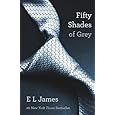
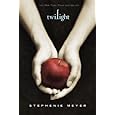
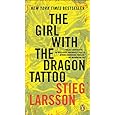
    I have a lot of respect for writers like Elmore Leonard and Tom Gallant. They’ve shown mastery of their art, and have achieved success as authors. But there are a lot of best-sellers that defy these standards. Three come to mind immediately: Fifty Shades of Gray, Twilight and The Girl with the Dragon Tattoo.


    Book fads

    I haven’t yet read Fifty Shades of Gray. It seems to elicit two kinds of response: readers either love it or hate it. Some find it new, fresh and honest.


    Writers mostly hate it. I don’t think that’s sour grapes—writers can’t begrudge every successful author, or we’d just be too depressed. But many writers point out that the writing style is heavy, wooden and unoriginal. The author, EL James, admits that she based the characters on Edward and Bella, the lead characters in Stephenie Meyer’s Twilight series (which itself has been criticized for its writing style). And I’m sorry, but as far as characters or personalities go, no one can tell me that either Edward or Bella is original.


    Several reviewers have criticized James’ overuse of description and metaphors. “Someone needs to take this author’s thesaurus and hide it someplace safe” wrote blogger Jessica on Read React Review.


    James’ inspiration, Stephenie Meyers, herself is no stranger to criticism of her writing ability. Apparently, Stephen King said Meyer “can’t write worth a damn.”

    Last year’s book phenomenon was Stieg Larsson’s trilogy, The Girl with the Dragon Tattoo, The Girl Who Played with Fire, and The Girl Who Kicked the Hornet’s Nest. Each book in the series is far too long at over 800 pages. And they’re not filled with complex plots or deep characterizations. Instead, we read about what kind of sandwiches and Billy’s Pan Pizzas the characters eat, the details of laptop computer specifications and Ikea purchases.


    Other than the girl of the title, Lisbeth Salander, and maybe her boss, Dragan Armansky, I did not find any of the characters at all believable. Instead, they’re flat renderings of roles in action movies: the thoughtful, plodding cop; the intrepid investigative reporter (in which role the author doubtlessly saw himself), the sexy female boss.


    So what do readers want?

    Why did these books catch on? I guess if I could answer that, I could rule the publishing world. Obviously, they each hit something the reading public was looking for at the time they were published, and could not find anywhere else. (Well, duh.)


    I haven’t read Fifty Shades yet, and I don’t ever want to read a Twilight book. I’m not pre-judging either of them, and I’ve only quoted what others have said about them. But I have read two of Larsson’s books (unfortunately), and I found them ponderous, annoying and completely unentertaining.


    What Larsson did right was create the character of the title (interestingly, that title was chosen by the Swedish publisher after the author’s death; he wanted to call it Men Who Hate Women). She is compelling: her pathological social inability is complemented by her tiny body. In other words, she should be completely helpless. Do you see Larsson’s oh-so-subtle social commentary, yet? Isn’t he clever? Salander makes up for it with a genius for hacking other people’s computers and savage determination for revenge.


    That’s the chord that Larsson struck. Salander does things we all wish we could do: she exacts revenge on anyone who ever hurt her. By using the latest technology in an age fascinated with digital technology, she grabs our attention even more firmly.


    Admit it: you’d love to hack into the email of that bitch two cubicles over who criticized your idea at the meeting last month. Find out just what she’s really doing when she’s supposed to be working on company time, and get your revenge.


    Not having read the book, I’m taking a big chance by analyzing Fifty Shades, but I’ll suggest this: James has answered the same urge in readers by creating a character that does what her readers would love to do: surrender sexually and have a dominant personality reassure them that, no, they’re not really perverts, that what they would love to do is all right, they’re not bad for wanting them, and ultimately, they’ll end up in control.


    So what do we do with this?

    Is that the answer to blockbusting books — characters and situation that play out the fantasies of millions? Okay. But the next challenge is always the biggest one: getting the word out to all those millions of people.