Why do so many best-selling books fail the stylistic standards of commercial publishers?
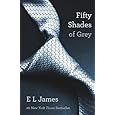
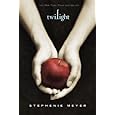
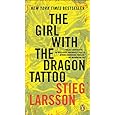
How do EL James, Stephenie Meyer and Stieg Larsson get away with such bad writing when the very companies that publish their books turn down manuscripts on the basis of poor writing quality?
Many book reviewers at major publishing firms sneer at “self-published” authors for having poor editorial quality, and they’re not just talking about the mechanics of spelling and grammar. Major publishers and the “literary” crowd write about deep characters and themes, and castigate writers for using description or writing “suddenly.”
Last weekend, I heard Canadian writer Tom Gallant, author of The Lord God Bird, in an interview on CBC radio. He said he had gone through his book in advance of his interview with Shelagh Rogers and found no metaphors and only one simile. Is this necessarily good? Should every English-language writer try to emulate Hemingway?
There are a lot of places to get advice on how to become a good writer. There are any number of blogs, books, websites, courses, seminars and workshops that profess to turn you into a good writer.
With the number and range of sources, you’d expect to find a range of opinion. Yet, there’s a certain sameness to the advice. It’s as if everyone has decided to follow Elmore Leonard’s 10 famous rules, like never writing “suddenly” or starting a story with weather.
I have a lot of respect for writers like Elmore Leonard and Tom Gallant. They’ve shown mastery of their art, and have achieved success as authors. But there are a lot of best-sellers that defy these standards. Three come to mind immediately: Fifty Shades of Gray, Twilight and The Girl with the Dragon Tattoo.
Book fads
I haven’t yet read Fifty Shades of Gray. It seems to elicit two kinds of response: readers either love it or hate it. Some find it new, fresh and honest.Writers mostly hate it. I don’t think that’s sour grapes—writers can’t begrudge every successful author, or we’d just be too depressed. But many writers point out that the writing style is heavy, wooden and unoriginal. The author, EL James, admits that she based the characters on Edward and Bella, the lead characters in Stephenie Meyer’s Twilight series (which itself has been criticized for its writing style). And I’m sorry, but as far as characters or personalities go, no one can tell me that either Edward or Bella is original.
Several reviewers have criticized James’ overuse of description and metaphors. “Someone needs to take this author’s thesaurus and hide it someplace safe” wrote blogger Jessica on Read React Review.
James’ inspiration, Stephenie Meyers, herself is no stranger to criticism of her writing ability. Apparently, Stephen King said Meyer “can’t write worth a damn.”
Last year’s book phenomenon was Stieg Larsson’s trilogy, The Girl with the Dragon Tattoo, The Girl Who Played with Fire, and The Girl Who Kicked the Hornet’s Nest. Each book in the series is far too long at over 800 pages. And they’re not filled with complex plots or deep characterizations. Instead, we read about what kind of sandwiches and Billy’s Pan Pizzas the characters eat, the details of laptop computer specifications and Ikea purchases.
Other than the girl of the title, Lisbeth Salander, and maybe her boss, Dragan Armansky, I did not find any of the characters at all believable. Instead, they’re flat renderings of roles in action movies: the thoughtful, plodding cop; the intrepid investigative reporter (in which role the author doubtlessly saw himself), the sexy female boss.
So what do readers want?
Why did these books catch on? I guess if I could answer that, I could rule the publishing world. Obviously, they each hit something the reading public was looking for at the time they were published, and could not find anywhere else. (Well, duh.)I haven’t read Fifty Shades yet, and I don’t ever want to read a Twilight book. I’m not pre-judging either of them, and I’ve only quoted what others have said about them. But I have read two of Larsson’s books (unfortunately), and I found them ponderous, annoying and completely unentertaining.
What Larsson did right was create the character of the title (interestingly, that title was chosen by the Swedish publisher after the author’s death; he wanted to call it Men Who Hate Women). She is compelling: her pathological social inability is complemented by her tiny body. In other words, she should be completely helpless. Do you see Larsson’s oh-so-subtle social commentary, yet? Isn’t he clever? Salander makes up for it with a genius for hacking other people’s computers and savage determination for revenge.
That’s the chord that Larsson struck. Salander does things we all wish we could do: she exacts revenge on anyone who ever hurt her. By using the latest technology in an age fascinated with digital technology, she grabs our attention even more firmly.
Admit it: you’d love to hack into the email of that bitch two cubicles over who criticized your idea at the meeting last month. Find out just what she’s really doing when she’s supposed to be working on company time, and get your revenge.
Not having read the book, I’m taking a big chance by analyzing Fifty Shades, but I’ll suggest this: James has answered the same urge in readers by creating a character that does what her readers would love to do: surrender sexually and have a dominant personality reassure them that, no, they’re not really perverts, that what they would love to do is all right, they’re not bad for wanting them, and ultimately, they’ll end up in control.

