Showing posts with label cooperative publishing. Show all posts

Thursday, May 30, 2013

Is there still a role for the commercial publisher?


“The global electronic marketplace is rapidly depleting authors’ income streams,” wrote Scott Turow, author and President of the Authors Guild., in an op-ed in the New York Times in April. E-books, pirated copies and changes to copyright laws will cause the “slow death of the American author.”
Photo: Evan Long by Creative Commons
Turow documents the futile efforts of the big publishing companies to control the e-book phenomenon, through doing things like fixing their prices ridiculously high, refusing to sell e-books to libraries and reducing the royalties they pay to authors.
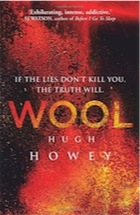
On the other end of the spectrum, Hugh Howey, author of the indie-pub phenomenon Wool, says that the self-publishing future is great for writers: “Those who take their writing seriously, who publish more than one title a year and do this year after year, are finding real success with their art. They are earning hundreds or thousands of dollars a month,” he wrote in Salon
Following these two statements, we have to ask: when readers choose good books without the intermediation of a publisher, is there a market for the gigantic, multinational Big Six — or “Bix” — publishers?
I have written about this on a couple of other blogs: Writers Get Together, the Guild of Dreams and BestSellingReads. Today, I’m bringing the arguments together and suggesting a new solution.

The legendary legacy

E-books are the driving force of publishing these days. Amazon reported that more than half of its sales are of e-books. And David Gaughran estimates that 25 percent of the e-book market is by independent authors.
The Bix claim to be agents of quality control: they find the best manuscripts, edit them rigourously, design and lay them out to be legible, print and distribute them so that readers enjoy reading them and promote them to bring them to the attention of audiences. Publishers take care of all those grimy aspects of publishing so authors are free to write more great books.
The Bix claim that they also provide an essential gatekeeping function. When the numbers of independent authors self-publishing e-books started climbing, the commercial publishers said that the self-published just weren't good enough to get published by a commercial publisher.
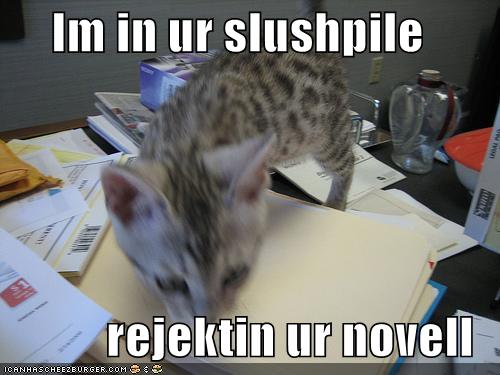
All those manuscripts that didn't make it out of the slush pile? The publisher sent their authors polite rejection letters, saying not that the manuscript is crap, but that it "didn't meet their needs at this time."
LOLcat built from original photo by sutefani in orlando,
under a Creative Commons-Attribution license by way of Flickr
Having worked for big and small publishers, here is what I know about the reality of choosing and editing books:
  • Acquisitions editors and agents choose manuscripts to publish based on sellability, not on quality. Because they cannot tell the future any better than you or me, they use factors like whether an author has been published before to make decisions. Getting selected from the slush pile is due either to blind luck or — usually — connections within the industry.
  • The quality of editing varies widely. Most copy-editors and proofreaders are right out of university and they’re so badly underpaid that most quickly seek more rewarding employment.
In reality, authors today do most of what publishers did 20 years ago: research, check facts, write, edit, copy-edit and proofread. Interior design or layout is capably handled by word processing apps. Howey and any number of other authors concur that most authors published by big companies have to do their own promotion. The days of book launch tours are long gone. Bix publishers only spend money to promote their sure-fire winners: their biggest sellers and celebrity authors.
The only money they shell out for new writers and relative unknowns, even for their mid-list authors, are for printing and distributing copies to bookstores.
But it’s not hard for the individual author to handle that part, as well. Software does most of the layout and production of e-books. Smashwords, Amazon and iTunes give step-by-step instructions on how to create a good e-book. Amazon’s CreateSpace system does the same for printed books. Their quality is equal to or better than commercial publishers’, and their prices are better than anything I’ve found in 30 years of managing printing.
That leaves cover design. More on that later.

The independent reality


Hugh Howey, from his website.
Hugh Howey, compares the self-published independent author to the independent musician. “We admire anyone who learns the grammar of chords and then strings these phrases together into music.” They begin by playing cover tunes, progress to busking and open-mic nights, get small gigs and hope to open for a big act or be discovered by a major label. “This is how artists are born. They are self-made.”
Like a musician, Howey became an overnight success after years of hard work. His breakthrough, best-selling novel, Wool, was the eighth or ninth title that he published through Amazon’s Kindle Select program. After he sold half a million copies, Simon & Schuster offered seven figures for the publishing rights. Ridley Scott optioned film rights.
According to Forbes magazine, Howey turned down S&S’s original seven-figure offer. Instead, he sold just the print rights for six figures, keeping the e-book rights for himself because he thinks that S&S won’t be able to sell enough to make up the royalty difference.

Proposing a new publishing model

Writers can, and do. perform all the functions of a commercial publisher. In other words, authors don’t need publishers.
I suggest a cooperative model of publishing, where authors, editors, designers and marketers work together to bring new electronic or print books to audiences with as little intermediation as possible.
(Image found on Ted Landphair's America blog, originally from whiteafrican, Flickr Creative Commons)

Many of you readers already know about the authors’ cooperative I belong to, Independent Authors International. With 13 members so far, it’s a consortium of writers who commit to supporting each other in development, production and promotion of each other’s work.
My latest book, One Shade of Red, is a good example of the process. Once I had written and re-written the manuscript, I turned it over to another iAi member, Gary Henry, independent author of American Goddesses. He performed the story editor function, pointing out where I needed to develop a character more, plot errors, purple prose and weak writing.
Cinta Garcia de la Rosa, author of The Funny Adventures of Little Nani, performed a second review. Bruce Blake, author of the Khirro’s Journey trilogy, and Benjamin Wretlind, author of Sketches from the Spanish Mustang, plus my usual editor, my wife, Roxanne Bury, provided copy-editing and proofreading.
David C. Cassidy, author of Velvet Rain, designed a fantastic cover.
In return, I edited or will edit their books, or will provide other services. I also do what I can to promote their books on Twitter, Facebook, Google+ and LinkedIn, and through my blog.
This service swap or barter exchange need not be the only way for this to work; authors could pay editors and designers cash, or provide a royalty, or come to other arrangements.
The point is, there are thousands of people with the skills needed to produce professional books. These skills are not locked down by publishing companies in London, New York and Toronto.
With this model, while the author retain control of the book and the money it earns (if any), the book still achieves the quality standard the Bix companies like to say they’re all about. The iAi colophon is a symbol of that standard.
Will iAi and other co-operative ventures replace the Bix? They’re big companies with a lot of assets. But they’re going to have to learn to adapt to the new reality, rather than fight against it.
Hugh Howey is right: this is a great time to be an author.
If you’re an author, I encourage you to check out Independent Authors International. And if you think you’d like to get involved, send an email.

Friday, July 27, 2012

Who are iAi?


On Monday, I used this blog to announce the launch of a new group of independent authors from around the world, aptly called Independent Authors International, or iAi.

iAi is a cooperative publishing model. The idea is to bring together the skills and resources that a traditional publishing company offers to writers: appraisal of ideas, editing, proofreading, design, formatting for publication and promotion — while leaving control, and revenue, in the hands of the author.

All writers have several skills in addition to writing. Some I know are also skilled in graphic design; some have of necessity become skilled in efficiently formatting manuscripts for e-publication or printing. And some are good at promoting, marketing and selling books.

Books that are reviewed by iAi members, professionally edited (by a member or another professional), professionally designed and manufactured to a high standard, can bear the iAi colophon — a standard of quality.

Members of iAi share their skills, and at the same time, raise the quality, professionalism and credibility of its members work.

I’m proud to be associated with these skilled, talented and professional authors:

Haresh Daswani: Evolution of Insanity

Roger Eschbacher: Dragonfriend: Leonard the Great, Book 1

Will Granger: Anabar’s Run, Anabar Rises, and horror short stories

RS Guthrie: Black Beast, LOST and the newly released Dark Prairies

Gary Henry: American Goddesses, What Happened to Jory and Other Dark Departures, The Moon Poem and Other Strange Jingle Jangles

Alan McDermott: Gray Justice and Gray Resurrection

Zoe Saadia: At Road’s End, The Young Jaguar, The Jaguar Warrior, The Warrior’s Way
Elise Stokes: Cassidy Jones and the Secret Formula, Cassidy Jones and Vulcan’s Gift

Benjamin X. Wretlind: Castles: A Fictional Memoir of a Girl with Scissors, Sketches from the Spanish Mustang


Their names are all linked to their Author pages on the iAi website. If you’re looking for some good e-books to read, you’d have a hard time finding anything better!

Monday, July 23, 2012

Independent Authors International: a new model changes the way books are published

I’m very excited about a new literary venture.

I’ve joined a group of 10 authors from 5 countries who are forging a new cooperative publishing model: Independent Authors International.

The members are all professional writers not affiliated or published by any major imprint. Instead, we are all independent authors who recognize that writers can provide all the services that a major publishing house can offer: editing, proofreading, design, e-book formatting, layout for print books and publicity. We’re sharing these services with each other to raise the quality and the credibility of independent publishing.

The news release explains it all. Then check out the website: iauthorsi.org. And check out the iAi author I'm cross-promoting this month: Haresh Daswani. Followers of this blog know that I found his Evolution of Insanity irresistible, if flawed.

Every month, a different iAi member's book will be featured in that spot on the right-hand side of this blog.

And when you’re hankering for great reads, now you know where to look!


Authors’ cooperative venture changes the publishing world — again

iAi to be a symbol of quality and professionalism in publishing

A group of writers, marketers and designers unaffiliated with publishers have banded together to create their own publishing model, “Independent Authors International (iAi).”

The new organization, whose members hail from across the U.S. and around the world, aims to support and legitimize the independent author movement, and bring new voices to readers throughout the world.

“Recently developed technologies like e-readers and print-on-demand make it now possible for individual writers to publish books without the resources of a large commercial publishing enterprise,” says iAi spokesperson, Scott Bury.

“The iAi co-operative will help professional authors by bringing together the skills and services that a commercial publisher offers, while leaving the authors in control of their work, at a fraction of the cost, and with a much more responsive and personal touch.”

The iAi's goal is to help its members produce quality, professional works recognized by literary agents, publishers, booksellers, and readers. The group is a democratic, cooperative organization controlled by its members.

Membership is granted by invitation of existing members. The group vets prospective members to ensure they meet the professional writing, editing, and marketing standards of the iAi.

To receive the services of the organization, members must contribute their editing, production, or marketing skills to other members.

The iAi currently has 12 authors and publishing professionals from the United States, Canada, the United Kingdom, Israel and the Philippines. The iAi website at http://iauthorsi.org/ has information on the organization's goals and principles, a list of members, books that meet iAi criteria and links to sites where these books can be purchased.

For more information about Independent Authors International or to schedule an interview with one of its members, please contact Scott Bury by email at scott.bury@iAuthorsi.org.