Showing posts with label bestseller. Show all posts

Monday, April 21, 2014

Ocean of Fear: A geeky thriller that I could not put down

Author Helen Hanson describes her writing as “thrillers for geeks”

There’s a certain geek factor in all thrillers. Many thriller authors write loving descriptions of cars, guns, bullets, bombs, or bullets. I have read several descriptions by different authors about how a bullet bounces around inside a skull and precisely what it does to a human brain.

But I actually enjoyed the geek factor in Ocean of Fear. Hanson made the geeky-technical aspects integral not only to the plot, but also to one of the main characters. 

What makes a good thriller?

To make a thrill, an author needs to build tension. The readers have to care enough about the characters and believe the situation enough to say “Oh no, don’t do that! You shouldn’t have done that!”

When the tension snaps, the author has to surprise you. It’s not a thrill when you know what’s going to happen

There are a lot of those moments in Ocean of Fear.

Plot points

Like any good thriller, Ocean of Fear begins with a murder. Baxter Cruise (character names are not this author’s strong suit), a grad-school dropout turned email spammer, discovers UC Santa Cruz professor, Dr. Allesandra Bisch, dead in her office. Baxter’s employer, Professor Sydney Mantis, had given Baxter a flash drive and asked him to give it personally to Dr. Bisch, as well as to look after his, Mantis’s dog while he suddenly had to leave town for a few days.

The mystery is not who killed Dr. Bisch — the author introduces the assassin in Chapter 2. The mystery is why, and the tension rises as the main investigator, FBI Special Agent Claudia Seagal, puts the pieces of the puzzle together, and as Baxter gets pulled deeper and deeper into the trap laid for Dr. Mantis. 

Hanson knows how to ramp up a story by taking it in unexpected directions. It turns out that the professors, Bisch and Mantis, were developing robotic submarines for drug dealers to use to smuggle their product into the US. Special Agent Seagal. This is the geek factor: Hanson tells us enough about robotics and remote control to make the story work, so that we understand that this story just could not happen without this technical detail. However, she never gives too much, never bores us with technical factoids that we don’t need. Every word is a plot point.

Engaging and critical backstories

Despite their unfortunate names, the characters have interesting backstories. Hanson is also skilled at not drowning the reader in long information dumps, but revealing details about Claudia’s deceased husband, Baxter’s dead parents, Mantis’s habit of seducing students, even the bad guys’ back stories as they’re needed. Readers begin to feel for the characters, to hope that their plans work out. The sibling rivalry between the two main baddies really rang true.

Two weaknesses

There are only two weaknesses with this story. First, there are the character names. The author shows us in Chapter 1 that “Dr. Bisch” is an intentional joke, but then there are all the animal names: Dr. Mantis, Agent Seagall. I don’t know if this was an intentional gag, but while there are some humorous moments in the book, it’s not overall a comedy. It’s a thriller that takes engaging, believable characters on an exhilarating ride to an explosive and satisfying conclusion.

The other weakness was the cover. It’s professionally done, but maybe a little too clichéd. It gave away too much of the story, instead of making me want to open the book.

But those are minor flaws. In the end, Ocean of Fear is a good, satisfying read from a skilled author.

4 *.

Visit Helen Hanson's website and blog and learn about her books.


Wednesday, June 05, 2013

Now out: the third Cassidy Jones Adventure


One of my favourite middle-grade adventure superheroes is Cassidy Jones. The brainchild of independent author Elise Stokes, Cassidy Jones became a hit about a year and half ago, when a middle school in the US took Stokes’ debut novel, Cassidy Jones and the Secret Formula, as a school project. And now, you can enter a Rafflecopter contest to win all three e-books: Win ALL THREE Cassidy Jones books! Just enter this Rafflecopter: Rafflecopter giveaway.

I know I’m not the intended audience for Cassidy Jones, but I was impressed by the sheer quality of the writing. Stokes is a writer who clearly loves the language and has the skill to use it to create interesting, believable characters in compelling situations. She knows plot and pacing and how to describe action and setting, and when to leave the description to the readers’ imagination.

The follow-up novel, Cassidy Jones and Vulcan’s Gift, took the story to greater strengths, developing the secondary characters more along with Cassidy herself, and filling in some enticing details about Cassidy’s mysterious neighbour—and catalyst in turning Cassidy into a superhero.

Now, the third book in the series is out: Cassidy Jones and the Seventh Attendant. What’s it about?


Some Secrets Are Better Left Buried…

When the mysterious Gavin Phillips returns to Seattle after a prolonged and unexplained absence, he threatens to expose fifteen-year-old Cassidy Jones’s incredible secret: she is a superhero. But his presence is far more sinister than she realizes, for it soon becomes apparent that his hidden agenda holds a dark and dangerous intent that will unleash an unparalleled evil upon an unsuspecting world. Can Cassidy stop him before all is lost?
For your entertainment, here’s a sample:

A police car screamed past me as I veered off Fifth Avenue and into an alley. Sirens came from every direction on their way to the museum. I ran until I was sure no one was pursuing me and slid into the shadows of a doorway to assess the damage. A small cry of panic tore from my throat when I saw the ravaged costume, spotted with blood. I had been shot so many times, it was a miracle I hadn’t been cut in half.

“No, no, no, no,” I chanted, worming a trembling finger into a bullet hole. Due to the hardness of my skin, I couldn’t feel anything through my numbed fingertips, so I ripped away the costume and lifted the black tank underneath, exposing my stomach, which was peppered with bullets. They reminded me of corks lodged in wine bottles. Small amounts of blood burbled up around the bullets, as if they plugged a dam.

Tears of relief smarted my eyes. This was one of those rare occasions when I was grateful to be a mutant.


“It’s going to be okay. These can be removed. I’ll heal.” I dried my eyes with my forearm and suddenly realized I couldn’t hear Emery in the earpiece, nor the background noise of the coffeehouse. We had somehow lost our phone connection. I retrieved my phone and punched the speed dial.

“Are you all right?” Emery answered. The sounds of sirens,the museum’s alarm, talking, shouting, and a police officer on a megaphone flowed through the receiver along with his voice. “Cassidy,” he said again when I didn’t answer.


“I don’t know what to do.” I wiped back a sudden flood of tears with the tattered sleeve of my mummy costume. “My head’s scrambled. I can’t think straight.”


“Do you know where you are?”

“Yeah.” I glanced around. “No. I’m not sure. It’s weird that I can’t feel any pain. I should feel pain.”

“Cassidy, listen carefully,” Emery said slowly and calmly,which meant he wasn’t calm at all. “You’re only four blocks from Riley’s office—”

“How do you know—” I began to ask, then remembered GPS. I struck my forehead with my palm in an attempt to clear the haze.

“You’ll be fine,” Emery soothed. “I’ll take care of you. Please concentrate.”

He explained how to get to the back of Riley’s building through alleys, avoiding the main streets. I would have known this if I could think properly.


“There are a lot of people on the streets now, so take care not to be seen. I’m only two blocks away from Riley’s office. I’ll let you in through the emergency exit in back. Everything will be fine, Cassidy. This is almost over. Repeat back to me everything I just told you.”

I tried but couldn’t. The bullets felt heavy in my stomach. A horrifying thought struck me: What if my skin suddenly softens and the bullets get swallowed up in my flesh?

“Hurry, Emery.” I disconnected the call and shot toward the street. We need to get these bullets out of me!


At the street, I looked around, recognizing where I was—or believing I did. Spying an alley, I ran across the street toward it, leaping over a parked car. I saw two men and a woman in the alley ahead. One man held a switchblade to the other man’s throat while the woman riffled through his pockets. I moved so fast, none of them saw me until the mugger with the switchblade was yanked off his feet by the back of his jacket collar.


“Help!” he screamed as I dragged him behind me, arms flailing, boot heels bumping along the asphalt.


I emerged from the alley into a street bustling with activity and flung the mugger toward an oncoming police car. Lights flashing,siren blaring, the police car screeched to a halt and the mugger hit the hood,tumbling over it with the switchblade still gripped in his hand.


I jammed the cell phone between my teeth and took a flying leap at the nearest building, catching a windowsill on the second floor. I scaled the protruding bricks as swiftly as a spider scurrying up a wall and heaved myself over the ledge and onto the roof. Pausing to catch my breath, I spat the phone into my hand and looked down. A small crowd had gathered below to gape at me.


The dazed mugger, sprawled atop the police car, dropped his switchblade, which clattered across the hood and onto the asphalt. The officer in the passenger’s seat stared up at me with a radio microphone to his mouth,but his lips weren’t moving, as if he were at a loss about how to call in what he had just witnessed.

Get Cassidy Jones and the Seventh Attendant at:

Amazon USA

BONUS:


Friday, December 07, 2012

The best and worst of Bruce Blake

Bruce Blake is having a significant impact on the independent author scene. In addition to writing some innovative fantasy and horror novels, he has founded the Guild of Dreams fantasy writers’ collective, which has a Facebook group page as well as a blog, where members take turns posting very interesting ideas, opinions, interviews, excerpts and lots of other stuff. Check it out — AFTER reading Bruce’s addition to the confessionals series, “The best and the worst I’ve ever done — as a writer.”

When Scott asked me to write a few words about the best and worst things I've done as a writer, it took me a while to come up with something that didn't sound cliché and lazy. How easy would it have been to say the best thing I ever did was to self-publish and the worst was to wait so long to self-publish? Both of those answers are valid, but I'm aware of the quality of Scott's writing and blogging, so I thought, “No, Bruce. That's not good enough. Scott's readers will demand more.”


So here's the real deal.

The best thing I ever did was to keep working on, reading about and learning my craft. Too broad? Let me narrow it down to a single incident. I took a writing course by mail through a major writing publication some years ago, which included one-on-one instruction from a published author in my genre. Part of the deal was that I could ask the instructor questions when I submitted my exercises, so I asked this gentleman about how much editing an author typically does. His response? “Most of the published authors I know have their first drafts published almost as-is.”

A book that changed Bruce's
writing life.
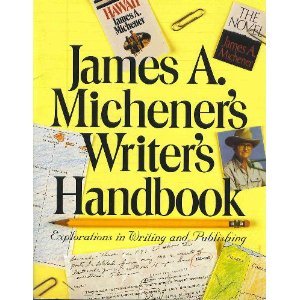
I was devastated. I hadn't been writing seriously for long at that point and was still pretty new to the idea of writing to be published, but I knew enough to realize my first drafts weren't good enough to go to print. Not by a long shot (and they still aren't). But I didn't let that deter me. I kept writing and, more importantly, kept learning. Soon after, I came across a book that changed my writing life: James A. Michener's Writer's Handbook: Explorations in Writing and Publishing.

The book included his first draft for a novel and you know what?

It sucked.

Photo of Stephen King
from Wikipedia
Commons

Photo of Ray Bradbury  from Wikipedia
Commons

Mr. Michener, author of dozens of bestsellers, proclaimed that writing really came together during the editing process. (An amusing side note: Mr. Michener wrote by hand. An assistant typed the manuscript, which the author would then edit by literally cutting and pasting with scissors and scotch tape). He said that a first draft is just about getting words down on paper, no matter whether they are good or not, and that editing and rewriting are where a writer breathes life into his work. Since that moment, I've read interviews and books by other writers who say the same thing. You know, hacks like Stephen King and Ray Bradbury.

By the way, years later, I finally tracked down a copy of one of my instructor’s books ... I couldn't get through it.

Ah, sweet vindication.
Other “best things” I've done would have to include realizing that any good writer needs the assistance of others in the form of professional editors, proofreaders and cover artists; exposing myself to other writers (though the other writers might not like it so much when I expose myself, wink wink nudge nudge); and taking it seriously enough to lose sleep and skip social functions to just get it done.


A matter of timing

The worst thing I have ever done as a writer, on the other hand, is more difficult to nail down. If I had to pick one, I think it would involve timing.

I published my first novel, On Unfaithful Wings, to Kindle in December 2011, but resisted enrolling in Amazon's KDP Select program until April (to be part of the program, your novel has to be exclusive on Kindle. I struggled with that concept, despite the fact I've sold a grand total of five copies through other venues). Doesn't sound like such a bad thing, does it? Not until you know that something changed significantly about the program around the end of March. Up until that time, copies given away during KDP free promos counted as sales. That meant independent authors could give their book away to thousands of people (my first free promo, I gave away just shy of 10,000 copies) and end up on the Kindle bestsellers list...the list paying customers see and often use to determine what books they are going to buy.

Around the end of March, the giveaways stopped counting as sales. I did my first promo two weeks later. That hesitation cost me hundreds, perhaps even thousands, of dollars. That would have to be the worst thing I've done as a writer.

Unless you include the time I killed a man in Reno just to watch him die.

Bruce Blake lives on Vancouver Island, which the rest of us Canadians know as the tropical part of Canada. When pressing issues like shovelling snow and building igloos don’t take up his spare time, Bruce can be found taking the dog sled to the nearest coffee shop to work on his short stories and novels.

His first novel is On Unfaithful Wings: An Icarus Fell Novel. He released his newest, Blood of the King, on Amazon in October. A promotional preview excerpt appeared in Written Words on October 1.


Follow him on Twitter @bruceablake.

Tuesday, November 06, 2012

What is writing style? Guest post by Bruce Blake

What is writing style? How important is it to readers? To writers? To a writer’s success?

I am asking authors for their thoughts on these questions.

Bruce Blake is author of the best-selling fantasy/horror novels On Unfaithful Wings and All Who Wander are Lost and founder of the Guild of Dreams fantasy writers’ collective. His latest novel is the epic fantasy Blood of the King, all available on Amazon.


Bruce, how would you describe your own writing style?

I am a big believer in Elmore Leonard's 10 Rules of Good Writing. If anyone's not familiar, included amongst these are: avoid detailed descriptions of characters, don't go into great detail describing places and things, and try to leave out the part that readers tend to skip. Those are the big three for me. I try not to waste any words. I'm a fan of many authors who are well known for their detailed descriptions (George R.R. Martin, China Mieville, etc.), but that's just not my style. I try to make every word count and use as few of them as possible. Short sentences, sharp dialogue, and I'm not afraid to throw out the odd fragment here and there.


Are there any authors whose style you admire? Do you try to emulate them?

I admire a lot of authors whose styles differ from mine and I would never attempt to emulate, like those I mentioned above, and J.R.R. Tolkien (I've often wondered how my style would be if I changed my name to Bruce R.R. Blake). I don't really try to emulate anyone, but I've been compared to Jim Butcher (I've only read one of his books) and Mike Carey. If I had to pick one novel in which the style particularly impressed me, it would have to be The Road by Cormac McCarthy. Never have sentence fragments been so powerful.


Are there authors whose writing style you dislike?

I think dislike is a strong word; there is something to take away from any writer's style. Having said that, I'm not a fan of writing that is more about the writing than it is about the characters and their story, though most writers who choose that style are far more talented than I can ever hope to be.


How important is your writing style to you? Are you happy with your style, or are there aspects of it you try to change during rewriting or editing?

I'm pretty happy with my style but, like everyone, I'm always striving to improve. Things definitely change during the rewriting and editing; that's when my style really emerges. I'm not a writer who will ever publish something as it came out during the first draft, nor will I usually even consider showing it to someone who has the ability to read. Too often, my first drafts end up being information dumps that need to be molded into shape. Sometimes they read like I was taking point-form notes during a lecture instead of writing a novel. My latest book, Blood of the King, went through about 12 drafts.


How can readers identify your writing style? Are there particular words or kinds of words that you tend to favour? Sentence structures? Or is it more in the story, the pacing or the characters?

Again, my style tends to be succinct. I pay attention to the lengths of my sentences and try to use them for maximum impact; it's not unusual for me to have sentences of only a couple of words or a paragraph that is only one word. I'm also conscious of word choices. I have a list I call “Bruce's Bad Words” that I try to weed out of my novels. It naturally includes words that signify passive constructs—like was, were and had—but it also includes words I use habitually (glance, something, moment) and what I call wishy-washy words (almost, barely, nearly). Ideally, I hope its the story, pacing and characters that help readers identify my writing. I think a truly good style should be close to invisible to any reader who is not looking for it.


Do you think your genre imposes certain restrictions on writing style?

I began writing that certain sub-genres of fantasy have requirements of style, but I did a rewrite, because that is not true. I think style is always open, but genre can impose certain tones or voices on a writer. Epic fantasy demands a different tone than urban fantasy, for instance, though the things that make up style—sentence lengths, dialogue, pacing, etc.—can remain essentially the same.


Do you think your audience responds to your writing style, consciously or unconsciously?

Yes, I do. I think that style is the thing that most readers respond to in genre writing, whether they can put their finger on what that style is or not. As I said, my goal is that my readers aren't even conscious of my style. I want it to be out of the way so my readers can concentrate on the characters and the story, not be distracted by how I tell it.


How important do you think writing style is to an author's commercial success?

Style is essential. It's what makes a novel walk and talk. A great story with interesting characters is still a laborious read when poorly written. Pacing, tone, voice, structure; all these things contribute to a reader's enjoyment of a book, and these are the elements of style (my apologies to Mr. Strunk and Mr. White). If you take a look through the one and two star reviews of any book on Amazon, you will find many “it would have been a great story if it was written by someone else” comments. If I use my magic decoder ring on that phrase, it says: “I didn't like the writer's style.”

Thank you, Bruce.

Bruce's blog is The Thoughts and Opinions of a Writer on the Rise. He is also the founder of the Guild of Dreams fantasy writers' collective. On The Guild of Dreams blog, Guild members take turns posting very interesting ideas, opinions, interviews, excerpts and lots of other stuff.