Showing posts with label religion. Show all posts

Monday, January 26, 2015

What is freedom of speech? Opinion or bullying and mocking?

Guest post by award-winning, bestselling author Samreen Ahsan 

Our world is trending on controversial hashtags these days: be it #JeSuisCharlie, #PeshawarAttack or #IWillRideWithYou. We all have our own opinions and thoughts—but what exactly does “freedom of speech” mean?

Is it having the right to express an opinion on something that you observe or read, or is it the power to criticize someone on the basis of their religion, nationality or colour?
To me, it is simply the power to generate your idea and raise your voice for justice.
I’d like to emphasize that I’m not here to criticize any theory or ideology. Everyone in this world has the right to believe in their own ways and no one has the right to mock them. God gave us the freedom of making our own decisions and taking charge of situations. He never asked us to rely on Him for every act. True, there are certain things that are in His hands (like our life and death) but on the journey from life to death, He has given us the power.
And what are all we doing here with that power? Just passing discriminatory remarks about each other and bullying in an immature way. Sure, it boils your blood if someone bullies your faith or ridicules your religion, but does that mean you should take out the sword and cut his throat?
I believe that everyone has the right to form his expression, yet I also believe that if you know something will offend a certain group, why take that path? There are other ways to make your magazine popular...is it necessary to choose the sensitive path? Make it more controversial just to get fame or some buzz?
Religion has always been a sensitive topic. Be it Jesus, Moses or Muhammad, I don’t think anyone should criticize someone’s belief system or the way they respect someone. Freedom of speech does NOT mean criticizing and mocking! It means you have the right to give your opinion on any matter without ridiculing someone’s ideology. And how do you do that? Work on the idea of think-before-you-speak.

On the other hand, I also believe that one should not react to someone’s criticism. I’m a practicing Muslim—why didn’t I react to Charlie Hebdo’s cartoons? Does that mean I don’t love my Prophet or I’m not sincere about Islam? NO! I believe no matter how much any other person criticize or mock, they cannot ruin Muhammad’s honor and dignity. He was chosen to be the last prophet and the religion and revelation of God is completed in him. So if someone picks Muhammad as a topic of criticism, it’s his mindset and his mindset own problem.
If I respect Jesus and follow Muhammad, I don’t expect the entire world to think the way I think and respect the way I respect. God is the one who gave us free will, so He is the one to give us freedom of expression. Everyone has the right to make an opinion. And this mocking won’t harm my faith and my honor toward Muhammad. It’s how God picked him. No one can cause dishonor because God honored him. We are not the ones to avenge Muhammad because his dignity is NOT going anywhere. He was and is a most noble man ever created.
The Quran says:
“We prescribed for them a life for a life, an eye for an eye, a nose for a nose, an ear for an ear, a tooth for a tooth, an equal wound for a wound”

but it also says:
“if anyone forgoes this out of charity, it will serve as atonement for his bad deeds. Those who do not judge according to what God has revealed are doing grave wrong.”

When we are taking revenge—are we sure if it is eye-for-an-eye, or are we taking the entire head with it? When you try to form an opinion about Islam or Muslim practices, do you have an idea that incidents can occur as a backlash? Mocking Muhammad, hurting people’s belief for NO reason, in the name of “freedom of speech” or for the sake of fun, is not a mature act.

I’m a proud Muslim, I’m NOT oppressed. My religion gives me the right to practise how I want and how much I want because it has taught me that I will be going in my own grave and will be responsible for my own deeds. No one has the right to drag me to the mosque and pray five times. I’m responsible for myself.

Anyone can stand up and take out a sword; anyone can raise the voice and bully the other. We are not thinking about the collateral damage resulting from these revenges. Our governments are spending millions of dollars on nuclear weapons, ready to kill each other, while people around the globe are dying of exposure or the lack of food and clean water. It’s a shame to all of us!
We all have to live in this world till the Day of Judgement so why not make it a more tolerable and peaceful place to live in? When our house is burned, we don’t curse the fire or reason behind it. We try to either extinguish the fire or save what we can.

Being a Muslim, I condemn all these acts these Jihadists or unknown people are doing in the name of Islam. This is NOT Islam. Islam means peace and Jihad means fighting the demon in you first. Muhammad was dishonored during his time in Mecca and Medina, but he never raised his voice to kill anyone who disgraced him. There was NO blasphemy at that time.

Muhammad always stayed on this Quranic verse: “To you be your religion, and to me my religion”. And I think we should all follow this verse, whether Muslim, Christian, Jew or any other faith.

Remember, there’s a very fine line between an opinion and bullying. What is your freedom of speech?
Samreen Ahsan is the award-winning author of the "Silent Prayer" series, A Silent Prayer and A Prayer Answered, paranormal stories based on Islamic concepts.

  • WINNER OF READERS’ FAVORITE 2014 INTERNATIONAL BOOK AWARDS
  • WINNER OF 2014 LOS ANGELES BOOK FESTIVAL
  • WINNER OF 2014 PARIS BOOK FESTIVAL
  • WINNER OF 2014 HOLLYWOOD BOOK FESTIVAL
  • HONORABLE MENTIONS OF 2014 NEW YORK BOOK FESTIVAL

History, art and literature are her passions. "I love digging out information about prophecies, divine miracles and paranormal events that are mentioned in history and holy books, that don’t sound possible in today’s modern world.

"Since childhood, I have been into reading and writing–and yes, it can’t happen without imagination, which luckily has no boundaries. Dance and music are also pastimes I enjoy, as well as reading romance fiction. I love to travel and explore historical cities."

Samreen Ahsan lives in Toronto, Canada.

Thursday, May 15, 2014

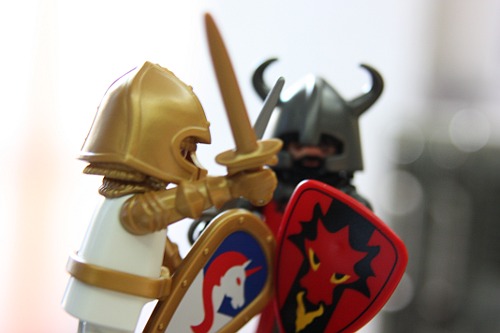
Good versus evil

Image courtest Nicu's Photoblog.
Licensed under a Creative Commons Attribution-Share Alike 3.0 License.
It’s the basis of just about every story: right versus wrong, good guys against bad guys, the appeal of the bad boy …

Something I’ve been wondering about for a long time is that, outside of literature, evil-doers don’t seem to consider themselves as committing evil acts. In fact, most seem to think they’re taking an extreme step in defence of goodness.

Everybody thinks of himself or herself as a good guy. The Boko Haram group kidnapped nearly 300 schoolgirls in Nigeria. The group released a video showing the girls dressed in grey hijabs. It claims to have liberated them and to have converted some to Islam.


Boko Haram’s name reportedly translates as “Western education is a sin.” Its stated goals are to impose Islamic law, so clearly its members see themselves—or at least, pretend to—as having a moral objective.

It uses bombs, murder and kidnapping to achieve that moral goal.

Following what can be described as a coup in Kyiv that deposed an elected government, several cities in eastern Ukraine held referenda last weekend on joining Russia—referenda without clear questions, voting lists or secret ballots. In supporting the results of those referenda, Russian President Vladimir Putin claims to support the civil and human rights of Russian speaking people in eastern Ukraine. On Tuesday, militants ambushed a Ukrainian army convoy and killed six soldiers.

Who’s on the side of good?

I just finished writing a book about the German invasion of the USSR in 1941, Army of Worn Soles. In that conflict, both sides claimed to be on the side of good, as they defined it. The Germans claimed to be seeking living space; the Soviets were defending themselves. In the West of 70 years after the fact, we tend to believe the Soviets were more in the right, but even a little research shows there was plenty of evil to go around. Nazi Germany and the USSR partitioned Poland between them. A few months after that, the USSR invaded Finland in the Winter War to “protect Leningrad.”

I don’t think anyone decides “I’m going to do evil.” 

In 2011, Anders Behring Breivik bombed and shot 77 young people at a camp in Norway. He was sentenced to 21 years in jail. I’m sure all my readers recognize his acts as evil, but Breivik claimed he did it to defend Norway from a Muslim invasion.

So we come back to religion, which defines good and evil. Good will get you into heaven, evil will send you to hell. But Islam, Judaism and Christianity all follow texts that prescribe stoning to death for having sex outside marriage. Christians fought bloody wars for centuries over (supposedly) differences in interpretations of religious tenets. The Church burned hundreds of Cathars to death for believing slightly differently than officially sanctioned Catholicism.

From a secular perspective, we could define “good” as improving people’s lives. The oil industry provides good jobs, and has enabled us to heat our homes and travel, while providing well-paying jobs to some and huge profits to a very few.

Syncrude's base mine. The yellow structures are the bases of pyramids made of sulphur - it is not economical for Syncrude to sell the sulphur so it stockpiles it instead. The extraction plant is just to the right of this photograph and most of the mine is to the left. Source: Wikipedia
On the other hand, the oil industry has spoiled the natural environment for over a century, choking cities’ air (Mexico City, Los Angeles, Tokyo, Beijing), poisoning rivers (Kalamazoo, Michigan) and devastating whole ecosystems (Athabaska River). The oil lobby has prevented meaningful development of alternative energy forms until very recently, and continues to resist measures to mitigate climate change.

Is “good” what’s good for me?

The challenge in fiction is to make characters and their actions believable. Even when we’re writing about vampires, aliens or witches, we—or at least, I—try to create an emotional connection that the reader can identify with.

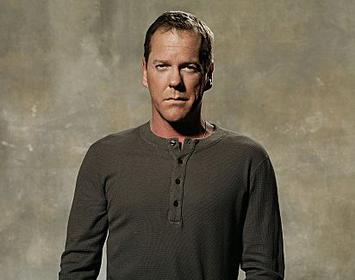
It’s always fun (strangely) to create a purely evil villain. Dr. Evil. Hannibal Lecter. Sauron. But what makes that person evil? The pursuit of goals, no matter the cost to others? Doesn’t that make 24’s hero Jack Bauer evil?

Good or evil? Source: Wikipedia
Fiction often presents villains as sympathetic characters, drawn into breaking the law or other evil acts to defend themselves or their families: think Michael Corleone in The Godfather, Walter White in Breaking Bad or Jaime Lannister in A Song of Ice and Fire (Game of Thrones). They’re naturally good people forced to do terrible things.

Hamlet poisoned his mother. Brutus stabbed Caesar to protect the Roman republic.

What’s good? What’s evil? Can we ever really say, or does it depend what end of the gun you’re on?


Friday, January 17, 2014

Tilting against the biggest books of all time: the Bible and Quran

I'm taking a huge chance here.


 Last week, the news media were full of the story about York University in Toronto accommodating a male student’s request not to be put in a study group with women, on religious grounds.

The identity and specific religion of the student are protected under Canada’s privacy laws. Whatever religion it is, this case points to a long-standing problem.

I fully support freedom of religion, and will defend everyone’s right to believe and practice whatever they like, as long as it is not hurting anyone else nor infringing on any else’s rights. But it’s time we all stopped using religion or philosophy to excuse inexcusable behaviour and to justify unjustifiable ideas.

That’s right. I’m telling the world that I do not believe that you can use the Bible, the Quran, Mao’s little red book, the Communist Manifesto or any other book to defend your ideas. I just don’t accept the argument “because God says so.”

You can’t prove that, and the fact that you have a book that’s called “God’s words” does not constitute proof. I can write a book called “God’s Words, too.”
 
See?

The devil is in the details

In September, 2013, sociology professor J. Paul Grayson assigned a mandatory group assignment that required students to work together in person. One student, who was taking the course online, asked Dr. Grayson to exempt him because his religious beliefs forbade him from meeting in public with a group of women.

Dr. Grayson refused the request, and after discussion, the student agreed to participate in the assignment and completed it. However, the university administration ordered Dr. Grayson to accommodate the request.

To his credit, Dr. Grayson refused the administration’s order to accommodate this religious request. “What if I said my religion frowns upon my interacting with blacks?” he wrote. This accommodate would set a precedent, he said, and make him an “accessory to sexism.”

The public reaction was telling and uplifting. I could not find a single person or opinion in the media that supported the religious accommodation. And rightfully so.

(The Dean of Arts at York University defended his action partly because the student asked to be able to complete the assignment in another way, and another online student who was situated outside the country was allowed another way to do the work.)

The media reaction

Every political leader in the country decried the university’s accommodation order. Every opinion speaker and writer I heard or read likewise sided with the professor. Every online comment also supported the professor, and pointed out that this type of religious accommodation damages women’s sexual equality rights, hard-won over the last century.

This is an example where the right of freedom to practice your religion conflicts with gender equality rights. Many Canadian schools provide prayer rooms, segregated by gender, as part of their “religious accommodation.” Canadian institutions — funded by Canadian taxpayers — accommodate religious practices that defy the Canadian Charter of Rights and Freedoms — part of the law that supposedly governs those institutions.

Religious versus human rights
I repeat, I support your right to believe and practice any religion you like. But I do not support anyone’s attempt to infringe on anyone else’s human rights. And equality of women and men is one of the most important.

I thought it was telling that CBC radio’s program, The Current, introduced this story with a clip of televangelist Pat Robertson saying that according to the Bible, men and women are not equal.

According to this logic, religion justifies unequal treatment and unequal rights between the sexes. It says so in the Bible.

I’m not trying to criticize any particular religion here, nor am I trying to open a general debate about crime and punishment. All I want to do is to point out the hypocrisy of the argument that goes: “I must do this/I cannot do that because the Bible/Quran/whatever other text I hold out as justification for every ridiculous idea that comes out of my mouth, says so.”
Crazy idea icon by mehagopijiji.
Licenced under Creative Commons.

Otherwise rational people are afraid to criticize religious beliefs and practices because they fear being branded as intolerant, racist, or xenophobic. Well, I’m none of those things, but I will say this: I don’t accept the “It’s God’s will” argument, because the people who use it don’t accept it, either.

Nobody actually follows the entire Bible, even though they say they do. Not even Pat Robertson. How many people sacrifice cattle to God? Does Pat Robertson? Yet Leviticus, the Biblical book that instructs believers in how to live every minute of their lives, tells readers to sacrifice bulls just about every day.

Have you ever seen a televangelist making that kind of sacrifice, or indeed, any kind of sacrifice of his own property?

Do religious leaders in Canada promote the death penalty for adultery? How many religious people think that’s okay? Should Canada accommodate religious sects that want to put adulterers to death?

From Leviticus, Chapter 20. Source: ReadBibleOnline.net
The Bible also tells believers to put homosexuals to death. I’m pretty sure that Canadian law does not accommodate this practice.

The Quran tells a husband to beat his wife — mildly, yes, but definitely to use force — if she defies his authority. Would Canadian law accommodate this? Would US law? I hope not.

No one follows any scriptures absolutely. No one in Canada can put adulterers or homosexuals to death. If they do, the law will punish them.

The point is that even the most religious choose among obligations to follow, adhering to some and ignoring others. It’s a human decision.

Not a divine one.

Basing all your life actions on an ancient book is an unsupportable idea. Every religious person chooses the scriptures he or she will follow, because no one follows all of them. No one can.

I won’t argue whether the Bible and Quran were divinely inspired, because I cannot change anyone’s belief on that point in a blog. But how about if I add this: God told me to write this post.


Prove to me that He (or She, or Whatever) did not.