Friday, September 27, 2013

Guest post: Bruce Blake on productivity

When I tell people I wrote the first draft of my upcoming novel, When Shadows Fall (The First Book of the Small Gods) in fourteen days, they either stare at me with a blank expression, make me repeat it to ensure they didn't mishear me and I actually said forty, or they ask me how I managed to churn out an entire novel in such a short time. Since you are not looking at me, and it clearly says “fourteen” days in the last sentence, I'm going to assume you fall into the third group...so here's how it happened.

First, it's important to realize I am a full-time writer—making stuff up is what I do. This output didn't happen in half-hour snatches here and there, but in 5-7 hour chunks of tapping on my laptop's keys. Before you stop reading because you don't have that much time to write, realize that what's most important about this output is how much I produced in the time I had—consistently about 1,300 words/hour. This number—your productivity—is how all authors should evaluate the effectiveness of their writing time, with a goal of maximizing the number of words written in the time available. It can be difficult to work around a day job, family, and other commitments—and none of us can jam more hours into the day—but you can control what you do with the time you have and get the most out of the minutes you put in at the keyboard. Here are the steps I took to keep my word count high.


1.      Pre-planning. More effort went into the planning of this book than any I've ever written. For a month, as I was writing and editing another project, I spent my evenings world-building for the Small Gods series. It was really during this phase that the seeds of the story grew and blossomed. The more I learned about the background and history of this world, the more the story I was planning kept taking twists and turns I wasn't expecting.
2.      Outlining. There's always a debate among writers about outlining versus writing by the seat of your pants. Simply put: I find I'm more productive when I have a pretty good idea where I want to go. It means I don't lose writing time by stopping to think about what to do next. This dovetails perfectly into the next point.
3.      Daily planning. This is a tip I picked up from Rachel Aaron's great little writing book 2,000 to 10,000: Writing Faster, Writing Better, and Writing More of What You Love. It's a simple concept...take the first five minutes of your writing session, grab a pen and paper (that's right—the old-fashioned way) and jot down what you will be writing about. Include actions, bits of dialogue, descriptions; all the points you want to hit, plus some of the detail. This is your road map for what you will write today—not tomorrow, not yesterday, but today.
4.      No editing. Sounds funny, doesn't it? Of course I edit, just not while I'm writing the first draft. I know too many writers who never get to the end of their manuscript because they spend too much time polishing the first half of the book to perfection. Not only are first drafts supposed to suck, I know the way I write; chances are good that, if I did a bunch of editing before I finished the rough draft, something else would change and I'd end up going back to rewrite all that careful editing, anyway. Time well wasted.
5.      Unplug. The Internet is not your friend. If you are writing and you can't find the word you're after, can't come up with a great name for a new character, or need to do a bit of research, bookmark it and save it for non-writing time. Seriously, it will still be there at 10 o'clock on Thursday night when there's a commercial during The Amazing Race...do it then. Don't even get me started on Facebook and email.
6.      Make writing a priority. We all hear many writers lamenting that they can't find time to write. I never have that problem because I plan my writing time, then make everything else work with it. I did the same thing when I was working sixty-hour weeks...the job schedule was the only thing that was inflexible; everything else had to realize I had a book to write.

With planning and forethought, it's more than possible to write quickly without sacrificing quality. Be ready, be focused, be dedicated...now go write.

Monday, September 23, 2013

A Difficult Mirror: Independent novel launches TODAY!

I'm excited: the newest Independent Authors International title and Benjamin X. Wretlind's third novel, A Difficult Mirror, hits the e-stands today, September 23. 

Others agree: "Combining horror, fantasy & mystery with elements of the traditional hero's journey, A Difficult Mirror contains a unique and detailed plot, rich characterization & a very real sense of danger," says Michael K. Rose, author of Sullivan's War, Chrysopteron and Darkridge Hall.

"Wretlind conjures visions beyond your wildest nightmares," adds Bruce Blake, author of the Icarus Fell series and the Khirro's Journey epic fantasy trilogy.

You can win a copy by entering the Goodreads giveaway at the bottom of this post — but first, you have to read an excerpt.

See for yourself

The sun dropped from the sky at a snail's pace, creeping past a few wispy cirrus clouds, past a small hill, a saguaro cactus arm and on and on. In time, the sky changed from a brilliant blue to a deep, blood red with spats of yellow and orange. The day's heat remained, as it typically did in the rainy season of the Southwestern United States. It wasn't quite official yet, but the seasonal shift of wind was only a few short weeks off and the humidity had already shown its ugly face. Off in the distance, a thunderstorm grew taller, its anvil transforming from bright white to orange to red as the sun finally disappeared without fanfare. Lightning flashed in chaotic patterns, stabbed at the desolate landscape and illuminated a torrential rainfall that flooded the land below. 

Another thunderstorm moved closer, fed by the unequal heating and cooling of the mountains to the north and the valley to the south. Soon it would be overhead, and in the downpour, Stephen Casey would have a hard time examining the body of a young woman whose head had been crushed by a rock.

Yellow tape, strung between the giant cacti, lent surrealism to the otherwise mundane crime scene. A gentle wind blew the tape back and forth, making the cordon look fragile. On the inside of the taped perimeter, in an area roughly the size of a small house, officers dressed in khaki mixed with the blue uniforms of unneeded paramedics. The body lay in the center of the scene, as yet untouched, and bathed in the final light of the day.

She had been a young woman, about twenty, slender and medium in height. Her clothes were bargain brand, and her shoes looked a few sizes too big. She had no discerning features other than long fingers which ended in chewed-off nails. Her head had been crushed, not by a single blow, but by what appeared to be a methodic erasure of her identity. Matted blonde hair covered with blood and mixed with the dirt of the environment surrounded the remains of her skull like a sick halo. 

As Casey knelt down, he covered his mouth with a handkerchief to mask the smell of the bloody corpse that had been sitting in the hot sun for a least a day. He examined the woman from the remains of her head to her feet, looking for a clue, looking for a reason or a method to the madness. His eyes wandered past the skullcap lying in several pieces mixed with brain matter, past what appeared to be eye sockets picked clean by birds, past a nose caved in about an inch. A small spider crawled from the remains of a nostril, zigzagged past a tooth, and left the scene via the remains of a crushed ear. Three earrings lay near the right ear, one of them torn off by the trauma. On the other ear, a single diamond stud remained intact.

Across her neck lay a gold-colored necklace, probably purchased from a street-corner vendor. Attached to it, caked in blood, was a small pendant that might have held some meaning, at least to the woman. The material was stone, like onyx, and possessed a white glow that shone even in the fading light of dusk. It was carved in the shape of two 'R's, linked together with a sword or staff through the middle. It seemed ugly, odd, and out of place. Casey scrunched up his nose in thought, grabbed his pen and made a quick sketch of the symbol.

A light flashed above his head. The crime scene photographer moved quickly, shooting pictures of the body, probable belongings and anything that didn't seem like it was a natural part of the landscape. Casey looked up, pointed to the pendant, and asked for a close-up. Quickly, the camera rose, the picture taken, and the photographer moved away.

Casey continued his cursory examination. Writing rapidly, he noted the meticulous manner in which the victim had been placed—legs together, feet pointing up, arms crossed over her chest. In her right hand, the victim held a tiny yellow flower, dotted with blood. This wasn't a haphazard murder, brought on by rage and carried out with carelessness. The body had been positioned, the flower planted and then—and only then—the head crushed beyond recognition.

"Peaceful looking, ain't she?" The voice came from behind Casey, raspy and full of phlegm.

"From the neck down." Casey stood He turned to the voice, grabbed a cigarette from his breast pocket and lit it. "Weird, though. What do you think?"

A small man—thin in the neck and face, with wire-rimmed glasses dangling on a pointed nose—cleared his throat, snorted once then spit out a wad of green phlegm as far from the body as he could. "Looks like the perp wanted a piece of ass, got pissed off when he didn't get it, knocked her in the head once, got scared, then crushed her skull so no one would recognize her." He looked down at the body.

"Lover? Pimp? Plumber?" Casey took a long drag of his cigarette. "Take a look at the clothes, Byron. Not from around here."

"No, not from around there." Byron pointed over a ridge to the brightening glow of million-dollar homes and upscale golf courses in the distance. "She's from the city. Just look at the shirt."

Casey looked down at the woman's shirt, just below the crossed arms. A cheesy slogan from a local gift shop, black words mixed with stains of blood: "I survived 123 degrees . . . but it was a dry heat!" 

Casey chuckled to himself. I have that shirt, too.

The photographer stepped up to Casey. "I'm all done here," he said without looking at anything or anyone in particular. He turned and walked away.
Thunder vibrated the desert floor, muffled only by the humid air and the distance. To the west, the thunderstorm had grown in size and threatened to drown the crime scene. The sun had set far enough that the reds and oranges had faded to deep indigos and grays. Around the perimeter of the cordon, halogen lights illuminated the scene, and a crew of younger officers was busy unfolding a makeshift tarp over the victim's remains.

Casey looked off in the distance toward the expensive homes and sheltered life of planned subdivisions. Just under the lights and on top of a small hill, he thought he saw a man observing the scene. Casey squinted and wished for a moment he hadn't left his glasses in his car. He never wanted to believe his eyesight was failing him, but there were times he chastised himself for not listening to what others had to say.

Byron tapped Casey on the shoulder. "See something of interest?"

Casey thought for a moment of all the times he'd been at a scene and felt the stares of onlookers. He'd been told once to look at all the faces in the crowd; murder is an act, but evasion is a sport. So often, the demons would be there mingling with the anonymous, hoping to gain some insight into what others might find.

In this case, though, the murder was remote. Why would there be onlookers?
"Nothing, Byron. Just thought I saw something." 

"Kind of hard to do that without your glasses, isn't it?"

Casey frowned and turned back to the scene. He walked slowly around the body, looking for something different in the artificial light, a tiny detail that might give him an advantage in this game of evasion. Watching where he stepped and avoiding the yellow evidence flags, he moved toward the woman's feet. Once more, he looked at the placement of the legs, the arms, the flower, and the shirt.

He scrunched his nose. Something was wrong. From his vantage point at the woman's feet, he saw just under the area where her arms crossed. Sure there was plenty of blood, but it almost looked . . .

"Byron," Casey called while still staring at the chest. "Come here and look at this."

Byron walked over. "What is it? More brains?"

"No. Take a look at the chest below the arms, and then the neck. Notice anything?"

Byron looked down at the victim and adjusted his glasses. He made a small noise of interest. "Move the arms out of the way."

Casey walked around the other side of the woman, knelt down, and pulled a pair of latex gloves out of his pocket, snapping them over his fingers. Reaching over the body, he lifted the arms. 

His eyebrows stood as his stomach sank. "Where's her heart?"

With a flash of lightning and a clap of thunder, the rain fell. Instinctively, Casey turned back to see if there really had been someone on the hill.


So, what's it about?

Four-year-old Justine has been lost to the world and with her an ability feared by many. But the balance of power has been shifting for years, and Justine may be able to tip those scales for good...if someone can find her in a pitiless place of sorrow and pain.

When Marie Evans meets a strange man on a deserted road and a body is found mutilated in the desert, a deep resentment teetering on the edge of release is about to explode. Someone, somewhere has drawn a line in the sand, and when Harlan Reese, Marie's ex-lover, enters a forest in central Arizona looking for his daughter, that line will be crossed.

In a world between Heaven and Hell, the past becomes the present as Harlan and Marie find each other once again. Their journey across an unforgiving land to find a way home with Justine by their side will be wrought with both pain and triumph.

It is, after all, A Difficult Mirror.

Now that you're hooked, you can win a free copy by entering this Goodreads giveaway: 

Goodreads Book Giveaway

A Difficult Mirror by Benjamin X. Wretlind

A Difficult Mirror

by Benjamin X. Wretlind

Giveaway ends September 23, 2013.
See the giveaway details at Goodreads.
Enter to win

What did you think of the excerpt? Leave a comment!

Wednesday, September 18, 2013

Québec’s proposed Charter of Values

Often, written words cause a major stir. The latest one worth a look is the Parti Québecois’ proposed Charter of Quebec Values.

The Quebec government has made a cursory attempt at providing the document in English and in French, but key parts, such as the introduction and the Message from the Ministre responsable des Institutions démocratiques et de la Participation citoyenne (Minister responsible for democratic institutions and citizenship), Bernard Drainville, are available only in French.


The Charter is not a basic statement of the society’s values; it’s a response to the growing and vocal Muslim community in Quebec. It begins with
“Les orientations proposées par le gouvernement ont pour objectif de poursuivre la démarche de séparation des religions et de l’État...”
“The objective of the ideas proposed by the government is the pursuit of the separation of religion and the State...”

Only in section 4 does the document get to what the proposed values are, and those are relatively brief: equality of women and men; and shared historical inheritance. These are the “common values” that the government says that Quebec’s people share.

Not much, really. Vague. Incomplete.

The proposed charter

The Charter proposal begins with a statement of concern:
Since 2006, a number of high-profile religious accommodation cases have given rise to a profound discomfort in Quebec. To maintain social peace and promote harmony, we must prevent tensions from growing.
Clear rules on religious accommodations will contribute to integration and social cohesion. They will benefit all Quebecers, including newcomers. We will be best served by a state that treats everyone the same.
I agree. Hey, if the state is obliged to treat everyone the same, why can’t people put up signs in English as big as in French?

I have to ask: why this, now? Quebec has been a remarkably open, if not completely tolerant society for decades. Montreal itself is almost as ethnically diverse as Toronto, the most ethnically diverse city in the world. Jews, Sikhs, Mennonites (and other religions, although I don’t know all that prescribe what people wear) and Muslims have been able wear clothes according to their religious convictions, without any problem.

This is not the first recent indication of the discomfort that some people, at least, in Quebec feel toward the growing Muslim community. A few years ago, the town of Hérouxville tried to ban Shariah law, and in 2005, the Quebec Assembly voted unanimously against allowing Sharia law in civil cases.

And who can forget the Quebec government’s unfortunate guide for immigrants that advised against honour killing and cooking of smelly foods?

I think there are two forces at work:
First, the dominant French-Canadian, French-speaking, white and nominally Catholic culture in Quebec has faded, replaced not only by the secular French-speaking and arguably slightly multi-ethnic culture that the government insists exists, but a more diverse culture. The “Quebecois” identity envisioned by the separatists from the 60s through the 80s (let’s face it, separatism stopped being cool by 1970), the identity supposedly protected by Bill 101, has mostly faded, especially in Montreal.

The other force is the resurgence of religion in daily life, especially among Muslims. The younger generation of Muslims is more observant of the outward aspects of their religion, including clothing, than before. This coupled with their increasing numbers means that Quebecers, and all Canadians, see more women and girls in obvious religious garb.

Backlash

Half of Quebec, including intellectuals, people of just about every religion represented in the province, and half of the separatists oppose the proposal.

What were they thinking?
That’s to be expected. What’s surprising is that the proponents of the Charter seemed totally umprepared for the backlash, as if they can’t understand why, for example, a Jewish prosecutor object if he would no longer be allowed to wear a yarmulke if he wanted to in court; or why a Sikh doctor should protest if he were disallowed from wearing a turban during hospital rounds or consultations in a CLSC clinic.

Whom are they hurting? Even the most strident believer in the PQ cannot believe that the fact that a woman wears a scarf on her head would cause someone else to change religions. “Oh, that is SUCH a nice scarf, I want one! I’ll even change religions so that I can wear it!”

No, the separatists cannot believe that.

I understand the other arguments: that Quebec is trying to protect its culture. But culture is a living thing, and that means it changes all the time. If its outward form is different from what political leaders remember from their childhood, they’ll just have to suck it up. Enforcing cultural norms has never worked and it isn’t going to start working now.

Is the charter fair?

To be frank, the proposed charter is discriminatory. It developed in response to a particular group, and affects religious minorities unfairly. If it doesn’t hurt anyone else, why shouldn’t a woman wear a scarf on her head? In a free society like Canada, she should have that right as an equal citizen. Yes, she should also be protected against abuse from anyone if she decides not to wear the scarf, too.

Just to be clear, I don't think that anyone should be allowed to wear clothing that puts themselves or anyone else in danger. That's why I don't think that girls should wear a hijab on the soccer pitch or while doing any other sport - because there is a danger of choking. Similarly, no one should be allowed onto a construction site without a hard-hat. I don't care what your religion says about that.

It's amazing that this piece of cloth can cause so much trouble.
And to be frank, I also think that the hijab in particular is also discriminatory. I’m not an expert on Islam, but from what I understand, the hijab itself is not a requirement of Islam. It’s something that some people choose to wear, and there are plenty of upstanding Muslim women in the world who choose not to wear it.

And let’s remember that some Muslim women feel pressured, or are absolutely pressured, to cover their heads. Not following the dictates of their culture and their families has caused the deaths of many Muslim women around the world, including in Canada. Don’t forget the murders of Geeti, Sahar and Zeinab Shafia’s and Rona Amir Mohammad, in the name of “honour.” No, it wasn’t because they didn’t wear hijabs, or not only because of that, but it is part of the same pattern of enforcing culture.

Isn’t that what the PQ is trying to do?

I think that people should be allowed to wear such a scarf. Hell, if I wanted to wear one, I don’t think that anyone should prevent me from doing so. Of course, I expect to be criticized, to be thought of as crazy or at least of having very poor taste.
Speaking of bad taste... maybe
Richard Simmons should put
something on his head.


I have to admit, I think a religious prescription on clothing is backward. But it you feel it’s a mark of respect, by all means, do it. And no democratic government should prevent you from doing it.

Saturday, September 14, 2013

The amazing Bruce Blake does it again: a new independent book launches!

Bruce Blake continues to amaze me with his productivity. He's launching a whole new epic fantasy series, the Small Gods.
On October 1, the author of the Khirro's Journey trilogy launches the first book in the series, When Shadows Fall.
What's it about?
A hundred hundred seasons have turned since the Goddess banished the Small Gods to the sky, leaving the land to mankind alone. 
For Prince Teryk, life behind the castle walls is boring and uneventful until he stumbles upon an arcane scroll in a long-forgotten chamber. 
The parchment speaks of Small Gods, the fall of man, and the kingdom's savior—the firstborn child of the rightful king. It's his opportunity to prove himself to his father, the king, and assure his place in history. All he needs to do is find the man from across the sea—a man who can't possibly exist—and save mankind. 
But ancient magic has been put in motion by a mysterious cult determined to see the Small Gods reborn. Powerful forces clash, uncaring for the lives of mortals in their struggle to prevent the return of the banished ones, or aid in their rebirth. 
Named in a prophecy or not, what chance does a cocky prince who barely understands the task laid before him stand in a battle with the gods?

When Shadows Fall is the newest Independent Authors Association title. iAi is an authors cooperative where members, all professional authors not associated with a commercial publishing company, provide all the functions of a publishing company, leaving control of the work in the hands of the author.

Bruce Blake is holding a Goodreads Book Giveaway contest, too. If you'd like a chance at one of five paperback copies of When Shadows Fall, just follow the instructions:


Goodreads Book Giveaway

When Shadows Fall by Bruce Blake

When Shadows Fall

by Bruce Blake

Giveaway ends October 04, 2013.
See the giveaway details at Goodreads.
Enter to win


Bruce Blake is founder of the Guild of Dreams fantasy writers group, and author of
As Mr. Bitts, he is co-author of:
Find out more about Bruce at his website.
Subscribe to his newsletter, Bruce Blake Writes!

Wednesday, September 11, 2013

Conveying emotion while avoiding cliché: Rachel Thompson on style


This edition of Written Words turns to Rachel Thompson, author of A Walk in the Snark, The Mancode: Exposed and most recently, Broken Pieces. She has graciously agreed to answer my pesky questions about writing style.

How would you describe your own writing style?

I've always been fascinated by writers who can express themselves with the least amount of words, yet still lyrically. That's why I'm such a fan of Hemingway. I tend to write in shorter sentences, with as few words as possible. 

You made a major shift between your first two books, The Mancode Exposed and A Walk in the Snark, and your third, Broken Pieces, in terms of subject matter and tone. Do you also think you wrote differently? Do you think your use of language changed?

The topics of male/female relationships are still there, and I'm still nonfiction, but yes, the tone is radically different. After writing the first two humor books, I found myself returning again and again to the childhood sexual abuse I experienced as a child and had never spoken or written about. It just seemed like it was time.

Are there any authors whose style you admire? Do you try to emulate them?

I hated Hemingway when I was younger, but very much appreciate his style now. I admire Hanuki Murakami immensely. John Irving and Pat Conroy also, for their ability to tell wonderful stories with rich characters. I'm enjoying more poetry now, especially by Dylan Thomas and Pablo Neruda. I enjoy David Sedaris very much. I'm also a huge advocate for women, and read as many female writers as I can. Those who influence me are Virginia Wolff, Lorrie Moore, Anne Rice's earlier works and Margaret Atwood — love her work. And indie authors like Christine Nolfi, Steena Holmes, and Terri Guiliano Long are extremely talented. 

Are there authors whose writing style you dislike?

It's interesting — I've attempted to read House of Leaves (by Mark Z. Danielewski) several times and just can't get through it. I'm very process-oriented and linear. That book is crazy. It's on my To Do list, though. :) 

How important is your writing style to you? Are you happy with your style, or are there aspects of it you try to change during rewriting or editing?

I do like my style. I find I work best with a loose structural outline (for example, “trust” or “love” as topics) and then I just let my mind go. It seems to work well with poetic structure in particular. I'm playing with sonnets right now. I tend to write in past tense more than I'd like. 

How can readers identify your writing style? Are there particular words or kinds of words that you tend to favour? Sentence structures? Or is it more in the story, the pacing or the characters?

As a nonfiction writer, I'm fascinated endlessly by the psychology of relationships, so I tend to use words that convey emotion, while avoiding clichés (e.g. heart, soul), which can be difficult! Avoiding cliché is a huge deal for me. With regard to pacing, in this past book I was struggling with the structure and how it lent itself to pacing. My brilliant editor, Jessica Swift, suggested I don't get mired in the structure while I was writing — rather, allow the pieces to go where they led me. This ended up working quite well and it's how we ended up structuring the book.

Meaning, it's not: essay, poem, prose; essay, poem, prose. It's whatever felt right for each section.

Do you think your audience responds to your writing style, consciously or unconsciously?

I do. We're taught to be chronological thinkers, but emotions don't conveniently fit into that neat little timeline. So with this book, I present it in pieces (as the title implies) so the reader will feel the same discomfort I did as I lived them. Even a 1-star review that complains about disliking the “disjointedness” of the book's structure is a win for me since that’s exactly what I wanted.

How important do you think writing style is to an author's commercial success?

I wish I had an easy answer. I had no idea people would respond to this book the way they have. Sometimes I read a NYTimes bestseller and think, “really?” So I suppose my answer is that yes, style does contribute, but we as authors also have to connect with readers at an emotional level for the work to resonate.


Where do you see yourself going creatively next? Tell us about your work in progress. What can your readers expect from RachelintheOC?

My social media book for authors (Let's Deconstruct! is the tentative title) is with my editor. We should be done with that process by October and I hope to release in November. I've started writing the next in the Broken series, titled Broken Places. I was hoping to release by December but we shall see — I'm thinking more spring of next year at this point. I don't want to rush it. And I recently signed with Booktrope to create the print version of Broken Pieces. That should be out in October or November also. 

Thanks, Rachel in the oh-see!

Thank you!

Rachel Thompson (aka RachelintheOC) is a bestselling author and social media/author marketing consultant. She is a founding member of the BestSelling Reads association of writers of new fiction.
Her three books, A Walk In The Snark, The Mancode: Exposed and Broken Pieces are all #1 Kindle bestsellers and garner five-star reviews from fans and professional reviewers alike.
When not writing, she helps authors and other professionals with branding and social media through her company, BadRedhead Media. Her articles appear regularly in the San Francisco Book Review (BadRedhead Says…), 12Most.com, bitrebels.com, and BookPromotion.com.
While she did live in “the OC” — Orange County, California, Rachel and family moved to Northern California in 2012 to be closer to family and friends — but really, because her family was tired of her burnt food and Rachel’s mom is a great cook.
She hates walks in the rain, running out of coffee, and coconut.

Find Rachel Thompson online: 

Email RachelintheOC(at)gmail.com
Website: rachelintheoc.com
Consulting company: BadRedhead Media 


Facebook 

Twitter 
Rachel: @RachelintheOC
Business: @BadRedheadMedia

LinkedIn

Goodreads  


Thursday, September 05, 2013

Progress report: The state of the blog — and a thank-you

I’m excited: pageviews on this blog broke through the 200,000 count a couple of days ago.

In other words, people from literally around the world have clicked their way to at least open their browsers on Written Words over 200,000 times — most of them in the past three years.

I like to think that viewers come back frequently — and with under 40 email subscribers who have signed onto the feedburner, and 247 Google “members,” I think I’m safe to say that the same people come back repeatedly.

A slow launch

This picture of the all-time history of pageviews looks like a cross-section of Alberta, looking south: the prairies almost perfectly flat until BOOM! a steep rise that really look like mountains.

I launched this blog in 2006, but I did everything wrong for the first four years: rare updates, mostly text, unsupported by any other promotion other than a few emails.

Then I got serious. When I was getting close to publishing my first novel, The Bones of the Earth, I started reading about publishing and promoting your own work. “Build a platform,” was a common theme from many advisors. A platform, went the common wisdom, comprised a website, a blog, a Facebook page and a Twitter feed.

I went to work and started writing blog posts more frequently in April 2011 — eight posts that month, but then fell back to just three in May and only one in all of June.

Getting serious

By August 2011, though, after a vacation, I really got serious and started posting two or three times a week. And I’ve managed to keep that up, too.
At about that time (as far as my Swiss-cheese-like memory can recall), I started using Twitter, and (as many of you know), most of my tweets link back to this blog. That’s probably how you got here in the first place.

That was when the visits really took off. My Twitter feed grew pretty quickly, to over 2,000 followers in the first year. It’s leveled off since then, but it’s pretty clear that tweets bring viewers to the blog.

I have done a few experiments. I use Hootsuite to schedule my tweets, usually a day or so in advance. (I also interactively add other tweets, and retweet stuff when I can.) If I reduce the frequency of tweets, my daily pageviews decrease, as well. I hope that I am not wearing out my Twitter welcome (Twelcome?) with such frequent use of the medium, but as long as my pageviews keep rising, I’ll assume I haven’t.

The next plateau?

These days, the average number of pageviews is around 400 a day; a marketing expert I know told me that he’s read reports that that is a very healthy number for a blog. That adds up to over 12,000 per month. While the two measures are not comparable, 12,000 readers of a trade magazine in Canada was once considered strong.

If this keeps up, that total pageview number will reach 300,000 in less than a year.

Who is to blame for this? You are, dear readers — you who keep coming back to see what’s on the blog.

Thank you.

Thursday, August 29, 2013

How to write a report I will read

My last post focused on fiction: how to write a novel I would enjoy reading.
There are far more people in the world who have to write other kinds of documents: letters, proposals, memos, instructions, report — which may or may not be fictitious.

These writers also need some guidance, at least to judge from many of the reports I have to read. So here are a few tips on how to write a report that I will be able to read.

1.   Start at the end

Get to the point immediately. No one reads reports for pleasure. They want to know “what’s in this for me?”

Start with your more important point: what does this report mean? In other words, the conclusion. State that up front. In fact, write it down first.
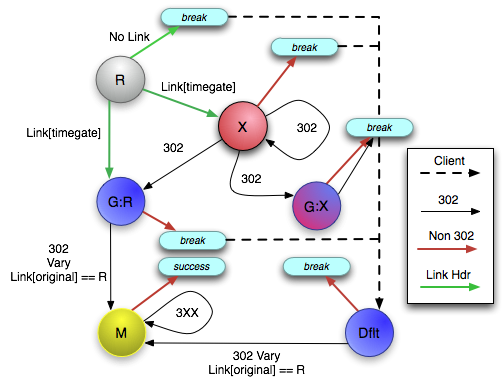
Think of writing your report as taking a road trip. What’s the first thing you do? You enter the destination into MapQuest (or Google Maps, or whatever). You find out exactly where it is and you get directions from where you are now.

Your conclusion, which should be the thesis statement of your report, is your destination. Now, you need to work out how to get there.

2.   Get a GRIP

Regular readers will know my copyrighted formula to writing: Goal, Idea, Reader and Plan. 

Goal — Your purpose. Why are you going to your destination? What will you do when you get there? In terms of writing, what result do you want from this report? It could be to change a policy in the workplace, or it could be to inform colleagues about safer working procedures. Whatever it is, have a clear idea about it. If you have trouble clarifying the purpose, answer this question: what do you want the reader(s) to do after they finish reading the report?

Reader — Whom is this report for? Who are they, specifically? What interests them? What motivates them? Why should they care about what you have to say?

Idea — Your main message, your thesis statement, the most important thing you have to say. Sum up your whole report into one grammatically correct sentence. If you can’t do that, you cannot make your point clearly to anyone else.
Image from Jamie Rubin, science-fiction author
http://www.jamierubin.net/2012/08/07/going-paperless-5-tips-for-how-a-paperless-lifestyle-can-better-capture-some-everyday-interactions/

Plan — This is your MapQuest/Google directions to the conclusion. A map has two main points: starting and destination. Now, your audience is uninformed, or at least not as aware of all the information you have. Where you want them to be is responding according to your Goal statement.

Typically, you need to present facts, show the links and relationships among them, and demonstrate to the readers why these are important. Tell the reader how the facts and links affect their job or life. 

For example, if you want to cause change in your organization, you will have to show how the current situation costs more money (or time, which is the same thing) than it has to. You have to demonstrate this is a pressing problem, or imminent threat to safety, employee morale or bottom-line profits. Then you have to demonstrate how your conclusion will solve all those problems.

3.   Write backwards

Write the conclusion first. That will put your destination, your main point, clearly at the top of your mind. And it will show you how to get there.
Then write the persuasive information that will bring your readers there. Follow your outline. Don’t skip anything. Fill in all the information your readers will need to accept your conclusion and take the action you want them to take.

National Museum of Health and Medicine. Educational and non-commercial use only.
Write the introduction last. State the problem (if there is one) and summarize your conclusion.

If you’re going to summarize anything, you have to have the full statement written out first. It’s far more difficult to say something succinctly first, then extend it to a full argument.

It’s like that old statement that’s been attributed to Mark Twain, Samuel Pepys, Oscar Wilde and many more: “Sorry to write you such a long letter; I didn’t have time to write a short one.”

4.   Control quality

Avoid jargon and business terms like “going forward,” “institutional arrangements,” “at the end of the day” or “outside the box.” These are emptyphrases. Just write what you mean.

Eliminate empty words and phrases that don’t add information. Replace noun phrases with verbs. Keep your sentences active (see my post on Writers Get Together).

And before you deliver your report to the audience, edit it. Go over it again. Watch out for clichés and vague thinking, as well as downright mistakes. Was the number supposed to be 51 or 15 cases of ammunition? Did that shipment arrive on February 8 or August 2?

5.   Proofread it one more time

It can’t hurt, and you may just catch something egregious. Better yet, have someone else read it over. You can’t proofread your own stuff.

Follow these guides, and you’ll have a much easier time writing a document that will have the results that you want.

Questions? Ask in the Comments section below.


Good luck!

Saturday, August 24, 2013

How to write a book I will like

Image "3D judges gavel" by Chris Potter (Flickr: 3D Judges Gavel) via Wikimedia Commons
I have reviewed a number of books by independent authors lately: Rachel Thompson, Bruce Blake, Seb Kirby, Doug Dorow, Chris Ward and of course RS Guthrie. All the reviews that I have published on this blog have been very positive: four or five stars out of five.

I thought I would now explain how I arrive at that judgement. Just in case you were wondering “What is it you want from a book, anyway, Scott?”

First, before you dismiss me as a the kind of reviewer who gushes over every book he reads, I have to tell you that I do not publish a review of every book I read.

About a year ago, I published a negative review of a book that I thought was bad: badly written and not edited even once. I gave it a one-star review.

I expected the author to react badly. What I did not expect was for her friends on Goodreads to rate my books poorly without reading them, in some kind of lame revenge.

From that point, I decided to publish a review only if I liked the book and felt justified in rating it at four or five out of five.

That doesn’t mean that if I do not publish a review of your book that I didn’t like it! I may not have gotten around to reading it yet, and even if I have, I may just not have had time to write a review, yet. And not every blog post is a book review. But if I really like a book, I will write a review of it, eventually.

Tell us what you  like, then!

Okay, okay. I was getting to that.

First, I demand that a writer knows what he or she is doing: writing in English. That means the writer has to know the rules of the English language: grammar, spelling, punctuation.

And the writer has to be able to string together sentences that are interesting without seeming forced. The words have to flow naturally.

I don’t want a writer to show off his or her vocabulary of archaic expressions. Far too many fantasy stories are full of words like “countenance” and “vouchsafed.”

Books written entirely in slang are tiresome, too. Yes, a cop has to speak some cop jargon, but that risks losing the audience.

Writers, don’t show off your way with words. Tell the story.

Don’t waste pages setting the scene or telling the character’s back-story — or  explain how the fantasy world came to be and how the secret orders of wizards or knights or whatever are holding things together.

Instead, let the explanation flow out of the plot. Show the consequences when the good witch dies,  don’t tell me about the danger.

And don’t get bogged down in details. I don’t need to hear the organization of MI6, how a Sig Sauer handgun works, or the relativistic underpinnings of your time machine. If it’s necessary to the plot, have one character explain it to another.

Details can make a scene come alive for the reader, but too much bogs the story down. Keep the story moving forward, and add details necessary for the action to make sense. If someone falls into a lake, the water temperature may be important to her survival. But the size of the lake or the colour of her shoes probably are not.

Characters

As readers of my reviews may guess, I like believable characters, even in unbelievable situations. Think Life of Pi.

Believable characters are like people you know: complex, with strengths and weaknesses. Even someone you love dearly must have some characteristics you find objectionable, if now downright obnoxious.

Look at yourself: what are your weaknesses? Where are your inconsistencies?
I have little patience anymore for the sharpshooting superspy who speaks 11 languages, takes out multiple bad guys with a combination of every martial art ever developed, flies jet fighters 15 feet above the city streets without hurting any bystanders and goes home to whip up a soufflé.

I prefer heroes I can identify with. The flawed ones. The guys who arrive at work with a stain on their pants and forget to pick up the eggs on the way home. Women who have to juggle families, jobs and career aspirations and don’t have time to learn a twelfth language.

It’s a lot more interesting to me if the hero has to figure out how to beat the bad guy. Think of even the action movies you’ve seen: isn’t it a lot more satisfying when the hero defeats someone who is far stronger and more capable?

It’s also a lot more interesting when the main character has to overcome one of her main weaknesses. That provides something else I look for in a story: character growth.

People do change. We age, we learn new things, we fall in and out of love.
And people who don’t change? They’re not interesting at all.

It’s the story

Ultimately, the story has to be engaging. It has to matter to me, and it has to keep moving.

I’m not going to try to prescribe a formula of dos and don’ts. There are enough bloggers and advisors to do that.

And I do not believe that there is a single right way to tell a story, either. The most successful books are those that do something different, even if the quality of the writing or the characterization is lousy.

The Girl with the Dragon Tattoo was an unlikeable, borderline-autistic geek. Twilight introduced sparkly vampires and made teenage female lust for non-humans okay. 50 Shades allowed women to read about kink on public transit.
Do you want me to review your book?  Just make sure it has believable characters, a plot that moves quickly — and an editor.