Saturday, November 23, 2013

My electronics are crazy

Who can tell me where to turn off the setting on the computer for “Cause random problems” or “Unpredictably shut off critical functions”?

Have you ever noticed that your electronics will suddenly stop doing what they have been doing, more or less reliably, for months or years, when you haven’t changed any settings? My earbuds for my iPhone do that. I’ve had the thing for almost a year now, and most of the time it works fine. But then, for no reason that I can discern, one day the little control on the right-hand wire will cease to function. Yesterday, for example, I was listening to music on my iPhone when it rang. I pressed the button, which in this circumstance, should switch it from music to phone mode and answer the call. 

Nothing happened.

Neither did the volume control on the earbud wire work. To adjust the volume, I have to use the on-screen controls or the buttons on the side of the handset. This may not seem like a big deal, but it is inconvenient when you have to put your book away, re-sling your briefcase on your shoulder and dig the phone out of your jacket pocket. Of course, by the time you do that, the call has gone to voice-mail.

This same thing happened last spring. I noticed that the control button on the wire didn’t work to adjust the volume or skip to the next song as I was listening while riding my bike to work. I thought perhaps that I had damaged the wire by taking the iPhone on my bike, although the phone had never suffered an impact. But after a couple of weeks, the button began working again of its own accord.

This happened a number of times over the spring and summer, but by August or so, the functionality seemed to settle down and just work as it should. Until yesterday.

This same self-discombobulation happens other electronics, too. My DVD player gets grumpy when I press the buttons too quickly, and then seizes up. I have to unplug it to clear it. 

At unpredictable intervals, my printers will cease to function — without any changes to the system, settings or options.

Yesterday, I printed a letter I wrote on my desktop computer, no problem. Today, my son tried to print a report for a university assignment, and got an error message that said his computer couldn’t find the printer.

In that two-day interval, no one made any changes to the settings or the operating system. But in a span of two days, repeating the same instruction once brought two different results. 

Einstein supposedly said that the definition of insanity is doing the same actions and expecting different results. Einstein, obviously, never had to put up with microcomputers.


Naturally, I welcome any suggestions to solve these problems. 

Monday, November 18, 2013

How a friend's comment solved a major writing problem

Image source: writeshop.com
I have been wrestling for years over how to organize my work-in-progress, Walking from the USSR. An almost casual comment from a friend over dinner presented a solution.

Now I feel I can wrap this baby up!

The book is the story of my father-in-law, Maurice, who served in the Red Army during the Second World War. It’s a complex story, because his life, like all of ours, I suppose, had several distinct phases. Understanding this story requires an explanation of the shifting borders of Poland, Germany, Ukraine and other countries, and some little-known facts about the war itself and who was on whose side.

I have written separate chapters and have enough raw material written down now to fill several books. All I need is to organize it and write a few connecting passages.

The trouble is, I’ve been at this same stage for well over a year now. I have made almost no progress in all that time. I have to admit, in that year I also wrote and published my second novel, One Shade of Red, and wrote a few other short stories and poems (and kept up with the rest of my life, but all writers do that). But the bottom line is that I didn’t get anywhere with the book.

Until last week, when a group of old friends got together at a local steakhouse for our quasi-annual bull session. One friend, Michel, asked how the writer was going. I summed up: “I’ve written most of the book, but I’m stuck on how to organize it.”

“What’s the book about?” Michel asked and sipped his beer.

“My father-in-law. He was drafted into the Red Army, was captured by the Germans, escaped from their POW camp, made his way with his 12 men back home, joined the resistance, was re-drafted when the Soviets came back, and fought through to Berlin before he could come back home to Montreal.”

I had to explain a little more — how a Canadian-born man ended up in the Red Army in the first place — and then Michel said “Why don’t you just tell it like that? He was drafted into the army, was captured and then escaped?”

I couldn’t say another word. Of course. It’s so simple — why hadn’t I worked that out long ago?

Sometimes, you’re too close to the subject to see it. It took someone who knew nothing about the project to make sense of it.

But that's the point of beta-readers, editors and literary friends. They can tell you about the obvious things that you, the obsessed writer, just cannot see.

That's another reason that we writers have to stick together. And have to get out of our homes or writing studios or wherever we write and talk to human beings occasionally. It just makes everything better. And far from being another distraction from writing, human contact is the stuff of which writing is spun.

Okay, now I have to get down to finishing the book. But at least now I can see the path clearly.


Thanks, Michel!

Saturday, November 09, 2013

Breathing life into long-lost cultures: Zoe Saadia's writing style

What is style? Written Words continues to explore the issue of style among independent authors. This time, I’ve asked historical novelist Zoe Saadia to weigh in.

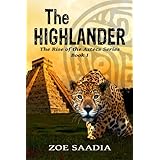
Saadia is unique among writers of historical fiction. Her novels, like At Road’s End, The Warrior’s Way, The Highlander and her latest, Two Rivers, are set in pre-European contact North America. The cultures of the place and time play very important roles in the stories. These factors place a particular challenge for the novelist, whose job it is to bring the audience into the created world.

I faced a similar challenge, if not as steep, with my historical fantasy, The Bones of the Earth, set in Dark Age eastern Europe. At least in my case, I could find some historical information about the peoples and the cultures of that setting. Pre-Columbian Americas, though, have less background information readily available.

That’s what I asked Zoe first.

Your books are set in a place and time unusual, if not unique, in literature: pre-Columbian MesoAmerica, specifically the Toltec, Aztec and Mayan cultures. What was it that inspired you to write historical fiction in that setting?
My main goal is to present pre-contact Americas to the wide audience of readers, to make people discover and enjoy these neglected cultures and periods. 

For some reason, historical novelists paid no attention to such large chunk of history, while doing to death all those well familiar times and places. Rome and Greece, Medieval Europe, Stuarts and Tudors and the Regency’s sparkling balls and receptions, all those and more have tomes of wonderful historical fiction to represent them, plenty of movies to fill our screens; while two large continents prior to their “discovery” seem to have no history at all — judging by the historical fiction genre, that is. Their conquest is well covered, and the post-conquest times, but what was there before?

Well, fifteen years of research had shown me that there were many fascinating things to find in pre-contact Americas, many different cultures, ways of life, upheavals and revolutions, empires rising and falling, democracies being born. A wonderfully rich field for historical novelist, and so far untouched by others – what a treasure  
So for now I have Central America covered with “Pre-Aztec” and “The Rise of the Aztecs” series, presenting the turbulent Mesoamerican history of the 14th and 15th centuries and how the well-known (to us) “Aztec” Empire came to rise. 
My North American books, the Peacemaker Trilogy, cover the process through which the great Iroquois confederacy was born — the famous democracy the constitution of which inspired quite a few clauses in the modern-day USA constitution (a fact admitted by the Founding Fathers in quite a few letters).
How long does the research take for one of your novels? What sources do you use?
The initial research takes long, a few years and more, but as I write series, I use the already accumulated information for one novel for the next. This way the research and the writing advance alongside each other. 

For example, when I was writing the novels of Pre-Aztec series, which are set in the capital of the regional power that preceded the familiar Aztec empire, I did not intend to write “The Rise of the Aztecs” series. 

Yet, as the general story progressed along with the research, I found myself yearning to learn more. The cultural details of the daily life were already there, the people’s mentality, their attitude, their way of life. So, I checked and rechecked the facts outlining the events. Tthe conquered cultures are always more difficult to research, as the original documents get destroyed and the version of the past events reported to us by the conquerors is terribly distorted, coated with a thick layer of unashamed propaganda. 
This way it was much easier to write the next series, with even some of the characters sneaking in, insisting on their own private history being developed beyond the general happy, or unhappy, previous ending.
How would you describe your own writing style?
My writing style is not a customary way of writing historical fiction. As I truly want to make a wide range of people discover the cultures I’m featuring in my novels, I write in a lighter style of action-adventures stories, as much for history lovers as for the enjoyment of a person who would not pick a history book given a choice.
So, while grounded in solid, well researched history, my stories are full of action, centered around all sorts of people, fictional and historical characters, behaving like regular men and women with feelings and desires of normal human beings all around the globe and in all times. Cultural values and technology aside, to my firm belief, people were always people, with their basic needs and ambitions, in Caesar’s Rome, Napoleon’s France, Moctezuma’s Tenochtitlan or modern-day New York City.
So, as I myself love fast-paced, easily flowing books to read, I make a point of writing my stories in this way, full of action, adventure and humor whenever possible.
What are the important elements of your style? What are you trying to achieve?
I want to make people discover pre-contact Americas; to meet the fascinating nations and cultures that inhabited these lands, all those various different civilizations. I want to break the terribly wrong image the colonial books and records created, which Hollywood cemented later on with its terribly distorted Westerns. This is my main goal
One challenge for writers of historical fiction is finding the appropriate “voice,” particularly in dialogue. How do you write dialogue that is at once reflective of the characters’ culture, and not outlandish or irritating to the readers?
Oh yes, it is a challenge. The cultural conceptions are, indeed, difficult to “translate” to our language, sometimes.
But then, it’s a very interesting, satisfying challenge — to make your characters likeable, understandable to the modern-day readers, while avoiding turning them into modern people dressed in costumes. There is nothing more irritating for me as a reader of historical fiction as running into a shallow historical novel full of modern-behaving characters. 

To avoid that, good cultural research helps. To just sift through the heap of the historical records is not enough. One needs to understand the people one is writing about, sometimes by enlisting the help of the modern-day history enthusiasts from these areas, many times the descendents of the involved cultures. I’m very lucky to have many friends all over Mexico, people who help me understand the events I may have misinterpreted otherwise, people who even are teaching me Nahuatl, the original language of the Aztecs and the other local peoples, which is still very much in use all over the western Mexico.

This way the characters of my books behave naturally, making the readers sympathize with them and their action, even though some of these may not make sense according to our values.
Are there any authors whose style you admire? Do you try to emulate them?
My main idols are Colleen McCullough and James Clavell, both exceptional historical novelists, whose every book I reread many times. Each time, I learn about different times and cultures without noticing, while enjoying myself immensely. Both these authors made me realize the power of the historical fiction as opposed to the non-fictional historical accounts. 

As for emulating, I suppose I tried to emulate them in the beginning, but today I think I developed my own style. Still, if likened to one of them, I would be extremely flattered.
Are there authors whose writing style you dislike?
I have trouble with over-descriptive writing style of many old-day classics.
Do you think your type of literature, historical fiction, imposes certain restrictions on writing style?
No, I don’t think so. I found that a novel is a novel, that every story could, and in my opinion should, be full of action, with the fictional side coming ahead of the historical one. The historical and cultural backgrounds are very important, but the story itself is more so. The trick is to manage to keep this balance
Do you think your audience responds to your writing style, consciously or unconsciously?
Oh yes, I think they are. 

For one, many people who don’t read historical fiction in general, seem to enjoy my books, appreciating the reader-friendly style of mine. 
On the other hand, sometimes I get criticized by the hard-core history fans, who are expressing their doubts regarding the depth of the historical research behind my novels. To their opinion historical novel should be suitably heavy, full of excessive descriptions. Luckily, those are not many, not enough to make me start doubting my style. 
I do want to reach many people, to make them learn history without noticing, while enjoying a good story, like a good historical fiction should do.
How important do you think writing style is to an author's commercial success?
I think it’s very important. Especially today, with the television providing a serious competition, we have to keep up, not make it most enjoyable for the readers, easy to read and to lose yourself in the story. 
Thank you so much for your fascinating knowledgable questions, Scott. I enjoyed myself immensely, answering them!
Thank you, Zoe!

After years of researching Classic ancient Meditterranean history, Zoe Saadia turned to the Great League of the Iroquois and their amazingly detailed constitution. The common points and differences in the two cultures and their take on democracy spurred more research and study, and eventually led Saadia to write two series set in pre-Columbian Mesoamera: the “Pre-Aztec” series (At Road’s End, The Young Jaguar, The Jaguar Warrior and The Warrior’s Way), and the “Rise of the Aztecs” series (The Highlander, Crossing Worlds, The Emperor’s Second Wife and Currents of War).

Her newest series is set among the Iroquois Confederacy: Two Rivers, Across the Great Sparkling Water, and The Great Law of Peace.

Zoe Saadia is a founding member of Independent Authors International.


Visit her website and blog, Pre-Columbian Americas.

Sunday, November 03, 2013

Charmin: when cute passes creepy to downright aggravating

I can’t keep it in anymore: I’m completely grossed out by Charmin toilet paper’s ads.

You know them, the series featuring cute talking bears who use Charmin toilet paper to shit in the woods. (Bill Maher claims the current Pope really isn’t Catholic, so I guess Charmin completes the trope.) 

The ad campaign was stupid enough when it claimed that Charmin didn’t break up and leave little bits of paper on your ass. I mean, beyond the fact that since bears don’t wear clothes and therefore probably wouldn’t be embarrassed about having paper on their backsides, how would any human ever know about toilet paper stuck to someone else’s ass?

That was creepy enough. But the latest goes well beyond it. In this one, Mama Bear brings in the newest “improved” Charmin, and Papa Bear goes absolutely ga-ga. But no, Mama won’t let him touch it.


For crying out loud, Mama Bear! Have sex with your husband once in a while so he has something to fantasize about besides toilet paper!

And Charmin: pull your heads out of your own asses.

Friday, November 01, 2013

My Presidential address

Today, I am proud to say that I take on the Presidency of BestSellingReads, a collective of “new fiction” authors. My thanks to Frederick Lee Brooke for being such an inspiring and capable President and blazing a path for me.

BestSelling Reads is an organization of writers of fiction and non-fiction who know the value of teamwork. Each member has a track record of producing quality books that regularly top best-seller lists, win awards and earn high reviews.

Above all, BestSelling Reads' site is a place to discover new, exciting, excellent books by some of the best new writing talent there is.

The group represents a broad range of writers working in many genres — everything from romance to thriller, science fiction to mainstream literature.

You may recognize some of the names: Shannon Mayer, Andy Holloman, Rachel Thompson, Patricia Sands ... authors with books near the top of their genres. And I’ve found every one of them to be helpful, kind, and downright smart. They’re some of the best writers I’ve ever read, too.

Regular readers know how I believe in independent writers working in concert to produce and promote books without the interference of a commercial publisher. Together, we can perform all the functions of a publishing company and achieve or exceed the standards of any Toronto, New York or London company — and leave control, and the rewards, in the hands of the author. BestSelling Reads is very effective at the function I find most difficult: marketing and promotion.

I was flattered to be invited to join at the beginning of the year; I’ve participated in a number of giveaways and other promotions, contributed to the blog and been interviewed on their Internet radio show. It’s been rewarding, and I’ve seen a couple of spikes in sales of my books.

Right now, BestSelling Reads is having another contest. You could win signed books of your choice from member authors of your choice — that’s right, real, physical books with covers and paper and everything. But don’t delay — the contest closes on November 3!

http://www.bestsellingreads.com/win-signed-books-october-giveaway/

Check it out, dear readers: take a look at the authors on the website, read the blog, and enter the contest. Leave some comments, too.

And remember: when you want a great read, you'll find a wealth of choice at BestSelling Reads.


Sunday, October 27, 2013

Freedom of expression and self-publishing: The Mail's manufactured crisis and dinosaur porn

I nearly missed this story last week: Kobo, the e-book reader manufacturer and publisher, went through an exercise of weeding out “offensive” books and removing them from its catalog. Of course, “offensive” means books about some forms of sex. Apparently, books that glorify stock market manipulation or various forms of fraud against the middle class, or books that use religion to justify oppression of women, for example, are okay.


It seems to have started with an “investigation” by the UK newspaper The Mail into WHSmith’s website. On October 11, The Mail Online reported:
Typing the word ‘daddy’ into the search box, for instance, brings up disturbing fictional accounts of bondage and sexual humiliation, as well as collections of bedtime stories for youngsters.
After The Mail on Sunday alerted WHSmith to the appalling content freely available on its website, executives took the unprecedented decision to take the whole site offline while the explicit ebooks were removed from sale.

‘We will tighten our processes to ensure that this error can never happen again and sincerely apologise to our customers for any offence caused,’ the company said in a statement.
The Mail on Sunday investigation found that pornographic ebooks – the majority of which are self-published by their authors – are also available through Amazon, Waterstones and Barnes & Noble.

By Sunday, October 13, WHSmith’s website was down as executives and staff went through the catalog to remove offending titles. The crisis then spilled over to Kobo, which has a partnership deal with WHSmith to supply e-books. According to the much more credible and professional newspaper, the Telegraph, Kobo shut down its UK website by October 17 while its people went through its catalog, as well, and reviewed its self-publishing system to ensure that authors comply with its policies.

Erotic book lovers, meanwhile, sent a petition to online book sellers demand they “LEAVE OUR EROTICA ALONE!”

Executives from both Kobo and WHSmith stated that they’re concerned about books that glorify rape, incest and bestiality, among other subjects.

I’m sure you’ll all be relieved to learn that all my books have passed muster on Kobo.com, including my unabashed erotic novel, One Shade ofRed.

One series of books is apparently not available on Kobo anymore: Christie Sims’ dinosaur erotica books, like Taken by the T-Rex and Mounted by the Gryphon. I have no way of telling whether those books ever were available on Kobo, but they are available on Amazon, Barnes+Noble.com and iBooks.
Image source: The Mary Sue 

Kobo still sells erotica, including “tentacle erotica” titles like Taken by Tentacles and Tentacle Alien’s Breeding Pet. Apparently, sex with dinosaurs is too disgusting for Kobo and WHSmith’s executives, but sex with aliens with tentacles is okay.


The power of the written word

This was a crisis manufactured by the Mail newspaper. Apparently, they have reporters with nothing better to do than to surf the Internet for sources of porn that can be embarrassed. Then, they can find people to make self-righteous condemnations of pornography.

John Whittingdale, chairman of the Commons Culture, Media and Sport Select Committee said: ‘It is disgusting that WHSmith, one of the country’s most respected retailers, is selling hardcore pornography alongside children’s books.
Why does the Mail toy with evoking the forces of censorship and repression of freedom of expression? Because it sells newspapers.

No matter how Kobo and WHSmith try to discriminate between “legitimate” literature and that which is offensive according to standards, however widely they may be accepted, removing books is censoring some content.

And the Mail depends on the premise of freedom of expression for its existence.

Thankfully, this crisis has sunk back into the swamp without causing much interest anywhere.


I’m just pleased to have found something as ludicrously funny as the idea of dinosaur erotica. I don’t intend to read any, but you have to admit, it has to be the most ridiculous idea in fiction.

Sunday, October 20, 2013

Sample Sunday: a chapter from the spooky work-in-progress

Hallowe'en is coming up fast, and in honour of that auspicious occasion, I'm posting some spooky stories on the next few Sundays. 
If you've been to this blog before, you'll recognize Dark Clouds. "The Mandrake Ruse" is the first chapter in what is slowly growing into a complete novel that I hope will cross the occult/paranormal-spy thriller genre boundary.
You can download Dark Clouds: The Mandrake Ruse as an e-book for free from the tab at the top of the page.

What follows is a short chapter, this one focusing on "pretty little Teri," the heroine of The Mandrake Ruse, What Made me Love You? and The Graveyard, and the wife of the Witch's son and hero of the tale, Matt.

Dark Clouds: Teri and the river 

Photo of Dumoine River copyright Scott Bury

The water was surprisingly warm, swirling and dancing in the setting sun, dark where it was deep, orange where it flowed over rocks, white were it leapt and spun and rolled in joy.
Teri let herself drift. She closed her eyes to let her spirit see freely. She felt the river’s joy, its happiness in its own strength, in its ability to feed the life in it and around it. Teri saw the fishes and the other creatures below its surface, hiding under soil and rocks and among the trees that pushed their roots into the river to draw their lives.
Teri’s skin tingled with the energy of life, but she ignored the sensation. She could not even be certain she was breathing, whether she was above or below the surface, but she pushed those thoughts, those fears out of her mind. She opened her spirit wider, searched for every sensation and tried to contact the river’s spirit.
A riot of sensation shocked her and her eyes flew open involuntarily. She found herself lying on her back on the water’s surface. She let the river take her. Trees drifted past on either side. The current pulled her until she drifted downstream, head-first. She felt a tug to one side and saw a boulder slide past her vision. The river had kept her from injury.
Teri took a deep breath and closed her eyes. She opened her mind again, willing herself not to think of language or any human constructs so that she could communicate with the essence of the river.
There it was: the joy, the power of the river, constant motion, different in every second, eternally the same. Dark, alive, irresistible. The river acknowledged Teri’s attempt at communication, and her mind filled with a cognizance of a powerful, dark, living and curious presence.
She wanted to ask “Where am I?” but knew that forming human words in her mind threatened to break the communion she had with the river. She explored the edges of her consciousness and found she could not exactly see, but gradually become aware of the world beyond the river’s banks, of the trees and hills and other rivers and lakes and animals, the forest stretching across the world’s curves. Life buzzed and oozed until it twisted or cramped in pain, and Teri understood that happened where humans built their cities.
But there, to her left, no, now her right as the river turned her playfully, there, far but not so far for the river, was her home. And beyond it, her parents’ home. And over there, yes, she could tell where Racine was. She could feel his rancour, feel the stink of his fear.
And in the other direction, a malevolence that could only be Helen. The Witch Queen was looking for her, but she did not have a connection with the joyous river and could not see Teri.
Teri felt the river probe her spirit. Later, her memory would translate the deep connection she had into words.
“Do not fear, little one,” the river said.
“I am not afraid. Thank you for saving me. How did I end up in you?”
“I do not know. One moment, you were there. Perhaps you fell in? The banks, though, do not remember you.”
“The last thing I remember is being in a dark room, chained to a bed,” Teri told the river, careful not to make her thoughts too concrete. “How long have I been in you?”
“A full day. Do not worry, my child. I will keep you warm until I deliver you into the waters of my brother/sister.”
Teri realized she was naked, but not cold. She wondered, briefly, if the sun had set yet, but she did not dare open her eyes in case that would sever her communion with the river.
“Who is your brother?” she asked.
She felt the presence swirl under and over and around her, like an enormous otter or fish, playing in the water. “Some of your kind call her/him the Ottawa River,” said the presence. “I will carry you to him/her by the time the sun rises again. You are tired. I can tell. Peace, child. Sleep. Trust me to take you home.”
Sleep. How long had it been since she had slept, Teri wondered. Days? Weeks? She had no idea how long Helen had kept her in that windowless room. The time had dragged; she knew that Helen had drugged her, somehow, to bring her there, and had used drugs or spells repeatedly to take away her consciousness. She remembered opening her eyes to see Helen’s only inches away, or across the room, supervising Loretta or one of her other bitches as they humiliated her. Even the water’s warmth could not keep her from shivering at the memory of two of Helen’s coven, hands on her ankles, spreading her legs apart while Helen laughed and brought a small crystal vial toward her vagina. But it had only been psychological torture; Helen would never bring herself to actually touch Teri.
Teri let the river calm her, let the water caress her skin. Her thoughts retreated from the world around her, from the embrace of the water, from the presence of the river. And then she felt the presence within her, and she knew that she had defeated Helen.
She slept, and the Dumoine River carried her gently through the night until it gave her to the embrace of its great sibling, and Teri moved with the speed of the deep natural world toward her home.

Friday, October 18, 2013

Win signed books from BestSelling authors


BestSelling Reads authors are doing it again — giving away a virtual boxed set of five  signed paperbacks in the BSR October giveaway. 

How does it work? From BSR's own blog: 
The grand prize winner gets to choose a total of five titles, choosing from all the books available by BSR member authors. Five titles from one author, or mix and match with one title each from five different authors. Plus a $50 Amazon gift card to add even more titles to your shelf!
Second prize is a virtual boxed set of three signed paperbacks plus a $20 Amazon gift card. Eight runner-up winners will receive one signed paperback of their choice by any BSR member author plus a $10 Amazon gift card. 
To enter, visit BestSelling Reads' blog at BestSellingReads.com and enter the Rafflecopter.

Good luck!

Wednesday, October 16, 2013

Cover reveal: the newest novel by New Fiction author Mohanalakshmi Rajakumar

An Unlikely Goddess 

launched October 14, 2013. From Mohanalakshmi Rajakumar, winner of the SheWrites New Novelist Award, 2011


The Hindu goddess, Sita, is said to have been born from the Earth.
King Janaka discovers the beautiful infant and in her beauty, believes in her divinity. He raises her as his own daughter……

A coming of age story, An Unlikely Goddess centres on Sita, the daughter of South Asian immigrants, growing up in all the wrong places. From Hinduism to Christianity, Brad to Naren, she's looking for love but gets anything but.

Excerpt:

Unlike her namesake, Sita's first mistake was being born.
     A girl, her mother thought, eyes dark in abject terror. What if he leaves me? She swallowed, increasing the dryness in her post-delivery mouth, the stiches across her abdomen itching. No water. Only ice chips until her bowels passed the tests. Mythili pressed back against the pillows. She closed her eyes, pushing her fingers into the sockets until the darkness was punctuated by bone-white stars. She wished she could as easily tune out the gurgles of the baby in the bassinet beside her.
Yet, even premature and unwanted, Sita was obliviously happy to enter the world, beaming her infant smile at anyone or anything she saw: the nurse, her aunt, her mother's back, the noxiously-pink cement walls of the Madras hospital in which she found herself. Several pounds underweight, she was otherwise fine—a petite, brown-skinned baby with tufts of black hair crowning a smooth scalp. How could she be expected to know that from her first breath she was, and always would be, a living reminder of her mother's failure to produce a first-born male heir?
       Though swaddled and placed in the bassinet immediately after delivery, her eyes were alive with motion. She blinked up at the faces of passersby, but they were admittedly few, so instead, she followed the blinking lights, the creeping shadows and the occasional appearance of a nurse. Everything about the world kept her busy with delight until sleep washed over her little body.
“Look at that smile,” the young nurse said, cradling Sita against her flat bosom.
“Aamam,” Priya, the childless aunt, agreed, rubbing a forefinger across the baby’s somewhat wrinkly face.
Instead of replying, Mythili, Sita’s mother, pulled a see-through blue sheet up to her chin and turned her face away.

You can buy An Unlikely Goddess now from Amazon: http://www.amazon.com/dp/B00FVSP82Q


About the author

Mohana is the modern mother, writer, wife. If you tell her something interesting, it's fair game for a blog post or her next novel. With eight e-books, two kids and a PhD, she's got a lot to say. 


Friday, October 04, 2013

Cassidy Jones and the Seventh Attendant: An independent novel review

Before you say it, I know: I am not in the target demographic for this book, or any of Elise Stokes’ Cassidy Jones adventures. Still, I enjoy reading them — despite the strange looks I get from others on the bus when I’m reading the latest installment in paper form.

Elise Stokes hit it big with her first novel, Cassidy Jones and the Secret Formula. After being reviewed by a 13-year-old reader, it was picked up by a middle-grade school as assigned reading. Then it won some awards and Elise Stokes became a prominent author of middle-grade or “young adult” fiction.
She followed up her first book in a year with Cassidy Jones and Vulcan’s Gift, but there was a longer delay for the third book. Now that I’ve read it, I understand why.

The plot

As most of the English reading world knows — at least, most of the “YA” market — Cassidy Jones is a normal teenage girl from Seattle. She’s awkward, lacks confidence and isn’t particularly athletic. Then, in true superhero fashion, she’s accidentally dosed with top-secret “Formula 10X,” being developed in her neighbour’s basement lab, which gives her super-strength, speed, the ability to heal quickly and enhanced senses. With the help of her neighbour’s son, Emery, another 14-year-old whose genius IQ has earned him university degrees already, Cassidy foils nefarious plots, rescues her kidnapped father and fights escaped tigers.

In this installment, the bad guys from the first novel return, searching for Formula 10X — which was destroyed in a fire after Cassidy’s accident. It turns out that the specifications were hidden in 10 separate microchips, scattered around the world. The baddies have recovered nine of them (using murder at least once); the last piece is hidden in an ancient Egyptian headdress on display in a museum in Seattle. Emery, Cassidy’s genius sidekick, learns of a plot to steal the chip, so Cassidy dresses as a mummy to spook the bad guys. This has some funny consequences, such as new rumours about a resurrected mummy running around the streets of Seattle.  

But when one of the thieves turns out to be Emery’s father, the mysterious Gavin Phillips, the plot twists — and so do Cassidy’s emotions.

High quality

The third book is a little darker and more serious than the first two. Cassidy is growing up and dealing with a new level of emotions when it comes to boys. Boys are starting to pay attention to her, as well, in ways that are new to her. 

And there’s a love triangle slowly emerging. I think that Stokes portrayed her character’s reaction to that skillfully and believably: it’s plain to Cassidy, but she deliberately chooses not to think about it. I can believe that in a 15-year-old who’s trying to deal with some pretty extraordinary events in her life.
Stokes also spends more space in this novel describing the stress her character has to deal with from having a secret identity—a second life that she has to hide from her own family.

And as with Stokes’ first two novels, the third shows top-notch writing style, editing and production — and a gorgeous cover designed by David C. Cassidy. A fellow member of Independent Authors International, Stokes is living proof that independent writers produce work that meets and exceeds professional standards.

Less action

There is not as much action in this book as in the first two. Cassidy seems to spend more time stressing over her relationships with her friends, rivals, unwanted suitors and her family than she does fighting bad guys. To me, this made for a more interesting story, but I wonder how Cassidy fans feel?

The other slight weakness I found in this story is that you really have to have read at least the first novel to follow this one. The bad guys from both previous novels combine forces in this one. The text also refers to characters and events from the other novels. I kept having to try to recall the previous books to understand some of the plot points in the third (it’s been over a year since I read them, after all, and I’m not getting younger, either).

But those are minor nits to pick out. This is another excellent novel by one of the best writers in the MG/YA field today. There’s lots of room left in the story-arc, too, so we can all look forward to Cassidy Jones and the Luminous soon.


5*

Friday, September 27, 2013

Guest post: Bruce Blake on productivity

When I tell people I wrote the first draft of my upcoming novel, When Shadows Fall (The First Book of the Small Gods) in fourteen days, they either stare at me with a blank expression, make me repeat it to ensure they didn't mishear me and I actually said forty, or they ask me how I managed to churn out an entire novel in such a short time. Since you are not looking at me, and it clearly says “fourteen” days in the last sentence, I'm going to assume you fall into the third group...so here's how it happened.

First, it's important to realize I am a full-time writer—making stuff up is what I do. This output didn't happen in half-hour snatches here and there, but in 5-7 hour chunks of tapping on my laptop's keys. Before you stop reading because you don't have that much time to write, realize that what's most important about this output is how much I produced in the time I had—consistently about 1,300 words/hour. This number—your productivity—is how all authors should evaluate the effectiveness of their writing time, with a goal of maximizing the number of words written in the time available. It can be difficult to work around a day job, family, and other commitments—and none of us can jam more hours into the day—but you can control what you do with the time you have and get the most out of the minutes you put in at the keyboard. Here are the steps I took to keep my word count high.


1.      Pre-planning. More effort went into the planning of this book than any I've ever written. For a month, as I was writing and editing another project, I spent my evenings world-building for the Small Gods series. It was really during this phase that the seeds of the story grew and blossomed. The more I learned about the background and history of this world, the more the story I was planning kept taking twists and turns I wasn't expecting.
2.      Outlining. There's always a debate among writers about outlining versus writing by the seat of your pants. Simply put: I find I'm more productive when I have a pretty good idea where I want to go. It means I don't lose writing time by stopping to think about what to do next. This dovetails perfectly into the next point.
3.      Daily planning. This is a tip I picked up from Rachel Aaron's great little writing book 2,000 to 10,000: Writing Faster, Writing Better, and Writing More of What You Love. It's a simple concept...take the first five minutes of your writing session, grab a pen and paper (that's right—the old-fashioned way) and jot down what you will be writing about. Include actions, bits of dialogue, descriptions; all the points you want to hit, plus some of the detail. This is your road map for what you will write today—not tomorrow, not yesterday, but today.
4.      No editing. Sounds funny, doesn't it? Of course I edit, just not while I'm writing the first draft. I know too many writers who never get to the end of their manuscript because they spend too much time polishing the first half of the book to perfection. Not only are first drafts supposed to suck, I know the way I write; chances are good that, if I did a bunch of editing before I finished the rough draft, something else would change and I'd end up going back to rewrite all that careful editing, anyway. Time well wasted.
5.      Unplug. The Internet is not your friend. If you are writing and you can't find the word you're after, can't come up with a great name for a new character, or need to do a bit of research, bookmark it and save it for non-writing time. Seriously, it will still be there at 10 o'clock on Thursday night when there's a commercial during The Amazing Race...do it then. Don't even get me started on Facebook and email.
6.      Make writing a priority. We all hear many writers lamenting that they can't find time to write. I never have that problem because I plan my writing time, then make everything else work with it. I did the same thing when I was working sixty-hour weeks...the job schedule was the only thing that was inflexible; everything else had to realize I had a book to write.

With planning and forethought, it's more than possible to write quickly without sacrificing quality. Be ready, be focused, be dedicated...now go write.

Monday, September 23, 2013

A Difficult Mirror: Independent novel launches TODAY!

I'm excited: the newest Independent Authors International title and Benjamin X. Wretlind's third novel, A Difficult Mirror, hits the e-stands today, September 23. 

Others agree: "Combining horror, fantasy & mystery with elements of the traditional hero's journey, A Difficult Mirror contains a unique and detailed plot, rich characterization & a very real sense of danger," says Michael K. Rose, author of Sullivan's War, Chrysopteron and Darkridge Hall.

"Wretlind conjures visions beyond your wildest nightmares," adds Bruce Blake, author of the Icarus Fell series and the Khirro's Journey epic fantasy trilogy.

You can win a copy by entering the Goodreads giveaway at the bottom of this post — but first, you have to read an excerpt.

See for yourself

The sun dropped from the sky at a snail's pace, creeping past a few wispy cirrus clouds, past a small hill, a saguaro cactus arm and on and on. In time, the sky changed from a brilliant blue to a deep, blood red with spats of yellow and orange. The day's heat remained, as it typically did in the rainy season of the Southwestern United States. It wasn't quite official yet, but the seasonal shift of wind was only a few short weeks off and the humidity had already shown its ugly face. Off in the distance, a thunderstorm grew taller, its anvil transforming from bright white to orange to red as the sun finally disappeared without fanfare. Lightning flashed in chaotic patterns, stabbed at the desolate landscape and illuminated a torrential rainfall that flooded the land below. 

Another thunderstorm moved closer, fed by the unequal heating and cooling of the mountains to the north and the valley to the south. Soon it would be overhead, and in the downpour, Stephen Casey would have a hard time examining the body of a young woman whose head had been crushed by a rock.

Yellow tape, strung between the giant cacti, lent surrealism to the otherwise mundane crime scene. A gentle wind blew the tape back and forth, making the cordon look fragile. On the inside of the taped perimeter, in an area roughly the size of a small house, officers dressed in khaki mixed with the blue uniforms of unneeded paramedics. The body lay in the center of the scene, as yet untouched, and bathed in the final light of the day.

She had been a young woman, about twenty, slender and medium in height. Her clothes were bargain brand, and her shoes looked a few sizes too big. She had no discerning features other than long fingers which ended in chewed-off nails. Her head had been crushed, not by a single blow, but by what appeared to be a methodic erasure of her identity. Matted blonde hair covered with blood and mixed with the dirt of the environment surrounded the remains of her skull like a sick halo. 

As Casey knelt down, he covered his mouth with a handkerchief to mask the smell of the bloody corpse that had been sitting in the hot sun for a least a day. He examined the woman from the remains of her head to her feet, looking for a clue, looking for a reason or a method to the madness. His eyes wandered past the skullcap lying in several pieces mixed with brain matter, past what appeared to be eye sockets picked clean by birds, past a nose caved in about an inch. A small spider crawled from the remains of a nostril, zigzagged past a tooth, and left the scene via the remains of a crushed ear. Three earrings lay near the right ear, one of them torn off by the trauma. On the other ear, a single diamond stud remained intact.

Across her neck lay a gold-colored necklace, probably purchased from a street-corner vendor. Attached to it, caked in blood, was a small pendant that might have held some meaning, at least to the woman. The material was stone, like onyx, and possessed a white glow that shone even in the fading light of dusk. It was carved in the shape of two 'R's, linked together with a sword or staff through the middle. It seemed ugly, odd, and out of place. Casey scrunched up his nose in thought, grabbed his pen and made a quick sketch of the symbol.

A light flashed above his head. The crime scene photographer moved quickly, shooting pictures of the body, probable belongings and anything that didn't seem like it was a natural part of the landscape. Casey looked up, pointed to the pendant, and asked for a close-up. Quickly, the camera rose, the picture taken, and the photographer moved away.

Casey continued his cursory examination. Writing rapidly, he noted the meticulous manner in which the victim had been placed—legs together, feet pointing up, arms crossed over her chest. In her right hand, the victim held a tiny yellow flower, dotted with blood. This wasn't a haphazard murder, brought on by rage and carried out with carelessness. The body had been positioned, the flower planted and then—and only then—the head crushed beyond recognition.

"Peaceful looking, ain't she?" The voice came from behind Casey, raspy and full of phlegm.

"From the neck down." Casey stood He turned to the voice, grabbed a cigarette from his breast pocket and lit it. "Weird, though. What do you think?"

A small man—thin in the neck and face, with wire-rimmed glasses dangling on a pointed nose—cleared his throat, snorted once then spit out a wad of green phlegm as far from the body as he could. "Looks like the perp wanted a piece of ass, got pissed off when he didn't get it, knocked her in the head once, got scared, then crushed her skull so no one would recognize her." He looked down at the body.

"Lover? Pimp? Plumber?" Casey took a long drag of his cigarette. "Take a look at the clothes, Byron. Not from around here."

"No, not from around there." Byron pointed over a ridge to the brightening glow of million-dollar homes and upscale golf courses in the distance. "She's from the city. Just look at the shirt."

Casey looked down at the woman's shirt, just below the crossed arms. A cheesy slogan from a local gift shop, black words mixed with stains of blood: "I survived 123 degrees . . . but it was a dry heat!" 

Casey chuckled to himself. I have that shirt, too.

The photographer stepped up to Casey. "I'm all done here," he said without looking at anything or anyone in particular. He turned and walked away.
Thunder vibrated the desert floor, muffled only by the humid air and the distance. To the west, the thunderstorm had grown in size and threatened to drown the crime scene. The sun had set far enough that the reds and oranges had faded to deep indigos and grays. Around the perimeter of the cordon, halogen lights illuminated the scene, and a crew of younger officers was busy unfolding a makeshift tarp over the victim's remains.

Casey looked off in the distance toward the expensive homes and sheltered life of planned subdivisions. Just under the lights and on top of a small hill, he thought he saw a man observing the scene. Casey squinted and wished for a moment he hadn't left his glasses in his car. He never wanted to believe his eyesight was failing him, but there were times he chastised himself for not listening to what others had to say.

Byron tapped Casey on the shoulder. "See something of interest?"

Casey thought for a moment of all the times he'd been at a scene and felt the stares of onlookers. He'd been told once to look at all the faces in the crowd; murder is an act, but evasion is a sport. So often, the demons would be there mingling with the anonymous, hoping to gain some insight into what others might find.

In this case, though, the murder was remote. Why would there be onlookers?
"Nothing, Byron. Just thought I saw something." 

"Kind of hard to do that without your glasses, isn't it?"

Casey frowned and turned back to the scene. He walked slowly around the body, looking for something different in the artificial light, a tiny detail that might give him an advantage in this game of evasion. Watching where he stepped and avoiding the yellow evidence flags, he moved toward the woman's feet. Once more, he looked at the placement of the legs, the arms, the flower, and the shirt.

He scrunched his nose. Something was wrong. From his vantage point at the woman's feet, he saw just under the area where her arms crossed. Sure there was plenty of blood, but it almost looked . . .

"Byron," Casey called while still staring at the chest. "Come here and look at this."

Byron walked over. "What is it? More brains?"

"No. Take a look at the chest below the arms, and then the neck. Notice anything?"

Byron looked down at the victim and adjusted his glasses. He made a small noise of interest. "Move the arms out of the way."

Casey walked around the other side of the woman, knelt down, and pulled a pair of latex gloves out of his pocket, snapping them over his fingers. Reaching over the body, he lifted the arms. 

His eyebrows stood as his stomach sank. "Where's her heart?"

With a flash of lightning and a clap of thunder, the rain fell. Instinctively, Casey turned back to see if there really had been someone on the hill.


So, what's it about?

Four-year-old Justine has been lost to the world and with her an ability feared by many. But the balance of power has been shifting for years, and Justine may be able to tip those scales for good...if someone can find her in a pitiless place of sorrow and pain.

When Marie Evans meets a strange man on a deserted road and a body is found mutilated in the desert, a deep resentment teetering on the edge of release is about to explode. Someone, somewhere has drawn a line in the sand, and when Harlan Reese, Marie's ex-lover, enters a forest in central Arizona looking for his daughter, that line will be crossed.

In a world between Heaven and Hell, the past becomes the present as Harlan and Marie find each other once again. Their journey across an unforgiving land to find a way home with Justine by their side will be wrought with both pain and triumph.

It is, after all, A Difficult Mirror.

Now that you're hooked, you can win a free copy by entering this Goodreads giveaway: 

Goodreads Book Giveaway

A Difficult Mirror by Benjamin X. Wretlind

A Difficult Mirror

by Benjamin X. Wretlind

Giveaway ends September 23, 2013.
See the giveaway details at Goodreads.
Enter to win

What did you think of the excerpt? Leave a comment!