Showing posts with label action. Show all posts

Thursday, July 03, 2014

Detail and action add up to a riveting read—An independent novel review

Gray Retribution, by Alan McDermott

No one writes action like McDermott.

From the first sentence, Gray Retribution delivers that combination of action and detail that few writers can manage. Not only does McDermott put us eye-to-eye with his characters, he gets the little things right, like the types of weapons and the way they all work, and the tactics that makes the difference between experienced soldiers and fighters who die on their first time.

Gray Retribution continues the saga of Tom Gray, the character that McDermott created for his first novel, Gray Justice. The initial trilogy told a complete, if complex saga about an ex-special forces soldier who sets up a private security company. Gray uses his arcane skills to seek tough justice against repeat criminals after his son is accidentally killed by one such repeat offender driving a stolen car, and Gray’s wife kills herself in depression.

The next two books sent Gray literally around the world and finally back to his home in the UK, rehabilitated socially if not fully psychologically. The fourth book, Gray Retribution, finds Gray back in charge of his company, struggling against the usual challenges facing any small business—plus clients nervous about being associated with someone as notorious as Tom Gray.

Once again, McDermott skillfully blends a personal and a global plot. Organized criminals threaten Gray’s new family, while in Africa, his friends and employees are caught in a war zone in Africa with scanty ammunition and supplies and a huge number of refugees to protect.

It’s a testament to the author’s skill at plotting that he manages to drive both plots simultaneously at his trademark breathtaking pace, without straining the readers’ credulity too much. The good guys are all crack shots and almost never make mistakes, but that’s part of the action genre. But I found myself identifying with Tom Gray—not because I am a crack soldier, but because I have found myself in those situations with two priorities clamouring for undivided attention because of huge, looming consequences coming up fast. I really felt for Gray as he tried to protect his family, rescue his friends and keep his business afloat, all at the same time.

McDermott’s attention to detail really brings the action to life. While he is never gratuitous with depicting violence, he doesn’t flinch when it comes to the more gruesome aspects of war. 

It all adds up to a book I could not put down.

I read a preliminary version of the book in manuscript form, and I’m looking forward to the final version sitting on my shelf.

Gray Retribution will be available on Amazon on July 8.

5*

Thursday, December 05, 2013

Book launch: Binder


David Vinjamuri, fellow member of Best-Selling Reads and a columnist with Forbes magazine, has released his second novel, Binder.

What's it about? 

In the mountains of West Virginia, hooded men ambush and beat a group of environmental protestors. An Army colonel’s daughter goes missing, and ex-operator Michael Herne travels to West Virginia to find her.  But the girl wasn’t with the protestors and as Herne tracks her he encounters cults, communes and supremacists on the path to unraveling a deadly conspiracy. 
Binder is the sequel to the best-selling thriller, Operator.

Advance praise

"A terrific, fast-paced read.  It’s not just technically accurate but really gets into the mindset of the Tier 1 operator." 

– Master Sergeant Rodney Cox,  Instructor, SWCS (U.S. Army John F. Kennedy Special Warfare Center and School at Fort Bragg, NC)

After a brief stint as an intelligence analyst, David spent nearly 20 years working with corporate brands. He writes for Forbes, teaches at New York University and loves reading and the outdoors. He is an active member in Best-Selling Reads, as well.

Check out his book on Amazon.


Sunday, August 18, 2013

The Ninth District: the way thrillers should be written

An independent novel review

I like it when an author sets his book in his home town, especially when it’s a place that doesn’t normally get mentioned in much mass media. The depth of knowledge comes through in the detail and that makes the story that much more realistic. For me, even nicer that it’s a place I visited a number of times, and where the geography is similar to the place where I grew up.

But that’s not the important reason that I liked Doug Dorow’s The Ninth District. It’s a terrific book, a thriller with a unique story and believable characters.

The story:

Minneapollis is the Ninth District of the Federal Reserve, where the US prints its currency; the Federal Reserve has a big, very secure building in that city. No Federal Reserve has ever been robbed, so it must present a huge temptation to robbers — and to writers of heist thrillers.

Dorow succumbed to the temptation and crafted this excellent yarn. It has all the elements required for a heist story: a good plan, cliff-hanging suspense and lots of detail about methods, setting, skills and contingencies. Dorow has clearly done his homework.

He also presents a number of excellent plot twists, particularly in the way the villain anticipates the hero’s action. The book opens with the hero, Jack Miller, watching a security video that shows a bank robber murdering a pregnant woman unnecessarily. The murder and several minor bank robberies are all part of the villain’s (whom the cops have dubbed “the Governor” for his habit of wearing a face mask of a former governor of Minnesota) plan.

Strong characters

The hero is FBI agent Jack Miller. He’s a sympathetic character. Separated from his wife and child and trying to work on reuniting, he’s also working through the transition from the young hotshot FBI agent to the veteran teaching the new guy the ropes.

Far too often, new thriller authors make their heroes way too heroic: the genius sharpshooter who’s also a martial arts master, speaks ten languages and is irresistibly handsome.

Jack Miller is flawed, fallible and far easier to identify with — and that makes him much more interesting as a character, too. Sure, he’s smart, he knows how to investigate cases, but he also reacts to threats against himself and his family in believable ways.

The protégé, Agent Ross, is also believable. He’s young, smart and eager for action — a little too eager, sometimes, and his mistakes get him badly hurt.

Jack’s wife, Julie, is well presented, as well. I wish, though, that she was a somewhat larger part of the story.

The villain, the Governor, is smart and ruthless, killing innocent women as part of his plan to throw the cops off his planned heist. However, Dorow has possibly tried too hard to make the villain appear mysterious and threatening. I would have liked to see a little more detail about him, his background and his underlying personality.

Smooth, competent style

Dorow is a professional writer of fiction and has earned all those good reviews. He knows how to bring out the characters through words and actions – showing, not telling. He know how to provide lots of detail about the city, the environment and police procedures without bogging the story down – I couldn’t stop turning pages (or swiping my finger across the screen of my iPad).

There’s lots of action and suspense in The Ninth District, and you want the good guys to succeed in not just the case, but their personal quests, as well.

If you like thrillers, download The Ninth District right now.


4*

The Ninth District on Amazon

Tuesday, June 25, 2013

On the Collateral Damage blog tour

Collateral Damage is the third thriller in the best-selling Annie Ogden series by Frederick Lee Brooke, fellow member of the BestSelling Reads group. I'm proud to participate in the blog tour launching this exciting title.
How good is Fred Brooke's Annie Ogden series? You could read my review of the first book in the series, the gripping and hilarious Doing Max Vinyl. You could follow the blog tour, starting with Chapter 1 on Shannon Mayer's blog, continuing with the Chapter 2 excerpt below, and then follow the tour according to the schedule, at the bottom of this page.

Or the best way: buy the books!
What's Collateral Damage about?
A love story.

When Annie Ogden’s ex-boyfriend Michael Garcia reappears, she has to confront a lie dating back to her time in Iraq. Will she go back to hot, passionate Michael, who has developed a disturbing interest in meth, or will she stick with her pudgy PI partner and fiancé, Salvatore?

A murder.

The calculus changes when Michael is arrested for murder. When Salvatore refuses to help investigate, Annie is forced to try to find the killer herself. Meanwhile her sister’s creepy husband, Todd, is making more of an ass of himself than usual.

An obsession.

Annie's problems with three obsessive men suddenly pale in significance when she realizes the killer has set his sights on her. 
Follow the blog tour every day, and leave a comment on each participating blog to win a $25 Amazon gift card AND a free signed paperback copy of any of Fred Brooke's books.
Now, get into it with this excerpt from


Chapter 2—Annie


I worked it up to a sprint for the last five blocks, rising onto the balls of my feet. Various people with toddlers and old people with canes moved aside. My attacker was watching. He could have ditched the mask. I wouldn’t even know which man he was. He knew where I lived, who I was.

I opened the door with the brass nameplate engraved with D’Angelo/Ogden. Salvatore had affixed the nameplate within three weeks of my moving in. At first, it bothered me. Was I some kind of territorial prize for him to mark on his door? Alison said I should be happy it was my own name. People wrote Mrs. John Ogden on letters to my mother. My mother left her last name and her first name at the altar.

Coffee perfumed the kitchen. I peeled off my training jacket, looking for signs of my man, but the only sound was the clicking of the steam radiators. I saw the bedroom door standing ajar at the angle I’d left it. Salvatore cherished his morning sleep.

I brought my mug in the bathroom and cranked the shower. How many times in Iraq, all I wished for was a shower. We’d be out on patrol somewhere, all night and then into the morning. We’d set up and wait all day for nightfall. You’d watch and wait for hours at a time. At a certain point, you started to itch. You’d be thinking a shower would feel pretty good about now.

I could make a list of the things I will never again in my life take for granted. Showers would definitely be on the list. Maybe not at the top of the list.

Salvatore stood there in boxers when I came out of the shower, all cheerful and hangdog at the same time, blocking my way to the towel. Normally I hang it on the peg by the shower door, but with the events of this morning, I’d forgotten. I stood there offering a full frontal, dripping clean.

“Happy anniversary,” I said.

“Don’t bother getting dressed.” Salvatore handed me the towel, showing the dimples under his three-day beard.

“Listen, I really can’t right now.”

“Okay. I was just thinking.”

“I was attacked.”

“No way.”

That got his attention.

Dressed in my towel, sitting on the bed, I described the Romney mask, the heavy arm, and my aggressive response. Salvatore is a former cop. He was on the Oak Park force for seven years, and he’s been a private investigator since he quit. He wanted to know details, as if we were going to go after my attacker.

“What about the shoes? Did you notice the color? The brand?”

“No.”

“Think, Annie. Close your eyes. Picture him in your mind.”

I did what he said. I saw the dude backing away after I kicked him. I saw him taunting me as I prayed for the bus to send him to kingdom come.

“I didn’t focus on the shoes. Some dark color, like gray. Not white or orange or anything.”

“Did you recognize the voice?”

I shook my head. He was trying to put together enough detail for a police report. He asked about rings, tattoos, scars, or piercings. He didn’t lose patience at my negative answers. He didn’t, but I did.

“It happened too fast. I just reacted. He hit me, I hit harder. I think I got him in the nose. You know, through the mask.

“So we’re looking for a guy with a broken nose?” We sat on the edge of the bed. Salvatore’s hands provided bookends to my face. He looked into my eyes. “How’s Annie Ogden, after this? Ready to take on the world?”

“It makes me furious,” I said.

“I can imagine.”

“No you can’t. You always say that, but you really can’t imagine what it’s like to be a woman and be attacked. To be stared at just because you have blond hair. You can’t imagine what it’s like to wonder if every stranger would be a rapist if you gave him the chance.”

“I’ve got no hair.”

“You know what I mean.”

He wanted to joke around. I can’t stand it when people are always cheerful. I put on my clothes while Salvatore took his shower. Later we had another cup of coffee in the kitchen.

“I’ve got something for you,” he said.

We sat at the kitchen table, and I picked up the little box. It looked like jewelry. The kind of jewelry spelled R-I-N-G. Not on the day when I am attacked, I thought. I wanted to postpone our half-anniversary. I wanted to postpone this box.

He was asking me to marry him. When you decide to marry someone, you go a long way toward defining the principal arc of your life with that one decision. With that one word. Fine, I thought, but I was attacked. When are we going to talk about that? How could I think about getting married when I had adrenaline gushing out of my eyes? How could he not see that?

I lifted the lid. In a pretty velvet holder nestled the biggest diamond I’d ever seen, the kind a movie star would wear. I turned the ring over and over in my fingers, admiring the sparkle. I felt its weight. It brought back the memories of another ring, another place and time, and the last time I was asked. It’s eerie how the past trails you into the present, silent and unseen, like a stalker. The stalker takes his time, he’s got all the time in the world, but one day, I thought, he’ll pull the trigger on me. I repressed that thought, those memories. Salvatore deserved better.

Salvatore slid the ring on my finger. He waited till I looked up.

“I love you, Annie. I’m ready.”

I kissed him. “Me too. Just not the same day I’m attacked.”

Win a $25 Amazon gift card AND a signed paperback edition of any book by Frederick Lee Brooke!


To win, all you have to do is visit every blog on the 26-day Collateral Damage Excerpt Tour and leave a comment showing that you read the excerpt. That’s it! See the blog list and join the tour ...

 
Monday, June 24: Chapter 1 on  Shannon Mayer's News Blog

Tuesday, June 25: Chapter 2 on Scott Bury's Written Words 

Wednesday, June 26: Chapter 3 on Raine Thomas's Write as Rain

Thursday, June 27: Chapter 4 on Emily Walker's Self Publish or Die!

Friday, June 28: Chapter 5 on Simon Jenner's Escaping Life by Writing Action Thrillers

Saturday, June 29: Chapter 6 on Amberr Meadows' Amber Is Me blog

Sunday, June 30: Chapter 7 on Anne Chaconas' blog

Monday, July 1: Chapter 8 on the BestsellingReads blog

Tuesday, July 2: Chapter 9 on Tyler-Rose Neath's The Reading Pile

Wednesday, July 3: Chapter 10 on Naomi Leadbeater Naimeless blog

Thursday, July 4: Chapter 11 on Mohana Rajakumar MohaDoha blog

Friday, July 5: Chapter 12 on Helen Hanson's blog

Saturday, July 6: Chapter 13 on Marilou George's Confessions of a Reader

Sunday, July 7: Chapter 14 on  J.C. Martin's blog

Monday, July 8: Chapter 15 on Corinne O’Flynn's blog

Tuesday, July 9: Chapter 16 on Tawdra Kandle's blog

Wednesday, July 10: Chapter 17 on Martha Bourke's blog

Thursday, July 11: Chapter 18 on Connie M. Chyle's blog

Friday, July 12: Chapter 19 on Cyndi's Reduce Footprints blog

Saturday, July 13: Chapter 20 on Kenneth Hoss's blog

Sunday, July 14: Chapter 21 on Andrea Kurian's Mommy Adventures with Ravina

Monday, July 15: Chapter 22 on Andy Holloman's blog

Tuesday, July 16: Chapter 23 on Marilyn Diekman's blog

Wednesday, July 17: Chapter 24 on Christine Nolfi blog

Thursday, July 18: Chapter 25 on Patricia Sands blog

Friday, July 19: return back home to author Fred Brooke's blog for Chapter 26

 
Frederick Lee Brooke is the author of the widely-acclaimed Annie Ogden mystery series, which includes DoingMax Vinyl, Zombie Candy, and Collateral Damage. The books do not have to be read in order.
Having lived in Switzerland for the past two decades, Brooke has taught English, run a business and learned French, German and Italian. You can find him online at www.FrederickLeeBrooke.com. Sign up for his newsletter and read all about his travels, recipes, and upcoming works!


Sunday, May 12, 2013

Sample Sunday: the drake

Image of Slavic god Perun fighting snake-god, Veles. Courtexy Dan Nye, UMichUkrainian blog.
Once again, here is an action excerpt from The Bones of the Earth — because you love action!

This is from Part 1: Initiation Rites (also available as a stand-alone novella from Amazon and Smashwords), where the hero, Javor, is pursuing his parents' murderer, guided by a mysterious stranger from Constantinople named Photius. 
Photius’ head seemed to move. It got longer, higher, and something black rose over the top. No—some animal, a huge snake was rising from behind the rock. In an instant, it towered over Photius. Covered in gleaming black scales, it curved its hideous neck downward again in a fluid motion, opening its maw wider, wider, so wide that Javor thought he would lose his mind. Slime dripped off its lips and teeth like daggers grew outward from the jaw.
Sound faded and time slowed for Javor. Photius looked up, eyes widening in horror. The snake, or whatever it was, lowered its head as if to swallow the old man whole. Javor’s body seemed to know what to do without his mind telling it. He realized that his father’s small hatchet was in his hand and that he was raising it over his head. He took two long, fast steps and sprang upward, swinging his arm down as he rose over Photius. The axe came down hard onto the snake’s skull, and he could feel its blade digging into flesh and bone. There was a horrible wrench at his shoulder, and he let go of the handle, and then his feet were on the ground again. He bumped into Photius, sending the old man sprawling.

Did you like it? Click the links at the top to find out what happens next.

Sunday, May 05, 2013

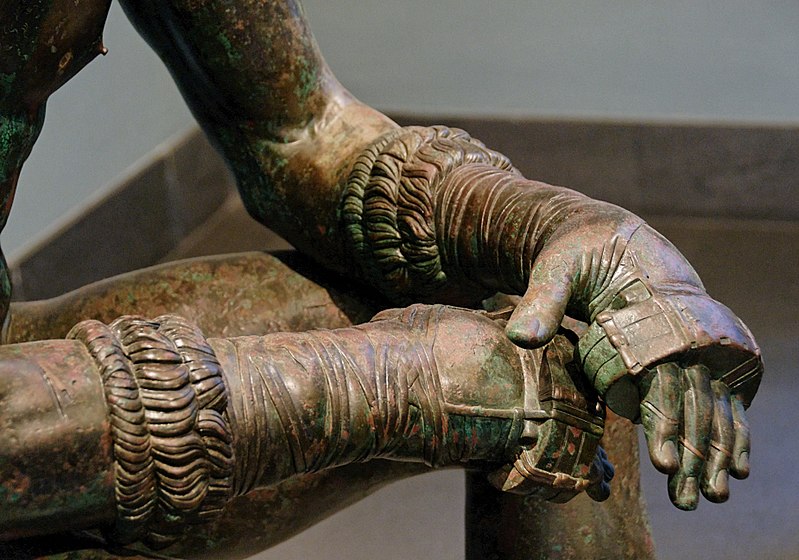
Sample Sunday: Boxing in the market

Happy first Sunday in May! I'm now back from my Mexican vacation and can pay attention to the blog again.
Image of “Thermae boxer," National Museum of Rome,
by Marie-Lan Nguyen (2009),
used under  Creative Commons


For Sample Sunday, I'm continuing my own tradition of posting action excerpts from my first novel, The Bones of the Earth. The selection below is from Part II: Tests. Here, the hero, Javor, meets for the first time a man who becomes his most valuable friend: Antonio.

Javor stepped back and found himself backed into a vendor’s stall. The locals yelled, protesting, telling the combatants to get away from their produce. The soldier stepped in and swung a heavy fist at Javor’s head. Javor ducked and the fist hit the vendor, who crashed to the ground. But the soldier did not take just one swing at a time—his left caught Javor on the side of the head and he, too, flopped onto the ground, smashing a flimsy table and scattering cheese.

The locals gathered tried to clear their property out of the way of the fight while avoiding fists themselves. Javor struggled to his feet when the Roman’s boot hit him in the chest, but it struck the amulet, which deflected the blow. Javor rose again to see the soldier in a boxer’s stance: fists up, elbows in, bouncing slightly on the balls of his feet. Javor copied him. The man was at least twenty years his senior, toughened with years of drilling and war. He was a head shorter, but much broader. Thick muscles showed where his tunic parted. He clearly had the advantage over Javor, but he waited. He’s measuring me, Javor realized. He’s looking at my size, my moves. Javor lunged forward and jabbed at the soldier’s jaw.

He connected with a smack, but the Roman barely flinched. He grinned and jabbed back, catching Javor on the chest, again striking the amulet. It clinked and a painful grimace crossed the soldier’s face. He shook his hand, looking puzzled, then jabbed again with his other hand, getting the same result. Now he had two sore hands.

He swore and aimed a blow at Javor’s nose, but Javor dodged and struck back at the same time. This time he hit the soldier in the nose, splattering blood across his face.

The Roman stepped back, grinning. “Oh, ho! The brat has some fight in him!”

What’s the matter with you? It was just a bunch of stupid apples!” Javor shouted, dodging another swing of those heavy fists. This time, a fruit stand shattered and collapsed.

Javor jabbed again and hit the soldier’s arm, then followed up and hit him in the chest. He thought he felt a crack, and the soldier grunted suddenly, doubling forward. But he straightened and closed in, ramming his fists repeatedly into Javor’s chest. Incredibly, Javor barely felt anything. He grabbed the Roman’s head in both hands and pulled down while bringing his knee up and to smash his opponent’s face.

The soldier staggered backward, mouth bloody, spitting out teeth. He looked up and grinned hideously, blood streaming down his chin, sticking his tongue out through the gaps in his teeth. He laughed, but he was enraged now.

And from behind him, two more off-duty soldiers ran to his aid, carrying thick clubs. “Hey, Antonio!” called the first as he ran past the soldier and swung his club at Javor’s head.

Without even thinking about what he was doing, Javor checked the soldier’s wrist with his forearm and then kicked. He spun on one foot and kicked with the other; his foot connected with the second soldier in the side and sent him sprawling. But the first was swinging the club again. Why did I leave my sword behind? He dodged, jumped onto a table which immediately collapsed under him, leaving him standing on squashed fruit. A club swung, missed and landed on a table of vegetables, splattering Javor with pulp.

Javor saw a hand with a club and kicked the wrist, then seized the club as it fell. He swung it up at the other club as it came down. They collided with a bone-shaking thud that he felt all the way up his shoulder.

The new soldier was tough and brought the club down hard on the club Javor held. His hand went numb and he dropped the club. The second soldier was on his other side, grabbing at Javor’s left arm. Again instinctively, Javor jumped in the direction the soldier pulled, sending him off-balance. Somehow, Javor ended up standing on the man’s chest. He spun again in time to block the first soldier with a kick to the chin. The man staggered back, tripped and fell on his back.

But Antonio, the trooper who had started the whole fight, was still there, face bloody and hideous, snarling like a hound. Faster than Javor could think, he grabbed the young man by the tunic and pulled him close as his right fist cocked back for a brutal blow to Javor’s face. There was nothing Javor could do—the legionnaire’s grip was like iron.

Liked it? Hated it? Leave a comment!

Sunday, April 28, 2013

Action sample Sunday: The Avar horsemen

Image of Avar horsemen courtesy REH: Two-Gun Raconteur
This week, I am again presenting a fan favourite: an action excerpt from my first book, The Bones of the Earth.

This passage comes from Part 2: Tests. In this section, the hero, Javor — cast out of his own village because of his autism and tendency to attract trouble — and Photius, the mysterious traveller, have found refuge in another village. But it’s not long before the village is attacked by raiders, a group of the horsemen who swept across Europe during the Dark Age. Javor and Photius have tried to organize some defence of the village’s wooden stockade, to little effect.

The riders charged from all directions at once, standing on their saddles to vault the stockade. One landed behind Javor, whose sword seemed to find its own way to the raider’s head, biting through the mail and killing him on the spot. Javor wrenched the sword free of the falling body and ran toward another attacker. His sword led the way, piercing the man’s chest.

But there were too many of them. They killed villagers indiscriminately. Spears and swords bloodied tunics and skirts. Mstys wielded a scythe, cutting down the raiders until a blow to his head knocked him down. Photius had his sword out and Javor saw him dispatch two raiders before another blocked his view.

Javor swung his sword, but the raider was quick and skilled and engaged him in a terrifying bout. Time after time, Javor barely dodged swipes of the curved blade. He couldn’t connect and was conscious of his own lack of skill and experience.

The other man knew he had the advantage. He hit Javor on the arm, then on the head with the flat of his blade. He drew no blood, but the pain slowed Javor down. He swung his blade again and missed again. His opponent seemed to go for his chest, but suddenly swiped savagely at Javor’s legs, tripping him. Javor went down hard. The amulet fell out of his jerkin then, but its chain was still on his neck, and Javor grabbed it unconsciously. The curved sword struck his back, ringing on the armour, but it didn’t penetrate.

Javor rolled on top of his sword. He tried to get out his dagger, but the raider brought his down on Javor’s chest. The blow winded Javor, but the armour held, ringing.

I hope you liked that. Leave a Comment below, one way or the other!

And if you want to find out what happens next, you can get The Bones of the Earth on Amazon US, Amazon UK, Smashwords, iTunes, Barnes & Noble and other e-tailers.

Sunday, April 14, 2013

Sample Sunday: A treat for action lovers

A number of the reviewers of my first novel, The Bones of the Earth, mentioned how much they liked my fight scenes. So for your Sunday pleasure, here's a sample of the first fight scene, in Chapter 6.

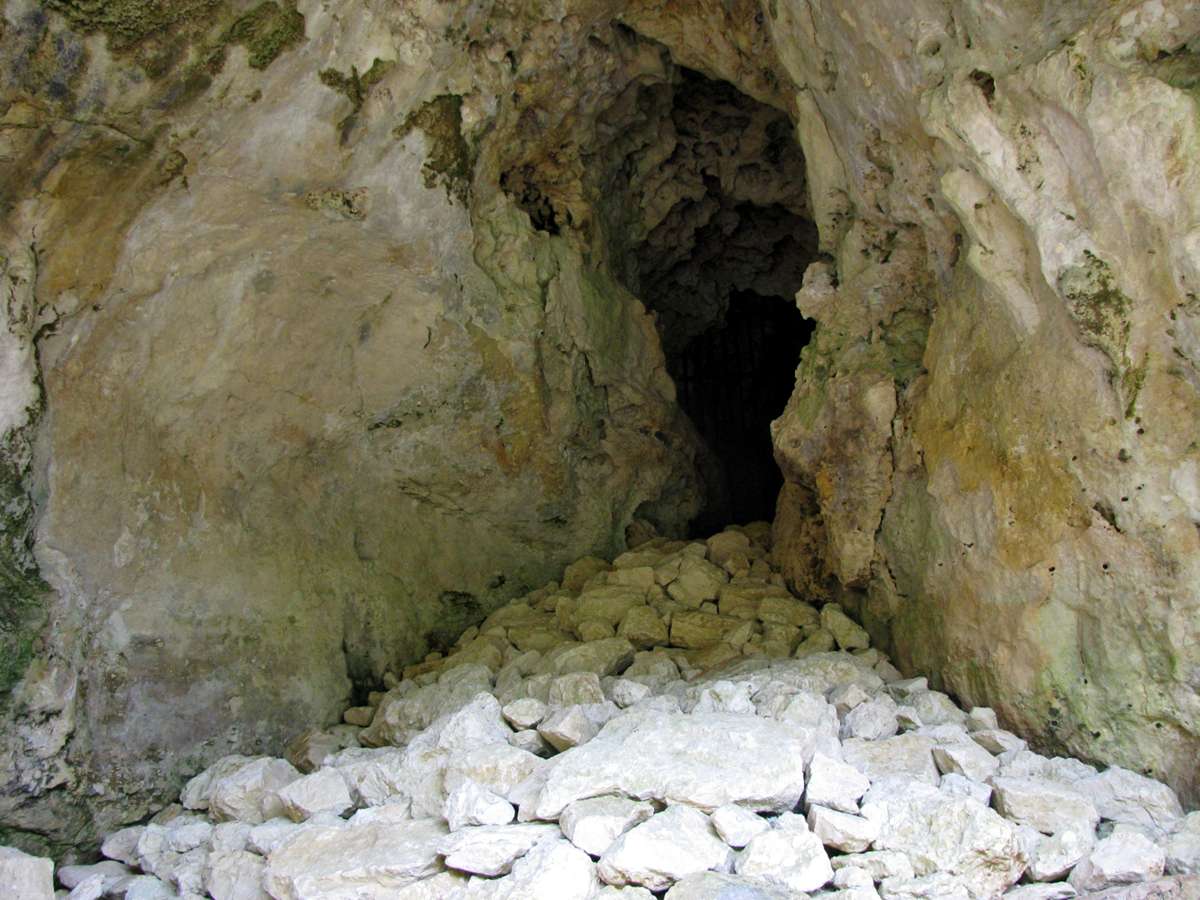
In this section, the hero, Javor — the misunderstood, ostracized young man — has followed the trail of his parents’ murderer to a cave high on a mountainside. Despite his disbelief, the murderer is a monster, just as everyone in his village and the mysterious stranger had told him.

Photo: Don Hitchcock 2008, via Creative Commons

Chapter 6: The Cave

All this Javor took in within a second, for crouching in front of the chasm was the proof of the story: man-shaped, but far, far larger. It was hideous, covered in a dull grey, leathery hide. Its impossibly wide, pig-like mouth was chewing something. Glowing red eyes shadowed by a stony brow glared at him with an alien expression for less than a heartbeat, and then it was reaching for Javor, right in front of him, filling his field of vision, roaring so loudly that Javor’s ears hurt. Its claw slashed at his head. Without thinking, Javor lunged forward, between the monster’s legs. The monster hit the cave wall and bits of rock flew in all directions.


Javor rolled and sprang up. If he had time to think, he would have been surprised to find his grandfather’s dagger was in his hand. The monster had Photius trapped against the wall. It seemed to be wary of his glowing staff, squinting against its light.

Javor screamed as fearsomely as he could and sprang forward, slashing the knife downward. He aimed at the monster’s back, but with agility surprising in such a large creature it twisted out of the way, and the knife bit into its arm. The monster roared again, a sound that froze Javor’s heart, and then with awful strength flung Javor across the cave. He rolled to the edge of the chasm. For a second, he felt as if he was going to tip over and plunge in; below was only a dull red light in a deeper blackness and a foul odour. He knew there was no bottom, only an endless drop that called to him; something in Javor’s mind yearned to lean over and fly into the chasm, to give himself to the infinite fall.

With a huge effort, Javor twisted away from the edge. He gripped his knife but the monster grabbed him in one huge claw and lifted him off the ground, pinning his right arm against his side. Its mouth opened, revealing row upon row of triangular teeth, and its hot breath stank.

Then Javor looked down, and saw that in its other claw the monster was holding the amulet—his amulet, the one his mother had inherited from her grandfather. But the monster’s grip tightened and drove all thought out of his mind. Javor struggled to breathe and his right arm felt as if it would break. The claws started to dig into his skin.

Javor’s focus narrowed to three brightly shining points: the monster holding him; the dagger clenched stubbornly in his trapped right hand; and the amulet in the monster’s left claw. Everything else faded, slipped back as if into a great distance.

That claw rose to maul him to pieces. Something in Javor’s mind called out, and he saw the amulet rise from the monster’s grip, as if it had jumped, and sail into his outstretched left hand.

The monster roared in anger and confusion. Javor felt a surge of strength from the amulet. The monster’s grip weakened and the claws no longer bit into him.


I hope you liked that! If you want to find out more, check out a longer sample available through Amazon, Smashwords and other e-book retailers.

The Bones of the Earth on Amazon.com   The Bones of the Earth on Amazon.co.uk   The Bones of the Earth on Amazon.ca   The Bones of the Earth on Smashwords   The Bones of the Earth on Barnes & Noble

Friday, March 15, 2013

Doing Max Vinyl: An independent book review

A fun thriller


Some books are just plain fun to read — like Frederick Lee Brooke’s Doing Max Vinyl.

This is a book that succeeds on several levels. First, it’s a perfectly crafted crime-thriller with a believable, sympathetic protagonist in Annie Ogden and a watertight plot. Second, all the characters are drawn from real life. Third, the writing is flawless, the style smooth and professional. And it’s full of observational humour. The laughs come from recognition — you know people like this, you’ve heard people say these things and you can easily picture them in the situations that Fred Brooke creates.


The plot

Max Vinyl is the owner of Tri-State Recylcing (TSR) in Chicago; on the day that he sells 20 percent of his company to Korean investors, his general manager fires the receptionist for spying on the company. The trouble is, the receptionist, Tris, is also Max’s girlfriend.

Tris, it turns out, is a “tree-hugger” according to the general manager, Manny Rodriguez. Manny had caught Tris snooping through some sensitive files and suspected she was going to blow the whistle on TSR’s less-than-environmentally friendly activities.

Those questionable practices? TSR recycles computers and other electronics. The law requires that companies dispose of their obsolete electronic equipment in such a way that harmful chemicals do not leak into soil, water or air. As a result, businesses pay recycling companies to dispose of their old computers, monitors, printers and other equipment properly. TSR charges to haul away the old equipment, then makes more money by reselling the best items. Any that it cannot sell, it disassembles, recycles, reuses or disposes of in an environmentally responsible manner.


Waste electronics represent two percent of the USA’s trash in landfills,
but 70 percent of overall toxic waste, according to e-waste workshop.
Image: Creative Commons.
 That’s what it tells the world on its website. What it really does, though, is pick the best, most sellable items from its incoming stream of used equipment — truckloads every day — and sell them through its website. TSR then dups eight to ten dumpsters into Lake Michigan every night.

Max has hired a number of ex-cons for the heavy work. Two in particular pilot the barge and dump the trash: Ike and Tranny. These two have the funniest antics in the book, especially the way that Tranny will say the opposite of what he means, then insist that’s not what he said.

“I get tired of always having to come up with the ideas, and you just say no to everything. How about you try saying no for a change and I get to have some ideas?”

“You mean I should come up with the ideas, and you can get to say no?”

“That’s what I said, stupid. Don’t try and turn things around that I say. I don’t go correcting you all the time.”

Every plot has to have a coincidence, or there’s no story. The skilled writer makes the coincidence seem unavoidable.

In Doing Max Vinyl, four very believable events occur on the same day:

• Max and the Korean investors agree to the $3 million sale

• Manny fires Max’s snoopy, tree-hugging ex-girlfriend

• a new laptop with very sensitive personal information accidentally enters TSR’s stream of trash

• and Ike and Tranny lose a global positioning system (GPS) device that shows them where to steer the barge and dump the garbage.

A waitress, Alison Ogden, find the GPS and takes it home because she thinks it’s a phone and her boyfriend collects old cell phones. When the boyfriend, Todd, tells her it’s not a phone, Alison gives it to her sister, Annie, who has just finished three combat tours in Iraq. Ike and Tranny track down Alison, break into her apartment and when they cannot find the GPS, take all of Todd’s 100-plus cell phones instead.

At this point, combat-trained Annie takes the fight to the bad guys to protect her sister. She infiltrates TSR and discovers its rotten foundation.

The characters

I could immediately picture Max Vinyl, the kind of sleazeball who convinces himself he’s a good guy while he’s cheating you, his wife, his employees, his business partners, the government and society at large. He overcharges his customers with rigged weigh-scales on his trucks, then dumps tonnes of garbage into the lake. He proudly proclaims he pays 25 percent above minimum wage. He’s chronically late on alimony payments and then pays his arrears with a cheque that bounces. Customers who have problems with items purchased off the website have to pay 90 cents a minute for telephone support. No wonder I laughed aloud when he falls face-first into a 10-dozen bouquet of roses after his ex-girlfriend pepper-sprays him.

Ike and Tranny kept me laughing, too, especially when Ike has to walk around with a table leg dangling from his forehead. The funniest part: he likes it!

Probably the most sensitively drawn character is Bob Olson, a square but straightforward good guy forced to bend his own moral code.

Brooke personifies the environment and Lake Michigan, too, in an original way that also evokes his humour. Bravo!

And Annie Ogden is precisely what I had hoped for in a female action hero. A former schoolteacher, she enlists in the Army and serves three tours in Iraq. She comes home with a new, confident attitude, a disdain for conventionality and a lot of fighting and survival skills. She’s small and fit, but not as young as she used to be. Brooke portrays her as very attractive, even beautiful in a diminutive way, but doesn’t take the beauty over the top like too many authors of female action heros. Conscious that she’s older than she used to be, she’s worried about the size of her butt — like every woman in the western world. When she takes on the bad guys, it’s absolutely believable.


The writing

Brooke is a pro. His skill with writing bears out his experience as an English teacher. The plot is airtight, the characters are likeable or hateable and recognizable. The style is spare and easy to read. I caught a few typos, but no more than I typically find in a commercially published book).

I found only two structural flaws:

• Two of the main characters, the catalysts of the action, Annie and Tris, never meet. While this makes sense in the context of this novel, I am sure that some putative expert will shake a figurative finger over this, calling it a major plot hole. It’s not.

• Somehow, the banner hanging over the work area at TSR that reads “MINIMUM WAGE PLUS 25% — TSR POLICY” gets replaced with the wording “Tris. TRS. Without.I.” Brooke never explains who did this (Tris, presumably), nor how. (Unless I missed it. If so, my apologies, Fred!)

The verdict

Doing Max Vinyl is a hoot, as well as a finely crafted thriller and a portrait of some real characters. I fully recommend this book!

5*

Visit Frederick Lee Brooke's website.

Check out Doing Max Vinyl on Amazon.

Tuesday, December 11, 2012

Independent book review: Russell Blake’s Jet

If you haven’t yet heard of the force of literature named Russell Blake, crawl out from under that rock and check out his website, blog and pages on Smashwords, Barnes and Noble, Kobo, Amazon and the other usual e-book sellers. It’s time to be brought up to speed.

Blake writes a new novel every couple of months. Notice I didn’t write “churns out”; his pace is amazing, but every work is inspired and professional. He’s not a hack, not a wannabe; he’s the real thing, living the writer’s life somewhere in Mexico.

For his current series, Jet, Russell Blake wanted to create a female James Bond-like character. His heroine, Jet, is highly trained in all the military skills; she's lethal, unstoppable and never makes a mistake. I found myself asking: do people like that really exist? But I almost immediately answered: who cares? Jet is not a deep analysis of the human condition — although there are philosophical aspects to this work. But essentially, Jet is a thrill ride as only Suspense Writer Russell Blake can do it.

Jet has all the elements readers can expect from Russell Blake: it's captivating from the first page, there's action all the way through and the pace never slows down. Bullets fly, bombs explode, Jet kicks high in a tight black leather jumpsuit. I kept imagining Milla Jovovich with long hair, even though I've never seen a Resident Evil movie.

Blake seems to know his way around some exotic locales: Trinidad, Belize, Venezuela, even Tel Aviv and Algiers.

Blake's writing chops are well evident: constant action, a good pace, and lots of details about weapons and tactics that action fans love. I had never heard of SIG guns before reading Jet. The plot is gripping, complex and complete  no plot holes or bizarre coincidences that are hallmarks of writers less skilled than Russell Blake.

Sometimes, it felt like he was showing off with his command of the language. He starts by breaking Elmore Leonard's rule he opens with weather. It takes some skill to pull that off and keep readers reading.
At other times, it reads like Eddie Van Halen's guitar writing: fast, thrilling, but really, Russell, do you have to show off this much? Take this:

The fountain in the middle of the square, thick calcium deposits crusting the pitted centerpiece, hosted a squabble of sparrows intent on bathing in the rainwater accumulated in its base. Drawn by their raucous chirping, he slowed to watch them enjoy their brief reprieve from the oppressive heat.
Or

A pair of flying fish catapulted out of the water off the bow, keeping pace as they surfed the glistening spindrift that danced above the waves, to the steady accompanying throb of the boat's motor.
But it's almost flawless. Really, I found seven typos in the whole book. Yes, I counted.


Story:

Jet, the first book in the series, starts with Carnival in Trinidad. Maya owns a small Internet café, which seems like something hard to make a profit with in a third-world country. She's attacked by professional killers, fights back, killing the whole team, or at least all but one. She then flees the country, which sets her on a course back to her past and to figure out who's trying to kill her, and why they're going to such lengths to do it.

We quickly learn that Maya was actually an Israeli super-agent code-named Jet, part of a super-secret, super-skilled and super-effective team with similar hotshot code names like Rain, Fire, Tiger and Lightning. Some time before the action of the book starts, she had faked her own death to get out of the whole assassin trade. She wanted a quieter life, and tried to create one in a tropical backwater.

Of course, life doesn't let her settle down. It turns out that one of her targets as a Mossad assassin had a brother, a Russian multi-billionaire oil tycoon and all-round bad guy. He wants revenge and has hired a top team of assassins to kill Jet. They track her down through the only person who knows that Jet's death was phoney: her old boss and lover, David.

Apart from Jet, all the characters are three-dimensional and believable. My favourite was Dr. Rani Stein, the obese general practitioner  heart of gold, deeply flawed, terrified yet brave. I felt like I knew him, or someone very much like him.

Jet, though, is a different story. She's almost perfect, apart from her aloofness and lack of compassion for just about anyone. I guess if you want to be an unstoppable assassin, you have to be a complete bitch.

To me, Jet was not a believable character: she's too fast, too accurate a shot, too smart ... I mean, how does a single unarmed person kill six professional assassins in a matter of minutes? How can one person be so supremely good at not just planning but also executing an operation where two people eliminate a score of adversaries on their own turf? But then, no super-spy characters are believable. James Bond certainly isn't, no matter how hard actors try to make him so.

And that's not the point of this novel. Jet is a series for lovers of kick-ass action, and Jet delivers a boatload of kickass. No, she's not invulnerable: she has a couple of weak spots, which almost undo her before the book ends. So, while Jet is not believable, she is fallible; the reader can identify with her at a few places in the plot mind you, for me, it's not when she's killing a gunman with one of those pointed receipt-holders you see on a store counter.

So, I'll give this book four stars for its airtight plot, flawless expression, non-stop action and solid characterization; I take one away because I just cannot believe in these superhuman killing machines. They make great movies, but are less satisfying on the printed page.

Once again, Russell Blake proves that the independent author can, and does, deliver a good read.

Sunday, October 28, 2012

Hallowe’en Treat, part 4: Six spooky sentences


The ride of fear


Photo used under Creative Commons from wwarby

It’s the last Sunday before Hallowe’en, and this is the last installment of my Hallowe’en treat to readers of this blog. Don’t worry, I’ll have lots more posts in the future, including more excerpts from various works.

This six-sentence excerpt comes from Part 2 of The Bones of the Earth. Here, Javor is riding with a column of Roman Legionnaires because … well, you’ll just have to read the book for the “because” part.

At any rate, they column is riding two wide along a long, twisting forest path, when suddenly they’re attacked by something they cannot see. Their only hope is to gallop as fast as they can to the end of the path and hope …


Three times, they heard screams; three times, legionnaires at random points in the column fell to the side. But the column dared not break stride and flew along the path. Horses stumbled, but righted themselves. Men gripped their saddle horns and prayed for salvation. Javor heard nothing but thundering hooves and jangling steel, and the amulet was vibrating so hard it felt like it was on fire.

Up ahead, he could see light as the path came to some kind of clearing, but at that moment, something cold and damp clutched around his neck and yanked him from the saddle.

Want to find out what happens to Javor? Click the cover image on the right and get the whole book!

For more great six-sentence samples, visit SixSunday.com. And leave comments on every one that you visit today!


Monday, July 16, 2012

Three-way blog swap: How do we choose names?

This week's guest post is part of a three-way. Joe McCoubrey, former journalist and now novelist, with a book coming out very soon, writes here about naming fictional characters; my guest post is now on paranormal author Cathy Brockman's blog, and Cathy is writing for Joe. Be sure to check out these other blogs, as well as anyone else with the Master Koda badge, for some great reading. But first, read Joe's words.


How do authors come up with names for their fictional characters?


If you think about it, the average novel will introduce about 20 or 30 different characters — from the hero or heroine (and their closest friends/family) right through to all the people they need to encounter in the various twists and turns of a story.

So where does an author start the naming process?

We all do it differently, but put no less thought into coming up with names that roll off the tongue, stay memorable for the reader, and somehow capture the character we’re writing about.

Lee Child’s engrossingly enigmatic MP wouldn’t be the same if he wasn’t called Jack (just call me) Reacher, and how did Stephen Leather take an everyday kind of name like Dan Shepherd and make it resonant through a gripping series? In the latter case, Leather’s use of the nickname ‘Spider’ provided an easy alliteration that we, as readers, instantly buy into.

So where did the names come from? The secret might just be as basic as authors playing about with a list until they get one they like. By building a great character (and great stories) around the chosen names, they hope to succeed in getting the reader to identify with the overall concept in such a way that the name remains with us. Obviously, it helps if you’re a prolific author who constantly finds interesting stories for your character and therefore builds the brand through the series.

Many authors use the names of friends, either in full or by coming up with a subtle derivative. This helps not only to prepare a nice long list but also makes it easier to describe characteristics and traits if the actual person is always on the mind when writing about their fictitious alter ego. Not much good if your friends are plain John Smith (with apologies to all John Smiths)!

There are also some pitfalls to be avoided.

Let’s say an author picks a name for a character who is an eminent surgeon with a private practice in a particular city and you attribute some unsavoury or unprofessional actions to the character. Where would the author be if such a professional with that name actually existed? Unlikely? Pick a name at random, Google it and see what happens! You’ll be surprised.

By the way he or she doesn’t have to be a surgeon — the same applies to any profession, including police officers, who figure most in popular fiction.

Our literary forefathers could delve into the realms of the surreal to come up with tasty bites like Robinson Crusoe or Wilkins Micawber. And you really had to be there to understand the mind of PJ Wodehouse when he gave birth to Bertie Wooster, Watkyn Bassett, Gussie Fink-Nottle and Tuppy Glossop!!

The process, however, could be as simple as the choices faced by all parents when picking a name for their child, although in this case they have half the job done for them. There’s not much they can do about the surname but just think of the tizzy they get into trying to come up with a first name that “sings” to them when they bolt it on. The modern writer has to find both halves of the equation!

And perhaps the secret is as simple as that. Start with one half — either the first name or the surname — and then try to find a match. It would be interesting to know if Child decided first on Reacher and then added Jack, or was it the other way round?

When all’s said and done, the readers are the people who decide whether the choices we make are appropriate. So why not ask the readers? In these days of social media it would be an interesting experiment for authors to Facebook or tweet their friends/followers/fans and ask them to submit possible names for particular characters. I can just see a typical post: I’m writing about gangland criminals in London and have decided to include twins by the names of Ronnie and Reggie. Does anybody have a suggestion for a surname??


Bio

Joe McCoubrey is a former journalist turned author. His first novel, Someone Has to Pay, is being released shortly, with number two already in the bag and number three halfway there. In between, he has written a short story, "Death by Licence," which was published last month in an anthology called Action: Pulse Pounding Tales, edited by Matt Hilton. To find out more about Joe, check out the following links:


Blog: http://joemccoubrey.com/
Facebook: http://www.facebook.com/#!/joe.mccoubrey
Twitter: http://twitter.com/JoeMcCoubrey1


My contribution to the three-way is on Cathy Brockman's blog at http://cathybrockman.com/our-next-stop-on-the-tour-scott-bury/
And don't forget to visit Joe's blog to read Cathy's post!