Showing posts with label review. Show all posts

Thursday, July 03, 2014

Detail and action add up to a riveting read—An independent novel review

Gray Retribution, by Alan McDermott

No one writes action like McDermott.

From the first sentence, Gray Retribution delivers that combination of action and detail that few writers can manage. Not only does McDermott put us eye-to-eye with his characters, he gets the little things right, like the types of weapons and the way they all work, and the tactics that makes the difference between experienced soldiers and fighters who die on their first time.

Gray Retribution continues the saga of Tom Gray, the character that McDermott created for his first novel, Gray Justice. The initial trilogy told a complete, if complex saga about an ex-special forces soldier who sets up a private security company. Gray uses his arcane skills to seek tough justice against repeat criminals after his son is accidentally killed by one such repeat offender driving a stolen car, and Gray’s wife kills herself in depression.

The next two books sent Gray literally around the world and finally back to his home in the UK, rehabilitated socially if not fully psychologically. The fourth book, Gray Retribution, finds Gray back in charge of his company, struggling against the usual challenges facing any small business—plus clients nervous about being associated with someone as notorious as Tom Gray.

Once again, McDermott skillfully blends a personal and a global plot. Organized criminals threaten Gray’s new family, while in Africa, his friends and employees are caught in a war zone in Africa with scanty ammunition and supplies and a huge number of refugees to protect.

It’s a testament to the author’s skill at plotting that he manages to drive both plots simultaneously at his trademark breathtaking pace, without straining the readers’ credulity too much. The good guys are all crack shots and almost never make mistakes, but that’s part of the action genre. But I found myself identifying with Tom Gray—not because I am a crack soldier, but because I have found myself in those situations with two priorities clamouring for undivided attention because of huge, looming consequences coming up fast. I really felt for Gray as he tried to protect his family, rescue his friends and keep his business afloat, all at the same time.

McDermott’s attention to detail really brings the action to life. While he is never gratuitous with depicting violence, he doesn’t flinch when it comes to the more gruesome aspects of war. 

It all adds up to a book I could not put down.

I read a preliminary version of the book in manuscript form, and I’m looking forward to the final version sitting on my shelf.

Gray Retribution will be available on Amazon on July 8.

5*

Monday, March 17, 2014

True Detective: A TV show writers can learn from

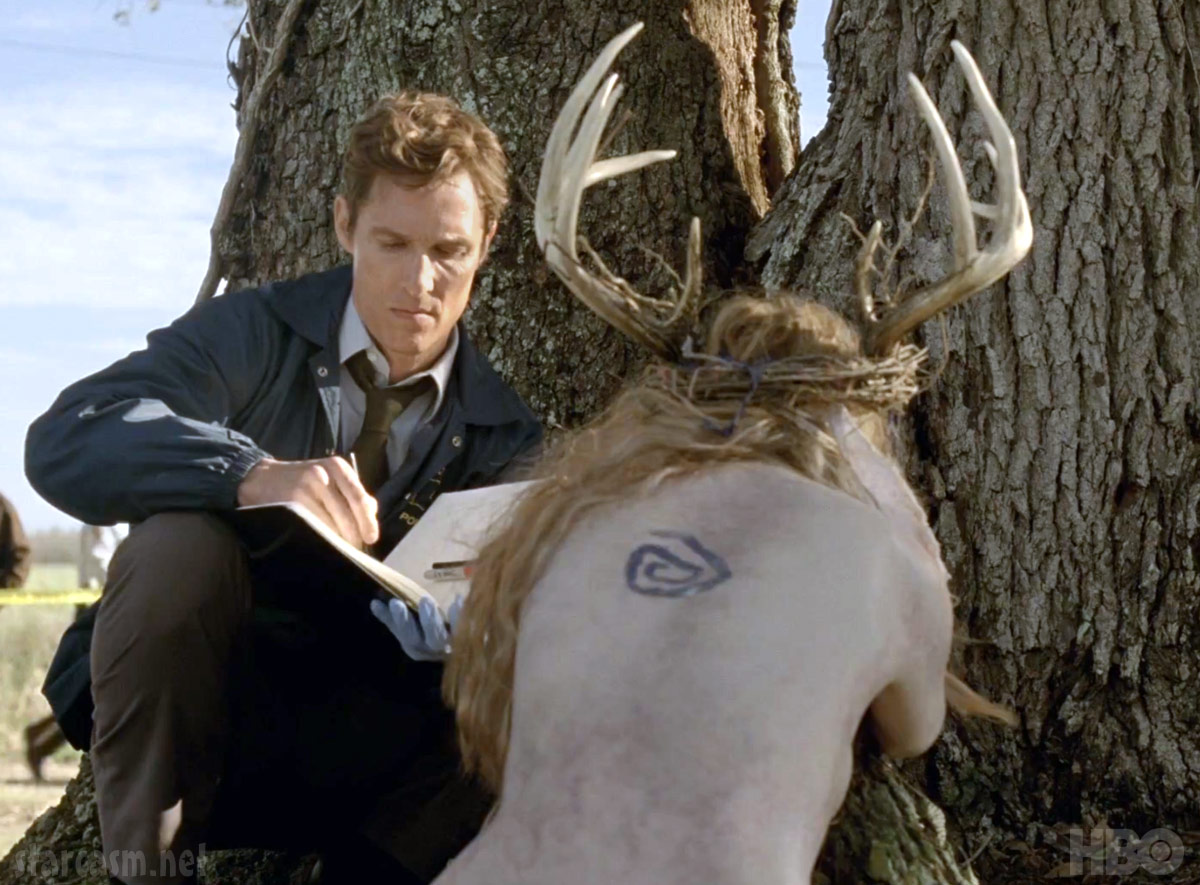
Image from HBO's True Detective opening
I know, it’s been more than a week since the conclusion of this innovative show aired. But I’ll argue that I have let my impression process in the back of my mind, and now I’m ready to make a more carefully considered evaluation.

True Detective, in case you missed it, was an eight-episode series on HBO starring Woody Harrelson as Detective Marty Hart and Matthew McConaughey as Detective Rust Cohle, investigating a series of ritualistic murders. Through the series, the two detectives pursue clues that lead them to a group of "devil worshippers," who abuse and kill children from poor, marginalized communities, including prostitutes, as part of their rituals. While the geographic setting stayed on the Louisiana coastal plain, the series jumped between three time periods: 1995, when Rust Cohle, the new guy on the force, joins partner Marty Hart; 2002, when the partners fraught relationship finally breaks down almost irreconcilably and Cohle leaves the police force and Louisiana; and 2012, when on Cohle returns to Louisiana in pursuit of the same cases he had started on in 1995, which leads to an internal police investigation.

The mystery begins with the discovery of a murdered girl, 

her body blindfolded and tied in a praying position in front of a tree. Antlers are tied to her head and strange symbols are painted on her back. Clues lead to a similar cold case from years earlier, and the detectives then find the same symbols on the bodies painted on the wall of a ruined rural church.

McConaughey's character, Rust Cohle, took extensive
notes during his investigations. He created a believable,
if emotionally damaged persona.
As the episodes progress, the clues seem to point to involvement of preachers, politicians and other prominent men in the area. A preacher, Billy Lee Tuttle, attempts to take the investigation away from Hart and Cohle in favour of a special task force to investigate anti-Christian crimes. 

The series jumps between 1995 and 2012, with occasion glimpses into 2002. The main visual clue is hair: while Harrelson only has to remove his toupee to age, McConaughey goes from a typical cop haircut to shaggy hippie/dirtbag look, with full handlebar mustache.

The strength of the show was the writing. 

The plot was sharp and engaging, the characters flawed, vulnerable and absolutely believable. The dialogue was genuine and perfectly credible. 

Even though the time setting kept changing, it was never hard to keep track — the hair was one visual clue, but that was the least of it. The dialogue and the progression of the story always made it clear what era we were watching. Every scene made me want to see the next one, even though the subject, ritualistic sexual child abuse, was the toughest imaginable.

The story actually reminded me of two things: one was the actual police investigation in Cornwall, Ontario, of a pedophile ring including priests and other community leaders who shared their victims; and the other is an excellent book by Gae-Lynn Woods, Devil of Light, a mystery set in east Texas with a plot very similar to the first season of True Detective.

The only downfall to True Detective was the final episode. 

SPOILER ALERT: IF YOU PLAN ON WATCHING THIS SHOW ON YOUR PVR, AND DON'T WANT TO LEARN THE ENDING, DO NOT READ PAST THIS POINT.

I cannot believe I just told part of my audience to stop reading my review. Ah, well.

The whole show seemed to be building up to the two cops busting open a decades-long scandal, a ring of men, including some prominent and "respectable" community and state leaders, kipnapped, abused, raped and murdered children, then covered it all up. But when Cohle and Hart find the centre of the abuse ring, the abandoned "Carcosa," they only find two men, neither of them prominent or powerful. There is a satisfyingly gruesome final fight scene, the bad guys are killed and the good guys vindicated.

But it felt, to me, like a cop-out. 

The evidence implicated powerful, rich men in the state, including senators, religious leaders and teachers, but none of those were ever caught. There is a throw-away line: "We didn't get them all," one detective says to the other at the end. "No, but we got some," is the reply.

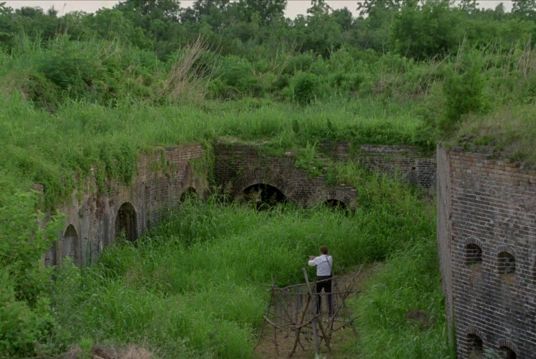
In the final episode, the heroes take the battle to the enemy's lair. But what the heck is this thing?
While that may be more authentic — the Project Truth inquiry certainly did not lead to widespread convictions in Ontario. But it's not satisfying from a storytelling point of view. As a viewer, I want tom find the villain, and I want to see him/her/them if not defeated, then  at least some kind of acknowledgement. True Detective alluded to the villain, and then forgot about them in the final episode, where the story becomes more of a straightforward cop shoot-em-out.

In sum, True Detective was an excellent series: engaging, entertaining and thought-provoking. Well worth watching live or recorded — and a lesson for anyone who wants to know what good writing is.

Thursday, January 09, 2014

The whole story and nothing but the story

Photo: Satiray in Flickr. Creative Commons License
While I post book reviews regularly on this blog, I decided years ago not to publish a negative review of a book by an independent author. I also promised never to publish a positive review unless I really meant it. My reviews are candid, and while I hope to promote independent authors, I won’t lie about a book’s quality. I just will not review a book I don’t think is good. I don’t see the point in tearing down a book by an author who is probably struggling as hard as I am to sell books. I would rather spend my time promoting deserving authors.

While I have read many excellent author-published books, the one I’m currently reading, which I will call “the book” for the rest of this post, disappoints me. It was written by a best-selling, independent author who has done a lot to promote the credibility self-published authors.

I expected an engaging story, but instead, I found a frustrating one. Getting through this story is like wading knee-deep through adjectival phrases, similes and adverbs.

Take this example (with key words changed to disguise the identity):
Bernard von Bauben saw her before he was halfway across the lobby. Mary Lynn was sitting in an overstuffed lavender chair beside the Baby Grand Piano, dressed in mauve and lace, smiling at him. Von Bauben walked immediately to her, and she stood and kissed his cheek. Her lips were warm, and von Bauben saw a fire burning deep within the coloration of her eyes.

Or this one:
The Elite Apartments were cloaked in peace and solitude as they were advertised to be. From the outside, only a dozen or so lights were visible in the windows, and the faint sound of a radio playing Scott Joplin’s ragtime disrupted the stilted silence of a day fading into night. 
As he climbed out of the car, Brent Haymire thought he glimpsed a nervous rustle of curtains on the third floor, and he wondered if someone was up there watching him. In his line of work, there were eyes everywhere. General Tom Regan often accused him of being stricken with an acute case of paranoia. Maybe he was imagining things. Maybe not. The mind did have a habit of playing tricks sometimes. But the subconscious was also the best warning system that man possessed, and Haymire knew that, thus far, his paranoia, real or imagined, had managed to keep him clear of those sordid things, legal and ominous, that go bump in the night.
 Good grief! Anyone with the slimmest grasp of English could cut those passages in half without losing any information.

Combine that with the number of times the author dedicates two paragraphs to describing a scene or a feeling, then does it again three pages later, and you can imagine my reaction:

“Get on with the story!”

Coincidentally, I watched Cloud Atlas on DVD last night. (Okay, so I still use obsolete technology. I also listen to a transistor radio when I work out.) That movie disappointed me, too, for a similar reason: the writers were more focused on their own writing cleverness than on telling the story.

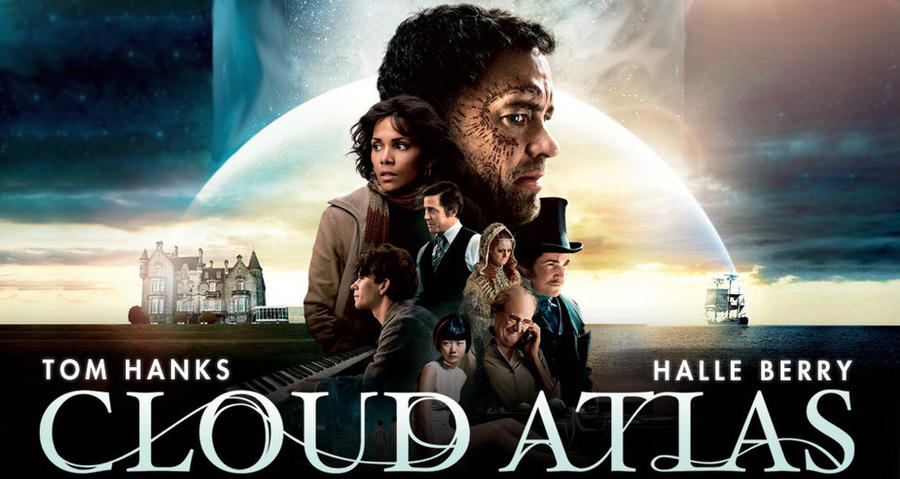
Cloud Atlas banner by CochiseMFC
Cloud Atlas was based on a novel with a great reputation (I haven’t read it, and I don’t think I will, now) and had a strong cast, but failed to tell the story. The novel features six “nested” stories that begin in the south Pacific in 1850, move through the 20th century to a dystopian and post-apocalyptic future, then goes back to the beginning. Each story is interrupted at a crucial point by the next story, which picks up a character or an object from the previous one. It was a clever idea that earned the author a lot of praise for his writing skills.

I think that the movie’s writers tried to be as clever, and ended up creating something so complex as to be baffling. Instead of nesting six different stories, the movie jumps around from story to story quickly, with no apparent reason and no apparent pattern, other than beginning and ending with the post-apocalyptic story of Zachry — in effect, turning the novel’s structure inside-out.

The cast, which included Tom Hanks, David Broadbent, Halle Berry, Hugh Grant, Hugo Weaving and Susan Sarandon, had roles in most, if not all of the stories. This was more of a distraction than an addition, especially with actors changing gender or race — Halle Berry as a Jewish refugee in 1935, or Doona Bae as a Korean clone in 2144 as well  the daughter of an American slaver in 1850. I found myself saying “Oh, that’s Tom Hanks with a skin wig and a beard and heavy makeup!” or “Hey, that’s no lady! That’s Hugo Weaving in drag and a blond wig!” Worst, I had to look up the cast on my iPad. “Is that Roger Daltrey? No, it’s Hugh Grant with a curly wig and old-guy makeup!”

Nearly three hours later, I could not see the movie’s point. I think the directors and writers tried to make a statement with the actors playing different roles in different stories, but what that statement was, I cannot tell.

The most important part of any story: the audience
The filmmakers behind Cloud Atlas and the author of the book that disappoints me spent far too much time admiring their own abilities, and not enough asking whether they’ve connected with their audience.
Image courtesy Creative Commons

What do you think? Did you watch Cloud Atlas? Did you read the novel? Have you ever read a book that seemed to have more to do with showing off the writer’s abilities than telling a story to a reader? Tell us all about it in the comments.

Thursday, July 18, 2013

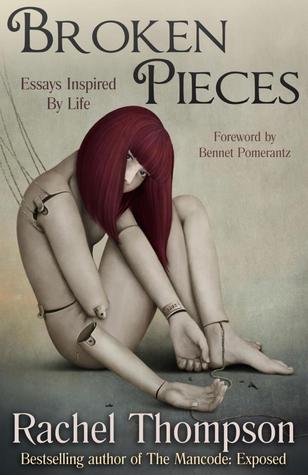
Independent novel review: Broken Pieces by Rachel Thompson

Why do I feel the urge to type “Rachel S. Thompson”?

Broken Pieces breaks the moulds of confessional memoirs and is rightfully ahead in the polling for best non-fiction book of the year among the E-Festival of Words contenders.

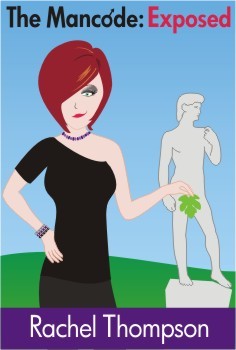
Rachel Thompson is best known for her humourous observations of male-female relationships in her blog, Rachel in the OC, and her previous books, A Walk in the Snark and The Mancode Exposed. These books are short, snappy, definitely snarky. Funny, entertaining and usually dead-on right.
“Husband has t-shirts from before we met. He sees no problem with this fact. “They still fit!” — why should he throw them away? Sigh. #Mancode.
With Broken Pieces, Thompson takes a decidedly more serious turn — a walk on a darker side. The book includes verse and prose poems, as well as extended descriptions of her emotions at different crises or turning points of her life in almost stream-of-consciousness prose.

It begins with descriptions of learning about the suicide of a former lover which happened only hours after she met him following years of separation. With a few well-crafted sentences, Thompson exposes the conflicted emotions that result from the memories of a troubled, inconsistent, thrilling and terrifying relationship.

Broken Pieces is an apt title. The book is very much a collection of essays, odes and prose poems, as well as pieces that are impossible to categorize. There are long passages that describe the author’s up-and-down relationship with her unnamed lover: how his strength made her feel safe, and how that feeling contrasted with his barely-restrained violence and his tendency to tear down her self-esteem. She also contrasts the lover with her eventual (and still) husband.

"Rachel in the OC" Thompson
It’s not all dark: Thompson also writes eloquently about the joys and bemusements of her relationships with her sometimes bumbling husband and their kids. Then, like refractions through a broken window, she turns back to her childhood and the trauma and abuse she experienced.

The pieces are disjointed. But I was never in doubt about which period of her life she had just jumped to. I always knew which man she was writing about on any given page. The book is not an easy read; it’s sometimes disorienting, but it’s compelling writing that tells Rachel’s own story. Broken Pieces shows Thompson as a real person, someone much more sympathetic than she comes across in her earlier books.

You cannot stop reading Broken Pieces once you start.

4*

Get it on Amazon or through Thompson's website.

Friday, June 21, 2013

Communicator's Toolbox review: Belkin's Ultimate Keyboard and Case for iPad

The Communicator's Toolbox


One of the original goals of this blog was to review technology developed for professional communicators. While I have reviewed digital cameras, laser and inkjet printers, software and even the iPad 2, it's been a long time since I've focused on the writer's tools.

I've been using the Belkin cover/keyboard combination for about a month, now, since the company sent me a demo at my request for a review model. Overall, I have to say I'm thrilled with it.

I got my iPad2 about two years ago, just before a trip to Austria and Switzerland. With it, I bought a Kensington KeyFolio case with an integrated Bluetooth keyboard for two reasons: first, I wanted a sturdy protective carrying case for the iPad; and second, I wanted a real keyboard, as opposed to a virtual one.

Compared to Kensington case

The Kensington KeyFolio fulfilled its purposes well. Its tough synthetic leather construction has protected the iPad well. However, Kensington made some compromises with the keyboard to get it to fit in a space the same width as the iPad itself. There is only one Shift key, for example, and the apostrophe/foot mark key is one row lower than on the standard QWERTY keyboard.

Those don't seem like huge issues, but it took me a while to get used to it. Only after I started using that keyboard did I realize that I use both Shift keys, depending on which letter I'm trying to capitalize. Also, getting a semi-colon every time I expected an apostrophe was annoying.

The other drawback to the KeyFolio was its size. The synthetic leather is pretty thick. I thought at first that would be a better protector for the fragile-looking iPad. But the KeyFolio makes the iPad a bulky device, hard to put into an already overstuffed briefcase.

It's also heavier. At 567 grams (1.25 pounds), the KeyFolio is almost as heavy as the iPad2's 601 grams (1.33 pounds). Suddenly, I was toting over a kilogram of tablet computer — heavier than a MacBook Air laptop computer.

The new protector

I heard about the Belkin Ultimate Keyboard Case for the iPad through a press release in my Mailbox (I get a LOT of press releases). When the item itself arrived, I was instantly delighted. Belkin designed the case to preserve the iPad's thin profile and form factor — two of its main selling points.
The base is made of aluminum alloy, and it's so thin, it's almost not there. Belkin says the keyboard is only 6.4 mm thick. The top is a textured rubber-like substance that provides adequate protection, at least in my experience so far. It has holes for the iPad's switches, camera, and earbud and power ports.

One of my greatest fears since getting
my iPad2.
Image source: laptoprepairleyland.co.uk 

Open it up and that same rubbery material is the hinge that attaches the two halves of the case: the rubber-backed shell that holds the iPad itself, and the aluminum-backed keyboard half. This is the only part that worries me — the rubber is very flexible and I always imagine it tearing.

But this flexibility is one of the great features of the case. On the keyboard side, above the keyboard itself, are three magnetic strips that hold the iPad up at your choice of three angles.
Belkin also uses the magnetism to power off and on the iPad when you close the case, just like with Apple's own tri-fold iPad cover.

A fully functional keyboard

The keyboard is smaller than the standard for a desktop computer, of course, to match the width of the iPad itself (or height, depending on how you hold it: 24.1 cm or 9.5 inches), but the layout is the QWERTY standard. It has two Shift keys, as well as Command, Option/Alt, and Fn keys. Overall, the typing experience on it is not much different from typing on a desktop computer's keyboard, except that the keys are a little closer together. The keys click satisfyingly when you depress them — unlike the standard Apple keyboard.

Drawbacks

The aluminum back is prone to scratching, like all aluminum. After a month, there are several noticeable scratches and scuff marks on mine, and I don't consider myself a rough user. The hardest surfaces my iPad has touched are desks and tables, and the inside of my briefcase or pannier saddlebags.
Getting my iPad into the case was tricky, and getting it out again almost as hard. However, I can't imagine when that would be necessary.

Bottom line

Belkin's Ultimate Keyboard Case for the iPad is a great accessory for the professional communicator who wants to use the iPad — or for anyone who uses the iPad, travels or commutes with it, prefers a physical keyboard and is as worried about dropping or damaging the iPad itself. It's very lightweight, almost unnoticeable in my hands. It doesn't interfere with the operation of the iPad at all. In fact, I typed this review on my Belkin Keyboard Case. Plus, it provides peace of mind about damaging the tablet.
While it is prone to scuffs, it has protected my iPad. For a hundred bucks, no iPad owner should be without one.

Find out more on Belkin's site: www.belkin.com/us/p/P-F5L149

Tuesday, February 12, 2013

An independent guest review: 50 Shades

Fifty Shades of the worst book I ever read


by Evan Zenobia

Evan Zenobia is editor of the Eclipse News blog and a close friend. He has graciously given Written Words permission to reprint this independent review of the bestselling Fifty Shades of Grey.

A meaningless setting. A cast of thoroughly unbelievable, unrelatable, one-dimensional characters. Add some poorly written dialogue and boring sex, and what do you get? The inexplicably popular jumble of words and paper that E.L. James has somehow managed to pass off as literature.

I’m referring, of course, to Fifty Shades of Grey, which I’ve spent the last two and half weeks subjecting myself to in tolerable doses. Now that I am finally done, I have no quandaries about calling it the worst book I have ever read. There are poorly written books that still contain good stories, or at least carry a good message. And there are well written books that may still follow a bad story arc. But Fifty Shades is poorly written and a bad story. It has literally no redeeming qualities.

The “plot,” if it can be fairly called that, revolves around utterly boring literature student/graduate Anastasia Steele and her “erotic” adventures with the mysterious and wildly handsome young billionaire Christian Grey. The motor that drives the dilapidated hull of a storyline along is fuelled by Steele’s attempts to reconcile her sexual inexperience and romantic longing with Grey’s “kinky” sexual habits.

But really, for a 514-page erotic novel, I have never read anything so dull. And on top of the dullness, almost every aspect of the story is irritating.

Consider the setting. James sets her novel in Washington State, in the United States. Which is strange, considering that most of the characters speak as if they’re well-read 19th century British aristocrats, using words like “profligate” and “taciturn” in everyday conversation. Excepting, of course, Steele’s token Latino friend, José, who throws colloquial Spanish into his speech with the frequency of Speedy Gonzales.

Also irritating is that James has chosen to write her book in first-person present tense. That alone is not the problem. Chuck Palahniuk wrote Fight Club the same way. But in Fight Club, the protagonist is crazy and also represents a social critique. In Fifty Shades, the protagonist is insufferable, stupid and boring. As such, the audience is forced to endure every stupid and pretentious thought that comes into her mind, whether it’s expressing her distaste for rap music before a BDSM romp or this gem on page 28, “I feel the color in my cheeks rising again. I must be color of The Communist Manifesto” (because, of course, Communist Manifesto is a shade of red you can find in any box of crayons or on paint swatches at Home Depot, and the Manifesto isn’t printed in black on white like every other book).

Meanwhile, the characters are almost all props leading up to the sex scenes, including Steele herself. Anastasia Steele apparently has three settings: blushing (sometimes the colour of communism), biting her lip (which arouses Grey), and drinking tea (again, mimicking the landed gentry of 19th century England rather than a young woman in Seattle, home of Starbucks). By her own admission, her favourite activity is reading old British novels by herself, and, at the age of 21, has never been drunk until Chapter 4 after finishing her final exams. (Newsflash to Steele: if you’re a literature student, and you’re not drunk until after your semester, you’re doing it wrong). She’s clumsy, and her hair never cooperates. Oh yes, and she’s a virgin.

Though this dull, sober virgin is pursued by José and her boss’s son, she is only attracted to the young, gorgeous billionaire with the personality of an anal-retentive Jack Donaghy/Gordon Gecko hybrid… only less interesting. Christian Grey is just a creepy guy. He’s arrogant. When Steele drunk-dials him, he tracks her phone, drives to find her, holds her hair while she pukes, then drives her unconscious body to his hotel room where he tucks her into bed and removes her vomit-stained pants before sleeping with (but not banging) her. Then he sends his personal assistant to buy her sexy underwear.

In what world is stalking, kidnapping, and partially undressing someone without their consent not creepy?

Oh, and speaking of consent. A huge part of Grey’s kink is that he doesn’t have sex without written consent. In fact, he’s got a pile of paperwork to sign before sex can begin. Now, personally, I can’t think of anything less arousing than paperwork. Filing taxes and writing incident reports never got my blood going. But for super virgin bookworm Anastasia Steele, it’s just the right thing. And even though Grey is an emotionally distant, creepy, stalker jerk, she is so desperate to be with him that she puts up with it all.

The only other character that needs mention is Steele’s beautiful blonde roommate, Katherine Kavanagh. She begins a deep relationship with Grey’s brother Elliot. What doesn’t make sense, however, is that she maintains it even as she develops a fierce hostility towards Christian Grey. The character is not at all developed, so her behaviour comes off as shallow and irrational.

Aside from all that, the book is just bad. The writing is awkward and clunky. James pretentiously jams her book full of obscure synonyms, obviously hoping it will make the story appear to be a fine work of literature rather than boring mommy porn. Meanwhile, she takes more than one occasion to remind the audience of the supremacy of the British, especially in terms of literature, and the unbearability of the French and others. While offensive, it fits in with the rest of the book’s undeserved pretentious snobbishness.

Further, the book appears longer than it actually is. A good chunk of the paper is wasted in blank space representing an excessively long chain of email correspondence between Steele and Grey. Apparently they never heard of texting.

I don’t want to spoil too much, so I’ll leave it at that. This is the worst book I have ever read. I can only award it negative stars.

Oh, and the sex is all really, really boring.

Evan Zenobia is the pen name of the blogger of Eclipse News, which regularly holds Sun Media to account. Visit the blog and leave your comments!

Friday, December 28, 2012

Money Land by RS Guthrie: an independent novel review

How do you follow up a magnum opus?


With the best story you can tell, exploring new literary grounds.

Money Land is the sequel to RS Guthrie’s Blood Land, which was originally titled Dark Prairies. Guthrie himself called it his magnum opus, and any reader can see that the author had poured his heart, soul and sweat into it. It was an ambitious novel that successfully combined a western murder mystery with a deep human tragedy. Between the virtual covers of that one novel, Guthrie took on alcoholism, family estrangement, racism, government corruption, big money, the oil industry and unconstrained greed. He successfully portrayed the character of the independent Wyoming spirit and even managed to evoke old-time Western movies and the very real, if poorly understood Johnson County War.

Money Land picks up three years later, with the protanoist, Sheriff James Pruett of Wind River, Wyoming, having come to terms with his wife’s murder. He has been clean and sober since and has been rebuilding his relationship with his daughter, Wendy.

Guthrie has labelled this novel “A James Pruett Mystery.” It’s not as personal for the author as Blood Land or even as his paranormal/occult horror/mystery-thriller novels featuring Bobby Mac: Black Beast and LOST. Money Land is more of a straightforward mystery, and Guthrie succeeds in keeping his readers turning the pages (or flicking the screens of their e-readers).

Guthrie knows how to create deep, realistic characters that have many sides to them. There are aspects of his heroes that enrage me, and sides to the villains that could make me cry. Even the tertiary characters, like the dirtbags who mostly annoy and distract the Sheriff, have nuances that I admire. Creating a novel filled with complex characters takes a writer of skill and subtlety.

There are a few passages where the story drags: the back-story— or maybe it’s mid-story — where the author fills in the three years between Dark Prairies/Blood Land and Money Land. They’re few, and we can and should forgive Guthrie for these. They don’t detract from a gripping and rewarding novel.

Guthrie skillfully juxtaposes the ugliness of the worst of human behaviour against inspiring and tender relationships and the spectacular backdrop of Wyoming’s plains and mountains.

5 stars
Visit Rob Guthrie's blog.
Visit Rob Guthrie's website.
Purchase Money Land from Amazon.