Wednesday, October 17, 2012

Writing tips: What is style?


Creative Commons: dbdbrobot
I’ve been thinking a lot about writing style lately. Actually, I’ve thought a lot about it for a long time — as long as I’ve been writing, which is most of my life.

I find that my response to a book or to a writer, no matter what the subject is, depends a lot on style. I like an author who is original, who does not just try to copy a best-seller or the current trend in books you can pick up at the drug store.

But there is also something else that determines how well I like a story, something about the way the writer uses language.

I’ll give you an example: Margaret Atwood is generally accepted as one of today’s greatest writers. She has written a great many books in of a range of types — I am trying to avoid using the word “style” in different ways here — and, it could be argued, in different genres. Alias Grace could be called “historical fiction,” set in 19th century Upper Canada and based loosely on real events. The Handmaid’s Tale is a set in a dystopian future and, while it doesn’t have a lot of sci-fi tropes, it won the Arthur C. Clarke award for best science fiction.

Atwood is both accomplished and unarguably a master of the writing craft, but while she writes about many different subjects, there is something about her manner of writing that puts me off a little. The only word I can use to describe it is heavy. Her writing is heavy — I don’t read it quickly or easily; on the other hand, I can’t put it down once I start, either.

One writer whose style I really admire is Mark Helprin’s, particularly in his Winter’s Tale, a fantasy set in New York City. In addition to his ability to meld fantastic elements, humour and action into a setting simultaneously believable and fantastic, Helprin also manages to be very descriptive as well as economical with prose. It’s as good an example of magical realism as any I’ve ever read.

But what is it that determines the style? Word choice? Sentence length? Description? Active voice? Those are just a few items in the writer’s toolbox. Also critical are creating realistic, believable and interesting characters, pacing, mixing action and pathos and so much more.


The accepted good

There is a tension between popularity and what is accepted as “good writing” by the publishers and the leading literary critics of any time.

For instance, today, “good” writing is usually characterized by lean prose, active voice, realistic dialogue and sparse description. Writing coaches keep advising us to avoid adverbs in favour of more precise verbs, except when it comes to describing dialogue. We should only use “said,” and not try to change that around with “exclaimed,” or “replied.”

Crime novelist Elmore Leonard came out with ’s 10 rules of writing a couple of years ago; he admitted that he was at least a little facetious at the time, but now he says he seriously believes them. Okay. And Leonard is a great writer, and changed the literary world, and sells zillions of copies, okay, okay — but is he the arbiter of the English language, now? What if something happens in a sudden way? Elmore, what is wrong with the word “suddenly”?

The exemplars of great writing are still supposed to be Fitzgerald and Hemingway. I love their work, but again — should we all try to emulate their styles?

On the other side of that tension is writing that flies in the face of those rules, yet sells millions of copies. The current target of criticism is EL James’ Fifty Shades of Grey. Here’s a passage:

I watch José open the bottle of champagne. He’s tall, and in his jeans and T-shirt, he’s all shoulders and muscles, tanned skin, dark hair, and burning dark eyes.

Descriptive, yes. Also clichéd — it’s been done so many times. “Burning dark eyes”? While we can all imagine what those must look like, couldn’t the author have thought of something original?

And yet, millions of readers ate that up, burning eyes and all. Did the burning eyes cause heartburn, I wonder?

Description

Writing coaches also tell us not to use too much description. Hemingway and Fitzgerald did not describe what their protagonists looked like. Okay, but Dashiel Hammet did.

Efficiency is the goal!
(Photo: The Pug Father/Creative Commons )
I agree that too much description can get in the way of the story. There is a lot of material for people to read, that communication of any kind must compete for an audience’s attention with so much more material than there ever was before, so we writers should always try to get as much information across as efficiently as possible — fewer words, more information. I get that.

But we do need to describe some things, some times. And occasionally, an adverb is the best way to do that. See?

Who says so?

I cannot answer all these questions myself, so I am inviting other talented independent writers to weigh in. What is good style? How do they describe their own style? They’ll be appearing on this blog over the next couple of weeks. My first guest will be Roger Eschbacher, author of middle-grade fantasy Dragonfriend: Leonard the Great, Book 1.

So watch this space, and leave lots of comments and questions for the guests, please. Maybe we can finally determine exactly what writing style is, after all.

Sunday, October 14, 2012

Spooky Sunday: 6 more scary sentences

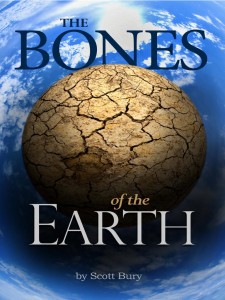
It's Sunday, and you know what that means: time for another installment of six spooky sentences from my novel, The Bones of the Earth.

Like last week's Six Sunday excerpt, these six sentences come from Part One of the novel. In this section, the hero, Javor, and Photius, the mysterious wanderer from Constantinople, are tracking the monster that murdered Javor's parents - although Javor does not believe in monsters. Yet.

The pair have been following a trail of destruction for a day and a night, when Photius tells Javor they are about to enter the monster's own territory:
Past a small rise, the thin grass disappeared into a loosely-packed scrabble. A few bent, withered trees with hardly any leaves clung weakly to the hillside; ahead, a brackish creek wandered sluggishly to the east. At the bank, Photius said “Take care now, son. Don’t touch the water,” and they hopped carefully from stone to stone across a natural ford. Javor could see craggy mountains ahead; surprisingly, they had no snow on their tops. The whole vista seemed dead and repellent. Javor gagged on the reek of rotting animal carcasses.


Like that? Leave a comment. And check out some other great samples on Six Sentence Sunday.

And if you want to find out what happens next to Javor and Photius, click on the links on the right or the tabs on the top of this blog.

Happy Sunday!

Thursday, October 11, 2012

Do the media reflect the world around us?


No.

Photo of Surrey, BC Marathon courtesy Indo-Canadian Voice
The world presented is the world that advertisers feel they can sell to easily: white people with lots of disposable income for designer cars, clothes and computers.

Best-selling indie author Martin Crosbie has invited some Canadian writers, including me, to answer the question: is the Canada he knows, that we all know, represented in the mass media?

He doesn’t see the country he knows in the major newspapers or magazines of the country. Another writer, Karen Magill of Vancouver, added that Canadian writers, like Canadians generally, feel an inferiority complex compared to the media dominance of the US, and as a result aren’t as eager to write about their own country. She writes that she as advised to set her novel, Missing Flowers, in a US city, rather than in Vancouver, British Columbia — her home town.

In my guest post, I wrote that neither the news media nor entertainment media reflect the country that I see around me. I touched on the types of professions in fiction, the settings, and about how closed commercial publishers are to new voices.

But indie authors are also missing something important. It seems that, in chasing that big audience, many indie authors are aping the conventions followed by mass publishers. As a result, indie fiction does not reflect the world that I see around me.


What’s missing? Diversity.

I know that many of my readers are writers themselves. I’ve been reading a lot of indie fiction lately, and unfortunately, many writers fall into some stereotyping traps. Most of the characters’ names are English, or occasionally Irish or Scottish. Cops are sometimes Italian or Polish. I’ve come across a smattering of Hispanic women TV reporters, for some reason, but almost no African-American characters.

Why is that? Whom do indie writers think they’re writing for?

I live in a major, modern North American city in the 21st century. The people that I live and work among come from, literally, around the world. Almost half the people I grew up with were immigrants, or their parents were. When I taught in college, my students came from China, Taiwan, Jamaica, Bangladesh, Bosnia, Iraq, Bolivia, Mexico, the US; in my neighbourhood, people come from India, Norway, Jamaica, Finland and China. And some were First Nations, Metis or Inuit.

If you’re reading this on the bus, subway, metro, train or ferry, look around: how many of your fellow commuters are white, of British extraction? Or are there people you can see are Asian, South Asian, African or Hispanic?

Think about your neighbours. How many of them have English last names? How many more are non-English? Sure, English may be the largest single ethnic group, but they’re not more than half anymore — I don’t even think that you’ll find a majority of English last names in most neighbourhoods in England, anymore.

Write what you know


Open your eyes, and write stories that reflect the world you live in. It’s not what’s in the mass media. And the only way we’re going to have an impact on this warped reflection is if we start to write about what is really in front of our eyes.

What do you think? How can writers start to reflect the country, the world, the reality that’s right around us, right now? Leave a comment.

Monday, October 08, 2012

A Thanksgiving giveaway

Today and tomorrow, Monday, October 8 and Tuesday, October 9, I'm giving away The Bones of the Earth for free through Amazon.

That's right: you can download an e-book copy of The Bones of the Earth, completely free, but only until midnight at the end of Tuesday, October 9.

Come to this link:
http://www.amazon.com/Bones-Earth-Dark-Age-ebook/dp/B006PI0NRG/


What the reviewers say:


"I kept turning pages, fascinated, wishing to know what will happen next."

"A marvelous read..I spent the better part of a day in The Bones of the Earth in spite of the things I had to do!"  

"Scott Bury has the knack of making his scenes spring to life." 

"A story that has you holding your breath as you wonder what's next. Highly recommended.” 
Don't miss it!


Sunday, October 07, 2012

Six spooky Sunday sentences

Image source: Wikipedia Commons
My favourite holiday, Hallowe’en is coming up fast. In honour of the event, for the next four Six Sentence Sundays, I’ll be posting the spookiest passages from The Bones of the Earth.

The Bones of the Earth is a historical fantasy set in the Eastern Roman Empire during the darkest of the Dark Ages. It begins when Avar raiders kidnap two girls from the village of the main character, Javor.

In Chapter 3, Javor and his best friend, Hrech, go to rescue the girls, and find them that night, just after the rising of the full moon.
It was hard to make out at first what he saw in the moonlight, but when his foot struck something that rolled, understanding hit him like a cold wave. It was a severed head; the Avar helmet rolled off it and continued a short distance before it fell over in the grass.

Javor was surrounded by the dismembered bodies of the whole troop. Ten heavily armoured men had been literally torn apart—maybe more. They may have had friends. Everywhere he looked there were legs, arms, torso, heads.

Want to read more? Click on the tabs above for some longer free samples, or click the cover image on the right for a link to the whole book.

And don't forget to visit Six Sentence Sunday for more great samples from all sorts of genres and writers!

Wednesday, October 03, 2012

Writing and tweeting tips: Hootsuite troubles


Source: Belch.com
 You’d think I’d have learned by now: whenever you try something new, test it to make sure it works. But though I know that rule, I ignore it. I have all sorts of good reasons: lack of time, lack of attention ... and every time, it comes back to bite me in the ass.

The lesson: when you start using a new system, such as one that will automate Tweeting for you, test it before you trust it completely.

I’ve been using Hootsuite for a couple of weeks now to schedule most of my daily tweets, and while it’s pretty easy to use, it was botching the links. For I don’t know how long now, nearly every link I had tweeted through Hootsuite (hooted?) did not work.

But I didn’t check, so I only found out when Twitter followers started notifying me that “the link in your Tweet is broken.”

The first time I saw that, I thought that I had inadvertently deleted one character from the abbreviated link address. The second time, I thought maybe that follower had some kind of browser incompatibility. But when I started getting three or four of these each day, I knew something was wrong. (They don’t call me Sherlock for nothing ... or actually, ever.)

I went to the Scheduled Tweets panel in my Hootsuite screen, and clicked on every URL. None of them worked. Each time, I got an error message that the URL did not exist.

Then I looked at the stream of sent Tweets in Twitter, itself. And I saw something strange. Where I had used Hootsuite to shorten the URL, which results in a link that starts with “ow.ly/”, Twitter showed a Twitter abbreviation that starts with t.co/

Getting to the bottom of it

I’ve been using SocialOomph to schedule Tweets for a few months, now. The system works well: it will shorten URLs like Bit.Ly does, and allow you to write and store tweets in advance. Tweets can include both #hashtags and @Twitter handles.

I’ve found SocialOomph to be reliable and robust: I have not yet found and instance where a tweet I scheduled did not go out, unless it violated some Twitter rule.

But the free version is limited. You cannot send out too many automated tweets with a Twitter handle (@Name) in a short time span. With some experimentation, I found that the time span is about an hour, so I restrict myself to scheduling one Tweet with an @ handle per hour. Also, you cannot repeat the same URL more than once per day. However, I found that I could send to the same URL within 16 hours.

The free trial version does not support creating a spreadsheet to schedule tweets, and I found I was spending a lot of time each day scheduling tweets one at a time. On the other hand, the “Professional” version, which does support mass uploading, costs $35 per month. That’s a little rich for me.

I investigated a couple of other services. Gremln is cute, does the same things as the other services, and it’s relatively cheap at $6 per month for a basic account that allows bulk updates. Hootsuite charges a little more: $9.99 per month, but it takes fewer clicks of the mouse to accomplish the same things. Some of my Twitter friends had run into glitches using Gremln. So, Hootsuite it was.

Solving the problem

It seems that Hootsuite developers have the same mentality as Microsoft Office programmers: they like to help you without letting you know they’re helping you, like the way that Word used to make the entire document bold when you bolded one word.

Hootsuite’s bulk tweet scheduling instructions tell you to create a spreadsheet with all your tweets in advance. You create a .csv (comma-separated values) format document. Each line should have the time, the tweet, and an optional URL link. Each of these fields, say the instructions, must begin and end with double quotation marks.

I use a spreadsheet program (either Microsoft Excel or OpenOffice) to create a .csv file. The program creates a raw text file, putting commas where the cells end. But it seems that the program also adds the quotation marks.

After I create the file, three processes affect it beyond my control: first, the spreadsheet program saves my content and formats it the way it sees fit; then Hootsuite uploads it, analyzes it to ensure it meets its standards, and then sends it to Twitter.

There are at least two conversions happening in this process: spreadsheet to .csv, and Hootsuite to Twitter. There may be more within Hootsuite and Twitter, too. Somewhere, the URLs I abbreviated through Hootsuite software get changed again.

The solution

I removed the quotation marks that I typed in around the Tweet text and the URLs. Then I tested that, scheduling four tweets just a little in advance (Hootsuite requires at least ten minutes notice). That worked — the shortened links took me where I wanted to go.

So the second lesson here is: when you’re creating a .csv file with a spreadsheet program to schedule your tweets for Hootsuite, do not add double quotation marks before and after the Tweet content or the links. If you want a quotation mark within the tweet, use single quotes.

I did leave the double quotation marks around the time, though, and that seems to be working.

Source: Creative Commons
The real lesson: whenever you decide to automate any process, test it first.

Monday, October 01, 2012

New fantasy launches today!

Blood of the King (Khirro's Journey Book 1)


Blood of the King, the new epic fantasy by Vancouver author and Guild of Dreams founder Bruce Blake, launches today, and Written Words is fortunate to have an excerpt to publish from Chapter 5. What's it all about?

The king falls and a hero is born, his fate thrust upon him by Shaman's curse. A journey to save the kingdom begins.

Khirro never wanted to be anything more than the farmer he was born to be, but a Shaman's curse binds him to the fallen king and his life changes forever.

Driven by the Shaman's dying words, Khirro's journey pits him against an army of the dead, sends him through haunted lands, and thrusts him into the jaws of beasts he wouldn't have believed existed. In one hand he carries the Shaman's enchanted sword, a weapon he can barely use; in the other he holds a vial of the king's blood, the hope of the kingdom. His destination: the Necromancer's keep in the cursed land of Lakesh. Only the mysterious outlaw magician can raise the king from the dead to save them all from the undead invasion, but can Khirro live long enough to deliver the vial?

Can a coward save a kingdom?

This blog post is part of a cycle: a group of bloggers is publishing excerpts from successive chapters of this exciting new book.


Read Chapter 1  on Tami Parrington's blog:

Read Chapter 2 (Part 1) on Chantal Boudreau's Visions in the Dark
Read Chapter 2 (Part 2) on Steve Montano's Blood Skies blog
Read Chapter 3 on Joshua Johnson's Gunpowder Fantasy blog
Read Chapter 4 on Emily Ann Ward's blog

And now you're caught up and can read part of Chapter 5:

Excerpt: Blood of the King

Chapter 5

The soldier sat on the top stair cleaning blood from his sword, listening to the groans of wounded men strewn on the walk around him. He shifted and slid the blade into its scabbard. Men moved along the wall walk making repairs, tending the injured and collecting the dead. Most of them made a wide berth around him, avoiding a man wearing the garb of the king’s guard. A few archers remained at the parapet launching arrows at the retreating Kanosee, but they had pulled back beyond bow range. The fight had been fierce but, despite the wall breach, they’d repelled the invaders.

For now.

Farther down the wall walk, soldiers scavenged the fallen enemy for whatever they might keep or sell. He sneered. How could they act that way? Where was their honor? On the battlefield, in the heat of the fight when life and death were at stake, such things were done for survival, not for personal gain. Bury them or burn them, don’t rob them. He spat in their direction and turned his head away.

When the Kanosee soldiers breached the wall, it had required all his focus to stay alive, and he lost track of the king in the melee. The last time he saw Braymon, he was engaged with one of the monstrosities summoned to swell the Kanosee ranks. The tide of battle engulfed the soldier, distracting him from his assignment until a fresh troop of Erechanians joined the fray, driving the invaders from the wall, setting the ladders alight with urns of burning pitch. The stench of burnt flesh had threatened to empty the soldier’s stomach; he might have known some of those men, as he may have known some he slew himself. When his thoughts had cleared of the fog of battle, the king was gone. The cloaked man wouldn’t be happy he failed, but he’d have other opportunities.

The soldier stood, stretched, and glanced down the stair at the landing below, a glint of sunlight on metal catching his attention. Near the wall, crowded at the corner of the landing, he saw a suit of plate—Erechanian and of high quality, but he couldn’t get a good view. He hurried down the stairs for a closer look.

Puddled blood, dried and brown, stained the landing. He surveyed the scene with a practiced eye and surmised two men had lain here, one gravely injured. His gaze followed the trail of blood descending the stair and the story became clear: one man injured, the other stripped his armor to carry him to safety. The warrior shook his head. How many men died trying to save one fallen soldier when the entire fortress was in peril? He half-smiled at the novice mistake and went to the heap of plate, shifting it with the toe of his boot. Dirty, scuffed, caked with dried blood inside and out. Through the flaking gore and dust of battle, a pattern was evident on the breast plate. He brushed grime away with a gloved hand and revealed a scrollwork of enameled ivy. His eyes widened.

The armor belonged to the king.

It must have been he who was seriously wounded, carried to safety by some faithful soldier. His stomach clenched. How would he find the king and complete his task now? Anger rose in the soldier; he despised failure, had been trained since birth that it meant weakness. A boot scuffed on a stair below and he stood, muscles tensed, hand on sword hilt.

“Ye! What 'ave we 'ere?” The man ascending the stairs halted as he saw the soldier standing over the pile of armor. “Anythin’ valuable?”

“Not sure.”

The soldier kept his voice purposely low to draw the man closer. With the king fallen, he had little time. The cloaked man had told him what would happen if the king fell and the Shaman performed his abomination, had explained how they would get out of the fortress. He needed to find a way to intercept them before they got too far. This man might be the way.

“I can’t see, ya damn fool. Move outta me way!”

The soldier shifted, keeping his king’s guard insignia hidden, and made space for the other man to sidle in beside him. The man did as the soldier had moments before, crouching, wiping dirt away for a better look and to gauge the armor’s value. The soldier loosened his dagger in its sheath.

“Gods, look at this. Must be worth a fortune.”

He brushed away more dirt, then stopped, hand hovering above an exposed loop of ivy spilling across the breastplate. The soldier’s dagger slid free.

“What is it?”

“The king,” the man said, a note of shock in his words. He stood, half turning toward the soldier. “It’s the king’s pl--”

The soldier’s blade touched the man’s throat, cutting off his words as the sharp edge pressed flesh hard enough to draw blood.

“Don’t cry out. I’ll open your throat before a sound escapes.”

The man’s eyes widened and his breathing stopped; the soldier knew he’d do whatever he said. This man was no warrior, he clung too tightly to life.

“There are tunnels leading from the fortress. Do you know how to access them?”

The man didn’t respond at first, so the soldier pressed more firmly and a drop of blood rolled down the man’s his neck. He nodded once, a quick, mute movement intended to keep the dagger’s edge from slicing deeper into his throat.

“Take me.” The soldier spun the man around, facing him down the stairs, deftly moving the blade from his throat and inserting the tip through the seam in his leather armor. “Don’t betray me or I’ll gut you like the pig you are.”

They descended to the courtyard five flights below, beads of sweat running down the man’s neck, mixing with the blood. They were nearly at the bottom when the man next spoke.

“Why? Why do you betray your king?”

“Not my king,” the soldier growled and jabbed the knife further into the man’s ribs. “Looks can be deceiving.”

They crossed the courtyard, bodies pressed close hiding the dagger between them. Soldiers and workers passed by, too distracted with their own business of repairs and clean-up to notice anything awry. The soldier breathed deep, inhaling familiar fumes of battle, and raised his eyes to the sun. Many hours yet remained in the day, encouraging him. He’d find the king.

His mission would yet be completed.

Biography

Bruce Blake lives on Vancouver Island in British Columbia, Canada. When pressing issues like shovelling snow and building igloos don't take up his spare time, Bruce can be found taking the dog sled to the nearest coffee shop to work on his short stories and novels.

Actually, Victoria, B.C. is only a couple hours north of Seattle, Wash., where more rain is seen than snow. Since snow isn't really a pressing issue, Bruce spends more time trying to remember to leave the "u" out of words like "colour" and "neighbour" then he does shovelling. The father of two, Bruce is also the trophy husband of burlesque diva Miss Rosie Bitts.

Bruce has been writing since grade school but it wasn't until five years ago he set his sights on becoming a full-time writer. Since then, his first short story, "Another Man's Shoes," was published in the Winter 2008 edition of Cemetery Moon, another short, "Yardwork," was made into a podcast in Oct., 2011 by Pseudopod and his first Icarus Fell novel, On Unfaithful Wings, was published to Kindle in December 2011. The second Icarus Fell novel, All Who Wander Are Lost, was released in July, 2012, and Blood of the King, the first book in the two-part Khirro's Journey epic fantasy, was released on September 30. He has plans for at least three more Icarus novels, several stand-alones, and a possible YA fantasy co-written with his eleven-year-old daughter.
Sunday, September 30, 2012

Update from my book signing event!


I thought I had sent this post yesterday from my iPad, but Google and Apple don't play nicely together. See the note at the end of the post.

Here are my two lovely assistants at my book signing event: my boys, Nicolas and Evan. This is my second post today from Gaia Java in Stittsville, so I'm going to use a different approach this time.
 
How is the signing going, you ask? (Yes, I can hear you — there's an App for that). There's a little lull now, but I had a small crowd up to about a half-hour ago. Some friends dropped in, had some coffee, talked about books and kids and cars. I spoke to a couple of readers and gave away some copies of my short story, Sam, the Strawb Part

It's thrilling to be autographing copies of your book — I have never felt like that before. Now, the crowds have died away; I'm waiting for the next rush to come, the people who need their afternoon coffee. Maybe I'll meet some more readers. I won't hope for more sales — I've had more than most authors get in one day at this kind of event. But I won't turn them down, either.

The technological side 

The last post, I wrote the text in a word processor, then copied and pasted it into Google's Blogger app. I could also add a picture or two, taken with my iPad2. That part worked fairly well, although the resolution is not great because of the iPad2's (the "old" iPad, now) rudimentary camera.
The Blogger app is not very good. It's designed for use on a phone, and the iPad version does not use the whole screen — just a little rectangle in the middle. There isn't enough room to see much of what you write. The onscreen keyboard — well, let's just say that it's a good thing I have the Kensington Bluetooth keyboard synced to the iPad.

This time, I'm using the old-fashioned approach of emailing the post to my Blogger account. It takes more planning, because you cannot attach a picture to the email from within the iPad. If you want a picture, you have to open it in Photos, select Email Picture, and add the post as a caption.

 Enough for now. I'll be here for another hour, so as the celebs on all the talk shows say, if you're in town, come and see me.

One last technological note:

 Live blogging from the iPad has a number of holes in it. I tried, twice, to send this post from my iPad. Doing that requires a double work-around.

First, for remomte blogging, Blogger requires that you set up a special email account in Blogger; type your text into the email, put the title as the Subject line, and email it to this special address, and the content goes to your Drafts folder. Then you can edit it.

However, on Safari on the iPad, you cannot select a photo from the camera roll or anywhere else in the iPad. So if you want to put a picture, you have to use the second work-around, this one imposed by Apple: select the photo in the Photos app, select E-mail Photo, address it to your Blogger account and add your text in the body of the email below the picture. This does not give you the option to format the picture in any way, however. I suppose if you had a Picasa account, you could include the photo in your blog by selecting its URL, but you can't do that with Photostream, because Apple likes to keep those URLs secret.

So there, two work arounds, but in this case, they didn't work. I thought I had updated the blog yesterday afternoon, but no — all I got, instead of a new post, was a single photo in the Drafts folder. I have had to edit it in HTML mode in Safari on my iPad, because for some reason, I cannot add text in the Compose mode.

Here's a recommendation to Google and Apple: play nicely together.

Sent from my iPad, then finalized on my desktop.

Saturday, September 29, 2012

Live blogging from my book signing!

I'm here at Gaia Java in Stittsville, in the west end of Ottawa, at my first book signing event.

I thought I'd take the opportunity to explore live blogging again, using my trusty dusty iPad2. I've managed to make a couple of entries on Facebook, and even added a picture on Twitter, using this technology. Updating the blog is a little more challenging using the iPad, so I'll describe the details on how I'm doing this at the bottom of this post.

The event is going much better than I expected. There's a lull in the traffic right now, so I have some time to write this blog, but I sold my first copy within my first 10 minutes here, so a lady who had seen the publicity from Gaia Java's web page. Within the first 90 minutes, I sold two more copies.

While this may not seem like huge numbers, from the research I've done on book signings, it is excellent results — some veteran authors have reported sales of two or three copies in a day.

I have to say "thanks" to Paul Melsness and Paul Jay, co-owners of Gaia Java, for this opportunity. They've allowed me not only space, but let me move tables and chairs around and put up posters on their walls. And, they have excellent coffee. Even if I were not flogging books, I love coming here to have some really great coffee and enjoy the art on the walls.

By the way, the art is for sale, and it's very good, so take a look.

Not only did Paul and Paul give me the space and chance to do this, they also did more effective publicity than I did. I put up posters and sent media advisories all over the region, but the reporter who came to cover this (so far) from the local paper got the notification through Gaia Java's publicity.

How I did it
For this post, I'm trying Google's Blogger App for the iPad. But here come some customers!

I'll blog again at the next chance.

Wednesday, September 26, 2012

Getting ready for my first book signing

Stressed-out image courtesy the Canadian Bald Guy.com

 
On Saturday, September 29, I will have my first book signing event, and I’m now starting to stress about making sure I’m ready.
 
Map and Directions
 
 
As regular readers of this blog (and I know there are a few of you) know, it’s going to be at Gaia Java — Ottawa’s newest and best chain of cafés — at 1300 Stittsville Main Street in Stittsville, in the far west end of the city.
 
I’ve done everything I can to try to publicize the event in advance:
 
  • sent notices to all the local newspapers, radio and TV stations
  • posted the announcement on local “event” websites
  • put up posters at libraries, cafés, bookstores and other places where people interested in books and book signings might see them
  • sent emails to everyone I know (well, almost everyone), even though they may be living in a different continent
  • created an “Event” on my Facebook page
  • announced it in a variety of Facebook and LinkedIn groups
  • announced it to my Google Plus circles
  • Tweeted
  • and of course, announced it here on my blog.
Short of hiring a publicist or sky-writers, I don’t know what else I can do for very little, or no, money.
 
So now, I’m trying to think of all the things I need on Saturday. A good friend, actor Van Brown, reminded me to bring “something to write with.” Obvious as that may seem, I had not put “pens” on my list of Things to Bring to the Book Signing.
 
I’ve made up a couple of other posters, including one with an enlargement of my book’s cover (at the suggestion of Melissa Bourbon’s and Tonya Kappe’s The Tricked Out Toolbox). I’ll bring a couple of pads of paper where people can write down their email addresses in case they want to subscribe to the blog or notices about the book or other books. Maybe some kind of raffle tickets for a free copy of Bones or one of the other books. Tape for putting up the posters. Pins, maybe. Pencils in case the pens run out. Bookmarks that promote The Bones of the Earth. Cards with my contact information.
 
Money for coffee: if you come out and mention this post, I’ll buy you a coffee!
 
What else do I need? Oh yes, copies of my book. The Bones of the Earth.
 
And I’ll have some copies of books by other members of Independent Authors International.
 
There. Is that everything? What have I forgotten? If you can think of something, PLEASE leave a Comment.
 
Finally: if you’re nearby, please drop in on Saturday! I’d love to meet readers!


Friday, September 21, 2012

I’m having a book signing!


I’m excited to be having my first real book signing with real, physical books next weekend.

Paul Melsness and Paul Jay, co-owners of Ottawa’s newest and best coffee chain, have graciously allowed me to invade their Stittsville, Ontario store.

Not only will I have copies of my novel, The Bones of the Earth, ready to autograph and personalize for anyone who wants to buy them, I’ll also have copies of other Independent Authors International titles:

 • Dragonfriend: Leonard the Great, Book 1, by Roger Eschbacher
If you think it was all good deeds and fancy ideals back in the days of Camelot, think again. For a time things went seriously bad: Arthur was imprisoned, Merlin had vanished, and a vile demon had taken over the throne.


Young Leonard is page to Sir Ronald, a poor but kind knight. When Sir Ronald is arrested for "bravery without a license" and dragged off to Camelot's dungeons, Leonard must do whatever it takes to free his master even if that means doing battle with dangerous monsters, trying to outwit Camelot's dark overlord, or taking a bath!


Dark Prairies/Blood Land, by RS Guthrie (this book was retitled and re-covered)
Crime's an ugly constant in the big city. L.A. Chicago. New York. But when a savage murder brutalizes a small town and neighbor turns on neighbor, a tough-as-nails cop is essential to restoring order. Blood Land is a gritty, emotional saga set in the Wyoming badlands with both greed and vengeance at its core.


When billions of dollars in natural gas rights hang in the balance and the town's top law officer's wife is slain by her own blood, a reluctant hero is forced to battle his own demons and ultimately choose between justice, revenge, and duty.


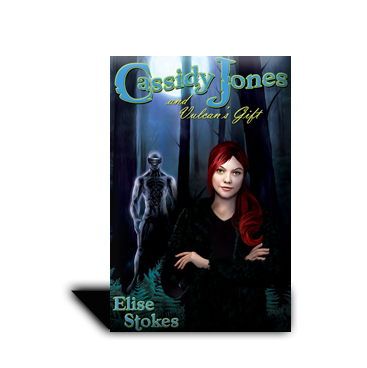
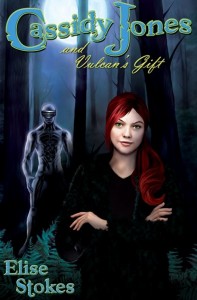
Two months after being infected with a strange retrovirus, Cassidy Jones continues to live a double life while she struggles to master her newly gained superpowers. High school has become the only normal thing left in her life--except for tall, dark, and handsome Emery Phillips, who shadows her every move, making sure she doesn't reveal her secret. Then an overnight sleepover at Catamount Mountain Zoo takes a menacing turn, putting everything at risk.  

I also plan to have paper copies of my first published fiction (since high school, anyway), Sam, the Strawb Part. As always, all the proceed from sales of that title go directly to Children at Risk, an Ottawa charity that supports families of children with autism spectrum disorders.

Now, if you live in the Ottawa or Stittsville areas, you have no excuse! I look forward to seeing you all at Gaia Java on Saturday, September 29, between 11:00 a.m. and 4:00 p.m.

Where: Gaia Java
1300 Stittsville Main StreetStittsville, ON

When: Saturday, September 2911:00 a.m. to 4:00 p.m.

Tuesday, September 18, 2012

Uncover the cover! Blood of the King


Bruce Blake’s newest book, Blood of the King, is coming out in just a couple of weeks, and it looks exciting and a good read.

Bruce is author of the Icarus Fell series of fantasy novels, founder of the Guild of Dreams fantasy authors’ cooperative and a fellow Canadian. I’m proud to present the cover of his upcoming opus, and all I can say about it is: wow.

I have to apologize: I was supposed to post this a couple of days ago, but life got in the way. Sorry, Bruce, but best of luck with the new book!

Blood of the King

(Khirro's Journey Book 1)

A kingdom torn by war. A curse whispered by dying lips. A hero born against his will.

Khirro never wanted to be anything more than the farmer he was born to be, but a Shaman's curse binds him to the fallen king and his life changes forever.

Driven by the Shaman's dying words, Khirro's journey pits him against an army of the dead, sends him through haunted lands, and thrusts him into the jaws of beasts he wouldn't have believed existed. In one hand he carries the Shaman's enchanted sword, a weapon he can barely use; in the other he holds a vial of the king's blood, the hope of the kingdom. His destination: the Necromancer's keep in the cursed land of Lakesh. Only the mysterious outlaw magician can raise the king from the dead to save them all from the undead invasion, but can Khirro live long enough to deliver the vial?

Can a coward save a kingdom?

Who is Bruce Blake?


Bruce Blake lives on Vancouver Island in British Columbia, Canada. When pressing issues like shovelling snow and building igloos don't take up his spare time, Bruce can be found taking the dog sled to the nearest coffee shop to work on his short stories and novels.

Actually, Victoria, B.C. is only a couple hours north of Seattle, Wash., where more rain is seen than snow. Since snow isn't really a pressing issue, Bruce spends more time trying to remember to leave the "u" out of words like "colour" and "neighbour" then he does shovelling. The father of two, Bruce is also the trophy husband of burlesque diva Miss Rosie Bitts.

Bruce has been writing since grade school but it wasn't until six years ago he set his sights on becoming a full-time writer. Since then, his first short story, "Another Man's Shoes" was published in the Winter 2008 edition of Cemetery Moon, another short, "Yardwork", was made into a podcast in Oct., 2011 by Pseudopod and his first Icarus Fell novel, "On Unfaithful Wings", was published to Kindle in Dec., 2011. The second Icarus Fell novel, “All Who Wander Are Lost”, was released in July, 2012, with the first book in the two-part “Khirro's Journey” epic fantasy coming Sept. 30. He has plans for at least three more Icarus novels, several stand alones, and a possible YA fantasy co-written with his eleven-year-old daughter.

See more about Bruce and his writings at his blog, www.bruceblake.wordpress.com

Find Bruce Blake on Facebook at www.facebook.com/BruceBlakeWrites

Follow him on Twitter as @BruceABake

Visit Bruce's Author page on Amazon.com
Visit the Guild of Dreams fantasy authors' blog at http://fantasycollective.wordpress.com/

Contact Bruce by email at bruceblake@hotmail.ca

Sign up for Bruce's mailing list


Sunday, September 16, 2012

The infinite fall: Six Sentences for Sunday

It's been a long time since I participated in Six Sentence Sunday, so I thought I'd enter again.
Javor screamed as fearsomely as he could and sprang forward, slashing the knife downward. He aimed at the monster’s back, but with agility surprising in such a large creature it twisted out of the way, and the knife bit into its arm. The monster roared again, a sound that froze Javor’s heart, and then with awful strength flung Javor across the cave. He rolled to the edge of the chasm. For a second, he felt as if he was going to tip over and plunge in; below was only a dull red light in a deeper blackness and a foul odour. He knew there was no bottom, only an endless drop that called to him; something in Javor’s mind yearned to lean over and fly into the chasm, to give himself to the infinite fall.
That six-sentence excerpt is from Part One of The Bones of the Earth. For more, you can click the tab above, or download a long, free sample from Smashwords.

You can also buy all of Part One: Initiation Rites for just 99 cents from Amazon, Smashwords, iBooks or B&N.

Or, you could buy the whole book from Amazon.

But don't forget to read some more great excerpts on Six Sentence Sunday.

Tuesday, September 11, 2012

What makes fiction good?


Creative Commons: Woman with books

Writing fiction is different from writing non-fiction. It’s harder.

With non-fiction, you may answer a need: “How to hammer nails straight,” or “How to deceive yourself into believing that this diet will actually work next week.”

In fiction, however, it’s completely up to the writer to make the reader need to read the content. And as I read fiction lately, I find myself trying to deconstruct the appeal some writers hold for me.

First, I want a story that pulls me along. I have to want to find out what happens next. While this strikes me as obvious, some writers apparently need to be told: don’t bore me.

I also appreciate originality. Many writers, particularly of cop or spy stories, seem to be trying to write an episode of their favourite TV show, rather than making up their own stories. Another tip: don’t make everyone beautiful. I’ve said it before: if you look around you, you won’t see a lot of beautiful people. A few, sure. But most humans are tolerable-looking, maybe attractive.

There’s also the depth of characterization, the writer’s ability to make a character or a situation real. Dialogue has a lot to do with this, but writing believable dialogue is very tricky. If you were to write down exactly what people actually say, it would make for very boring and incomprehensible prose — people make up what they say as they go along, and there are a lot of false starts and changes in tense and tone in ordinary speech. And then there’s all the information conveyed by tone of voice and body language. It takes an extraordinarily skilled writer to capture all of that.

How a writer writes

Writing style has a lot of impact on my enjoyment. There’s word choice, and sentence structure, but I don’t have patience for writers who are trying to impress me with their vocabulary. TELL THE STORY.

Many have said: “Show me, don’t tell me.” The writers I like best are those who, simply and clearly, bring me right into the situation.

Here’s a great example from the independent and best-selling Martin Crosbie. In the opening of My Temporary Life, he brings you intimately into the character’s life — and you don’t even notice his style:

I think I first smelled booze on Gerald when we were eleven, and as far as I know he’s been drinking ever since. We’re thirteen now, almost fourteen, and he still carries a mickey to school a couple of times a week. I know how he does it. He told me once. He raids his parents’ liquor cabinet and takes a little from every bottle, making up a toxic mixture of alcohol. He’s small and wiry, almost invisible really, so it’s probably quite easy for him to sneak around in his house, stealing things, unnoticed.
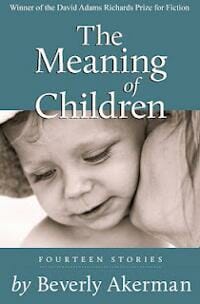
Another great Canadian independent author is Montrealer Beverly Akerman. This is the opening of the first story in her collection, The Meaning of Children:

When the arguing started, their voices would get louder and louder, till they broke into my dreams. That night, I woke and listened in the dark for what felt like a very long time. Perhaps I should have been afraid, but I wasn’t. For one thing, they never yelled at Lisa or me, and for another, they argued so often I was used to it. Besides, I learned a lot when they fought. But that night, the uproar was exceptional. Even Lisa woke up after a while, and she stood there in the crib in her fuzzy footed pyjamas, fingers in mouth, he eyes shiny and round as marbles. I finally got out of bed and padded down the hallway to see what it was about this time.

Both examples give you a lot of information, but not too much. They tell you about a character and make you want to read more, without overwhelming you with the dreaded “information dump.”

What not to do:

Here’s an example of an information dump (details altered to protect the guilty):
Michael Chapman stood wearily in line at the ferry’s bar. It had been a long trip, but he was nearing its end. Four years ago Michael was a twenty-eight-year-old investment counselor with a corner office in one of the gleaming glass towers of Atlanta. He thought he had it all — until his marriage disintegrated in a messy divorce in which his wife got the house, the kids, and everything else important to him. After eight more months of pointless activity, he walked away from his job, cashed in what remained of his investments, and bought a ticket to England.
Not only does that use a lot of clichés (“gleaming glass towers,” “marriage disintegrated,” “messy divorce,” “walked away from his job”), there’s no reason to dump all this here. Get on with the story: he’s in line at the bar — does he get his drink? Or does something get in the way? Where is the ferry going? How long has the journey been?

As the writer, you can build the back-story in as it's needed. Show me the pain of the divorce when Michael meets another potential romantic partner, or some other situation that calls for it. And he's 28, with kids and a corner office? In what universe, other than EL James's?

In On Unfaithful Wings, fantasy author Bruce Blake is a little more descriptive. But he doesn’t overwhelm you while making you feel for this character:

I stood with my back to the church, much the way I’d lived my life.

Rain poured down the eaves, splashing my shoes. Each drop pattering against the leather felt as though it landed directly on my mood. I tugged my suit jacket tighter and glanced at my watch — almost eleven p.m. If the rain didn’t let up soon, Trevor would be in bed, his belated birthday present another day late. After letting him down again, Rae probably wouldn’t let me give him the gift, anyway. A heavy sigh drew the taste of rain on dry soil into my lungs as I suppressed the desire to call her names in my head, to blame her for everything. It wasn’t her fault.


One more example to stress the points I’m trying to make: make it a close-up. It’s been said before: we find the universal in the particular. In A Birthday to Remember, Thomas L. Scott uses simple, clear language to take us all back to our own fifth birthdays:

Once, on a Saturday morning when I was just five years old, our house burned to the ground. Just before it happened, I was alone in the family room right off the kitchen, probably doing something I shouldn’t have been doing, like jumping on the furniture or bouncing a ball against the wall. You know, kid stuff. Well anyhow, the fire turned out to be one of those things which really wasn’t anybody’s fault, no matter how badly you wanted it to be. Circumstances came together and it just happened. Nobody likes to think stuff like that goes on but it does. It was my fifth birthday.
All these good examples put the reader right into the situation. They’re personal. Readers can identify with the character. If it were a movie, the director would be starting with a very close focus. Context comes later, naturally as the story rolls out.

In the next post, I’ll give you some more examples of the kind of writing I don’t like. Because you’re all writing for me, right?

Tuesday, September 04, 2012

What do free giveaways on Amazon lead to? Lots of people getting your book for free.


Through the Labour Day long weekend, I used three of the five days out of ninety in which Amazon lets me set my book’s price to zero as a promotion. As best as I can figure it, over 1,400 people downloaded a full e-book copy of The Bones of the Earth gratis.

Of course, it’s done very little for my bank account.

Downloads versus rankings

As a member of Independent Authors International, a writers’ cooperative group, I participated in the group’s first Labor Day Free Reads event. Seven of us (see last week’s post) all set September 1 to 3 as “free days” on our Amazon Kindle Select accounts. We joined and/or notified I don’t know how many bloggers, portals, reviewers and Facebook groups to publicize it; we wrote and shared updates for our own Facebook pages and scheduled hundreds of tweets.

The giveaway began at midnight on September 1. While some participants thought progress was slow, for my own part, I was happy. I had over 300 downloads by Saturday evening, and when I got up the next morning, some 30 hours or so into the program, Amazon US was showing over 600 downloads. The UK site showed 39 downloads, plus one sale of The Bones of the Earth, Part One: Initiation Rites.

Some of the other participants noted that there were no downloads from the UK site after sometime on Saturday afternoon, September 1. It turned out there was some kind of glitch in Amazon.co.uk’s tallying system. I experienced it, too: while downloads from the US site climbed fairly steadily all weekend, the UK site was stuck at 39.

More exciting to watch were the rankings. By the end of Saturday, The Bones of the Earth had advanced to no. 1,300 or so in the Free lists, and by Sunday afternoon, September 2, it was number 2 in Historical Fantasy in Amazon.com’s US Free lists, and number 5 in Epic Fantasy; in the UK, despite only showing 39 downloads, it reached number 1 in Historical Fantasy!

After that, it started falling in the rankings, to number 3 and finally settling at number 5 in historical fantasy, and number 451 overall, by the end of the event, even though total downloads kept advancing.

Image: Creative Commons

Why did I give my book away for free after trying to sell it for so many months?

Good question. I’m glad I asked it.

Many other indie authors who have tried the Kindle Select giveaway program since it became available at the beginning of this year reported a sales spike immediately following the end of the giveaway period. For example, Russell Blake made his Geronimo Breach free for three days in January and saw about 12,000 downloads. “Then, when it went back to paid, a funny thing happened. After languishing for the first day, it shot like a rocket, finally hitting #165 in the paid Kindle store,” he reported in his blog.

Russell wasn’t the only one. I read similar stories from several other indie authors. But as time went on and more and more independent writers used the program, the results were less and less striking.

Still, I was hopeful. Writers I respected for both their writing and marketing ability kept using the program. In the summer, I participated as a supporter of the Book Pushalooza for Derek Blass, Elise Stokes, Robert Guthrie, Shannon Mayer and a few others. The planning and organization in that group effort was amazing.

Lessons learned

How did iAi Labor Day Free Reads go? For me, 1,400 downloads is great — it’s many times more copies than I have sold in the past 8 months, even if it was a small number compared to Russell Blake’s results.

Still, I have to keep that in perspective. Russell was already selling thousands of copies of his book before he had the giveaway.

Another lesson: maybe next time, I won’t do this over a long weekend. People, and readers are people, often go away from their computers during holidays.

Yet another lesson: I will participate for a longer period in the Facebook and other groups that I want to promote my book before asking them to do that.

And there are still more bloggers and reviewers to contact.

As far as sales go: strangely enough, I have sold 12 copies of The Bones of the Earth, Part 1: Initiation Rites at 99 cents through the weekend. I don’t understand this, because Part 1 is, as the title implies, the first part of the full novel. Part 1 came with parts 2 and 3 for free last weekend. I’m not complaining — four bucks is enough for two cups of good coffee. But it seems strange to me. I guess the fact that Part 1 is the first part of the full book is not that clear to some people. Anyway, I’m glad people bought the story, and I hope it makes them want to read the rest of it.

As for the hoped-for sales spike: I’m writing this during that first day after the end of the event, during which Russell Blake reported “languishing” sales. So I’ll watch my reports from Amazon. And I’ll let you know how it’s going.


Sunday, September 02, 2012

Progress report: Amazon promotional giveaway event

It’s one day into the first promotional giveaway of my book, The Bones of the Earth, and I’m thrilled with the results. The numbers may not seem huge to some people, but for me, they’re great.

As I mentioned in the post last week, I’m participating in Independent Authors International’s first multi-author, multi-book giveaway through Amazon. Throughout this Labour Day long weekend, seven of us have used our Amazon Kindle Select program free days to give away copies of our e-books.

In total, there have been over 700 downloads of my book in the first 34 hours of the multi-author giveaway event. As I’m writing this, The Bones of the Earth is ranked the number two historical fantasy in Amazon’s Free lists, and number 1 in Amazon UK’s lists!

Strangely, traffic on my blog is not much heavier than normal. Other participants and friends like Cinta Garcia (who guest posted here a few months back) have noticed heavier blog traffic.

So, great results? Compared to my book’s sales since the beginning of the year, this is great! Compared to the big sellers, fair to middling.

Reasons? Perhaps the last long weekend of the summer was not a great choice: there are a lot of other things for people to do, like go to the beach one last time, or get the kids ready for school. Or maybe there are a lot of other giveaways to compete with.

Those are the results so far. I promise to publish further updates for anyone who is thinking of trying this strategy.

Saturday, September 01, 2012

ON NOW! The first Independent Authors International Labor Day Free Reads Giveaway!


September 1 – 3:
3 days
7 free authors
7 great books

ALL FREE!

Independent Authors International’s Labor Day Free Reads giveaway is on NOW.


Don't miss your chance to end your summer with spectacular reading!

From September 1 to 3, anyone can download up to seven great titles from seven great, free-thinking independent authors — all for free!

I’m proud to be included in this group. Take a look at what will be available for you this coming weekend:

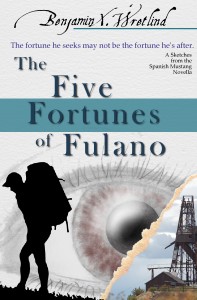
The Five Fortunes of Fulano — one of the Sketches from the Spanish Mustang, by Benjamin X. Wretlind. From a reviewer: “Mr. Wretlind has penned a tale of such emotional and literary depth that it will haunt the reader long after the last page is turned.”


Cassidy Jones and Vulcan’s Gift — described by a reviewer as “both the Superman 2 and Wrath of Khan to the first book,” Cassidy Jones and the Secret Formula. Both are great, esteem-building reads for the middle-grade and young adult set.

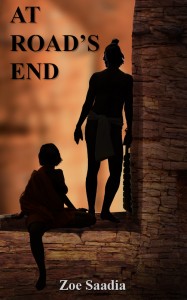
At Road’s End — the first in Zoe Saadia’s literary adventure series set in pre-Columbian America, this book has been reviewed as “a book to have on your MUST READ list.”

American Goddesses — Gary Henry’s paranormal/science-fiction yarn that makes you think, and think again.

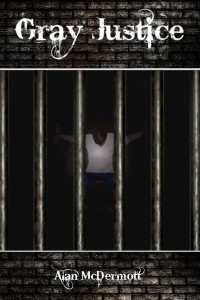
Gray Justice — the first in Alan McDermott’s series about ex-commando Tom Gray, a man who doesn’t so much take justice into his own hands and thrust it into all of ours.

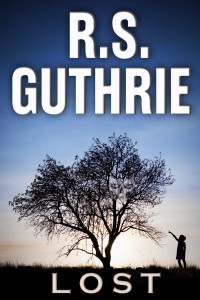
Lost — the second installment in Rob Guthrie’s thriller-horror crossover featuring one of the most interesting cops of all, Bobby Mac, and the book that established Guthrie as a truly talented and visionary writer.

And of course, my own offering: The Bones of the Earth — a tale that combines epic fantasy and historical research with a story about a young man who is trying to find his own place in a confusing and often chaotic world.

Don’t miss out. If you’re looking for some great reading material for your e-reader this fall, you could not do better than this mix from thought-provoking, truly independent authors.

To download them for free, simply type the titles into the search field in Amazon. Or watch this space and my Twitter feed for the link to the iAi Labor Day Free Reads landing page.

As if you needed another reason to celebrate a long weekend:
3 days
7 free-thinking writers
7 free books.